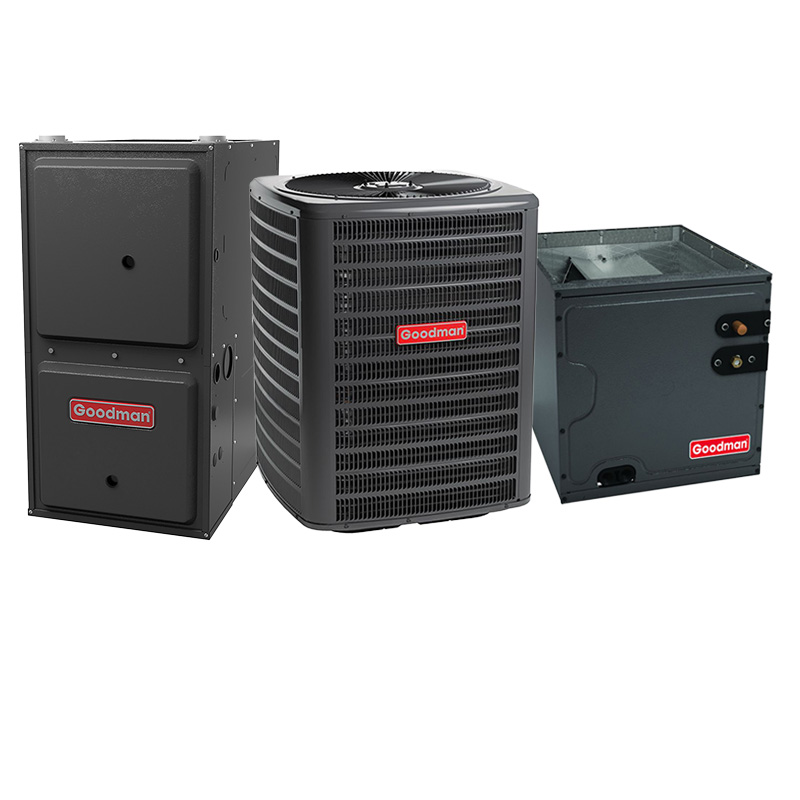
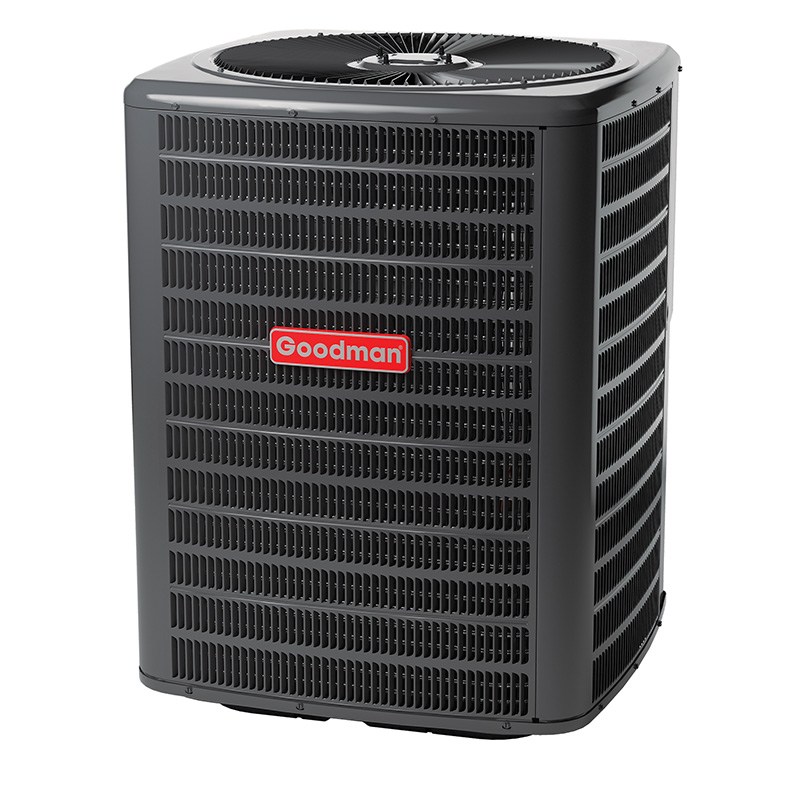
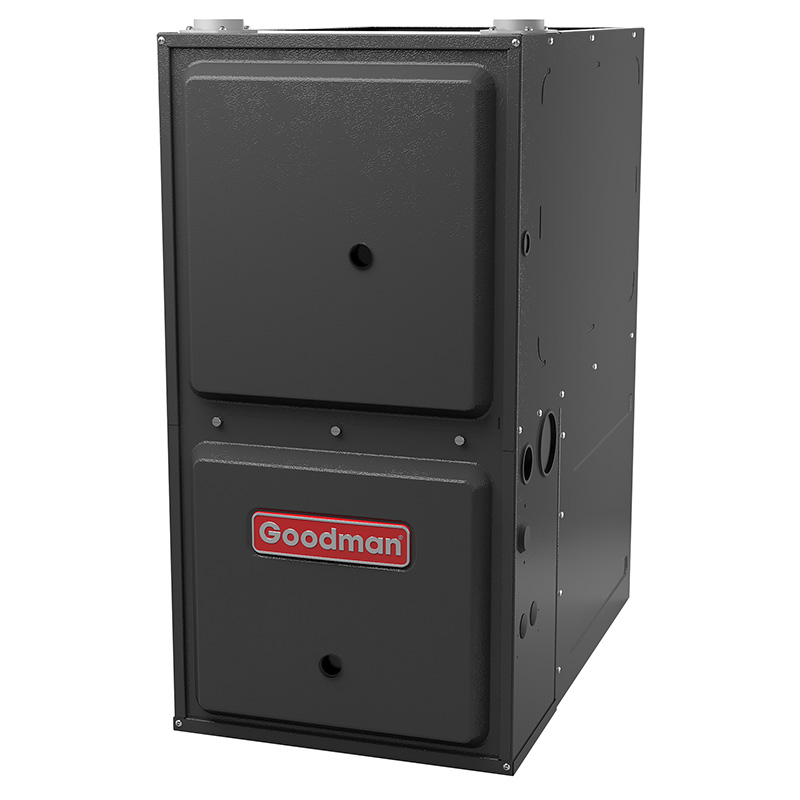
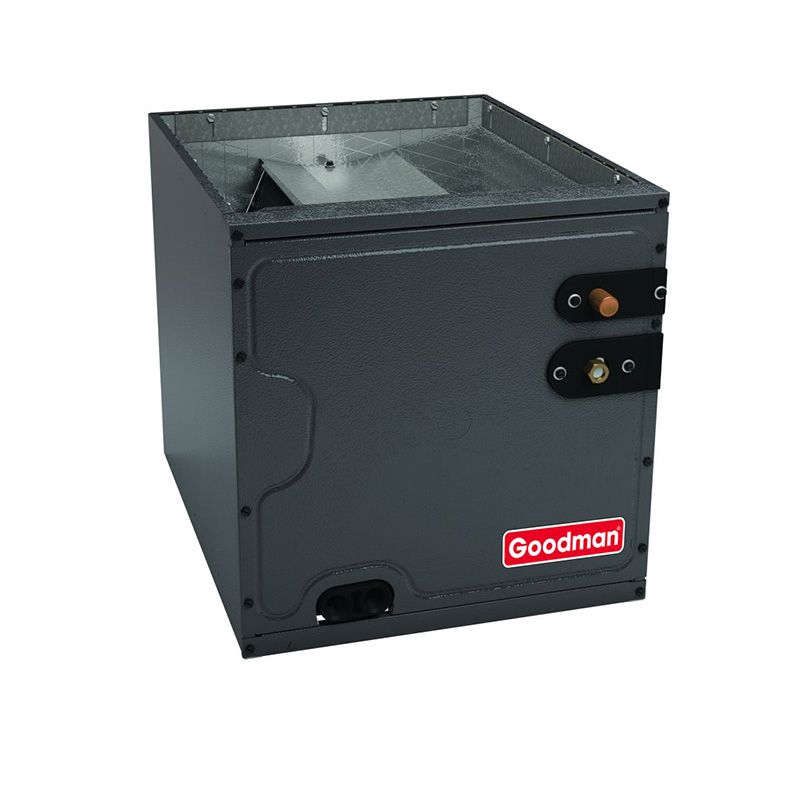
Goodman Furnace And Air Conditioner 2 Ton 15.2 SEER2 AC With 60000 BTU 80% AFUE Two Stage Multi-Speed ECM Gas Furnace System – Low NOX For California Downflow | R32
View on AC Direct see your lowest price →Check current price on AC Direct →
Key features
- 2-ton cooling capacity, 15.2 SEER2 rated efficiency
- 60,000 BTU two-stage gas furnace, 80% AFUE
- Multi-speed ECM blower motor for quieter, lower-wattage air delivery
- Downflow configuration for under-unit duct systems
- Low NOx burner meets California air district emission requirements
- R-32 refrigerant charge, compliant with current EPA phase-down rules
About this system
This Goodman bundle pairs a 2-ton, 15.2 SEER2 air conditioner with a 60,000 BTU, 80% AFUE two-stage gas furnace sized for smaller homes or zones in the 700 to 1,100 square foot range, depending on local climate and insulation. The downflow configuration routes conditioned air downward through the supply plenum, making it the right fit for installations where ductwork runs beneath the unit, most commonly in crawlspace or basement setups with the air handler on the main floor. California buyers will note the Low NOx combustion rating, which meets South Coast AQMD and similar air district requirements that bar standard-emission furnaces in much of the state.
The refrigerant charge is R-32, a lower global-warming-potential option that is becoming the industry standard as R-410A is phased out under new EPA rules. R-32 operates at similar pressures to R-410A, so most certified technicians can work with it, but it is classified A2L mildly flammable, meaning installation must follow updated code requirements for leak detection and ventilation clearances. The two-stage furnace and multi-speed ECM blower motor are genuine upgrades over single-stage budget systems: two-stage firing reduces temperature swings and short-cycling, while the ECM motor uses significantly less electricity than a PSC motor and moves air more quietly at lower speeds.
At 80% AFUE, the furnace is a mid-efficiency unit. It will satisfy code minimums in most non-northern-climate regions, but it is not the right choice for homeowners in very cold climates where a 95% or 96% AFUE condensing furnace would cut heating bills noticeably. Think of this system as a cost-conscious, code-compliant package for moderate California and Southwest climates where heating loads are secondary to cooling season performance.
This Goodman system delivers a legitimate two-stage, ECM-equipped package at a price point that undercuts Carrier, Trane, and Lennox equivalents by roughly 15 to 25 percent. The trade-off is a brand with a known pattern of capacitor failures after the early years, coil leak reports in a meaningful share of units, and compressor longevity that averages shorter than premium-brand counterparts. For buyers in California who need Low NOx compliance and want two-stage comfort without a premium-brand budget, it is a sensible choice, provided install quality and a service contract are part of the plan.
Overall score is the average of the five ratings above.
What we like
- Two-stage furnace reduces temperature swings and short-cycling compared to single-stage alternatives
- ECM blower motor lowers electrical consumption and operating noise at partial load
- Low NOx certification satisfies California and other restrictive air district requirements out of the box
- R-32 refrigerant positions the system for long-term regulatory compliance as R-410A fades out
- Price sits 15 to 25 percent below comparable Carrier, Trane, and Lennox two-stage bundles
Trade-offs
- 80% AFUE is the lowest efficiency tier and will cost more to operate than 95%+ condensing furnaces in colder climates
- Dual-run capacitors are the most commonly documented early failure point, and coil leaks appear in a meaningful share of owner reports
- Compressor lifespan averages 10 to 14 years versus 15 to 20 for premium brands, affecting long-term cost of ownership
- Downflow-only configuration limits where this unit can be installed; it is not interchangeable with upflow or horizontal applications
What homeowners and pros say about Goodman
Homeowners who have lived with Goodman equipment for several years tend to split into two camps. Those who had professional installation and kept up with annual maintenance often report years of uneventful service, pointing to the lower purchase price as a real advantage. The frustration surfaces around year seven and beyond, a pattern consistent with the roughly 2.5 out of 5 score Goodman holds on ConsumerAffairs, where repair cost complaints cluster in the later years of ownership. The two most specific documented failure points are dual-run capacitors, which are among the most common service calls across all HVAC brands but appear more frequently in Goodman owner reports, and evaporator coil leaks, which generate a notable share of the negative long-term reviews. Capacitor replacements typically run in the 300 to 600 dollar range and are not catastrophic, but coil leaks can be expensive and disruptive.
HVAC technicians tend to describe Goodman as an acceptable product whose outcome depends heavily on who installs it and how. Google dealer reviews average around 3.8 out of 5, where the most repeated praise is straightforward: it costs less up front than Trane, Lennox, or Carrier. Technicians also note that Goodman compressors average roughly 10 to 14 years in the field compared to 15 to 20 years for premium-brand compressors, which factors into the true cost of ownership calculation. For this specific system, the two-stage furnace and ECM blower motor are genuine product strengths that lift it above the basic Goodman lineup, and the Low NOx rating removes a compliance obstacle for California buyers. The honest picture is a system that delivers solid value and modern feature content at a budget-friendly price, with a reliability ceiling that buyers should factor into their long-term maintenance budget.
Sources: ConsumerAffairs Goodman owner reviews, AHRI Directory of Certified Product Performance, U.S. DOE appliance and equipment efficiency standards, Goodman product specification sheets.
What it costs to run
At 15.2 SEER2, cooling this 2-ton system for a typical 1200-hour cooling season at the U.S. average electricity rate of $0.17/kWh works out to roughly $322 per year in cooling, about $43 less per year than a minimum-efficiency 13.4 SEER2 unit of the same size. Your real cost depends on your climate and local rate.
Method: (24,000 BTU/hr ÷ 15.2 SEER2) × 1200 hours ÷ 1000 × $0.17/kWh. Rate source: U.S. EIA average; cooling hours: moderate-climate estimate.
How it compares
| Brand | Comparable model | SEER2 | Stage | Price position |
|---|---|---|---|---|
| Goodman | 2-Ton 15.2 SEER2 AC / 60K BTU 80% AFUE Two-Stage ECM Downflow Low NOx R-32 | 15.2 | Two-stage | Value pick |
| Carrier | Comfort 16 (24ACC636) with 58MVC gas furnace | 16 | Two-stage | Priced roughly 20 to 25 percent above this Goodman bundle |
| Trane | XR15 (4TTR5024) with S8X2 gas furnace | 15.2 | Two-stage | Priced roughly 15 to 20 percent above this Goodman bundle |
| Lennox | Merit ML15XC1 with ML195 gas furnace | 15.5 | Single-stage AC, two-stage furnace | Priced roughly 20 to 30 percent above this Goodman bundle |
Competitor rows are comparable single-stage units at similar efficiency; price is relative position, not a quote.
Questions about this system
Does this furnace actually meet California Low NOx requirements, and will my local air district accept it?
Goodman designates this unit Low NOx, which targets the 14 ng/J or stricter emissions thresholds required by South Coast AQMD and similar California districts. You should confirm the specific permit requirements with your local air district and licensed contractor before purchase, as some jurisdictions impose additional paperwork or inspection steps.
Is R-32 refrigerant a problem to service in California?
R-32 is classified A2L, meaning it is mildly flammable, so installation must follow current California Mechanical Code and manufacturer requirements for clearances and leak detection. Most licensed HVAC technicians are now trained for A2L refrigerants, but you should confirm your installer holds the appropriate certification before the job begins.
What does the downflow configuration mean, and how do I know if my home needs it?
Downflow means the furnace discharges conditioned air from its bottom, so the supply plenum and ductwork must be below the unit. This is typical in homes where the air handler sits on the main floor above a crawlspace or basement duct system. If your ducts connect above or to the side of the unit, you need an upflow or horizontal configuration instead.
Goodman has lower consumer ratings than Trane or Carrier. Should I be worried about reliability?
Goodman scores roughly 2.5 out of 5 on ConsumerAffairs, a channel that skews toward complaints, and around 3.8 out of 5 in Google dealer reviews where affordability is the most frequent praise. The documented weak points are dual-run capacitor failures, which are usually a low-cost fix, evaporator coil leaks that surface in a notable share of units, and compressors that average 10 to 14 years rather than the 15 to 20 years typical of premium brands. A good installation, annual maintenance, and a service contract reduce but do not eliminate these risks.
At 80% AFUE, how much heating efficiency am I giving up compared to a high-efficiency furnace?
An 80% AFUE furnace converts 80 cents of every dollar of gas into usable heat; a 95% or 96% AFUE condensing furnace converts 95 to 96 cents. In a mild California climate where the heating season is short, the payback period on the higher upfront cost of a 95% unit can be long enough that the 80% option makes financial sense. In colder inland California climates or areas with high gas rates, the savings on a high-efficiency unit add up faster.
Specifications
| Cooling capacity | 2 Ton |
| Efficiency | 15.2 SEER2 |
| Furnace output | 60000 BTU |
| Furnace efficiency | 80% AFUE |
| Configuration | Downflow |
| Refrigerant | R-32 |