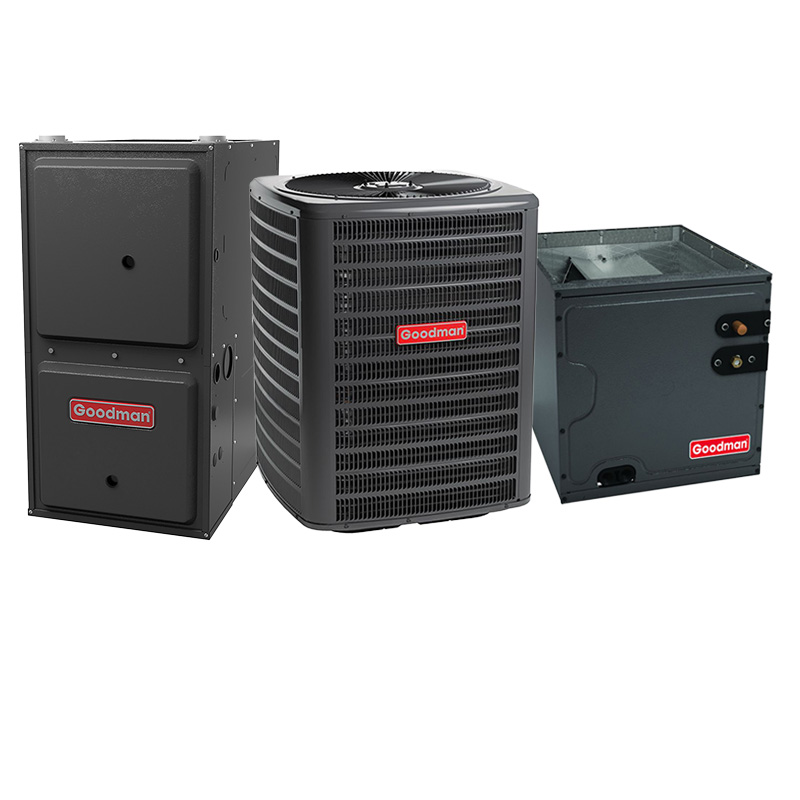
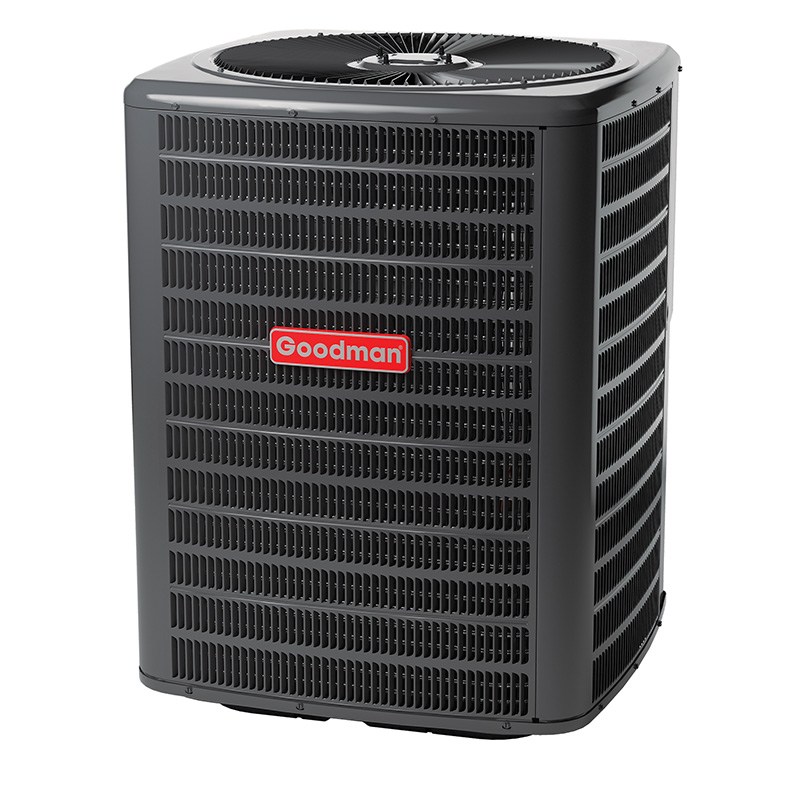
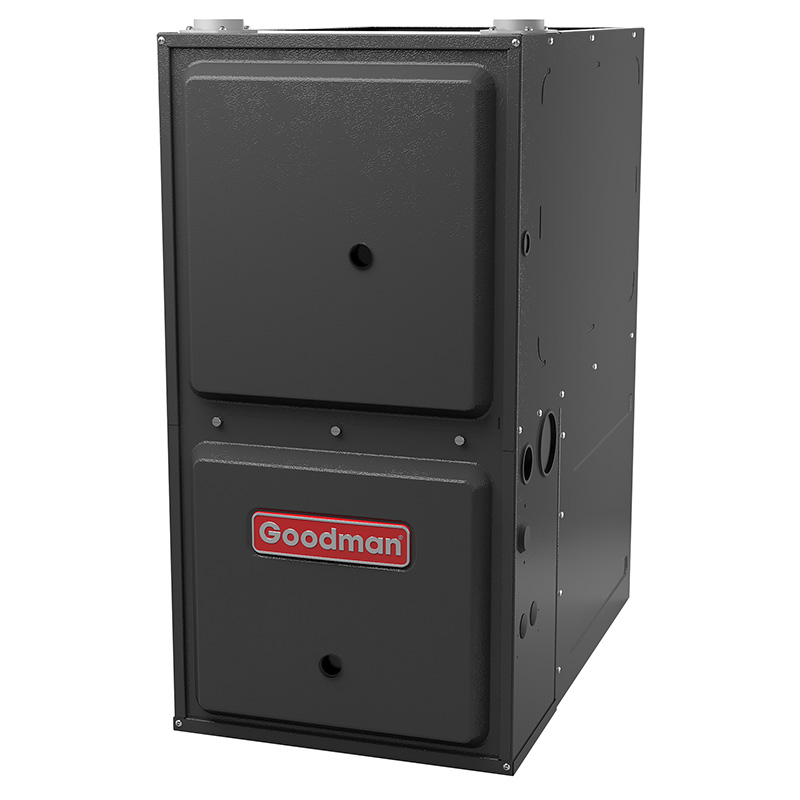
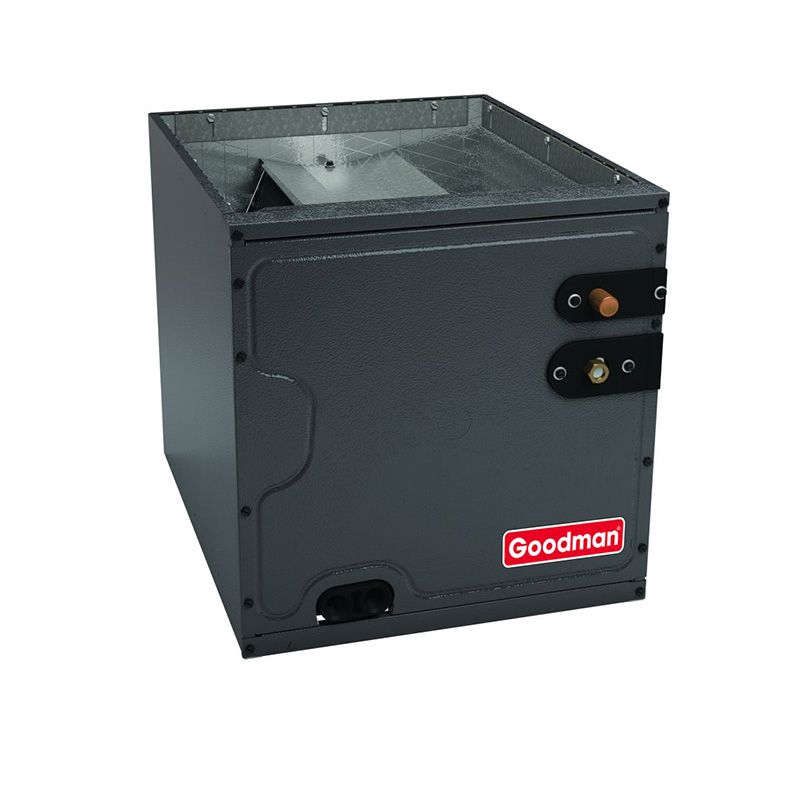
Goodman Furnace And Air Conditioner 3.5 Ton 15.2 SEER2 AC With 100000 BTU 80% AFUE Two Stage Multi-Speed ECM Gas Furnace System – Low NOX For California Downflow | R32
View on AC Direct see your lowest price →Check current price on AC Direct →
Key features
- 3.5-ton cooling capacity rated at 15.2 SEER2 with R-32 refrigerant, California Low NOX compliant
- 100,000 BTU two-stage gas furnace reduces temperature swings and can lower fuel use on mild days
- 80% AFUE mid-tier heating efficiency meets most regional code minimums
- Multi-speed ECM blower motor for quieter operation and lower blower electricity draw
- Downflow configuration designed for attic or closet installations where air discharges downward
- R-32 refrigerant has a lower global warming potential than the R-410A it replaces
About this system
This Goodman system pairs a 3.5-ton, 15.2 SEER2 air conditioner with a 100,000 BTU, 80% AFUE two-stage gas furnace in a downflow configuration, making it purpose-built for homes where the air handler sits above the living space and air flows downward, common in homes with attic-mounted or closet-based systems. The R-32 refrigerant charge meets California’s Low NOX and evolving environmental standards, so this unit ships ready for installation in California without additional compliance steps. At 3.5 tons, it covers roughly 1,600 to 2,200 square feet depending on insulation, ceiling height, and local climate, though a proper Manual J load calculation by your installer is the only reliable way to confirm the right size for your home.
The two-stage furnace runs at a reduced firing rate during mild weather and steps up to full capacity on the coldest days, which reduces temperature swings and can lower gas consumption compared to a single-stage unit cycling on and off at full blast. The multi-speed ECM blower motor adjusts airflow to match demand rather than running at one fixed speed, which is gentler on ductwork, quieter at lower loads, and more efficient than a standard PSC motor. The 80% AFUE rating means 80 cents of every dollar of gas becomes usable heat, a mid-tier efficiency level that satisfies code minimums in most of the country but leaves room for improvement if gas bills are a priority concern.
This system is a practical fit for homeowners who need a reliable, code-compliant replacement or new installation without paying the premium commanded by Trane, Lennox, or Carrier. The trade-off is a brand with a documented history of component-level failures in the 7-to-14-year range and a support experience that depends heavily on which dealer and installer you choose. Budget for professional installation by an experienced technician, because Goodman’s real-world longevity tracks closely with how well the system is commissioned at startup.
This Goodman bundle delivers a functional, code-compliant two-stage system at a price point 15 to 25 percent below comparable Trane, Lennox, and Carrier equipment, which makes the upfront math attractive. The two-stage furnace and ECM blower are real comfort upgrades over entry-level single-stage systems, but Goodman's track record of capacitor failures, evaporator coil leaks, and compressor lifespans averaging 10 to 14 years means the total cost of ownership over 15-plus years may close some of that initial gap. The value case holds strongest when paired with a skilled installer and a solid extended warranty.
Overall score is the average of the five ratings above.
What we like
- Purchase price runs 15 to 25 percent below Trane, Lennox, and Carrier at similar efficiency tiers
- Two-stage furnace operation reduces temperature swings and short-cycling on mild days
- ECM blower motor lowers fan electricity draw and runs more quietly at reduced speeds
- R-32 refrigerant satisfies California Low NOX requirements out of the box
- Downflow configuration directly addresses a common installation constraint in attic and closet setups
Trade-offs
- Dual-run capacitors are the most frequently reported failure, typically occurring within the first 7 to 10 years and costing 300 to 600 dollars to fix
- Evaporator coil leaks show up in a meaningful share of owner reviews and can be costly to address out of warranty
- Compressor lifespan averages 10 to 14 years versus 15 to 20 years for premium brands, raising long-term replacement risk
- 80% AFUE is the minimum mid-tier efficiency level and will not satisfy high-efficiency upgrade goals or utility rebate thresholds that require 90-plus percent AFUE
What homeowners and pros say about Goodman
Homeowners who bought Goodman equipment with cost savings in mind frequently reflect that sentiment in online feedback, and the Google dealer review average of around 3.8 out of 5 across dealer locations tracks with that picture: affordable equipment that works as expected when installed correctly. The ConsumerAffairs score tells a different story, sitting at roughly 2.5 out of 5, though that channel skews toward owners motivated by frustration. The recurring theme in those lower-rated reviews is repair costs that begin climbing after roughly year 7, and the documented failure modes back that up. Dual-run capacitors are the most commonly cited breakdown, a repair that typically runs 300 to 600 dollars and is considered a low-cost fix in HVAC terms. Evaporator coil leaks appear in a meaningful share of reviews and are harder to dismiss, and Goodman compressors are generally reported to average 10 to 14 years before replacement is on the table, compared to 15 to 20 years for equipment from Trane, Lennox, or Carrier.
HVAC technicians who work on Goodman units regularly tend to frame it the same way: not a bad product, but one whose outcome depends heavily on installation quality and early maintenance. A small share of first-year refrigerant leak reports are attributed to charging or line-set issues rather than factory defects, reinforcing the point that who installs it matters as much as what gets installed. For this specific system, the two-stage furnace and ECM blower earn genuine credit from installers as real comfort upgrades over single-stage budget equipment, and the R-32 charge is a straightforward compliance win for California buyers. The honest bottom line is that buyers who choose this system, keep up with annual maintenance, and work with a capable local dealer will likely get solid years of service. Buyers who treat it as fully set-and-forget equipment may find repair bills eroding the upfront savings faster than expected.
Sources: ConsumerAffairs Goodman owner reviews, AHRI Directory of Certified Product Performance, U.S. DOE appliance and equipment efficiency standards, Goodman product specification sheets.
What it costs to run
At 15.2 SEER2, cooling this 3.5-ton system for a typical 1200-hour cooling season at the U.S. average electricity rate of $0.17/kWh works out to roughly $564 per year in cooling, about $75 less per year than a minimum-efficiency 13.4 SEER2 unit of the same size. Your real cost depends on your climate and local rate.
Method: (42,000 BTU/hr ÷ 15.2 SEER2) × 1200 hours ÷ 1000 × $0.17/kWh. Rate source: U.S. EIA average; cooling hours: moderate-climate estimate.
How it compares
| Brand | Comparable model | SEER2 | Stage | Price position |
|---|---|---|---|---|
| Goodman | This system (3.5T 15.2 SEER2 / 100K BTU 80% AFUE Two-Stage ECM Downflow R-32) | 15.2 | Two-stage | Value pick |
| Carrier | Performance 15 (24ACC636) with 58MVC Gas Furnace | 15.2 | Two-stage | Typically 15 to 25 percent more than this Goodman bundle |
| Trane | XR15 (4TTR5036) with S9V2 Gas Furnace | 15.0 | Two-stage | Typically 20 to 30 percent more than this Goodman bundle |
| Lennox | Merit 16ACX with ML195 Gas Furnace | 15.2 | Single-stage AC / two-stage furnace | Typically 20 to 25 percent more than this Goodman bundle |
Competitor rows are comparable single-stage units at similar efficiency; price is relative position, not a quote.
Questions about this system
Is this system legal to install in California, and does it meet Low NOX requirements?
Yes. The furnace carries a Low NOX rating and the air conditioner uses R-32 refrigerant, both of which satisfy California Air Resources Board requirements. Confirm with your installer that the specific model numbers are listed on the CARB approved equipment list before purchasing.
What does downflow configuration mean, and how do I know if my home needs it?
Downflow means the furnace pulls air in at the top and discharges conditioned air downward, which suits systems installed in an attic or upper-level closet where ductwork runs below the unit. If your current furnace sits in a basement or utility room with ducts running up through the floor, you likely need an upflow unit instead. Your installer can confirm the correct orientation during a site visit.
What are the most common repairs I should budget for over the life of this system?
Dual-run capacitors are the most frequently reported failure on Goodman equipment and typically cost 300 to 600 dollars to replace. Evaporator coil leaks are also documented in owner reviews and can be more expensive, especially once the parts warranty expires. Setting aside a small annual service fund and keeping up with filter changes and annual tune-ups gives the best chance of catching issues early.
Does the 15.2 SEER2 rating qualify for utility rebates in my area?
Many utilities require a minimum of 15.0 or 15.2 SEER2 for rebate eligibility on split systems, so this unit may qualify, but requirements vary significantly by utility and state. Check your utility's current rebate portal or ask your installer to look up your specific program before purchase to confirm eligibility.
How important is installer quality with a Goodman system, and how do I find a good one?
Installer quality is widely cited by HVAC technicians as the single biggest factor in how long a Goodman system lasts and how reliably it performs. A minority of first-year refrigerant leaks are attributed to improper installation or charge rather than equipment defects. Look for a licensed contractor who performs a Manual J load calculation, pressure-tests the refrigerant circuit, and verifies airflow before leaving, and check their Google reviews specifically for mentions of post-installation support.
Specifications
| Cooling capacity | 3.5 Ton |
| Efficiency | 15.2 SEER2 |
| Furnace output | 100000 BTU |
| Furnace efficiency | 80% AFUE |
| Configuration | Downflow |
| Refrigerant | R-32 |