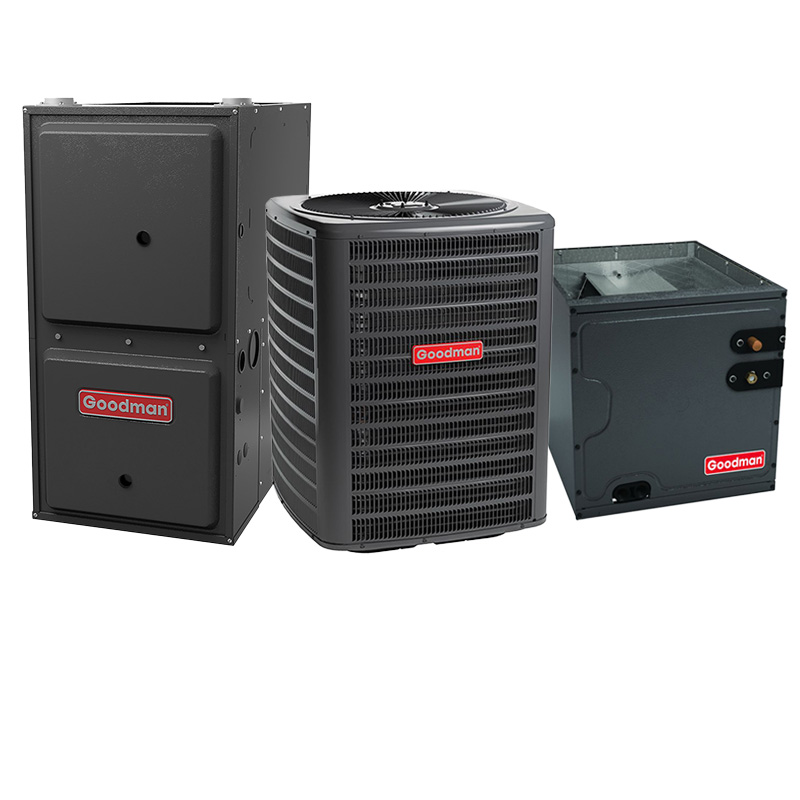
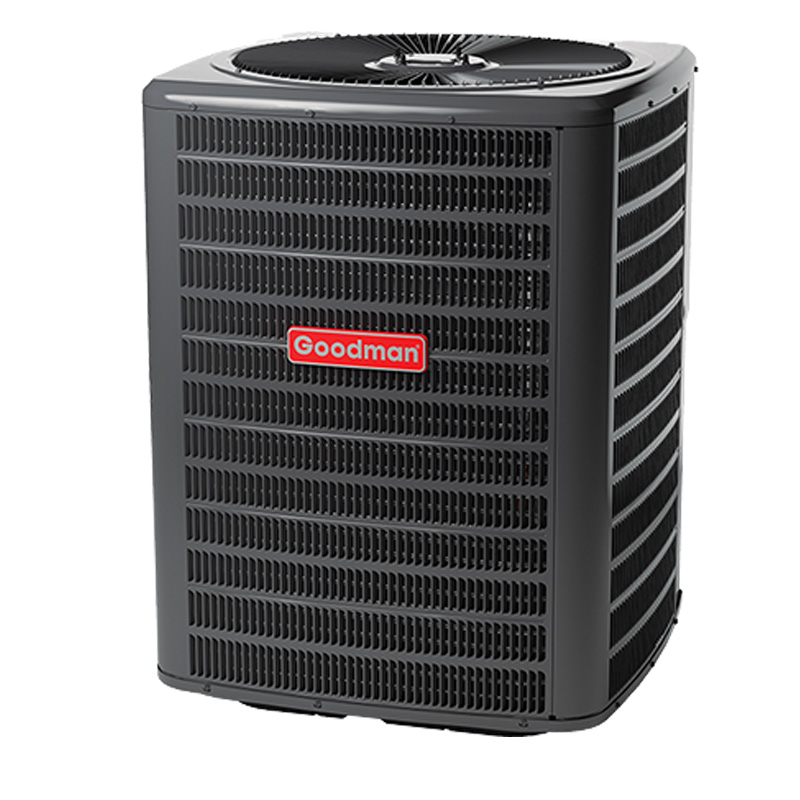
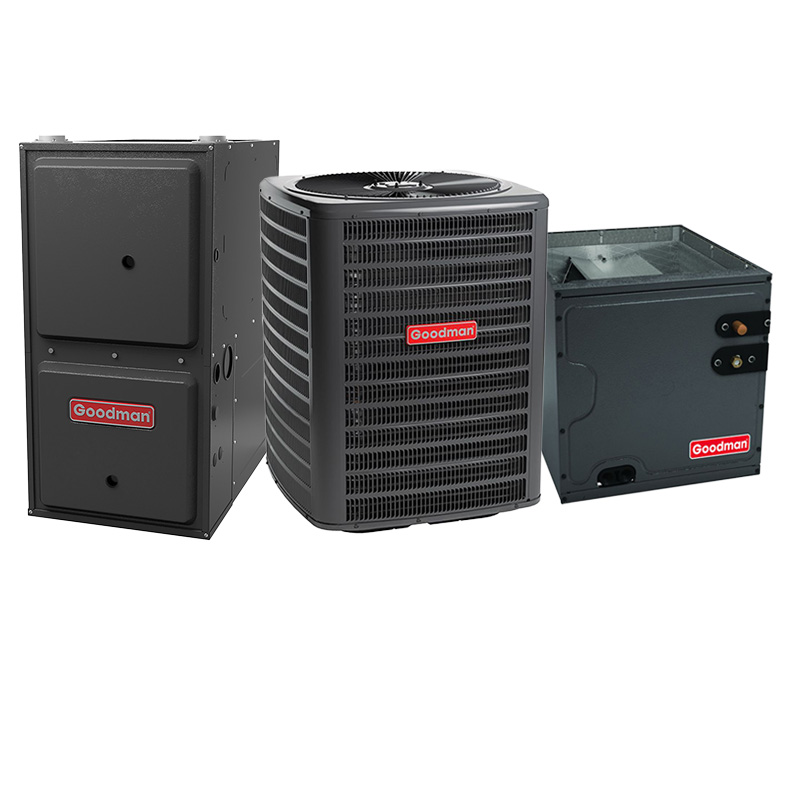
Goodman Furnace And Air Conditioner 3.5 Ton 14.5 SEER2 AC With 100000 BTU 96% AFUE Multi-Speed ECM Gas Furnace System – Downflow | R32
View on AC Direct see your lowest price →Check current price on AC Direct →
Key features
- 3.5-ton cooling capacity with 14.5 SEER2 efficiency rating
- 100,000 BTU furnace at 96% AFUE — high-efficiency, federally tax-credit eligible
- R-32 refrigerant: lower global warming potential than R-410A
- Multi-speed ECM blower motor reduces electricity use and temperature swings
- Downflow configuration for below-floor duct systems and platform installations
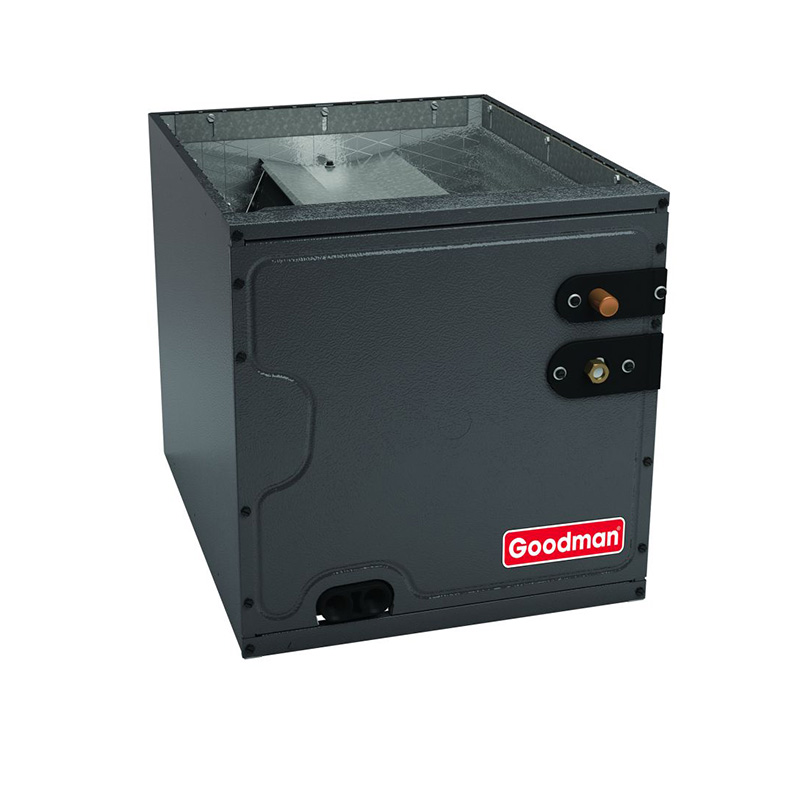
- Factory-matched split system designed for straightforward coil and air-handler pairing
About this system
The Goodman 3.5-ton, 14.5 SEER2 / 96% AFUE system pairs a single-stage air conditioner using R-32 refrigerant with a multi-speed ECM gas furnace rated at 100,000 BTU in a downflow configuration. That combination covers roughly 1,800 to 2,400 square feet depending on your climate zone, insulation, and duct layout. The 96% AFUE rating means only about four cents of every fuel dollar escapes as waste heat, which lands this furnace solidly in the high-efficiency tier and makes it eligible for federal and some state energy tax credits. The 14.5 SEER2 rating meets the current federal minimum for most northern U.S. regions and sits just above the southern minimum, so it is compliant nationwide but not a top-shelf performer on the cooling side.
The downflow cabinet orientation sends heated or cooled air downward into the duct system, making this unit the right choice for homes where the furnace sits in a closet, utility room, or platform above a crawlspace with ductwork running beneath the floor. Switching to R-32 refrigerant is a meaningful forward step: R-32 has roughly one-third the global warming potential of the outgoing R-410A, and its higher energy density can support slightly better heat-transfer efficiency. The multi-speed ECM blower motor runs at lower speeds during mild conditions, cutting electricity consumption and reducing temperature swings compared with a basic single-speed motor. This system suits a budget-conscious homeowner replacing aging equipment in a mid-size home who wants substantially better furnace efficiency without paying a premium brand’s price.
This Goodman bundle delivers genuinely high furnace efficiency and a code-compliant cooling rating at a price point that undercuts Trane, Carrier, and Lennox by a meaningful margin. The trade-off is a brand track record that shows real durability gaps after year seven and a cooling SEER2 score that is adequate but not impressive. For a homeowner prioritizing upfront cost and strong heating efficiency over long-term premium reliability, it is a reasonable choice when paired with a skilled installer.
Overall score is the average of the five ratings above.
What we like
- 96% AFUE furnace efficiency is a genuine high-efficiency designation, not a marketing stretch
- R-32 refrigerant is more environmentally responsible and increasingly better supported by technicians
- Multi-speed ECM motor improves comfort and lowers blower electricity costs versus single-speed units
- Factory-matched system simplifies coil compatibility and can support warranty claims
- Priced 15 to 25 percent below comparable Trane, Lennox, and Carrier systems
Trade-offs
- Dual-run capacitors are the most frequently reported failure point, typically surfacing within the first ten years
- Evaporator coil leaks appear in a notable share of owner reports, risking refrigerant loss and repair costs
- Compressor lifespan averages 10 to 14 years versus 15 to 20 years for premium-brand compressors
- 14.5 SEER2 cooling efficiency is the entry level for compliance in most regions — no headroom above baseline
What homeowners and pros say about Goodman
Homeowners who shop Goodman consistently land on the same point: the upfront price is genuinely lower, often by several thousand dollars compared with Carrier, Trane, or Lennox systems at a similar efficiency tier. Google dealer reviews average around 3.8 out of 5 across installer locations, where affordability is the most frequently cited reason buyers chose the brand. That satisfaction tends to hold through the early years. The concern is what happens later. ConsumerAffairs scores Goodman at roughly 2.5 out of 5, a platform that skews toward people who had problems, and the recurring pattern in those complaints is repair costs climbing after roughly year seven. The documented failure modes are specific: dual-run capacitors are the most common breakdown, usually a low-cost fix in the 300 to 600 dollar range, but evaporator coil leaks and compressor failures are also reported at a rate that separates Goodman from premium brands. Compressors in Goodman equipment tend to average 10 to 14 years, compared with 15 to 20 years for Trane and Carrier, which matters on a 3.5-ton unit running long cooling seasons.
HVAC technicians who work on Goodman equipment regularly point to install quality as the single biggest variable in how long the system lasts. A properly commissioned Goodman with correct refrigerant charge, clean duct connections, and a functioning drain setup will outperform a carelessly installed premium unit. That means your contractor choice matters at least as much as your equipment choice with this brand. The R-32 refrigerant and 96% AFUE furnace in this specific system represent genuine forward steps, and the multi-speed ECM blower adds real comfort value. But a small share of owners also report refrigerant leaks within the first year, a pattern attributed to charge or install issues rather than factory defects, which reinforces the case for vetting your installer carefully before committing to any Goodman purchase.
Sources: ConsumerAffairs Goodman owner reviews, AHRI Directory of Certified Product Performance, U.S. DOE appliance and equipment efficiency standards, Goodman product specification sheets.
What it costs to run
At 14.5 SEER2, cooling this 3.5-ton system for a typical 1200-hour cooling season at the U.S. average electricity rate of $0.17/kWh works out to roughly $591 per year in cooling, about $48 less per year than a minimum-efficiency 13.4 SEER2 unit of the same size. Your real cost depends on your climate and local rate.
Method: (42,000 BTU/hr ÷ 14.5 SEER2) × 1200 hours ÷ 1000 × $0.17/kWh. Rate source: U.S. EIA average; cooling hours: moderate-climate estimate.
How it compares
| Brand | Comparable model | SEER2 | Stage | Price position |
|---|---|---|---|---|
| Goodman | 3.5T 14.5 SEER2 AC + 96% AFUE ECM Furnace (this system) | 14.5 | Single-stage | Value pick |
| Carrier | 24ACC6 (AC) + 59TP6 96% AFUE Furnace | 14.5–15 | Single-stage | 15 to 25 percent above this system |
| Trane | XR14 (AC) + S9X2 96% AFUE Furnace | 14.5–15 | Single-stage | 15 to 25 percent above this system |
| Lennox | ML14XC1 (AC) + ML296V 96% AFUE Furnace | 14.5–15 | Single-stage | 20 to 30 percent above this system |
Competitor rows are comparable single-stage units at similar efficiency; price is relative position, not a quote.
Questions about this system
Is a downflow furnace harder to install than an upflow model, and will any contractor be able to do it?
Downflow units require a specific plenum and subbase arrangement so the cabinet sits safely above the duct opening, and they are less common than upflow models. Most experienced HVAC contractors handle them routinely, but you should confirm the installer has done downflow work before, since improper subbase installation is a documented source of problems.
R-32 is still fairly new in residential split systems — will my local technicians be able to service it?
R-32 requires technicians to hold an EPA 608 certification, which most licensed HVAC pros already carry. Tool compatibility is the practical question: some older recovery machines and manifold gauges are not rated for R-32's slightly higher pressure, so confirm your servicing contractor has updated equipment before you need a repair call.
The 96% AFUE rating sounds impressive — what does that actually mean for my gas bill?
A 96% AFUE furnace converts 96 cents of every dollar of gas into usable heat, compared with roughly 80 cents for a standard-efficiency unit. In a cold climate where heating is a major expense, that gap is meaningful over a full winter, and the furnace qualifies for the federal 25C energy efficiency tax credit at the time of writing.
What is the real warranty on this Goodman system and what does it require to stay valid?
Goodman offers a 10-year parts warranty on registered systems, which requires you to register the equipment within a set window after installation. Failure to register typically drops coverage to five years. The warranty covers parts but not labor, so a compressor replacement in year eight, for example, would still carry a significant labor cost.
Goodman gets mixed reviews online — should I be worried about reliability for a 3.5-ton system in a warm climate where the AC runs hard?
The concern is legitimate. ConsumerAffairs scores Goodman at roughly 2.5 out of 5, with recurring complaints about repair costs after year seven, and documented failure modes include capacitor failures, evaporator coil leaks, and compressors that average 10 to 14 years rather than the 15 to 20 years seen with premium brands. In a hot climate with heavy cooling loads, those risks are amplified, so budgeting for an extended labor warranty or a service contract from your installer is worth considering.
Specifications
| Cooling capacity | 3.5 Ton |
| Efficiency | 14.5 SEER2 |
| Furnace output | 100000 BTU |
| Furnace efficiency | 96% AFUE |
| Configuration | Downflow |
| Refrigerant | R-32 |