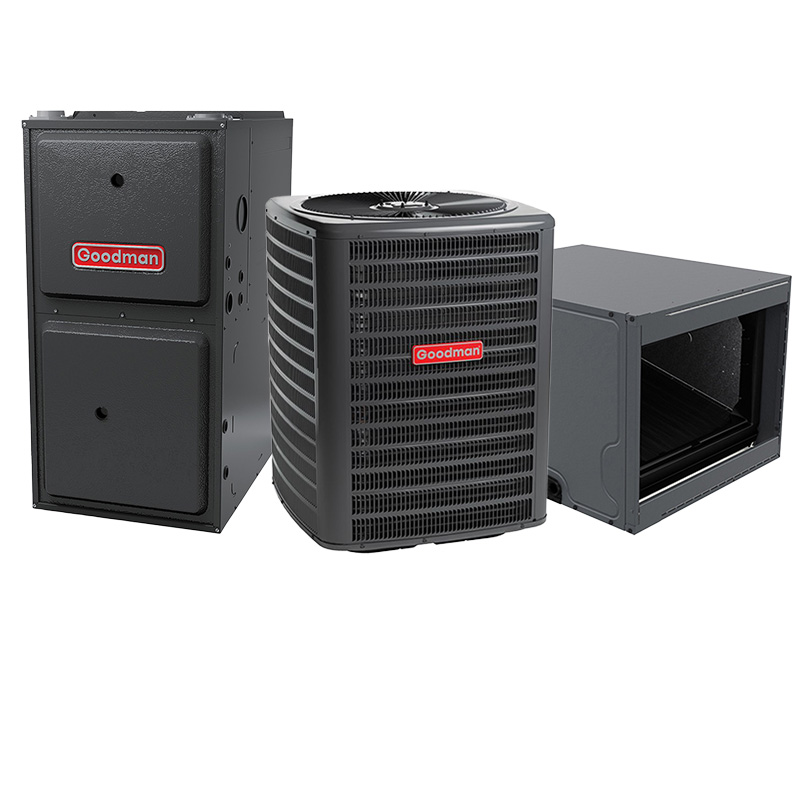
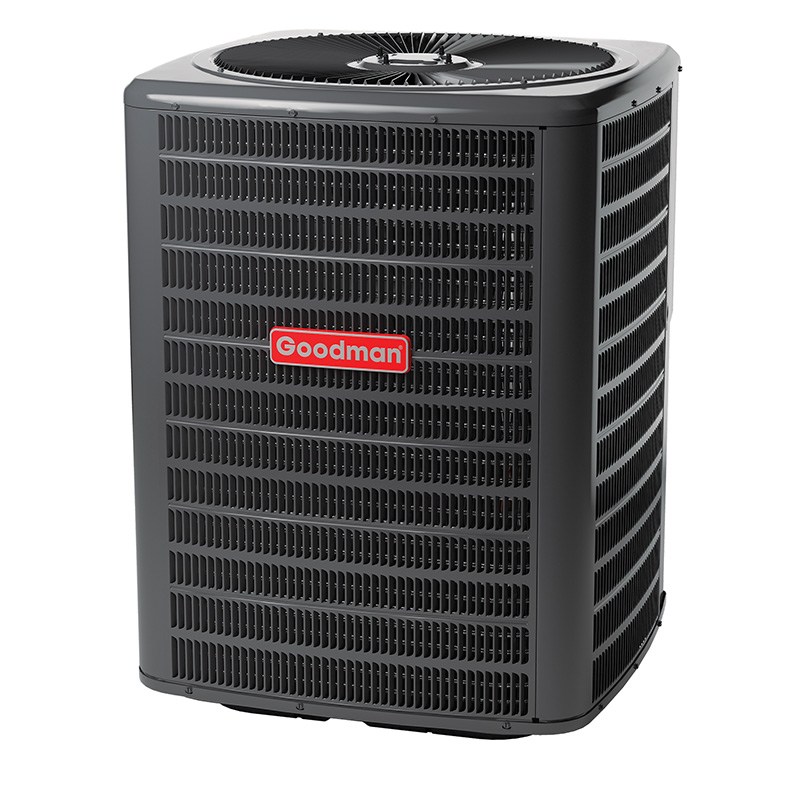
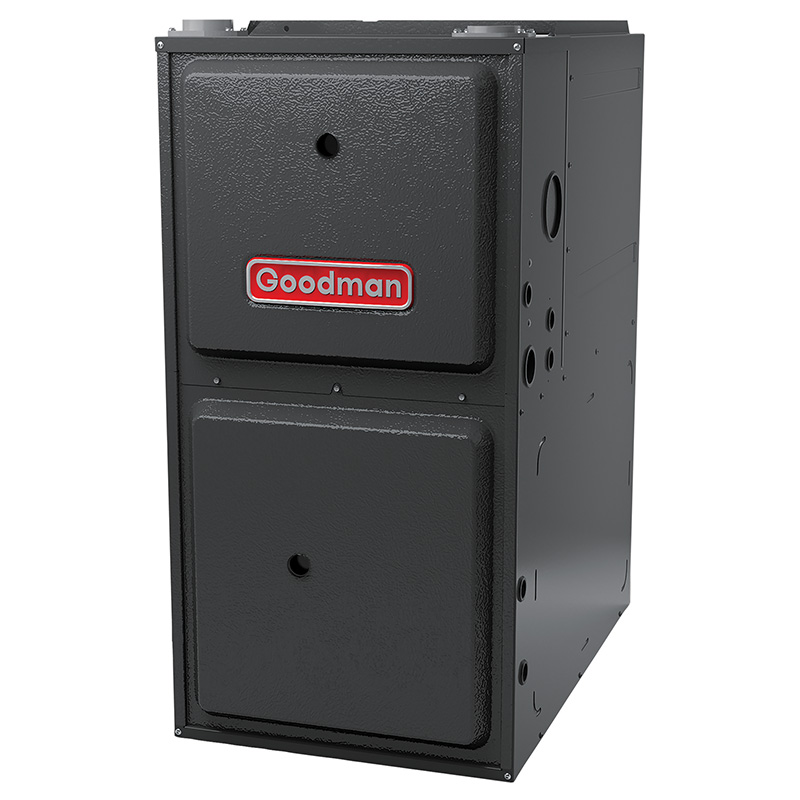
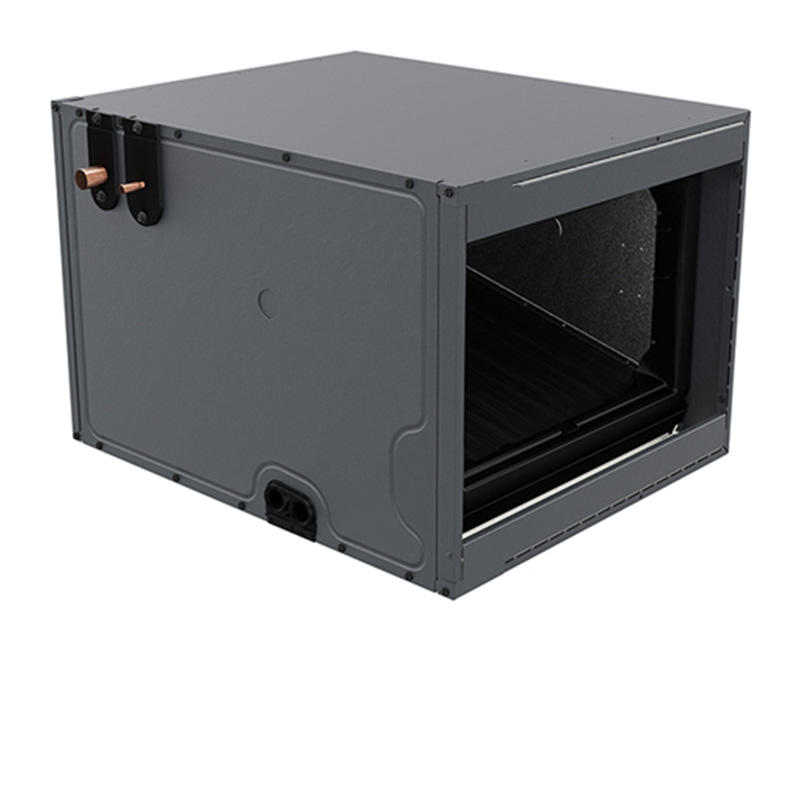
Goodman Furnace And Air Conditioner 3.5 Ton 15.2 SEER2 AC With 80000 BTU 80% AFUE Two Stage Multi-Speed ECM Gas Furnace System – Horizontal | R32
View on AC Direct see your lowest price →Check current price on AC Direct →
Key features
- 3.5-ton, 15.2 SEER2 cooling efficiency meets current federal minimums with moderate savings over baseline
- Two-stage compressor reduces short cycling and lowers indoor humidity on mild days
- Multi-speed ECM blower motor cuts fan energy use and improves airflow consistency
- 80,000 BTU, 80% AFUE two-stage gas furnace suits moderate heating climates or budget-focused installs
- Horizontal configuration designed for attic, crawl space, or side-exit ductwork installations
- R-32 refrigerant offers lower global warming potential than R-410A as phase-out continues
About this system
This Goodman system pairs a 3.5-ton, 15.2 SEER2 air conditioner with an 80,000 BTU, 80% AFUE two-stage gas furnace in a horizontal configuration, making it a practical choice for homes where the air handler sits in a crawl space, attic, or utility closet with side-exit ductwork. At 3.5 tons, it targets homes in roughly the 1,600 to 2,200 square foot range depending on climate and insulation, though a proper Manual J load calculation should always drive that decision. The R-32 refrigerant is a meaningful step forward: it has a lower global warming potential than R-410A and is increasingly the industry standard as R-410A is phased out.
The two-stage compressor and multi-speed ECM blower motor are real operational benefits. Two-stage cooling runs on low capacity during mild weather, which reduces short cycling, keeps indoor humidity lower, and puts less mechanical stress on the system than a single-stage unit running at full blast and then shutting off repeatedly. The ECM motor uses significantly less electrical energy than a standard PSC motor and gives the furnace side more precise airflow control. At 80% AFUE, the furnace meets minimum federal efficiency standards for most northern climate zones but is not a high-efficiency unit; roughly 20 cents of every dollar in gas escapes through the flue. Homeowners in cold climates who heat heavily may want to compare the long-term fuel savings of a 96% AFUE alternative against the higher upfront cost.
Goodman sits in the value tier of the North American HVAC market, typically priced 15 to 25 percent below equivalent Trane, Lennox, and Carrier configurations. That gap is real money on a system of this size, and it makes Goodman a legitimate option for budget-conscious buyers, rental property owners, and anyone who prioritizes keeping initial costs down. The trade-off is that Goodman compressors historically average 10 to 14 years compared to 15 to 20 years for premium brands, so the lifetime cost picture is more complicated than the sticker price alone suggests.
This Goodman combination delivers genuinely useful two-stage operation and an ECM motor at a price point that undercuts the major premium brands by a meaningful margin, making it a reasonable choice for buyers who want more than basic single-stage performance without paying for a premium nameplate. The 80% AFUE furnace and 15.2 SEER2 rating land at or just above federal minimums rather than in high-efficiency territory, so fuel-cost savings over a 96% or 18+ SEER2 system will not materialize here. Known reliability concerns, including a compressor lifespan shorter than premium competitors and documented issues with capacitors and evaporator coil leaks, mean installation quality and a solid labor warranty matter as much as the equipment itself.
Overall score is the average of the five ratings above.
What we like
- Two-stage cooling and heating reduce short cycling and improve humidity control compared to single-stage equipment
- ECM multi-speed blower lowers fan electricity consumption and enables quieter low-speed operation
- R-32 refrigerant is more environmentally friendly than R-410A and better positioned for the long-term regulatory environment
- Priced 15 to 25 percent below comparable Trane, Lennox, and Carrier systems, reducing upfront cost on a large system
- Horizontal configuration fills a specific installation need that not all system bundles address
Trade-offs
- 80% AFUE means 20% of fuel energy is exhausted; high-usage households in cold climates will pay more to operate it than a 95-96% AFUE alternative
- Compressor lifespan averages 10 to 14 years versus 15 to 20 years for premium brands, which narrows the lifetime cost advantage
- Dual-run capacitor failures are the most commonly reported repair on Goodman equipment, typically appearing after year 7, adding recurring service costs
- Evaporator coil leaks and early refrigerant loss have been reported by a meaningful share of owners, and a minority experience refrigerant issues within the first year that often trace back to installation
What homeowners and pros say about Goodman
Homeowners who choose Goodman frequently point to the price gap versus the major brands as the deciding factor, and that sentiment shows up consistently in Google dealer reviews, which average around 3.8 out of 5 across installer locations. The most common praise centers on affordability and the availability of contractors willing to work on the equipment. HVAC technicians tend to hold a more divided view: many acknowledge that Goodman covers a lot of ground for the money, especially in the two-stage and ECM tiers, but they are quick to note that installation quality is the single biggest variable in how long any Goodman system lasts. A poorly charged system or a rushed duct connection will shorten its life regardless of what the spec sheet says.
On the reliability side, the picture is honest rather than flattering. The ConsumerAffairs rating sits at roughly 2.5 out of 5, though that platform draws disproportionately from frustrated owners, and the complaints cluster around repair costs that start climbing after roughly year 7. The documented failure modes technicians flag most often are dual-run capacitors, typically a 300 to 600 dollar fix when they go; evaporator coil leaks, which show up in a meaningful share of owner reviews and can be more expensive to address; and compressor lifespan that averages 10 to 14 years rather than the 15 to 20 years seen in premium equipment. A small minority of owners also report refrigerant issues within the first year, which usually points to a charge or installation problem rather than a factory defect. For this specific system, R-32 refrigerant and two-stage operation are genuine upgrades over entry-level Goodman configurations, but the brand-level reliability ceiling remains the same.
Sources: ConsumerAffairs Goodman owner reviews, AHRI Directory of Certified Product Performance, U.S. DOE appliance and equipment efficiency standards, Goodman product specification sheets.
What it costs to run
At 15.2 SEER2, cooling this 3.5-ton system for a typical 1200-hour cooling season at the U.S. average electricity rate of $0.17/kWh works out to roughly $564 per year in cooling, about $75 less per year than a minimum-efficiency 13.4 SEER2 unit of the same size. Your real cost depends on your climate and local rate.
Method: (42,000 BTU/hr ÷ 15.2 SEER2) × 1200 hours ÷ 1000 × $0.17/kWh. Rate source: U.S. EIA average; cooling hours: moderate-climate estimate.
How it compares
| Brand | Comparable model | SEER2 | Stage | Price position |
|---|---|---|---|---|
| Goodman | GSXH5 / GMVC8 Series (this system) | 15.2 | two-stage | Value pick |
| Carrier | Comfort 15 (24ACC6) with 58MVC furnace | 15.2 | two-stage | Typically 15 to 20 percent more than this Goodman bundle |
| Trane | XR15 (4TTR5) with S9V2 furnace | 15.2 | two-stage | Typically 20 to 25 percent more than this Goodman bundle |
| Lennox | Merit 16 (14ACX) with ML196 furnace | 15.2–16.0 | single-stage AC, two-stage furnace | Typically 15 to 25 percent more than this Goodman bundle |
Competitor rows are comparable single-stage units at similar efficiency; price is relative position, not a quote.
Questions about this system
Is a horizontal configuration the same as a standard upflow or downflow system, and can I convert it?
Horizontal means the air handler is oriented on its side, with supply and return air entering and exiting from the ends rather than the top or bottom, which is typical for attic or crawl space installations. Most Goodman furnaces in this series can also operate in upflow or downflow positions, but you should confirm with the specific model documentation before purchase because some components need to be repositioned and a conversion done incorrectly can cause condensate drainage or heat exchanger problems.
Why does R-32 matter, and does it affect what happens when the system needs service?
R-32 has a global warming potential roughly 68% lower than R-410A and is not subject to the same phase-down timeline, so parts and refrigerant should remain available and reasonably priced as the industry transitions away from R-410A. Technicians need to be certified to handle R-32, and some older recovery equipment is not compatible, so confirm your service contractor is set up for it before committing.
What is the real-world difference between two-stage and single-stage operation for a home in my size range?
On mild days, a two-stage system runs on its lower capacity setting, which typically means longer run cycles, better moisture removal from indoor air, and less temperature swing between cycles. For a 1,600 to 2,200 square foot home, this usually translates to more consistent comfort and lower humidity in summer compared to a single-stage unit that overshoots, shuts off, and repeats. The efficiency gains are real but modest at this SEER2 rating.
The ConsumerAffairs rating for Goodman is about 2.5 out of 5. Should that concern me?
ConsumerAffairs is a complaint-skewed platform where satisfied owners rarely post, so the 2.5 rating overrepresents problems relative to the overall ownership population. The recurring theme in those reviews is repair costs rising after roughly year 7, which aligns with the documented capacitor and coil failure patterns. Google dealer reviews average around 3.8 out of 5, and affordability is the most common praise. Neither number alone tells the full story; a quality installation and a service contract that covers parts and labor are the most practical ways to manage the risk.
Does Goodman's warranty cover the compressor and heat exchanger, and what does it actually require?
Goodman offers a 10-year parts limited warranty including the compressor and heat exchanger when the equipment is registered within a set window after installation, typically 60 days. The warranty covers parts only, not labor, which is a meaningful distinction since a compressor or coil replacement on a system this size can run several hundred to over a thousand dollars in labor alone. Ask your installer about adding a labor warranty through their company or a third-party service agreement.
Specifications
| Cooling capacity | 3.5 Ton |
| Efficiency | 15.2 SEER2 |
| Furnace output | 80000 BTU |
| Furnace efficiency | 80% AFUE |
| Configuration | Horizontal |
| Refrigerant | R-32 |