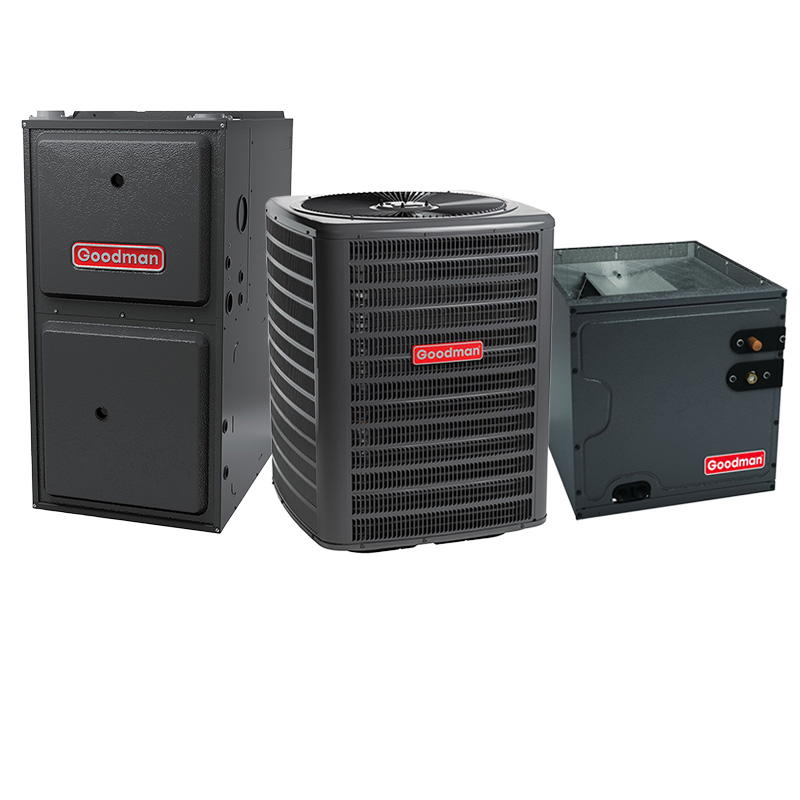
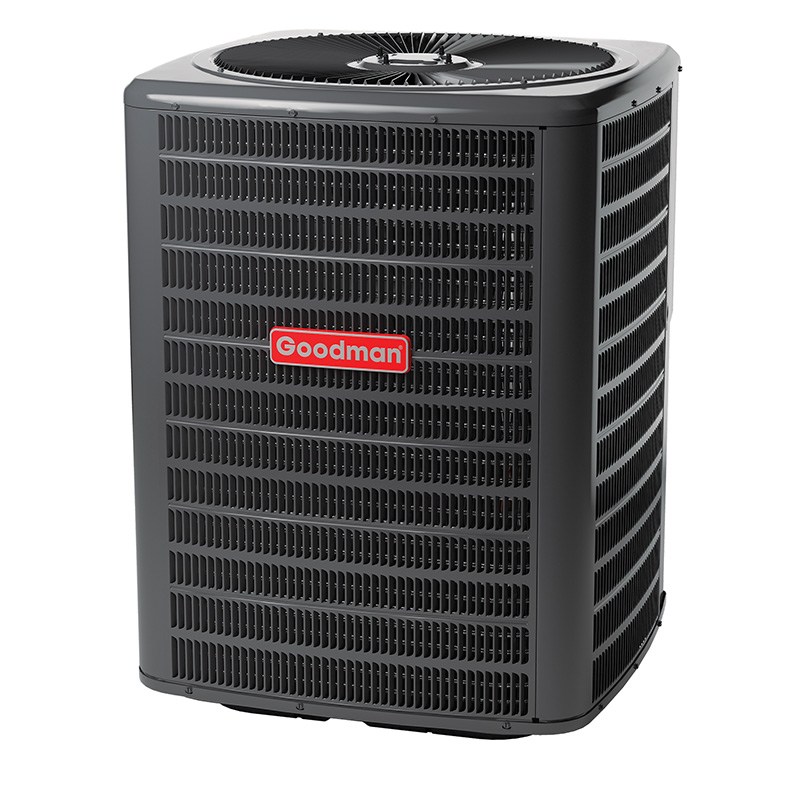
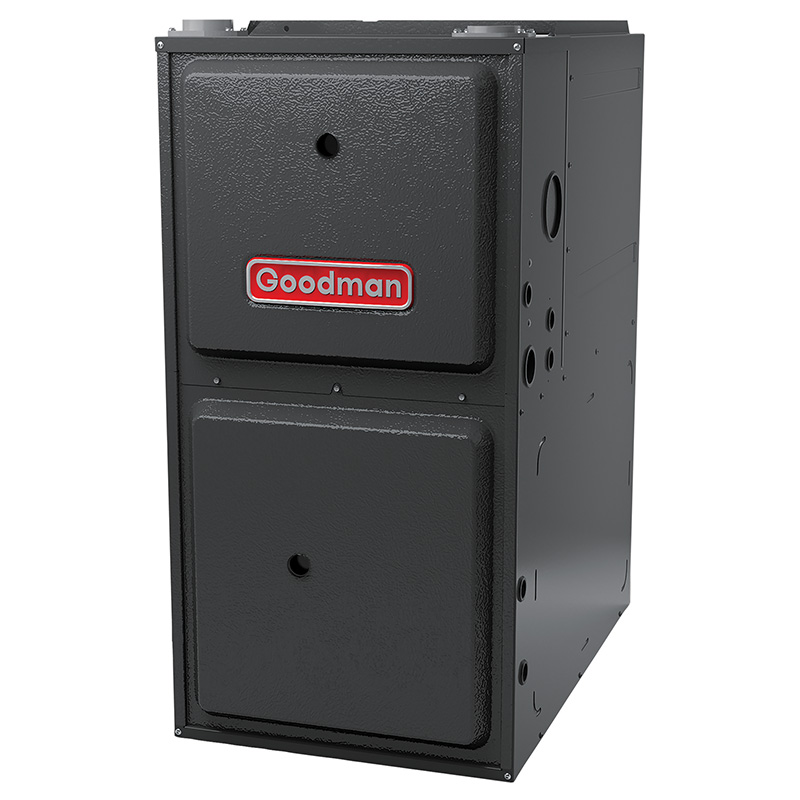
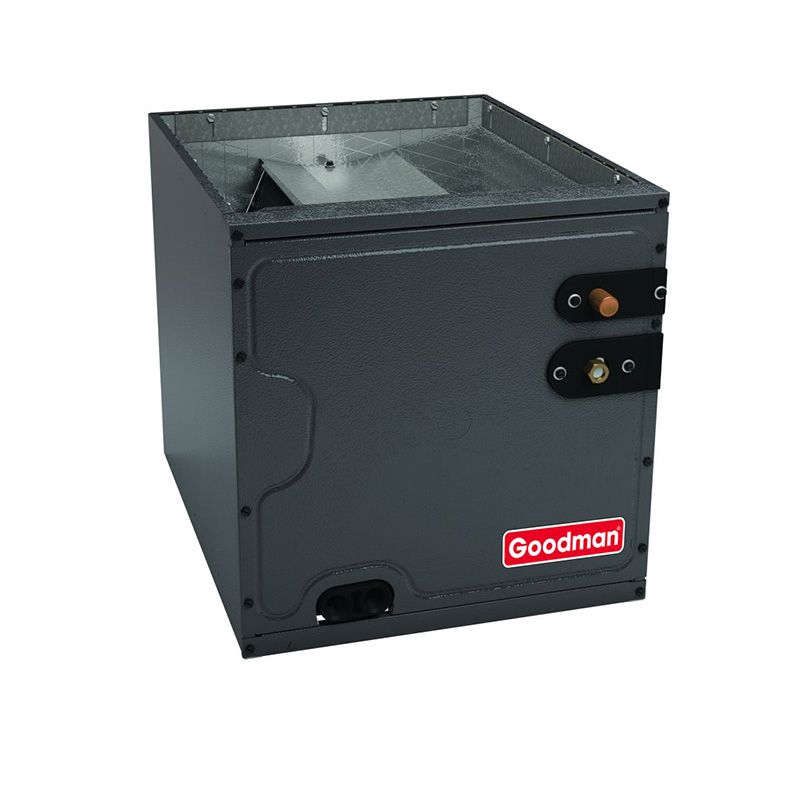
Goodman Furnace And Air Conditioner 3.5 Ton 15.2 SEER2 AC With 80000 BTU 80% AFUE Two Stage Multi-Speed ECM Gas Furnace System – Upflow | R32
View on AC Direct see your lowest price →Check current price on AC Direct →
Key features
- 3.5-ton cooling capacity rated at 15.2 SEER2, meeting current federal minimum efficiency standards
- 80,000 BTU two-stage gas furnace at 80% AFUE for moderate-climate heating efficiency
- Multi-speed ECM blower motor reduces electricity use and improves airflow consistency
- Upflow cabinet design suits basement or ground-level utility closet installations with overhead ductwork
- R-32 refrigerant with lower global warming potential than legacy R-410A systems
- Two-stage operation runs on low capacity most of the time, reducing short-cycling and improving humidity control
About this system
This Goodman bundle pairs a 3.5-ton, 15.2 SEER2 air conditioner with an 80,000 BTU, 80% AFUE two-stage gas furnace in an upflow configuration, making it a practical fit for homes in the 1,800 to 2,400 square foot range that have a basement or utility closet with ductwork running upward. The R-32 refrigerant charge is a forward-looking choice: R-32 has a lower global warming potential than the R-410A it replaces and is gradually becoming the residential standard, so parts and service should remain accessible for the foreseeable future.
The 15.2 SEER2 rating sits at the minimum efficiency threshold under current federal standards for most U.S. climate regions, which means you are not paying a premium for efficiency you may not recover in utility savings, but you are also not getting a high-efficiency system. The 80% AFUE furnace converts eight dollars out of every ten in gas to usable heat, a trade-off that makes sense in moderate climates or homes where gas costs are low, but costs more to operate over time compared to a 96% AFUE unit. The two-stage furnace and multi-speed ECM blower motor are genuine comfort upgrades over single-stage equipment: the system runs on low fire most of the time, cycling less aggressively and providing more even temperatures and better humidity control than an entry-level single-stage setup would.
Goodman prices this type of bundle 15 to 25 percent below comparable Trane, Lennox, and Carrier equipment, which makes it appealing for budget-conscious buyers, landlords, or anyone replacing aging equipment without a large capital budget. The core caveat that technicians repeat consistently is that installation quality matters more with Goodman than with premium brands, so pairing this equipment with an experienced, licensed installer is not optional, it is essential to getting the rated lifespan out of it.
This bundle delivers a solid mid-tier comfort experience at a price point that undercuts major brand competitors by a meaningful margin. The two-stage furnace and ECM motor are real value-adds at this price, but the 80% AFUE ceiling and minimum-standard SEER2 rating mean operating costs will be higher than a premium high-efficiency system over a 15-plus-year horizon. Buyers who prioritize lower upfront cost over long-term operating efficiency, and who commit to a quality installation, will get reasonable service from this system.
Overall score is the average of the five ratings above.
What we like
- Price comes in 15 to 25 percent below comparable Carrier, Trane, and Lennox bundles
- Two-stage furnace and ECM blower provide better comfort and humidity control than entry-level single-stage equipment
- R-32 refrigerant is a future-friendly choice as the industry moves away from R-410A
- Upflow configuration is one of the most straightforward to install and service in a basement or closet setting
- Widely available replacement parts and a large national network of Goodman-trained technicians
Trade-offs
- 80% AFUE is the lowest efficiency tier available; operating costs will be noticeably higher than a 95 to 96% AFUE alternative in cold climates
- Compressor life averages 10 to 14 years versus 15 to 20 years for premium brands, meaning replacement may come sooner
- Dual-run capacitor failures are the most commonly reported repair issue and, while inexpensive to fix (typically $300 to $600), they are frequent enough to factor into ownership costs
- Evaporator coil leaks appear in a meaningful share of owner reviews, and a minority of owners report refrigerant leaks within the first year, often tied to install or charge issues
What homeowners and pros say about Goodman
Homeowners who chose this type of Goodman system tend to highlight the upfront savings as the decisive factor, and dealer Google reviews averaging around 3.8 out of 5 reflect that satisfaction when the equipment is installed correctly and priced fairly. The praise stops there for some owners, however. On ConsumerAffairs, where Goodman scores roughly 2.5 out of 5, the pattern that appears most often is repair costs that start climbing after about year 7, souring the memory of that initial price advantage. The two documented failure modes worth knowing before you buy are dual-run capacitor failures, typically a $300 to $600 fix but reportedly common enough to expect at least once, and evaporator coil leaks, which show up in a meaningful share of owner accounts and can be considerably more expensive to address.
HVAC technicians who service Goodman equipment regularly offer a consistent take: the equipment is not bad, but it is less forgiving of a rushed or imprecise installation than a Trane or Carrier unit would be. A minority of owners report refrigerant leaks within the first year, and those cases are almost always traced back to install or charge problems rather than a factory defect, which underscores why technician quality matters as much as the brand name on the cabinet. The compressor lifespan averaging 10 to 14 years versus 15 to 20 years for premium brands is not a dealbreaker, but it is a real number to weigh if you are planning a long-term ownership horizon. For a rental property, a home you plan to sell within a decade, or any situation where lower upfront cost outweighs maximizing service life, this system makes reasonable sense.
Sources: ConsumerAffairs Goodman owner reviews, AHRI Directory of Certified Product Performance, U.S. DOE appliance and equipment efficiency standards, Goodman product specification sheets.
What it costs to run
At 15.2 SEER2, cooling this 3.5-ton system for a typical 1200-hour cooling season at the U.S. average electricity rate of $0.17/kWh works out to roughly $564 per year in cooling, about $75 less per year than a minimum-efficiency 13.4 SEER2 unit of the same size. Your real cost depends on your climate and local rate.
Method: (42,000 BTU/hr ÷ 15.2 SEER2) × 1200 hours ÷ 1000 × $0.17/kWh. Rate source: U.S. EIA average; cooling hours: moderate-climate estimate.
How it compares
| Brand | Comparable model | SEER2 | Stage | Price position |
|---|---|---|---|---|
| Goodman | GSXH5 / GMVC8 Bundle (this system) | 15.2 | Two-stage | Value pick |
| Carrier | Performance 16 (24ACC6) with 58MVC Gas Furnace | 15.2 to 16 | Two-stage | Approximately 20 to 25 percent more than this Goodman bundle |
| Trane | XR15 (4TTR5) with S8X2 Gas Furnace | 15.2 to 16 | Two-stage | Approximately 20 to 30 percent more than this Goodman bundle |
| Lennox | Merit 16ACX with ML180 Gas Furnace | 15.2 to 16 | Single-stage (AC) / Two-stage (furnace) | Approximately 15 to 25 percent more than this Goodman bundle |
Competitor rows are comparable single-stage units at similar efficiency; price is relative position, not a quote.
Questions about this system
Is 80% AFUE going to cost me significantly more to heat my home than a higher-efficiency furnace?
Yes, in a meaningful way if you are in a colder climate. An 80% AFUE furnace loses 20 cents of every dollar of gas as exhaust heat, while a 96% AFUE unit loses about 4 cents. In a northern climate the annual savings from a high-efficiency furnace can reach $200 to $400 per year depending on your home size and local gas rates, so the math on upgrading is worth running before you commit.
Why does Goodman get low scores on ConsumerAffairs but decent scores from dealer reviews?
ConsumerAffairs skews toward buyers who had problems, and Goodman's score there is about 2.5 out of 5, with repair costs after year 7 cited most often. Google dealer reviews average around 3.8 out of 5, where affordability is the most common praise. Neither number tells the whole story, but together they suggest the equipment performs acceptably when installed well and maintained, but can generate frustrating repair bills as it ages.
What is the most common repair I should expect with this system, and what does it cost?
Dual-run capacitor failure is the most frequently reported issue in owner accounts of Goodman equipment. It is generally a straightforward repair that typically runs $300 to $600 depending on your market and the technician. Budgeting for at least one capacitor replacement over the life of the system is realistic.
Does R-32 refrigerant require a specially certified technician to service this system?
Yes, technicians need Section 608 EPA certification to handle refrigerants, and working with R-32 specifically requires familiarity with its mildly flammable classification (A2L under ASHRAE). Most licensed HVAC contractors are already getting trained on R-32 as the industry transitions, but it is worth confirming your service provider has experience with it before scheduling work.
Will this upflow furnace work if my ductwork is in the attic rather than in the basement ceiling?
No. An upflow furnace is designed for installations where supply air exits the top of the cabinet and travels upward into overhead ductwork, which suits a basement or ground-floor closet setup. If your ductwork runs through the attic or you need air distributed downward, you would need a downflow (counterflow) or horizontal configuration instead.
Specifications
| Cooling capacity | 3.5 Ton |
| Efficiency | 15.2 SEER2 |
| Furnace output | 80000 BTU |
| Furnace efficiency | 80% AFUE |
| Configuration | Upflow |
| Refrigerant | R-32 |