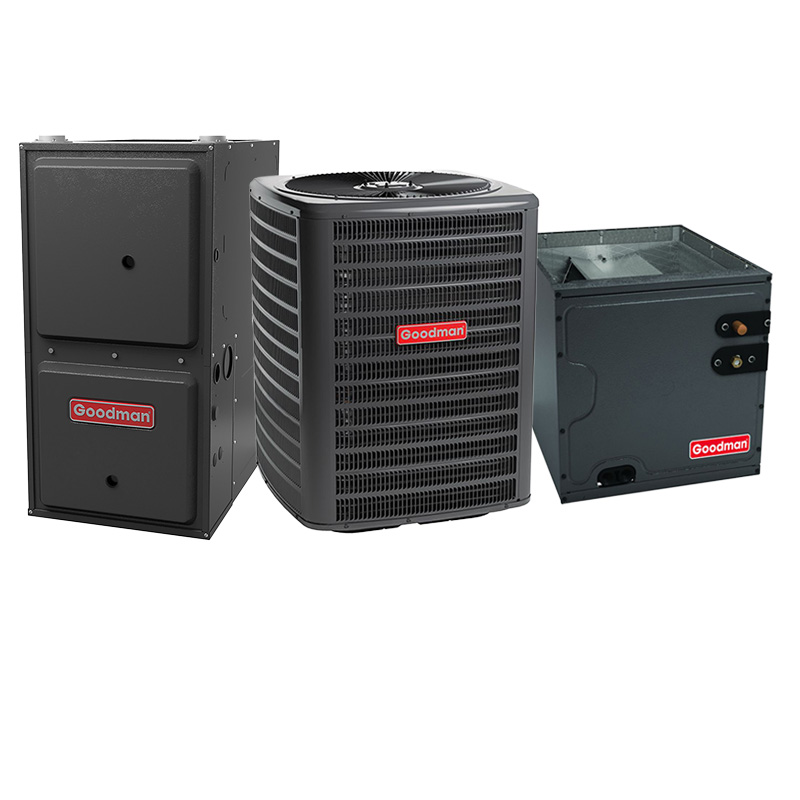
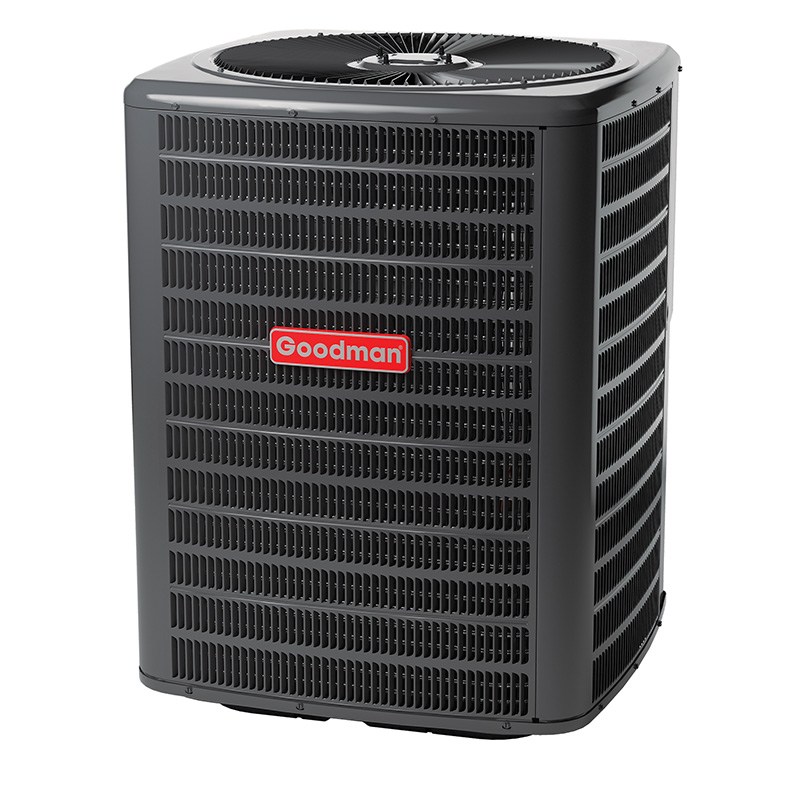
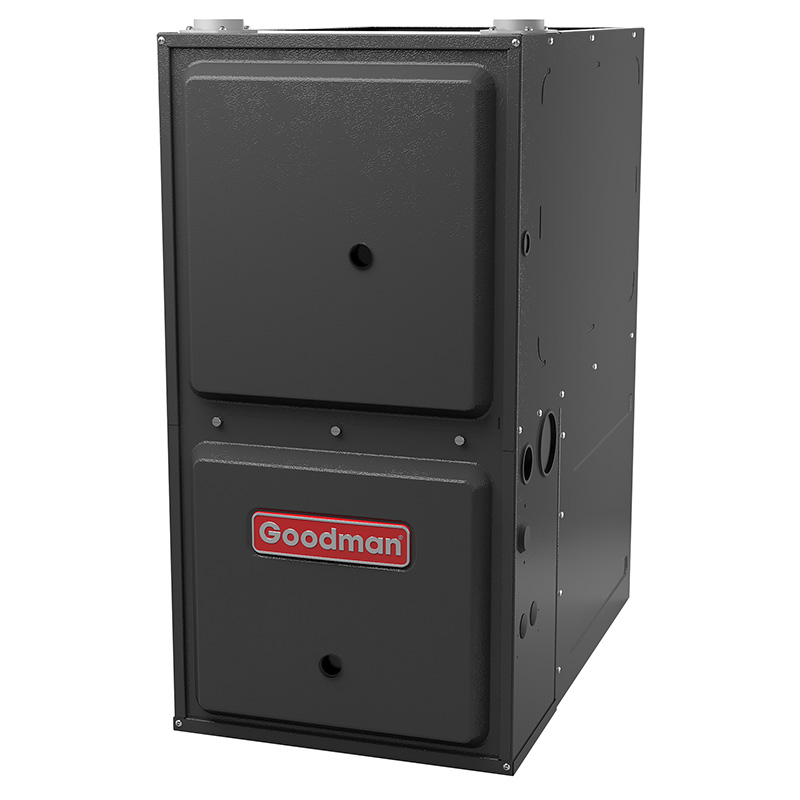
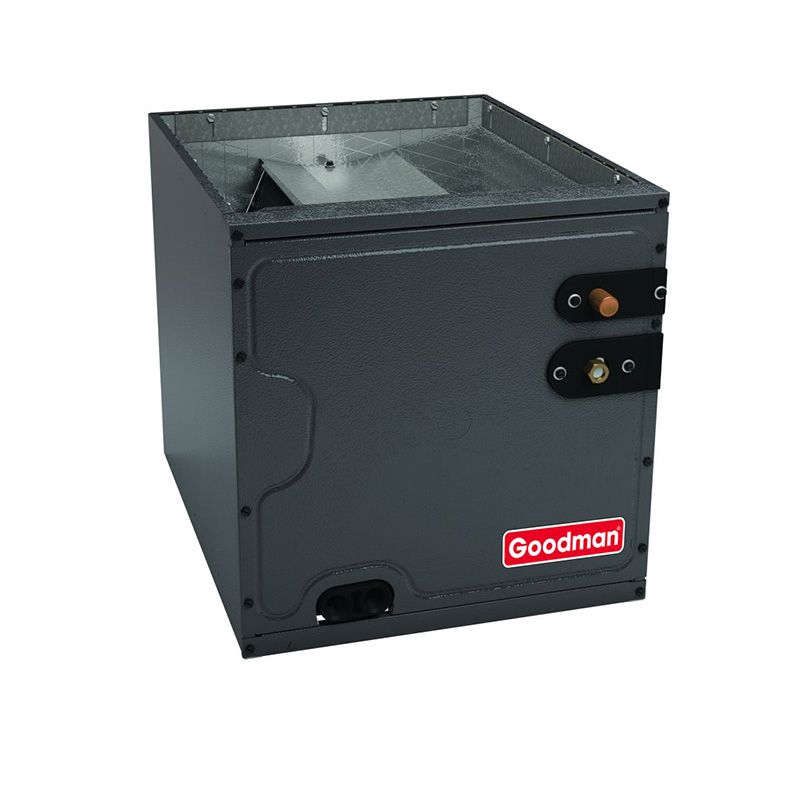
Goodman Furnace And Air Conditioner 3 Ton 15.5 SEER2 AC With 100000 BTU 80% AFUE Two Stage Multi-Speed ECM Gas Furnace System – Low NOX For California Downflow | R32
View on AC Direct see your lowest price →Check current price on AC Direct →
Key features
- 3-ton, 15.5 SEER2 air conditioner with R-32 refrigerant for California Low-GWP compliance
- 100,000 BTU two-stage gas furnace fires at partial capacity on mild days to reduce temperature swings
- 80% AFUE combustion efficiency meets federal minimum; heat goes into the home, not out the flue
- Multi-speed ECM blower motor cuts fan electricity draw compared to standard PSC motors
- Downflow cabinet design routes conditioned air downward, suited for crawlspace or under-floor duct systems
- Low NOx burner meets California Air Resources Board (CARB) emissions requirements out of the box
About this system
This Goodman bundle pairs a 3-ton, 15.5 SEER2 air conditioner with a 100,000 BTU, 80% AFUE two-stage gas furnace in a downflow configuration, making it a practical choice for homes where the air handler sits above a crawlspace or finished basement and supply air is routed downward. The R-32 refrigerant charge meets California’s lower-GWP requirements, and the Low NOx combustion design satisfies California Air Resources Board (CARB) rules, so this system ships ready for installation in most California counties without an aftermarket burner swap.
The two-stage furnace fires at a reduced capacity on mild days and steps up only when demand calls for it, which smooths out temperature swings and runs quieter than single-stage equipment. The multi-speed ECM blower motor draws significantly less electricity than a standard PSC motor, adding modest operating cost savings over the life of the system. At 15.5 SEER2 the air conditioner sits just above the federal minimum for most regions, so it is efficient enough to keep utility bills reasonable without carrying the price premium of a 17 or 18 SEER2 unit. Together, this bundle suits a homeowner replacing aging equipment in a 1,500 to 2,200 square foot California home who wants two-stage comfort and code compliance at a mid-range price point rather than top-tier features.
Because this is a downflow-only furnace, it cannot be flipped to upflow or horizontal without a separate cabinet. Buyers should confirm their duct configuration before ordering. Proper commissioning, including torque-checked refrigerant fittings and a verified R-32 charge, matters especially here: a meaningful share of early refrigerant leak reports across Goodman systems trace back to install or charge issues rather than factory defects.
This Goodman bundle delivers two-stage comfort and California code compliance at a price point noticeably below Carrier, Trane, and Lennox equivalents, making it a reasonable choice for budget-conscious buyers who secure a skilled installer. The trade-off is a brand track record that leans on installation quality and shows a higher-than-average rate of component issues after year seven, so long-term ownership cost is less predictable than with premium brands.
Overall score is the average of the five ratings above.
What we like
- Ships California-ready with Low NOx burner and R-32 refrigerant, avoiding costly field modifications
- Two-stage furnace and ECM blower improve comfort and reduce operating noise versus single-stage, PSC-motor alternatives
- Priced roughly 15 to 25 percent below comparable Trane, Lennox, and Carrier systems, lowering the upfront cost barrier
- R-32 refrigerant has a lower global warming potential than R-410A and is increasingly well-supported by California technicians
- Downflow configuration is a purpose-built fit for homes with under-floor duct systems, avoiding makeshift adapters
Trade-offs
- Dual-run capacitors are the most commonly reported failure point across Goodman equipment, typically surfacing within the first several years of use
- Evaporator coil leaks appear in a notable share of owner reviews, a risk worth factoring into maintenance budgeting
- Compressor lifespan averages 10 to 14 years based on documented owner experience, shorter than the 15 to 20 years seen in premium-brand equipment
- 80% AFUE is the federal floor for furnace efficiency; in colder California climates or homes with high heating loads, a 95%+ AFUE unit would recover more of the fuel cost over time
What homeowners and pros say about Goodman
Homeowners who chose Goodman equipment consistently point to upfront price as the deciding factor, and that sentiment tracks with Google dealer review scores hovering around 3.8 out of 5 across locations. Positive feedback clusters around the value proposition: buyers report getting two-stage and ECM-equipped systems for what single-stage budget competitors charge. Where satisfaction drops, the ConsumerAffairs score of roughly 2.5 out of 5 captures it bluntly. That channel draws disproportionately from frustrated owners, and the recurring complaint is repair costs that accelerate after roughly year seven, with dual-run capacitor failures cited most often as the first domino. Capacitor replacements are generally a 300 to 600 dollar fix, but their frequency across Goodman equipment makes a preventive replacement at the 5 to 6 year mark a reasonable budgeting move.
HVAC technicians who work on Goodman equipment regularly offer a more nuanced view. They note that the brand’s documented failure modes, including evaporator coil leaks that appear in a meaningful share of owner reviews and compressors that tend to reach end of life in the 10 to 14 year range rather than the 15 to 20 years seen in premium-brand equipment, are real but manageable when an owner goes in with realistic expectations. The technicians most critical of Goodman tend to be responding to systems that were installed carelessly, since the brand’s performance ceiling is closely tied to how well the system is commissioned. For a California buyer who needs Low NOx compliance, a downflow cabinet, and R-32 refrigerant without paying Carrier or Lennox prices, this bundle is a workable starting point paired with a service agreement and a maintenance fund.
Sources: ConsumerAffairs Goodman owner reviews, AHRI Directory of Certified Product Performance, U.S. DOE appliance and equipment efficiency standards, Goodman product specification sheets.
What it costs to run
At 15.5 SEER2, cooling this 3-ton system for a typical 1200-hour cooling season at the U.S. average electricity rate of $0.17/kWh works out to roughly $474 per year in cooling, about $74 less per year than a minimum-efficiency 13.4 SEER2 unit of the same size. Your real cost depends on your climate and local rate.
Method: (36,000 BTU/hr ÷ 15.5 SEER2) × 1200 hours ÷ 1000 × $0.17/kWh. Rate source: U.S. EIA average; cooling hours: moderate-climate estimate.
How it compares
| Brand | Comparable model | SEER2 | Stage | Price position |
|---|---|---|---|---|
| Goodman | 3-Ton 15.5 SEER2 AC / 100K BTU 80% AFUE Two-Stage ECM Furnace (this system) | 15.5 | Two-stage | Value pick |
| Carrier | Performance 16 / 58TP (two-stage furnace bundle) | 16 | Two-stage | Moderately higher than this system, typically 15 to 20 percent more installed |
| Trane | XR15 / S9V2 (two-stage furnace bundle) | 15.5 | Two-stage | Higher than this system, typically 20 to 25 percent more installed |
| Lennox | Merit 16ACX / ML196 (two-stage furnace bundle) | 16 | Two-stage | Higher than this system, typically 20 to 25 percent more installed |
Competitor rows are comparable single-stage units at similar efficiency; price is relative position, not a quote.
Questions about this system
Is this system actually legal to install in California without any modifications?
Yes, for most California counties. The furnace carries a Low NOx rating that meets CARB requirements, and the air conditioner uses R-32 refrigerant rather than R-410A. Always confirm with your local air quality management district, as a small number of districts have stricter rules than the state baseline.
Can this downflow furnace be converted to upflow if I change my mind later?
No. This cabinet is designed exclusively for downflow installations. If your duct system routes air upward from the air handler, you need a different cabinet orientation. Confirm your configuration before purchasing.
What does R-32 refrigerant mean for maintenance and repairs going forward?
R-32 has a lower global warming potential than R-410A and is increasingly stocked by California HVAC distributors, so recharges and leak repairs should not be difficult to source. Technicians working on R-32 systems do need specific recovery equipment and training, so confirm your installer is equipped for it before scheduling.
Goodman's ConsumerAffairs score is low. Should I be worried?
ConsumerAffairs rates Goodman at roughly 2.5 out of 5, but that channel is heavily skewed toward dissatisfied owners, so the number overstates failure risk for the average buyer. Google dealer reviews sit around 3.8 out of 5, and the most consistent praise is affordability. The honest picture is that Goodman performs adequately when installed correctly but has documented higher rates of capacitor failure, coil leaks, and shorter compressor lifespan than premium brands, so budget for a service agreement or maintenance reserve.
How does 80% AFUE affect my heating bills compared to a higher-efficiency furnace?
At 80% AFUE, 20 cents of every dollar spent on gas exits through the flue rather than heating the home. A 95% AFUE furnace wastes only 5 cents per dollar, so in a home with significant heating loads the higher-efficiency unit closes the price gap over several years. For homes in mild coastal California climates where the furnace runs relatively few hours per year, the payback period on a 95% unit is long enough that 80% AFUE remains a defensible choice.
Specifications
| Cooling capacity | 3 Ton |
| Efficiency | 15.5 SEER2 |
| Furnace output | 100000 BTU |
| Furnace efficiency | 80% AFUE |
| Configuration | Downflow |
| Refrigerant | R-32 |