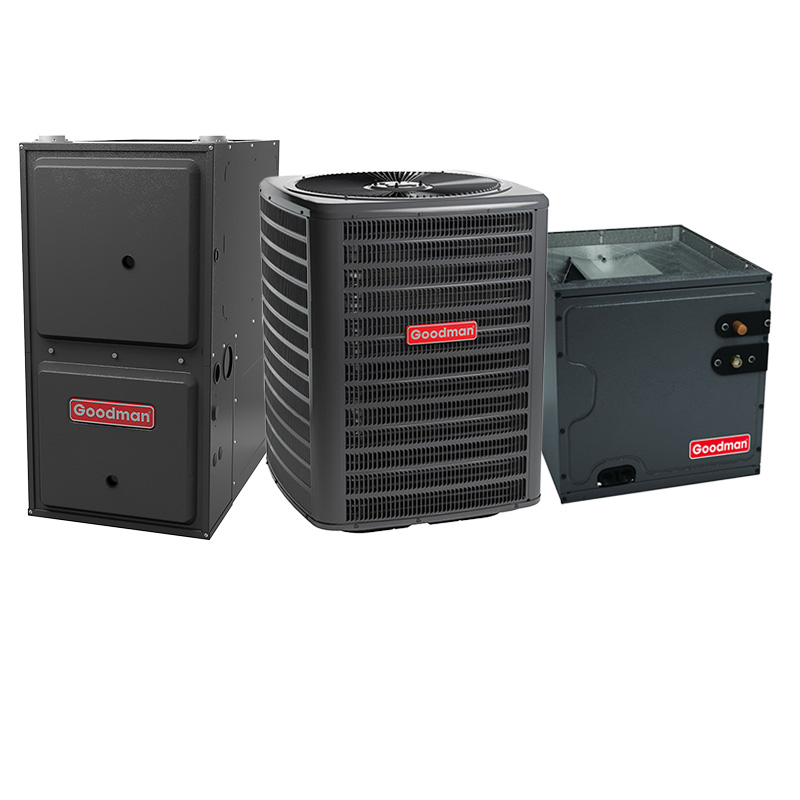
Goodman Furnace And AC – 3 Ton 14.5 SEER2 AC With 60000 BTU 96% AFUE Two Stage Multi-Speed ECM Gas Furnace System – Downflow | R32
View on AC Direct see your lowest price →Check current price on AC Direct →
Key features
- 3-ton cooling capacity with 14.5 SEER2 efficiency rating
- 60,000 BTU two-stage gas furnace at 96% AFUE
- ECM variable-speed blower motor for quieter, more efficient airflow
- Downflow configuration designed for floor-discharge duct systems
- R-32 refrigerant with lower global-warming potential than R-410A
- Two-stage heating reduces short-cycling and improves comfort on mild days
About this system
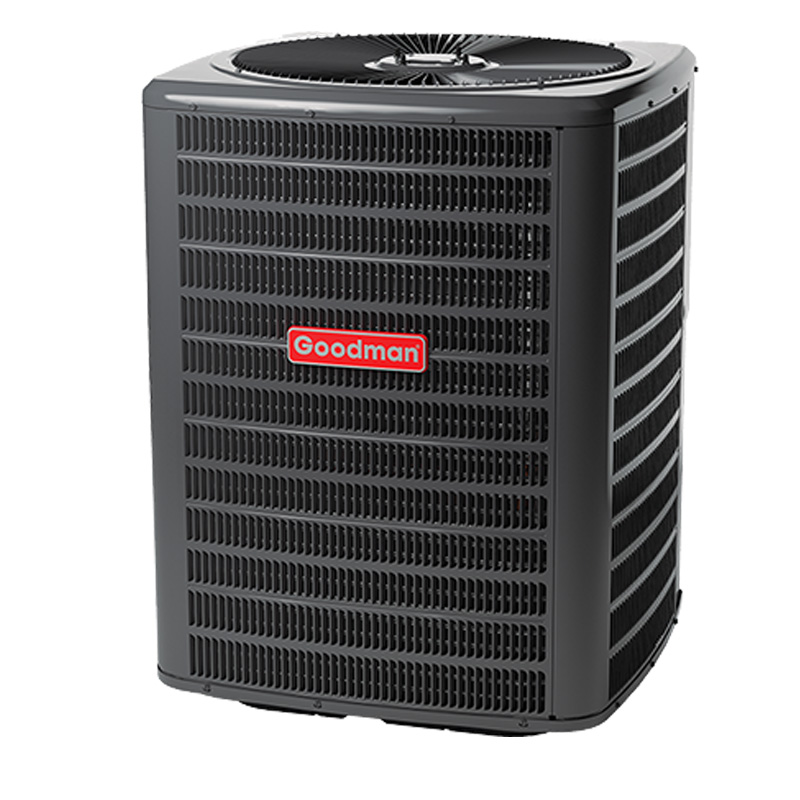
This Goodman bundle pairs a 3-ton, 14.5 SEER2 central air conditioner with a 60,000 BTU, 96% AFUE two-stage gas furnace in a downflow configuration, meaning the furnace discharges conditioned air downward through floor-level ductwork. That orientation suits ranch-style homes, manufactured housing, and basements where the duct trunk runs beneath the unit. The air conditioner uses R-32 refrigerant, a lower global-warming-potential alternative to R-410A that is increasingly common as the industry phases out older blends. At 14.5 SEER2, efficiency sits at the entry-level of current federal minimums for most U.S. climate regions, so operating costs will be moderate rather than exceptional, but the system clears the regulatory bar without overpaying for efficiency tiers most homeowners never fully recoup.
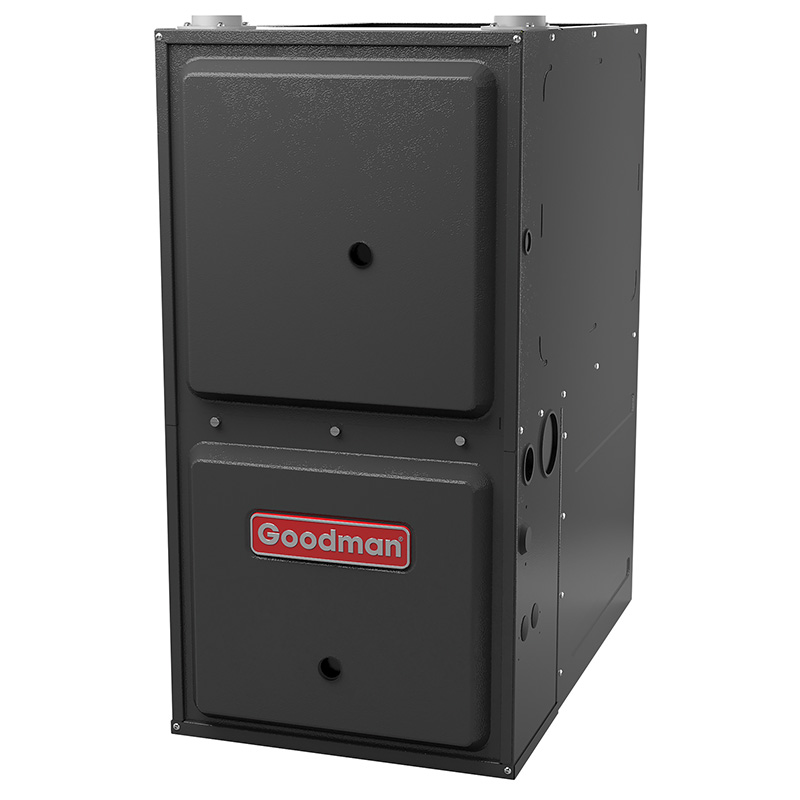
The furnace side is where this package earns its keep. A 96% AFUE rating means only four cents of every fuel dollar escapes as waste heat, which is solidly in condensing-furnace territory. Two-stage operation lets the burner run at a lower capacity on mild days, reducing short-cycling, improving humidity control, and cutting wear on heat exchangers. The ECM (electronically commutated motor) blower adds further efficiency by drawing significantly less electricity than a standard PSC motor and moving air more quietly at lower speeds. Together, those furnace features meaningfully offset the baseline air-conditioning efficiency rating when you consider year-round energy use.
This system is best suited to cost-conscious homeowners replacing aging equipment in a home with existing downflow ductwork, who want a meaningful furnace upgrade without reaching into premium-brand price territory. It is not the right fit for buyers who prioritize the longest possible compressor life or who want hands-off ownership for 20-plus years without the possibility of mid-decade repairs.
This Goodman system offers a genuinely capable furnace with honest mid-tier cooling efficiency at a price point 15 to 25 percent below Trane, Lennox, and Carrier equivalents. The two-stage, 96% AFUE furnace with an ECM motor is a real value for the money; the air conditioner is functional but not exceptional in efficiency or expected longevity. Buyers who get a quality installation and budget for a capacitor or coil repair around year seven to ten will likely find the total cost of ownership reasonable.
Overall score is the average of the five ratings above.
What we like
- 96% AFUE two-stage furnace delivers strong heating efficiency relative to price
- ECM blower lowers electricity use and reduces operating noise compared to PSC motors
- R-32 refrigerant is forward-compatible as older refrigerants continue to be regulated out
- Priced 15 to 25 percent below comparable Carrier, Trane, and Lennox systems
- Downflow orientation is a practical match for homes where upflow or horizontal layouts are not possible
Trade-offs
- Compressor lifespan averages 10 to 14 years, shorter than the 15 to 20 years typical of premium brands
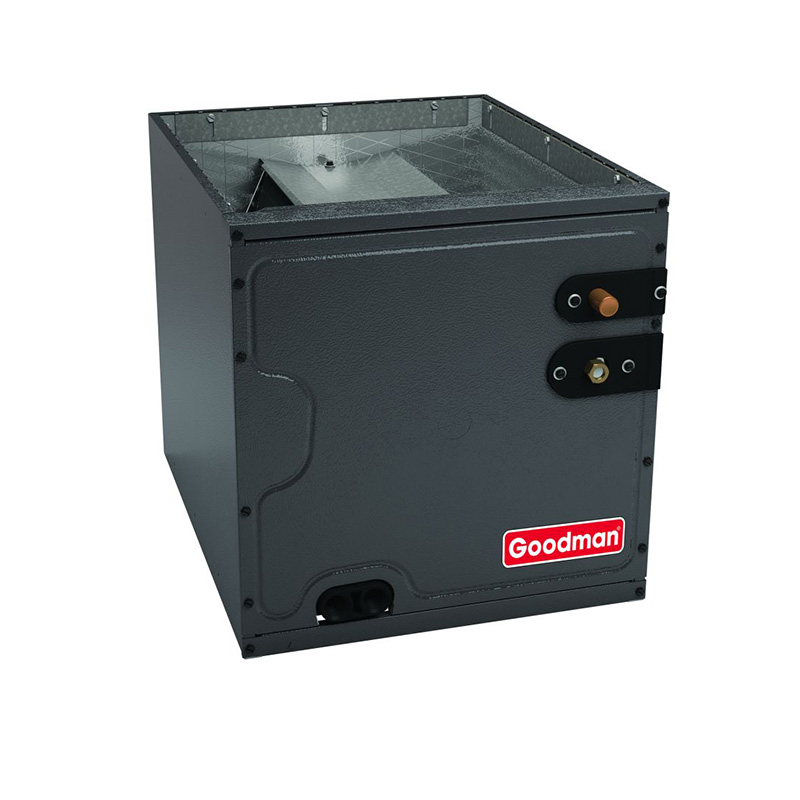
- Evaporator coil leaks appear in a notable share of owner reports and can be a costly mid-life repair
- Dual-run capacitor failures are the most frequently reported issue, usually surfacing after year five or six
- 14.5 SEER2 is entry-level efficiency; higher-SEER2 options exist at moderate price premiums if long-term utility savings are a priority
What homeowners and pros say about Goodman
Homeowners who share their experiences with Goodman equipment online tend to cluster at the extremes. On ConsumerAffairs, where the platform skews toward people motivated to report problems, Goodman averages roughly 2.5 out of 5 stars, and the recurring complaint in those reviews is repair costs that start climbing around year seven. The specific failure modes technicians and owners cite most are dual-run capacitor failures, which are common across many brands but show up frequently in Goodman threads, and evaporator coil leaks, which can turn into a several-hundred-dollar to over-a-thousand-dollar repair depending on whether the coil needs replacement. Compressor longevity is another honest concern: Goodman compressors tend to average 10 to 14 years, versus the 15 to 20 years owners of Trane and Carrier equipment often report. A minority of early owners also describe refrigerant leaks in the first year, though technicians generally attribute those to installation errors rather than factory defects.
The more balanced picture shows up in Google reviews of Goodman dealers, where the average hovers around 3.8 out of 5 across locations, and the most common thread of praise is straightforward: the price. For a homeowner who gets a careful installation from a qualified contractor, the combination of a 96% AFUE two-stage furnace and an ECM blower at a price 15 to 25 percent below premium brands is genuinely competitive. HVAC pros who speak positively about Goodman tend to say the same thing: the equipment is adequate when it is installed correctly, and the savings versus a premium brand can absorb a capacitor replacement and still come out ahead over a ten-year horizon. Those who are more critical point out that Goodman’s quality control is less consistent than Trane or Carrier, and that the lower initial cost can erode if the coil or compressor fails before the equipment should reasonably need replacement.
Sources: ConsumerAffairs Goodman owner reviews, AHRI Directory of Certified Product Performance, U.S. DOE appliance and equipment efficiency standards, Goodman product specification sheets.
What it costs to run
At 14.5 SEER2, cooling this 3-ton system for a typical 1200-hour cooling season at the U.S. average electricity rate of $0.17/kWh works out to roughly $506 per year in cooling, about $42 less per year than a minimum-efficiency 13.4 SEER2 unit of the same size. Your real cost depends on your climate and local rate.
Method: (36,000 BTU/hr ÷ 14.5 SEER2) × 1200 hours ÷ 1000 × $0.17/kWh. Rate source: U.S. EIA average; cooling hours: moderate-climate estimate.
How it compares
| Brand | Comparable model | SEER2 | Stage | Price position |
|---|---|---|---|---|
| Goodman | GSXH503610 + GCVC960603BN (this system) | 14.5 | Two-stage | Value pick |
| Carrier | Comfort 14 (24ACC636) + 58STA060 | 14.3 | Single-stage | Priced roughly 20 percent higher than this Goodman bundle |
| Trane | XR14s (4TTR4036) + S9X2 two-stage furnace | 14.3 | Two-stage | Priced roughly 20 to 25 percent higher than this Goodman bundle |
| Lennox | Merit 14ACX + ML196E two-stage furnace | 14.3 | Two-stage | Priced roughly 15 to 20 percent higher than this Goodman bundle |
Competitor rows are comparable single-stage units at similar efficiency; price is relative position, not a quote.
Questions about this system
Why does this system use a downflow configuration and will it work with my house?
Downflow furnaces discharge air through the bottom and pull return air in from the top, which suits homes where ductwork runs under the unit through a floor or platform rather than through an attic or overhead trunk. If your existing furnace is a downflow model, this is a direct swap; if your ductwork is configured for upflow or horizontal airflow, you would need a different cabinet orientation.
Is R-32 refrigerant harder to service than R-410A?
R-32 is mildly flammable, which means technicians need specific certification and handling procedures, but it is not unusually difficult to find or service in most metro areas. As R-410A is phased down under current regulations, R-32 and similar lower-GWP alternatives are becoming the industry standard, so service availability is expected to improve over time rather than shrink.
What is the most likely repair I should budget for over the first ten years?
The dual-run capacitor is the most commonly reported Goodman failure point and is typically a straightforward repair in the $300 to $600 range. Evaporator coil leaks are a more serious documented issue that can cost significantly more to address, so keeping the unit on a maintenance plan and catching refrigerant loss early is worth the annual fee.
Does the two-stage furnace actually make a noticeable comfort difference?
Yes, particularly during shoulder-season weather. Running at the lower stage on moderate days reduces the on-off cycling that causes temperature swings, and the ECM motor adjusts airflow speed accordingly, which also helps with humidity control. Most homeowners in climates with long mild spells notice fewer hot and cold spots compared to a single-stage system.
How important is installer quality for a Goodman system specifically?
Very important, and this is consistently emphasized by HVAC technicians. Refrigerant charge errors, duct leaks, and improper condensate drainage are among the most common causes of first-year problems, including the refrigerant leaks reported by a minority of early owners. Choosing a licensed contractor who performs a full Manual J load calculation and pressure-tests the refrigerant circuit before commissioning is not optional if you want the warranty and the hardware to perform as specified.
Specifications
| Cooling capacity | 3 Ton |
| Efficiency | 14.5 SEER2 |
| Furnace output | 60000 BTU |
| Furnace efficiency | 96% AFUE |
| Configuration | Downflow |
| Refrigerant | R-32 |