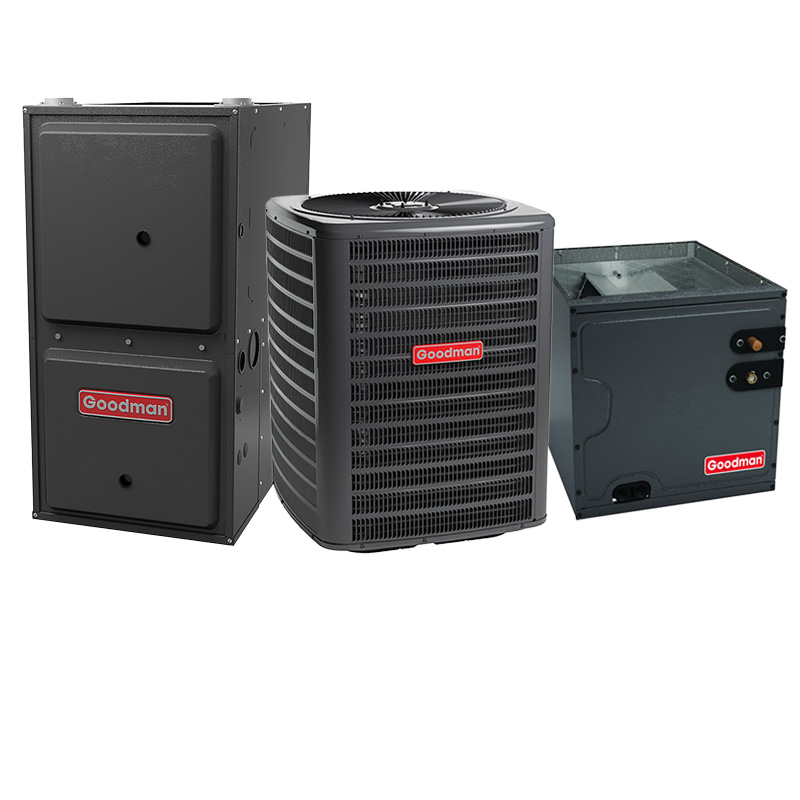
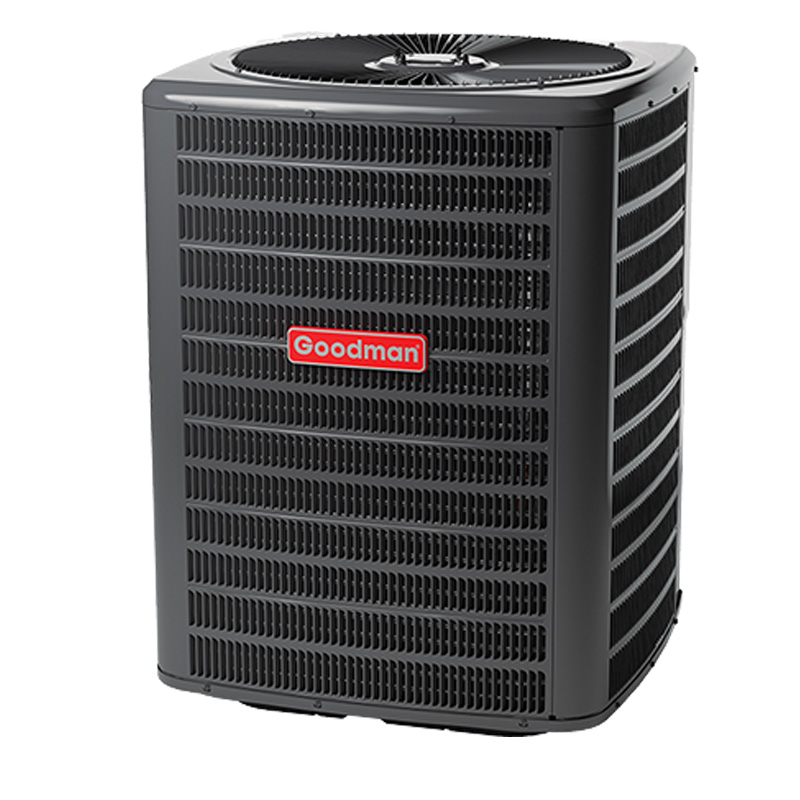
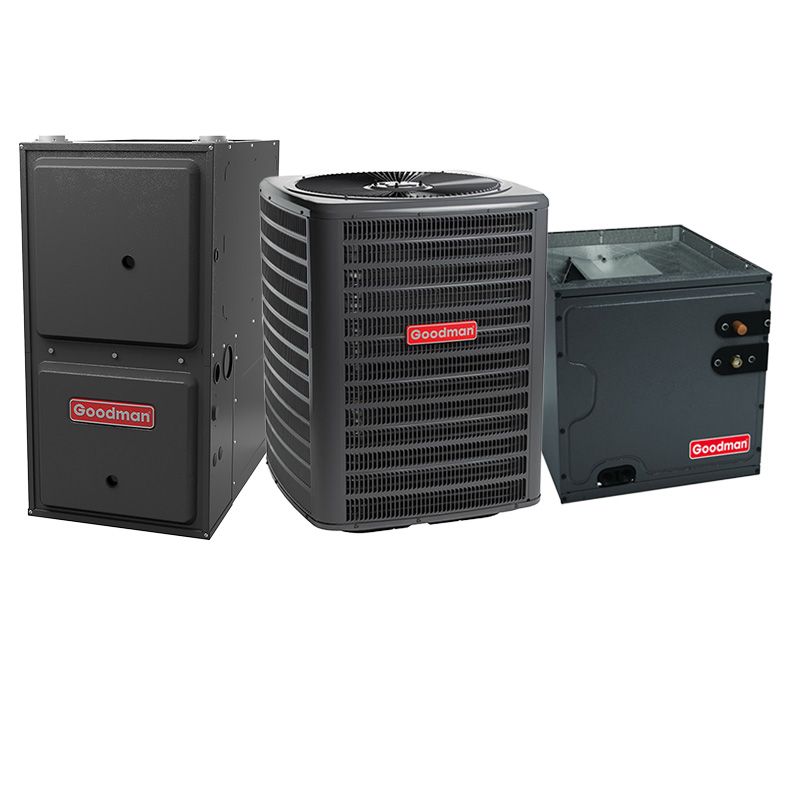
Goodman Furnace And Air Conditioner 3 Ton 14.5 SEER2 AC With 60000 BTU 96% AFUE Multi-Speed ECM Gas Furnace System – Downflow | R32
View on AC Direct see your lowest price →Check current price on AC Direct →
Key features
- 3-ton cooling capacity rated at 14.5 SEER2 for baseline efficiency compliance
- 60,000 BTU gas furnace at 96% AFUE for high-efficiency heating
- Multi-speed ECM blower motor for quieter, more even airflow
- Downflow configuration designed for closet or main-floor air handler placement
- R-32 refrigerant with lower global-warming potential than R-410A
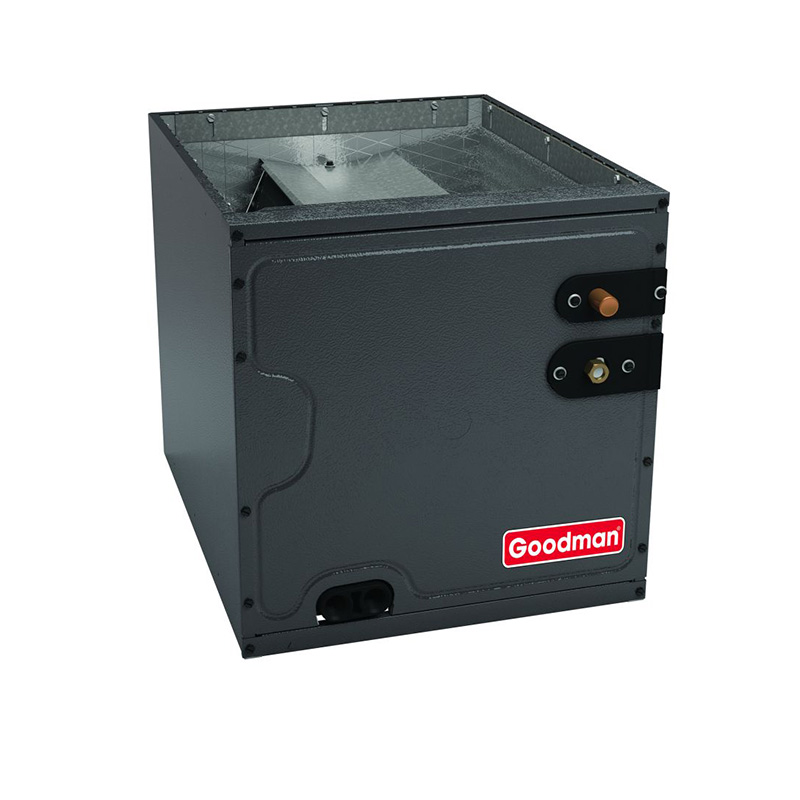
- Factory-matched system simplifies coil compatibility and equipment sizing
About this system
This Goodman bundle pairs a 3-ton, 14.5 SEER2 central air conditioner with a 60,000 BTU, 96% AFUE multi-speed ECM gas furnace in a downflow configuration, making it a strong candidate for homes where the air handler sits in a closet or utility space on the main floor and conditions flow downward into the duct system below. The R-32 refrigerant charge is a forward-looking choice: R-32 has a lower global-warming potential than the older R-410A it is replacing across the industry, and future refrigerant availability should remain solid. At 14.5 SEER2, this system just clears the federal minimum efficiency threshold for most U.S. climate zones, which keeps up-front costs reasonable without chasing peak efficiency numbers.
The 96% AFUE rating is where this system earns its keep on the heating side. Only 4 cents of every dollar spent on gas escapes as waste heat, which puts this furnace firmly in the high-efficiency category. The multi-speed ECM blower motor is a meaningful upgrade over single-speed PSC motors: it ramps airflow to match demand, which means quieter operation, more even temperatures throughout the house, and better humidity control in cooling mode. This package suits homeowners who want to avoid the higher price of a modulating or variable-capacity system while still getting noticeably better comfort than a basic single-speed unit.
This Goodman system delivers solid specs at a price point 15 to 25 percent below comparable Carrier, Trane, and Lennox packages, and the 96% AFUE furnace with an ECM motor offers genuine comfort advantages over entry-level alternatives. The trade-off is a brand track record that shows more component failures past year seven than premium competitors, and long-term satisfaction leans heavily on the quality of the installation and the caliber of service available in your area.
Overall score is the average of the five ratings above.
What we like
- Factory-matched bundle simplifies installation and coil compatibility
- 96% AFUE furnace keeps annual gas bills lower than 80% or 90% AFUE alternatives
- Multi-speed ECM motor improves comfort and humidity control versus single-speed units
- R-32 refrigerant is a future-ready, lower-GWP choice as R-410A is phased out
- Significantly lower purchase price than equivalent Trane, Lennox, or Carrier systems
Trade-offs
- Dual-run capacitors are the most commonly reported failure point, typically surfacing within 5 to 8 years
- Evaporator coil leaks appear in a meaningful share of owner reports, which can be costly to address
- Compressor lifespan averages 10 to 14 years versus 15 to 20 years for premium-brand compressors
- A minority of owners report refrigerant leaks within the first year, usually tied to install or charge issues
What homeowners and pros say about Goodman
Homeowners who choose Goodman generally do so because the savings at purchase are real and substantial. On Google dealer review aggregates, Goodman installations average around 3.8 out of 5, where affordability and the straightforward installation experience draw the most consistent praise. The picture is less flattering on ConsumerAffairs, where Goodman sits at roughly 2.5 out of 5, and that channel skews toward people motivated to complain. The recurring theme in those negative reviews is repair costs that start climbing around year seven, which aligns with what HVAC technicians report anecdotally: the equipment often runs fine in the early years, but component quality means more service calls as the system ages.
The specific failure modes worth knowing before you buy: dual-run capacitors are the most frequently replaced part, and while the fix is quick and relatively low cost at 300 to 600 dollars, it does tend to repeat. Evaporator coil leaks show up in a meaningful portion of owner reports and are a more expensive repair. Compressors on Goodman units average 10 to 14 years of service life, which is a real gap compared to the 15 to 20 years technicians commonly see from Trane, Carrier, and Lennox compressors. A smaller group of owners reports refrigerant leaks within the first year, which experienced installers say usually points to a charge or connection issue at installation rather than a product defect. The honest conclusion most pros reach is that Goodman is not a bad choice, but it rewards buyers who invest in a skilled installer upfront and stay on top of annual maintenance.
Sources: ConsumerAffairs Goodman owner reviews, AHRI Directory of Certified Product Performance, U.S. DOE appliance and equipment efficiency standards, Goodman product specification sheets.
What it costs to run
At 14.5 SEER2, cooling this 3-ton system for a typical 1200-hour cooling season at the U.S. average electricity rate of $0.17/kWh works out to roughly $506 per year in cooling, about $42 less per year than a minimum-efficiency 13.4 SEER2 unit of the same size. Your real cost depends on your climate and local rate.
Method: (36,000 BTU/hr ÷ 14.5 SEER2) × 1200 hours ÷ 1000 × $0.17/kWh. Rate source: U.S. EIA average; cooling hours: moderate-climate estimate.
How it compares
| Brand | Comparable model | SEER2 | Stage | Price position |
|---|---|---|---|---|
| Goodman | GSXH503610 + GCVC960603BX (this system) | 14.5 | Single-stage AC / Multi-speed furnace | Value pick |
| Carrier | Comfort 14 (24ACC636) with 58MVC furnace | 14.3-14.5 | Single-stage | 15 to 25 percent higher than this system |
| Trane | XR14c with S9V2 furnace | 14.3-15.0 | Single-stage | 20 to 30 percent higher than this system |
| Lennox | Merit 14ACX with ML96V furnace | 14.3-15.0 | Single-stage | 20 to 30 percent higher than this system |
Competitor rows are comparable single-stage units at similar efficiency; price is relative position, not a quote.
Questions about this system
Can I install this system myself, or does it require a licensed HVAC contractor?
A licensed HVAC contractor is required in virtually every U.S. jurisdiction to handle refrigerant and make gas connections legally. Beyond licensing, Goodman's performance and warranty are heavily dependent on correct installation, so this is not a DIY project. Poor installation is the most commonly cited reason for early failures in Goodman systems.
Is the downflow configuration compatible with my existing ductwork?
Downflow systems are designed for applications where the air handler is mounted upright and supply air exits from the bottom into a plenum or floor duct system below. If your existing setup has the ductwork running up from the ceiling or out the sides, this configuration will not fit without significant duct modification. Confirm your existing plenum orientation with your installer before ordering.
What does the Goodman warranty cover on this bundle, and are there conditions I need to meet?
Goodman typically offers a 10-year parts warranty when the equipment is registered within 60 days of installation by a licensed contractor. Failure to register usually drops coverage to five years. The warranty covers parts but not labor, so a service call on a covered part can still cost you the technician's time.
How much should I budget for likely repairs over the first 10 years?
The most common repair on Goodman equipment is the dual-run capacitor, a relatively inexpensive fix typically running between 300 and 600 dollars including labor. Evaporator coil leaks are more expensive and show up in a meaningful share of owner reports. Setting aside 500 to 1,500 dollars over the first decade for incidental repairs is a reasonable planning figure, though actual costs vary widely by region and contractor.
Why does this system use R-32 refrigerant instead of R-410A, and does that affect servicing?
R-32 has a significantly lower global-warming potential than R-410A and is being adopted across the HVAC industry as manufacturers phase out R-410A under updated environmental regulations. Servicing R-32 systems requires a technician with the appropriate certification and recovery equipment, so confirm that your local service contractors are equipped to handle it before purchasing.
Specifications
| Cooling capacity | 3 Ton |
| Efficiency | 14.5 SEER2 |
| Furnace output | 60000 BTU |
| Furnace efficiency | 96% AFUE |
| Configuration | Downflow |
| Refrigerant | R-32 |