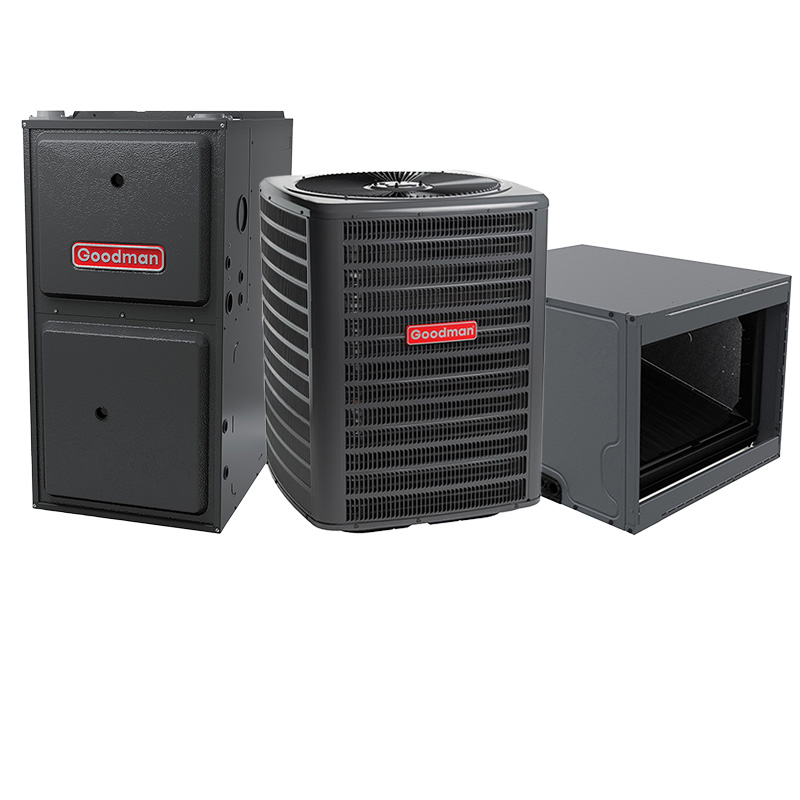
Goodman Air Conditioning And Heating – 4 Ton 15.2 SEER2 AC With 120000 BTU 96% AFUE Two Stage Multi-Speed ECM Gas Furnace System – Horizontal | R32
View on AC Direct see your lowest price →Check current price on AC Direct →
Key features
- 4-ton, 15.2 SEER2 cooling efficiency meets current federal minimums with modest headroom
- 96% AFUE two-stage gas furnace reduces fuel waste to 4% per heating cycle
- Multi-speed ECM blower motor improves comfort and dehumidification vs. single-speed PSC motors
- Horizontal configuration designed for attic, crawl-space, or closet installs with limited vertical space
- R-32 refrigerant offers lower global warming potential than legacy R-410A
- Two-stage gas valve reduces short-cycling, evening out temperatures on shoulder-season days
About this system
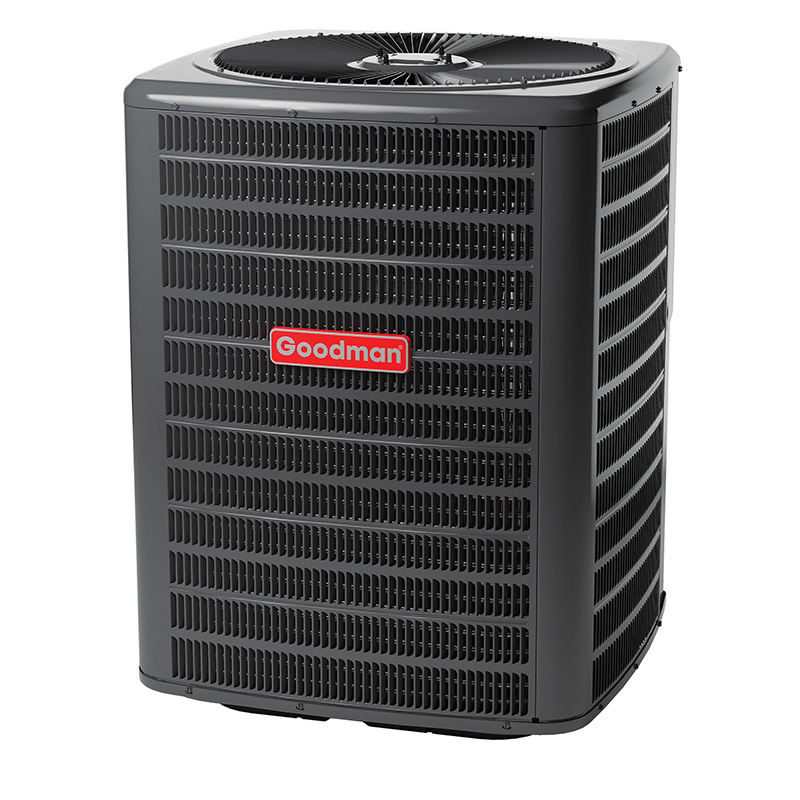
This Goodman bundle pairs a 4-ton, 15.2 SEER2 air conditioner with a 120,000 BTU, 96% AFUE two-stage gas furnace in a horizontal configuration, making it a practical choice for homes with attic or crawl-space installations where vertical clearance is limited. The R-32 refrigerant charge is a forward-looking detail: R-32 has a lower global warming potential than the R-410A it replaces, and it is expected to remain the dominant refrigerant as regulatory pressure on older blends continues to increase.
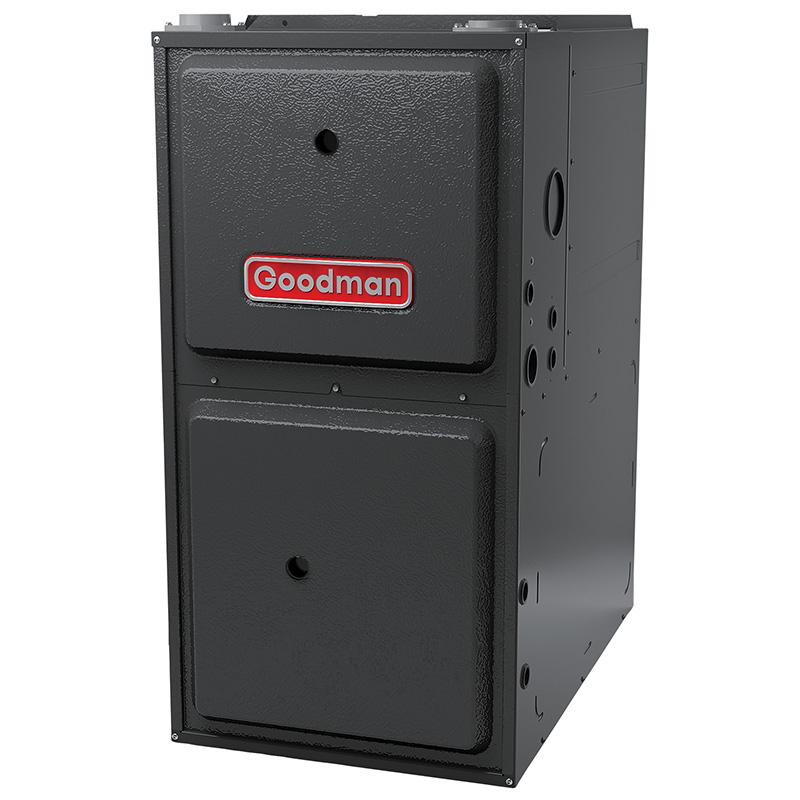
The furnace side of this system earns its keep on paper. A 96% AFUE rating means only 4 cents of every fuel dollar escapes as exhaust, which is solidly in the high-efficiency tier and will noticeably reduce heating bills compared with an 80% AFUE unit. Two-stage gas operation lets the furnace run at a lower flame on mild days rather than cycling on and off at full blast, which smooths temperature swings and reduces short-cycling wear. The multi-speed ECM blower motor adjusts airflow continuously, a meaningful comfort upgrade over PSC motors and one that also helps keep humidity in check when the system is cooling.
At 4 tons and 120,000 BTU, this is sized for larger homes, typically in the 2,000 to 2,600 square foot range depending on climate zone, insulation, and window load. Buyers should confirm sizing with a Manual J calculation before purchasing; oversizing a two-stage system wastes much of the efficiency benefit that staging provides. The horizontal configuration limits install locations compared with an upflow or downflow unit, so confirm your air handler space before ordering.
This Goodman system delivers genuinely high-efficiency heating paired with code-compliant cooling at a price point that typically undercuts Carrier, Trane, and Lennox by 15 to 25 percent for comparable specs. The two-stage furnace and ECM blower are real comfort upgrades that justify the bundle, but long-term reliability depends heavily on install quality and a willingness to budget for likely capacitor and possible coil service after year seven.
Overall score is the average of the five ratings above.
What we like
- 96% AFUE furnace is a high-efficiency rating that meaningfully cuts winter gas bills
- Two-stage gas operation smooths temperature swings and reduces short-cycling wear on components
- ECM multi-speed blower improves humidity control and runs quieter than single-speed alternatives
- R-32 refrigerant is the current industry direction, avoiding near-term refrigerant obsolescence issues
- Priced 15 to 25 percent below comparable Trane, Carrier, and Lennox bundles for meaningful upfront savings
Trade-offs
- Compressor lifespan averages 10 to 14 years versus 15 to 20 years reported for premium brand competitors
- Dual-run capacitors are the most frequently reported failure point, typically starting after year 7
- Evaporator coil leaks appear in a meaningful share of owner reports, a repair that can run into the hundreds
- Horizontal-only configuration limits installation locations and can complicate service access compared with upflow units
What homeowners and pros say about Goodman
On Google dealer reviews, Goodman equipment averages around 3.8 out of 5 stars, with affordability consistently cited as the reason buyers chose the brand. That score reflects customers who got a working system installed correctly and are satisfied with the value. The picture shifts on ConsumerAffairs, where Goodman sits at roughly 2.5 out of 5, a platform that skews toward people motivated enough by frustration to write a review. The recurring pattern there is repair costs climbing after year seven, which lines up with the documented failure modes: dual-run capacitors are the most frequently reported breakdown, usually a straightforward fix in the 300 to 600 dollar range, but evaporator coil leaks also surface in a notable share of owner accounts and carry a higher repair tab. For this specific two-stage, high-efficiency bundle, those failure modes are relevant because the ECM motor and multi-speed controls add complexity compared with a basic single-stage system.
HVAC technicians who work on Goodman equipment regularly tend to share a consistent view: the equipment is acceptable for the price, but how long it lasts tracks closely with how carefully it was installed and commissioned. Refrigerant charge accuracy matters especially with R-32, and a sloppy line set connection is cited as the most common source of first-year refrigerant leaks, which a minority of owners report. The compressor lifespan question is real: documented averages of 10 to 14 years compare unfavorably with the 15 to 20 years commonly cited for Trane, Carrier, and Lennox compressors, meaning buyers who plan to stay in a home for 15-plus years should factor potential compressor replacement into their total cost of ownership math before the upfront price difference looks as compelling.
Sources: ConsumerAffairs Goodman owner reviews, AHRI Directory of Certified Product Performance, U.S. DOE appliance and equipment efficiency standards, Goodman product specification sheets.
What it costs to run
At 15.2 SEER2, cooling this 4-ton system for a typical 1200-hour cooling season at the U.S. average electricity rate of $0.17/kWh works out to roughly $644 per year in cooling, about $87 less per year than a minimum-efficiency 13.4 SEER2 unit of the same size. Your real cost depends on your climate and local rate.
Method: (48,000 BTU/hr ÷ 15.2 SEER2) × 1200 hours ÷ 1000 × $0.17/kWh. Rate source: U.S. EIA average; cooling hours: moderate-climate estimate.
How it compares
| Brand | Comparable model | SEER2 | Stage | Price position |
|---|---|---|---|---|
| Goodman | GSZTO-4 with GMVM971204DN (this system) | 15.2 | two-stage | Value pick |
| Carrier | Performance 16 (24ACC6) with 58TP 96% furnace | 16 | two-stage | Typically 20 to 25 percent above this Goodman bundle |
| Trane | XR15 (4TTR5) with S9V2 96% furnace | 15.2 to 16 | two-stage | Typically 20 to 25 percent above this Goodman bundle |
| Lennox | Merit 16ACX with ML196 96% furnace | 16 | two-stage | Typically 15 to 20 percent above this Goodman bundle |
Competitor rows are comparable single-stage units at similar efficiency; price is relative position, not a quote.
Questions about this system
What does horizontal configuration mean, and will it work in my home?
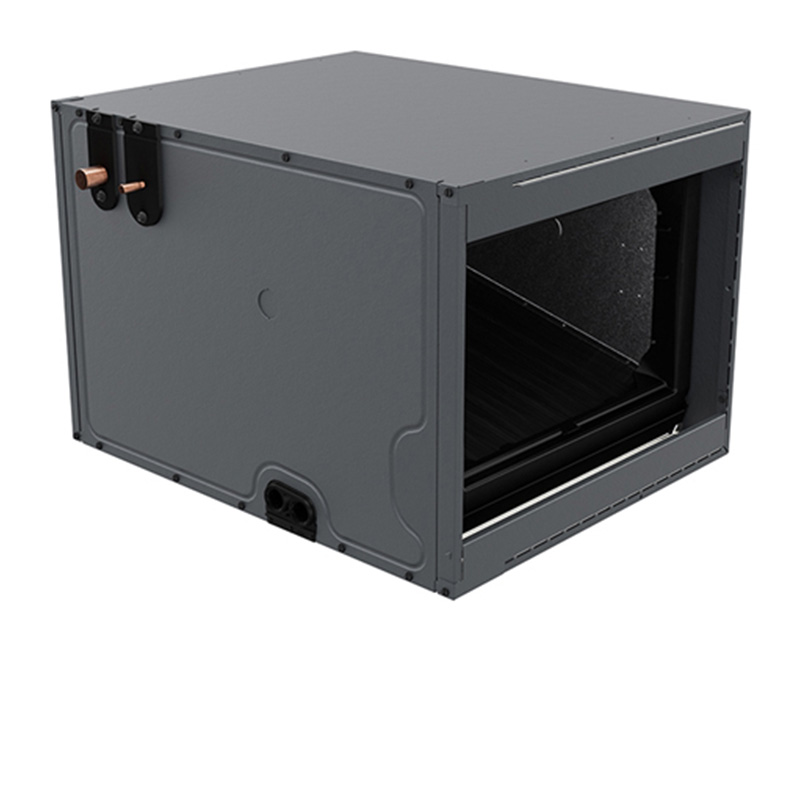
Horizontal means the air handler lies on its side and discharges air horizontally rather than upward or downward. This suits attic platforms, crawl-spaces, and some closet installs but will not work as a drop-in replacement for upflow or downflow furnaces without significant ductwork modification. Confirm your existing air handler orientation before purchasing.
Is R-32 refrigerant harder to service than R-410A?
R-32 requires technicians who are certified to handle mildly flammable refrigerants, and not every HVAC company has that certification yet. In most metro areas it is available, but in rural markets you should confirm your local service contractors are equipped for R-32 before buying. The refrigerant itself is not more expensive than R-410A.
What is the warranty on this Goodman system?
Goodman typically offers a 10-year parts limited warranty when the unit is registered within 60 days of installation by a licensed contractor, plus a lifetime heat exchanger limited warranty on qualifying furnaces. Failure to register often reduces coverage to 5 years, so registration immediately after install is important. Verify current warranty terms on Goodman's site at time of purchase, as coverage details can change.
The furnace is 120,000 BTU. Is that too large for a typical 4-ton cooling system?
Not necessarily. Heating loads in colder climates often exceed what cooling load alone would suggest, and a 120,000 BTU two-stage furnace running at its lower stage behaves like a smaller unit most of the time. That said, an oversized furnace in a mild-climate home will short-cycle even in two-stage mode, so a Manual J load calculation is the only way to confirm this bundle is correctly sized for your specific house.
How likely are the documented failure modes, and should I buy an extended warranty?
Dual-run capacitor failures are the most consistently reported issue and are relatively inexpensive to fix, typically in the 300 to 600 dollar range, but they often start appearing after year 7. Evaporator coil leaks are reported by a meaningful share of owners and cost considerably more. Given the documented compressor lifespan of 10 to 14 years versus 15 to 20 for premium brands, an extended labor warranty from a reputable local contractor can make financial sense if you plan to stay in the home long-term.
Specifications
| Cooling capacity | 4 Ton |
| Efficiency | 15.2 SEER2 |
| Furnace output | 120000 BTU |
| Furnace efficiency | 96% AFUE |
| Configuration | Horizontal |
| Refrigerant | R-32 |