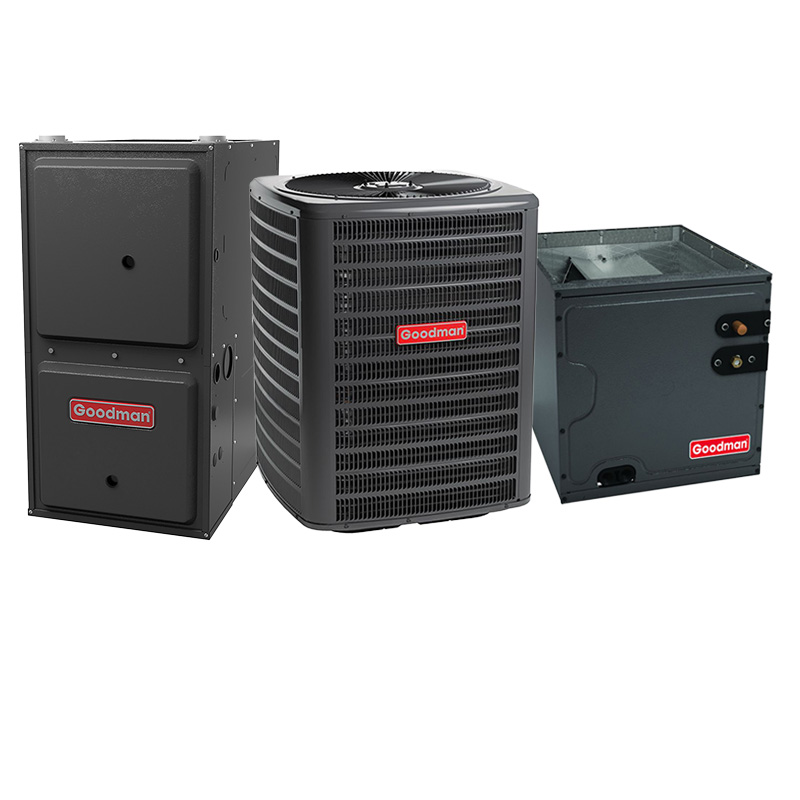
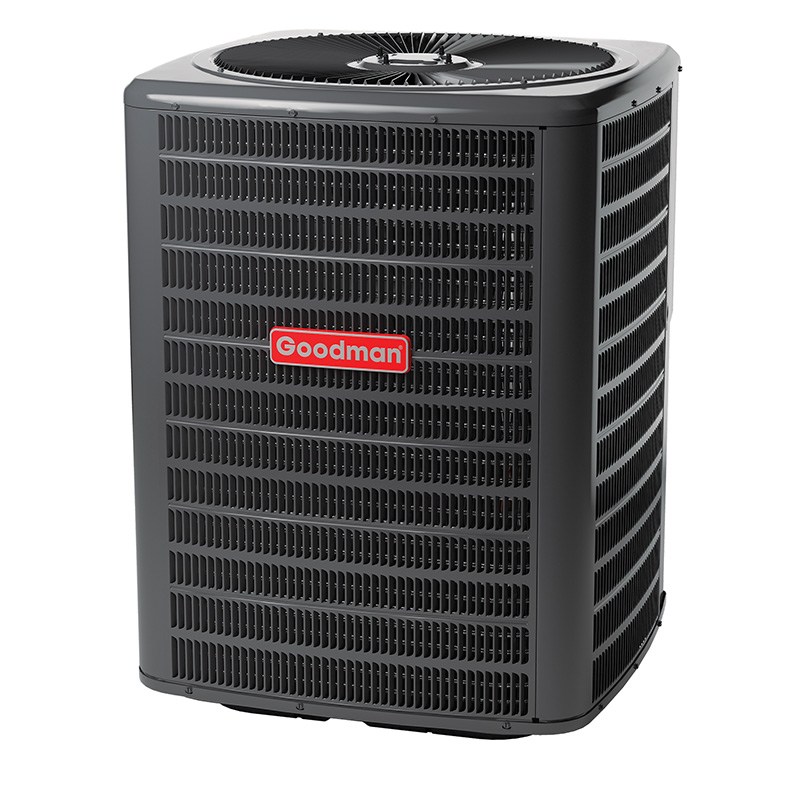
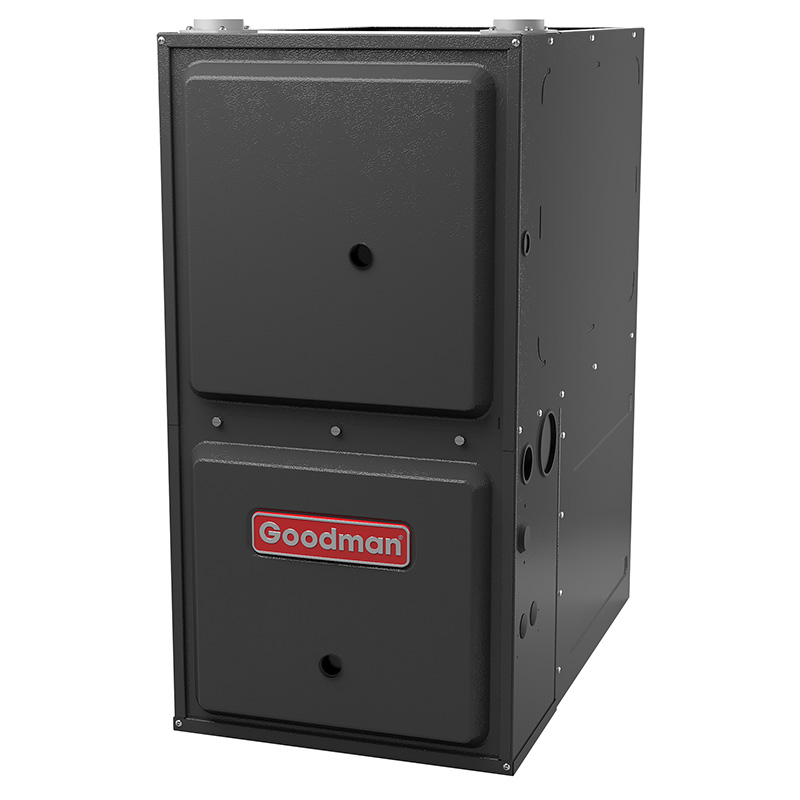
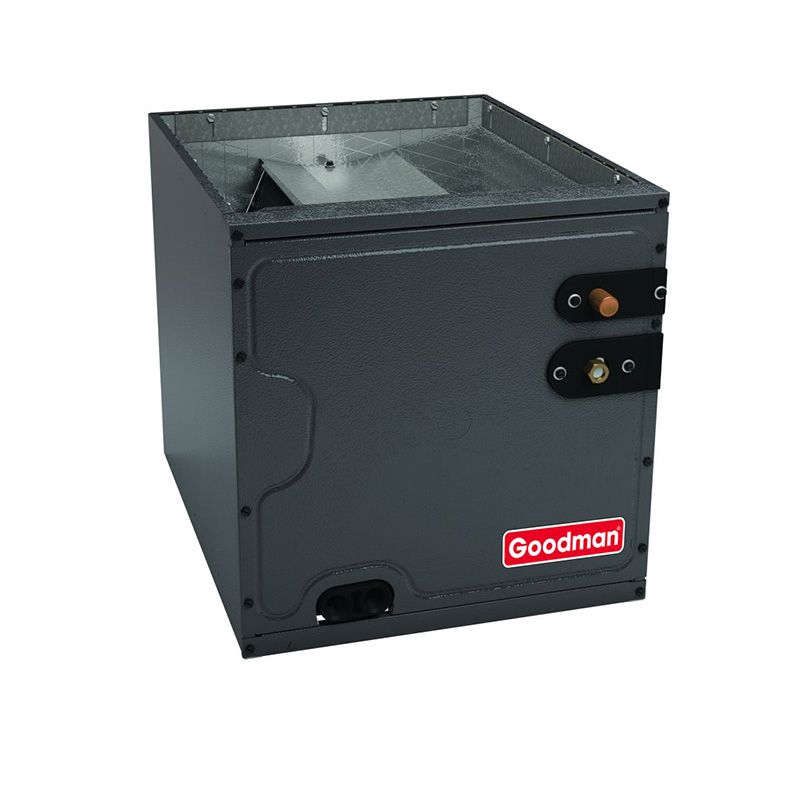
Goodman Furnace And Air Conditioner 4 Ton 15.2 SEER2 AC With 100000 BTU 80% AFUE Two Stage Multi-Speed ECM Gas Furnace System – Low NOX For California Downflow | R32
View on AC Direct see your lowest price →Check current price on AC Direct →
Key features
- 4-ton, 15.2 SEER2 cooling efficiency, compliant with current federal minimums
- 100,000 BTU two-stage gas furnace at 80% AFUE for moderate fuel efficiency
- Multi-speed ECM blower motor reduces electricity use and noise at part-load
- Downflow configuration designed for closet or platform installations with downward ductwork
- R-32 refrigerant charge meets California Low NOx and environmental compliance requirements
- Two-stage heating reduces temperature swings and improves humidity management
About this system
This Goodman bundle pairs a 4-ton, 15.2 SEER2 air conditioner with a 100,000 BTU, 80% AFUE two-stage gas furnace in a downflow configuration, making it a practical choice for homes where the air handler sits in a closet or utility space above a crawl space or on the main floor with ducts running downward. The R-32 refrigerant charge meets California’s low-NOx and environmental requirements, so it ships ready for installation in the state without additional compliance steps. At 15.2 SEER2, the cooling efficiency clears the federal minimum for most regions but sits closer to the entry-level tier than the mid- or high-efficiency bracket, meaning energy bills will be lower than an older 13 SEER system but noticeably higher than a 17 or 18 SEER2 alternative over a decade of use.
The two-stage furnace and multi-speed ECM blower are the standout features here. Two-stage heating lets the system run at a lower fire rate on mild days, which reduces temperature swings and improves humidity control compared to a single-stage unit. The ECM motor draws significantly less electricity than a standard PSC blower and runs more quietly at part-load speeds. Together, these features make the system better suited to moderate climates or homes where comfort consistency matters as much as raw heating output. The 80% AFUE rating means one-fifth of the fuel energy exits as exhaust, so homeowners in cold climates who run the furnace heavily may find a 95% or 96% AFUE unit pays back its higher upfront cost within a few years.
This Goodman system delivers a solid feature set at a price point meaningfully below comparable Trane, Carrier, and Lennox bundles, making it a reasonable choice for budget-conscious buyers who hire a skilled installer and stay current on maintenance. The two-stage furnace and ECM motor add real comfort value that single-stage systems at this price tier cannot match. The trade-off is that Goodman's documented failure rates and shorter average compressor lifespan mean owners should budget for repairs after year 7 and consider whether the warranty coverage is sufficient protection.
Overall score is the average of the five ratings above.
What we like
- Priced roughly 15 to 25 percent below equivalent Trane, Carrier, and Lennox systems, lowering the upfront barrier
- Two-stage furnace operation reduces temperature swings and improves whole-home comfort on mild days
- ECM blower motor cuts fan electricity consumption and runs quieter than standard PSC motors
- R-32 refrigerant is pre-charged and California Low NOx compliant, avoiding extra compliance steps
- Downflow orientation suits a specific and common installation scenario where other configurations would not fit
Trade-offs
- 80% AFUE is the lowest efficiency tier available; heavy furnace users in cold climates will pay more in gas bills compared to 95%+ AFUE alternatives
- 15.2 SEER2 sits near the federal minimum, so long-term cooling energy costs will be higher than mid- or high-efficiency units
- Goodman compressors average 10 to 14 years versus 15 to 20 for premium brands, meaning replacement may come sooner
- ConsumerAffairs reviews average around 2.5 out of 5, with recurring complaints about repair costs climbing after roughly year 7
What homeowners and pros say about Goodman
Homeowners who post about Goodman equipment tend to split along a familiar line: those who had a thorough installation from a careful technician report years of unremarkable, dependable service and emphasize the value versus what neighbors paid for a Trane or Carrier. Those who ran into problems tend to encounter them after year 7, which aligns with the ConsumerAffairs average of roughly 2.5 out of 5, a score shaped largely by owners who came to the platform after a frustrating repair bill. Google dealer reviews tell a softer story, averaging around 3.8 out of 5 across dealer locations, where affordability is the most common praise and satisfaction is generally higher when the selling dealer also handled the installation and startup.
HVAC technicians in online forums tend to view Goodman as a workable brand whose longevity is tightly connected to how the system was put in and how consistently the filters and coils are maintained. The specific failure modes that come up most often in service reports are dual-run capacitor failures, which are low-cost fixes but can leave a homeowner without cooling in summer heat while waiting for a service call; evaporator coil refrigerant leaks, which are more disruptive and expensive; and compressor lifespans that techs peg at 10 to 14 years on average, shorter than the 15 to 20 years commonly cited for Trane or Carrier compressors. A minority of owners have also reported refrigerant leaks within the first year, which technicians generally attribute to installation or initial charge quality rather than the equipment itself. For this specific downflow, California-compliant bundle, the R-32 charge and Low NOx furnace add a layer of regulatory peace of mind, but the underlying brand reliability picture remains the same.
Sources: ConsumerAffairs Goodman owner reviews, AHRI Directory of Certified Product Performance, U.S. DOE appliance and equipment efficiency standards, Goodman product specification sheets.
What it costs to run
At 15.2 SEER2, cooling this 4-ton system for a typical 1200-hour cooling season at the U.S. average electricity rate of $0.17/kWh works out to roughly $644 per year in cooling, about $87 less per year than a minimum-efficiency 13.4 SEER2 unit of the same size. Your real cost depends on your climate and local rate.
Method: (48,000 BTU/hr ÷ 15.2 SEER2) × 1200 hours ÷ 1000 × $0.17/kWh. Rate source: U.S. EIA average; cooling hours: moderate-climate estimate.
How it compares
| Brand | Comparable model | SEER2 | Stage | Price position |
|---|---|---|---|---|
| Goodman | 4-Ton 15.2 SEER2 AC / 100K BTU 80% AFUE Two-Stage ECM Downflow Bundle | 15.2 | Two-stage | Value pick |
| Carrier | Performance 15 (24ACC636) with 58TP 80% AFUE Gas Furnace | 15 | Two-stage | Approximately 15 to 20 percent higher than this Goodman bundle |
| Trane | XR15 (4TTR5048) with S8X2 80% AFUE Gas Furnace | 15.2 | Single-stage | Approximately 20 to 25 percent higher than this Goodman bundle |
| Lennox | Merit ML15XC1 with ML196E 80% AFUE Gas Furnace | 15.2 | Single-stage | Approximately 20 to 25 percent higher than this Goodman bundle |
Competitor rows are comparable single-stage units at similar efficiency; price is relative position, not a quote.
Questions about this system
Is this system actually legal to install in California, or do I need additional parts?
Yes, this bundle is configured specifically for California. It uses R-32 refrigerant and the furnace carries a Low NOx certification, so it meets California Air Resources Board requirements as shipped. Confirm with your installer that the unit has not been substituted with a non-Low NOx variant before purchase.
Why does the downflow configuration matter, and can I use this system in an upflow or horizontal application?
Downflow furnaces are engineered to discharge heated or cooled air downward through floor ducts, with the return air entering from the top. Using a downflow unit in an upflow or horizontal application is not safe and will void the warranty. If your ductwork runs up or horizontally, you need a different cabinet orientation.
What are the most common repairs I should expect with a Goodman system over 10 years?
Dual-run capacitor failure is the most frequently reported issue and is typically a straightforward repair in the $300 to $600 range. Evaporator coil refrigerant leaks appear in a meaningful share of owner reports and are more expensive to address. A small percentage of owners have reported refrigerant leaks within the first year, which is usually tied to installation or initial charge quality rather than a manufacturing defect.
Will the 80% AFUE furnace cost me significantly more to operate than a high-efficiency model?
At 80% AFUE, 20 cents of every dollar spent on gas exits the flue as exhaust. A 96% AFUE furnace wastes only 4 cents per dollar. The annual savings depend on your local gas rates and how many heating degree days your location sees, but in a cold climate with high usage, the payback period on a higher-efficiency furnace can be under five years.
Does Goodman's warranty require professional registration, and what does it actually cover?
Goodman requires the equipment to be registered within a set window after installation to receive the extended parts warranty; unregistered units receive a shorter default coverage period. The warranty covers parts but not labor, refrigerant, or diagnostic costs, so out-of-pocket repair expenses can still be significant even within the warranty term. Confirm the registration deadline and labor coverage options with your installer before the job is complete.
Specifications
| Cooling capacity | 4 Ton |
| Efficiency | 15.2 SEER2 |
| Furnace output | 100000 BTU |
| Furnace efficiency | 80% AFUE |
| Configuration | Downflow |
| Refrigerant | R-32 |