Goodman Furnace And AC – 1.5 Ton 14.7 SEER2 AC With 40000 BTU 96% AFUE Two Stage Multi-Speed ECM Gas Furnace System – Downflow | R32
View on AC Direct see your lowest price →Check current price on AC Direct →
Key features
- 1.5-ton cooling capacity suited to smaller homes or individual zones up to roughly 600 to 900 square feet depending on climate
- 14.7 SEER2 rating meets current federal minimums with a small buffer, adequate for moderate cooling climates
- 96% AFUE two-stage gas furnace reduces fuel waste and temperature swings versus single-stage units
- Multi-speed ECM blower motor lowers electricity use and blower noise compared to standard PSC motors
- Downflow configuration designed for installations where the air handler sits above the conditioned space
- R-32 refrigerant charge offers lower global warming potential and aligns with the industry's current transition away from R-410A
About this system
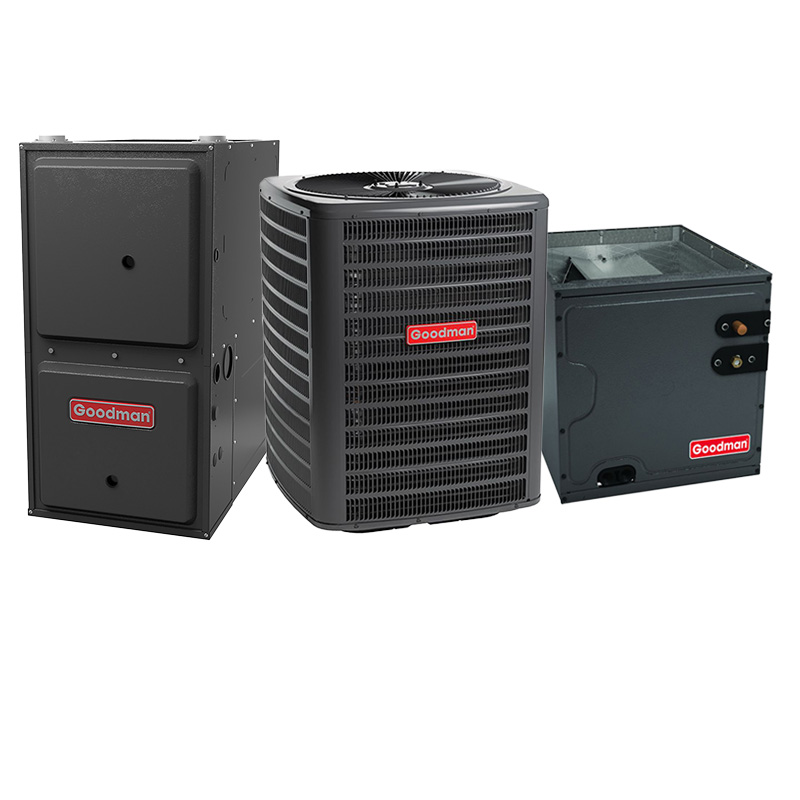
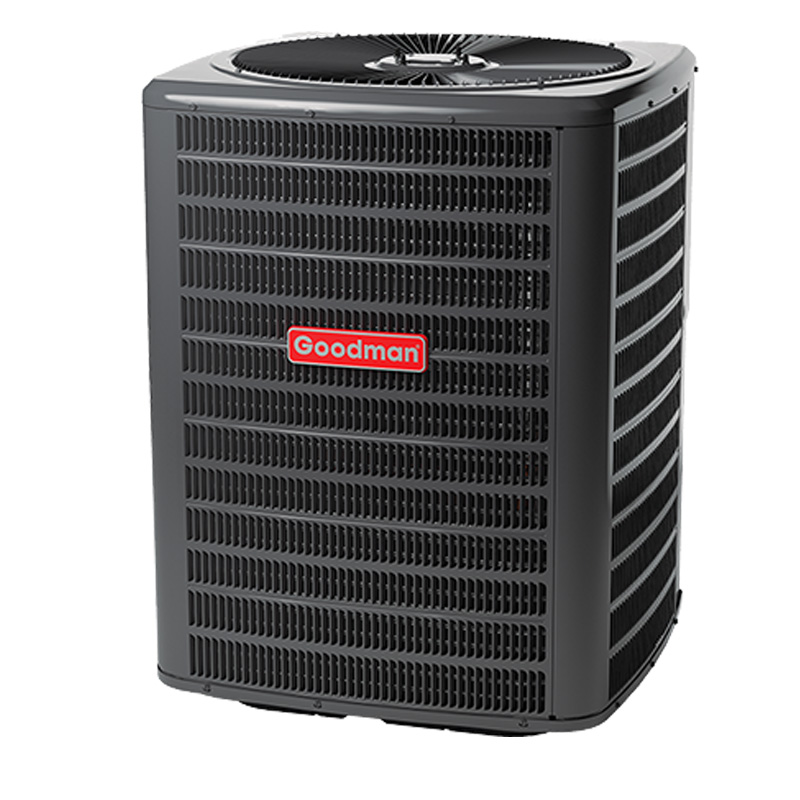
This Goodman bundle pairs a 1.5-ton, 14.7 SEER2 central air conditioner with a 40,000 BTU, 96% AFUE two-stage gas furnace in a downflow configuration, making it aimed squarely at smaller homes, conditioned basements, or manufactured housing where the air handler sits above the living space and blows conditioned air downward. The R-32 refrigerant charge is a forward-looking choice: R-32 has a lower global warming potential than the R-410A it replaces and is increasingly the industry standard, so sourcing refrigerant for future service calls should remain straightforward for years to come.
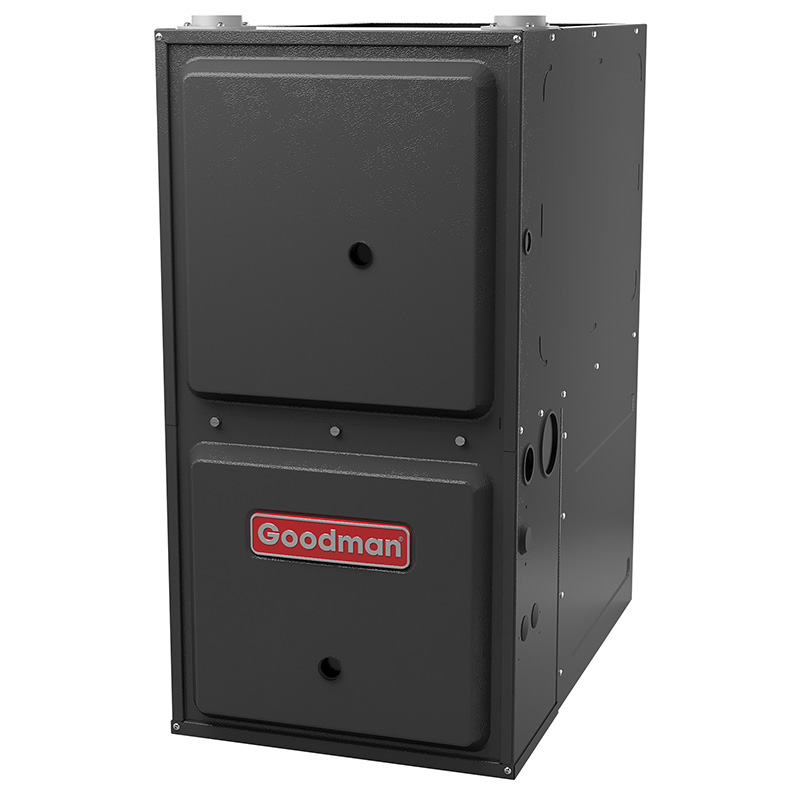
The two-stage furnace and multi-speed ECM blower motor are the standout specs here. Two-stage heating means the furnace runs on a lower fire on mild days and steps up only when the load demands it, which reduces temperature swings and keeps average fuel consumption well below single-stage alternatives. The ECM motor is significantly more efficient than a standard PSC blower and tends to run quieter at lower speeds. Paired with a 96% AFUE rating, very little fuel energy is wasted to exhaust. The air conditioner side sits at 14.7 SEER2, which clears the current federal minimum with a modest margin but does not approach premium-tier efficiency. For a small 1.5-ton load, annual cooling costs will be modest regardless, so the efficiency gap versus a higher-SEER2 unit is smaller in absolute dollar terms than it would be on a larger system.
This Goodman system delivers real spec value at a price roughly 15 to 25 percent below comparable Trane, Lennox, and Carrier bundles, and the two-stage furnace with ECM motor is a meaningful comfort upgrade over single-stage alternatives in the same price range. The trade-off is a brand track record that shows higher-than-average repair activity after year seven and a compressor lifespan that averages shorter than premium competitors, so buyers should budget for maintenance and consider an extended warranty.
Overall score is the average of the five ratings above.
What we like
- Price is 15 to 25 percent below comparable premium-brand bundles, leaving room in the budget for a service contract
- Two-stage furnace operation improves comfort and reduces fuel use on mild heating days compared to single-stage units
- 96% AFUE is a high-efficiency rating that minimizes heat lost to exhaust gases
- ECM blower motor cuts electricity consumption and runs noticeably quieter at lower speeds
- R-32 refrigerant is the emerging industry standard, supporting easier future service access
Trade-offs
- Dual-run capacitors are the most commonly reported failure point and typically need replacement within the first seven to ten years, adding service costs
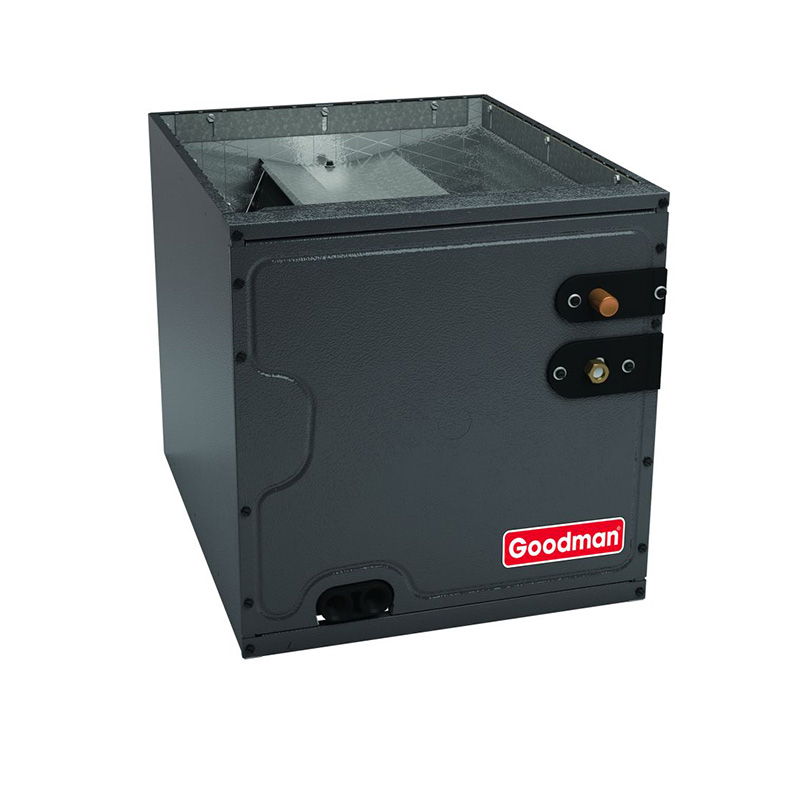
- Evaporator coil leaks appear in a meaningful share of owner reviews and can be expensive to address outside the warranty period
- Compressor lifespan averages 10 to 14 years versus 15 to 20 years for premium brands, meaning earlier replacement costs over the system's life
- A minority of owners report refrigerant leaks within the first year, most often traced to installation or initial charge issues rather than manufacturing defects
What homeowners and pros say about Goodman
Homeowners who follow HVAC forums and owner review channels give Goodman a split verdict. On ConsumerAffairs, the brand scores roughly 2.5 out of 5, a figure worth contextualizing: that platform attracts disproportionately frustrated owners, and the recurring theme in the negative posts is repair costs climbing after the seven-year mark rather than early catastrophic failure. On Google dealer reviews, where a broader cross-section of owners weighs in, Goodman scores around 3.8 out of 5, and affordability is consistently the top reason buyers say they chose it. The consensus is that buyers who get a careful installation from an experienced contractor and stay current with annual maintenance tend to report reasonable satisfaction, while those who cut corners on either front encounter the brand’s documented weak points sooner.
Among HVAC technicians, Goodman occupies a familiar position: serviceable equipment that rewards good workmanship and punishes shortcuts. Techs note that dual-run capacitor replacements are among the most routine calls on Goodman systems, typically a straightforward and low-cost fix in the 300 to 600 dollar range but one that tends to recur if the root cause is a unit running in a hot, poorly ventilated space. Evaporator coil leaks are a more significant documented failure mode and show up frequently enough in owner accounts to be worth factoring into a long-term ownership cost estimate. On the compressor side, technicians generally expect a Goodman compressor to average 10 to 14 years of service, noticeably shorter than the 15 to 20 years more commonly associated with Trane, Carrier, or Lennox compressors. None of these failure modes are unique to Goodman, but their frequency relative to premium brands is the honest trade-off for paying 15 to 25 percent less upfront.
Sources: ConsumerAffairs Goodman owner reviews, AHRI Directory of Certified Product Performance, U.S. DOE appliance and equipment efficiency standards, Goodman product specification sheets.
What it costs to run
At 14.7 SEER2, cooling this 1.5-ton system for a typical 1200-hour cooling season at the U.S. average electricity rate of $0.17/kWh works out to roughly $250 per year in cooling, about $24 less per year than a minimum-efficiency 13.4 SEER2 unit of the same size. Your real cost depends on your climate and local rate.
Method: (18,000 BTU/hr ÷ 14.7 SEER2) × 1200 hours ÷ 1000 × $0.17/kWh. Rate source: U.S. EIA average; cooling hours: moderate-climate estimate.
How it compares
| Brand | Comparable model | SEER2 | Stage | Price position |
|---|---|---|---|---|
| Goodman | GSXH5 / GCVC96 Series Bundle | 14.7 | Two-stage | Value pick |
| Carrier | Comfort 14 (24ACC4) with 58SC Gas Furnace | ~14.3 to 14.8 | Single-stage | Typically 15 to 25 percent more than this Goodman bundle |
| Trane | XR14c with S9X2 Gas Furnace | ~14.3 to 15.0 | Single-stage | Typically 15 to 25 percent more than this Goodman bundle |
| Lennox | Merit 14ACX with ML96V Gas Furnace | ~14.3 to 15.0 | Single-stage | Typically 15 to 25 percent more than this Goodman bundle |
Competitor rows are comparable single-stage units at similar efficiency; price is relative position, not a quote.
Questions about this system
Is a downflow furnace the right configuration for my house, and can I use this system in a horizontal application?
A downflow furnace is specifically designed to draw return air in at the top and discharge conditioned air downward, making it the correct choice when the unit sits in an upper floor, attic platform, or closet above the living space. It is not rated for horizontal or upflow installation, so confirm your existing ductwork and mechanical space match the downflow orientation before purchasing.
What does two-stage heating actually mean for my comfort and energy bills?
A two-stage furnace operates at a lower heat output on mild days and switches to full capacity only when outdoor temperatures drop significantly. This keeps indoor temperatures more consistent by running longer, gentler cycles rather than short blasts of high heat, and it typically lowers average gas consumption compared to a single-stage unit of the same AFUE rating.
How worried should I be about the capacitor and coil issues mentioned in owner reviews?
Dual-run capacitor failure is the most frequently reported repair for Goodman equipment and is generally a low-cost fix in the 300 to 600 dollar range when caught promptly during routine maintenance. Evaporator coil leaks are more serious and more expensive; scheduling annual tune-ups and registering the equipment for the manufacturer warranty gives you the best chance of catching either issue while coverage is still active.
Does this system use R-32 refrigerant, and will that make future service more expensive or harder to find?
Yes, this unit is charged with R-32, which is being adopted broadly across the industry as a replacement for R-410A. Because major manufacturers are all transitioning to R-32, most HVAC service companies are already equipped to handle it, and supply availability is expected to improve over time rather than become harder to source.
What warranty comes with this Goodman bundle, and what should I do right after installation?
Goodman's standard warranty requires registration within a specified window after installation to receive the full parts coverage period, which is typically ten years on covered components for registered residential equipment. Register the equipment immediately after installation, keep a copy of your contractor's work order documenting the refrigerant charge and system startup, and save those records since warranty claims and potential dispute resolution around first-year refrigerant issues often depend on documented installation data.
Specifications
| Cooling capacity | 1.5 Ton |
| Efficiency | 14.7 SEER2 |
| Furnace output | 40000 BTU |
| Furnace efficiency | 96% AFUE |
| Configuration | Downflow |
| Refrigerant | R-32 |