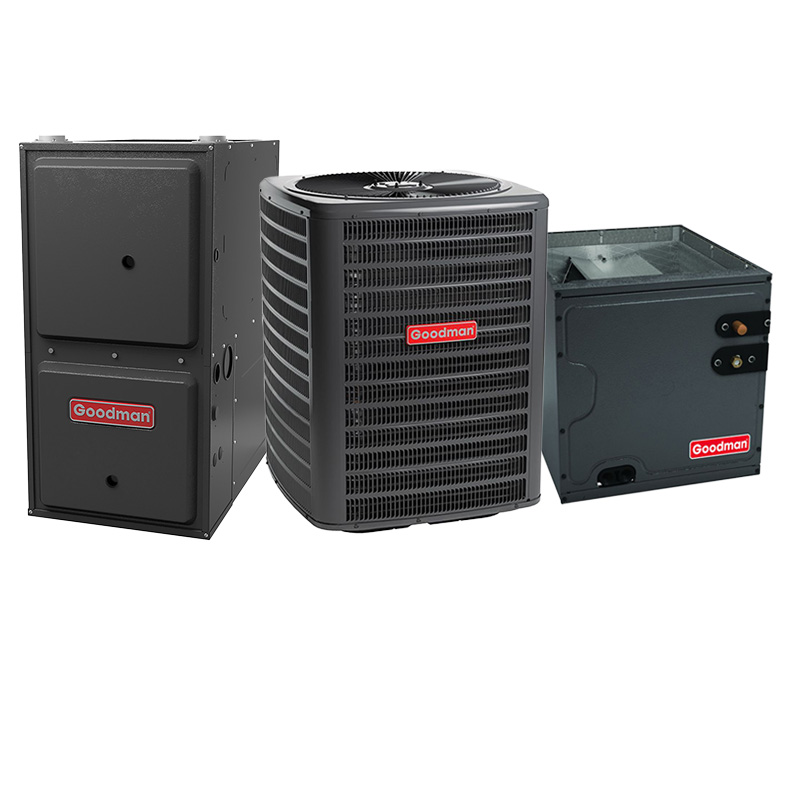
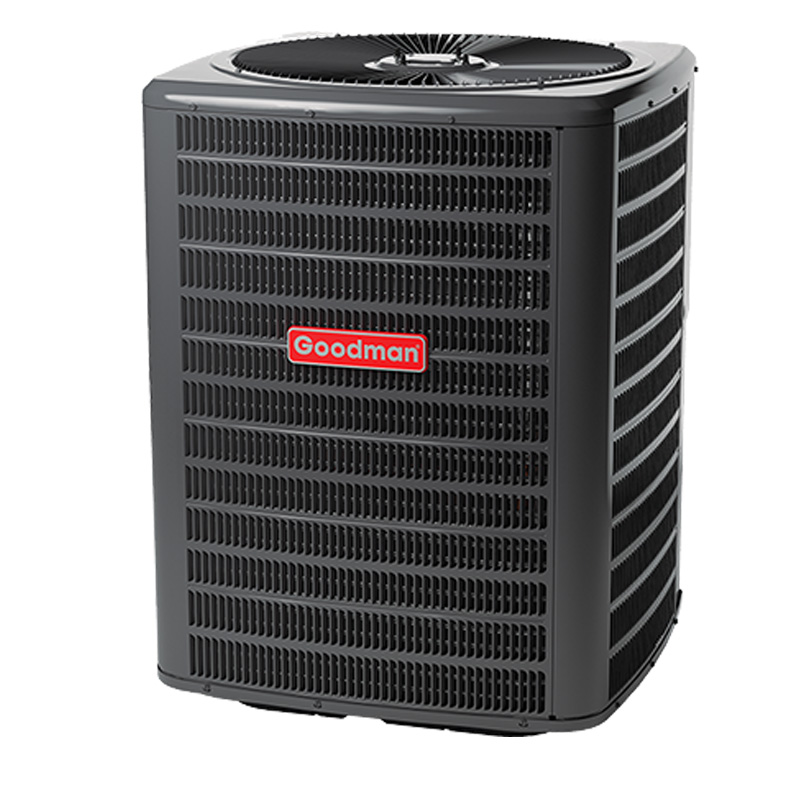
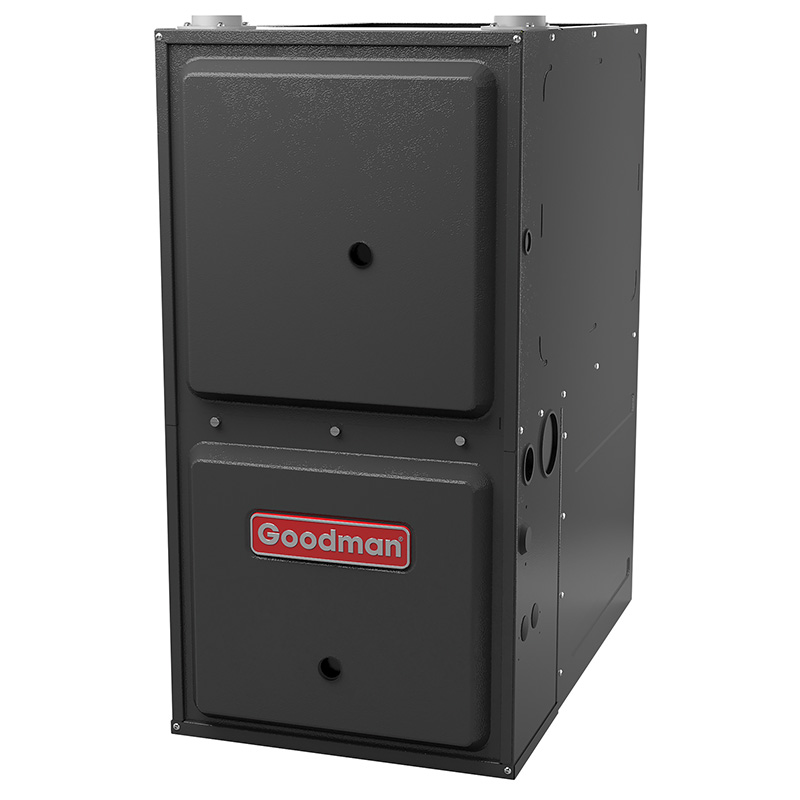
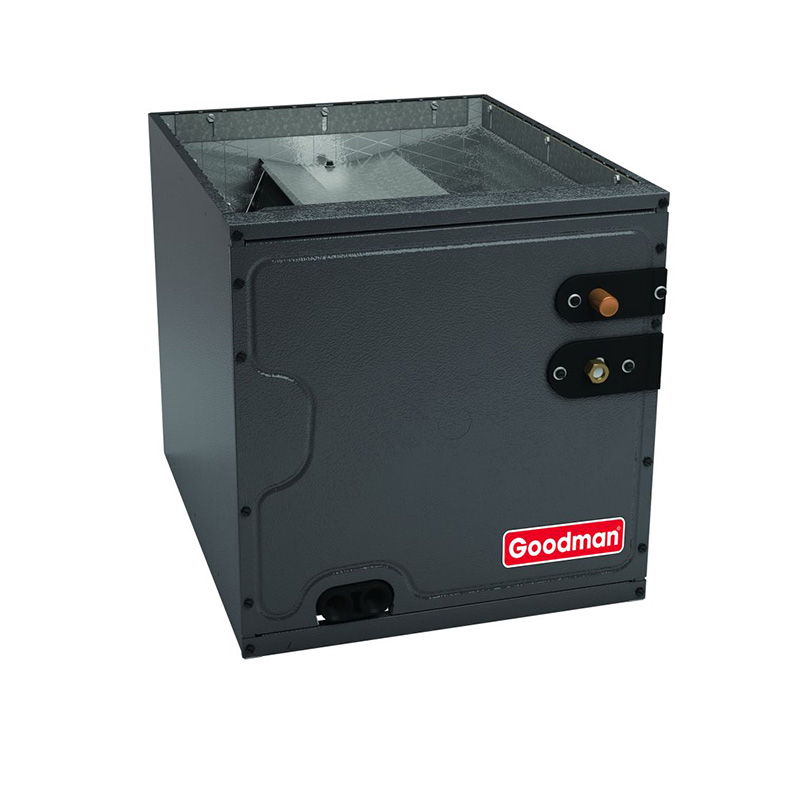
Goodman Furnace And AC – 2.5 Ton 14.3 SEER2 AC With 60000 BTU 96% AFUE Two Stage Multi-Speed ECM Gas Furnace System – Downflow | R32
View on AC Direct see your lowest price →Check current price on AC Direct →
Key features
- 2.5-ton AC rated at 14.3 SEER2, meeting current federal minimum efficiency standards
- 60,000 BTU gas furnace with 96% AFUE two-stage operation for reduced short-cycling
- Multi-speed ECM blower motor lowers electricity use and improves airflow balance
- Downflow configuration for homes with floor-register duct systems
- R-32 refrigerant with lower global-warming potential than R-410A
- Factory-matched system designed to simplify sizing and coil compatibility
About this system
This Goodman bundle pairs a 2.5-ton, 14.3 SEER2 central air conditioner with a 60,000 BTU, 96% AFUE two-stage gas furnace in a downflow configuration, meaning the furnace discharges conditioned air downward through floor registers. That layout suits homes with the air handler in a utility closet, basement ceiling, or crawlspace where ductwork runs beneath the living space. R-32 refrigerant gives the AC side a lower global-warming potential than legacy R-410A, and it will keep the system compatible with evolving refrigerant regulations in the coming years.
The 96% AFUE rating means 96 cents of every dollar spent on gas converts to heat, putting this furnace solidly in the high-efficiency tier and qualifying it for many utility rebates. Two-stage heating lets the furnace run at a lower output on mild days, which reduces short-cycling, improves humidity control in shoulder seasons, and cuts operating noise. The multi-speed ECM blower motor adjusts airflow continuously rather than blasting on at full speed, which helps evening out temperatures room to room and keeps electricity costs lower than a standard PSC motor. At 2.5 tons, this system is sized for roughly 1,200 to 1,800 square feet of well-insulated living space, though a proper Manual J load calculation should always confirm sizing before purchase.
Goodman positions this system as a budget-conscious alternative, typically priced 15 to 25 percent below comparable equipment from Trane, Lennox, or Carrier. That price gap is real, but so are the trade-offs around long-term reliability that buyers should factor in before committing.
This Goodman bundle delivers solid efficiency specs and a genuinely useful two-stage furnace at a price point that undercuts premium brands by a meaningful margin. The trade-off is a reliability track record that lags behind Trane, Lennox, and Carrier, with documented weak points in capacitors, evaporator coils, and compressor longevity that buyers should budget for after the warranty period. It is a reasonable choice for cost-conscious buyers who want high-efficiency heating without stretching to a premium brand, provided they budget for maintenance and hire an experienced installer.
Overall score is the average of the five ratings above.
What we like
- 96% AFUE furnace cuts gas bills and qualifies for many utility rebates
- Two-stage furnace operation reduces noise and improves comfort on mild days
- ECM blower motor uses significantly less electricity than standard PSC motors
- Priced 15 to 25 percent below comparable Trane, Lennox, and Carrier systems
- R-32 refrigerant is forward-looking and lowers environmental impact versus R-410A
Trade-offs
- Dual-run capacitors are the most frequently reported failure point, typically requiring a 300 to 600 dollar repair around year 7 or later
- Evaporator coil leaks appear in a meaningful share of owner reviews, a concern that warranty coverage only partially offsets
- Compressor lifespan averages 10 to 14 years versus 15 to 20 years seen with premium-brand compressors
- A minority of owners report refrigerant leaks in the first year, pointing to sensitivity to install quality and proper charging
What homeowners and pros say about Goodman
Homeowners who chose Goodman most often mention price as the deciding factor, and that sentiment lines up with the brand’s Google dealer review average of around 3.8 out of 5. Praise for affordability is the most consistent theme across those reviews, with satisfaction generally higher in the first several years of ownership. The ConsumerAffairs score tells a different story, sitting at roughly 2.5 out of 5, and the complaints that dominate that channel center on repair costs climbing after roughly year 7. The two failure modes that come up most consistently are dual-run capacitor failures, a relatively inexpensive fix in the 300 to 600 dollar range but one that can feel frustrating in a system that is still under a decade old, and evaporator coil leaks, which are more disruptive and costly to address.
HVAC technicians who install Goodman equipment regularly tend to have a more measured view than either the enthusiastic early owners or the disappointed ones who post complaints. The professional consensus is that install quality is the single biggest predictor of how long a Goodman system lasts, more so than with premium brands that have tighter tolerances built in at the factory. Technicians also flag compressor longevity as a realistic concern, with Goodman compressors averaging 10 to 14 years in the field compared to 15 to 20 years for top-tier brands. For this specific system, the two-stage furnace and ECM motor are genuine functional upgrades over a basic single-stage setup, and they give it a more competitive feature set than the entry-level Goodman products that generate the most complaints. The R-32 refrigerant on the AC side draws few concerns from installers who have the required A2L handling certification, and it positions the system reasonably well for the years ahead as the industry continues its refrigerant transition.
Sources: ConsumerAffairs Goodman owner reviews, AHRI Directory of Certified Product Performance, U.S. DOE appliance and equipment efficiency standards, Goodman product specification sheets.
What it costs to run
At 14.3 SEER2, cooling this 2.5-ton system for a typical 1200-hour cooling season at the U.S. average electricity rate of $0.17/kWh works out to roughly $428 per year in cooling, about $29 less per year than a minimum-efficiency 13.4 SEER2 unit of the same size. Your real cost depends on your climate and local rate.
Method: (30,000 BTU/hr ÷ 14.3 SEER2) × 1200 hours ÷ 1000 × $0.17/kWh. Rate source: U.S. EIA average; cooling hours: moderate-climate estimate.
How it compares
| Brand | Comparable model | SEER2 | Stage | Price position |
|---|---|---|---|---|
| Goodman | 2.5 Ton 14.3 SEER2 AC / 60K BTU 96% AFUE Two-Stage ECM Furnace (Downflow, R-32) | 14.3 | Two-stage | Value pick |
| Carrier | Performance Series (24ACC636 AC / 59TP6 Furnace) | 15.0 | Single-stage | Typically 15 to 25 percent more than this Goodman bundle |
| Trane | XR15 AC / S9X1 Furnace | 15.0 | Single-stage | Typically 15 to 25 percent more than this Goodman bundle |
| Lennox | Merit Series (13ACX AC / ML196 Furnace) | 14.3 | Single-stage | Typically 15 to 25 percent more than this Goodman bundle |
Competitor rows are comparable single-stage units at similar efficiency; price is relative position, not a quote.
Questions about this system
Is a downflow furnace hard to find an installer for, and does it cost more to set up?
Downflow furnaces are less common than upflow units, so not every technician installs them routinely. Labor costs can run slightly higher because the configuration requires careful attention to floor-mounted plenum sealing and correct duct connections. Confirming your installer has experience with downflow systems before booking is worth the extra phone call.
What does the R-32 refrigerant mean for future service costs?
R-32 is a single-component refrigerant, which makes recharging simpler and less expensive than blended refrigerants if a leak is repaired correctly. Availability is growing as the industry moves away from R-410A, so sourcing R-32 should not be a problem in most markets. The main caution is that R-32 is mildly flammable, so technicians need A2L certification and proper handling practices.
Goodman has mixed reviews online. Should I be worried about buying this system?
Goodman scores around 2.5 out of 5 on ConsumerAffairs, a channel that skews toward complaints, and roughly 3.8 out of 5 across Google dealer reviews. The pattern in owner feedback is that problems tend to cluster after year 7, particularly around capacitors and evaporator coils. Budgeting 500 to 1,000 dollars for a likely capacitor or minor repair in that window is a realistic expectation, not a worst-case scenario.
Does a two-stage furnace actually make a noticeable comfort difference for a 2.5-ton system?
Yes, especially in climates with long shoulder seasons. Running at low stage most of the time means longer, quieter heating cycles that distribute warmth more evenly and reduce the temperature swings a single-stage furnace creates. The ECM blower reinforces this by adjusting airflow speed rather than switching abruptly between off and full blast.
How long should I expect this system to last, and what parts are most likely to need replacement?
Based on Goodman's documented track record, the dual-run capacitor is the most common early repair, and evaporator coil leaks are a recurring concern. The compressor tends to average 10 to 14 years, shorter than the 15 to 20 years reported for premium-brand compressors. Annual preventive maintenance, prompt capacitor replacement when symptoms appear, and a quality install from the start are the biggest factors in getting to the longer end of that range.
Specifications
| Cooling capacity | 2.5 Ton |
| Efficiency | 14.3 SEER2 |
| Furnace output | 60000 BTU |
| Furnace efficiency | 96% AFUE |
| Configuration | Downflow |
| Refrigerant | R-32 |