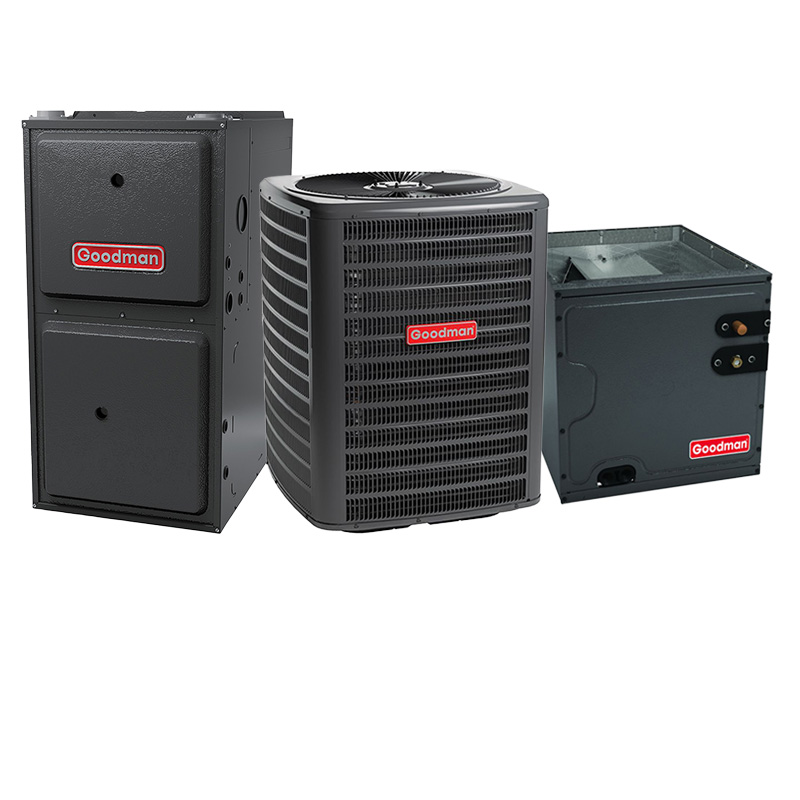
Goodman Furnace And AC – 2.5 Ton 15.2 SEER2 AC With 60000 BTU 96% AFUE Two Stage Multi-Speed ECM Gas Furnace System – Upflow | R32
View on AC Direct see your lowest price →Check current price on AC Direct →
Key features
- 2.5-ton cooling capacity paired with a 60,000 BTU heating output
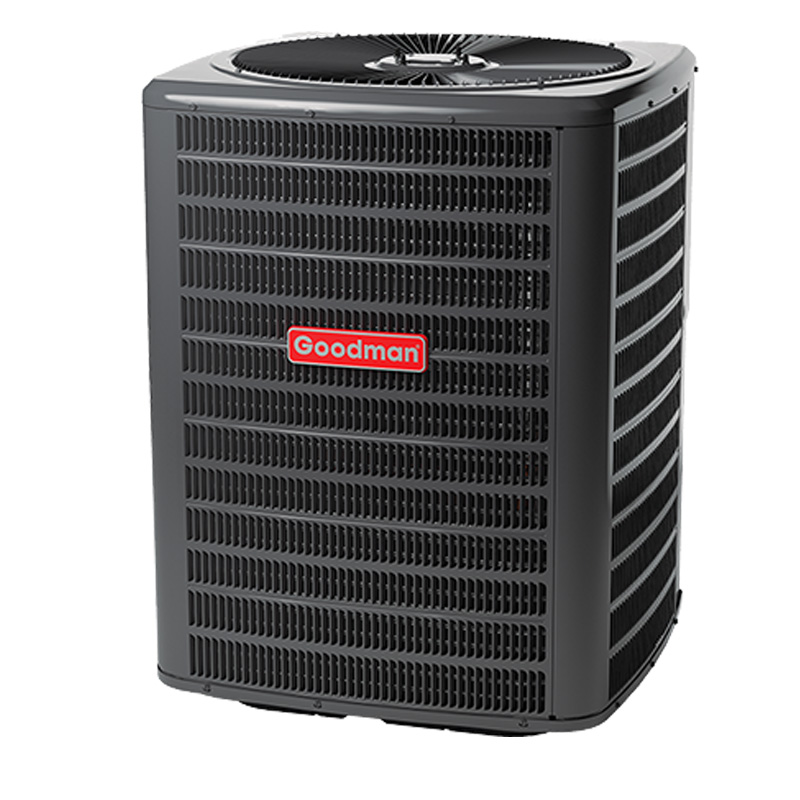
- 15.2 SEER2 air conditioner using R-32 refrigerant
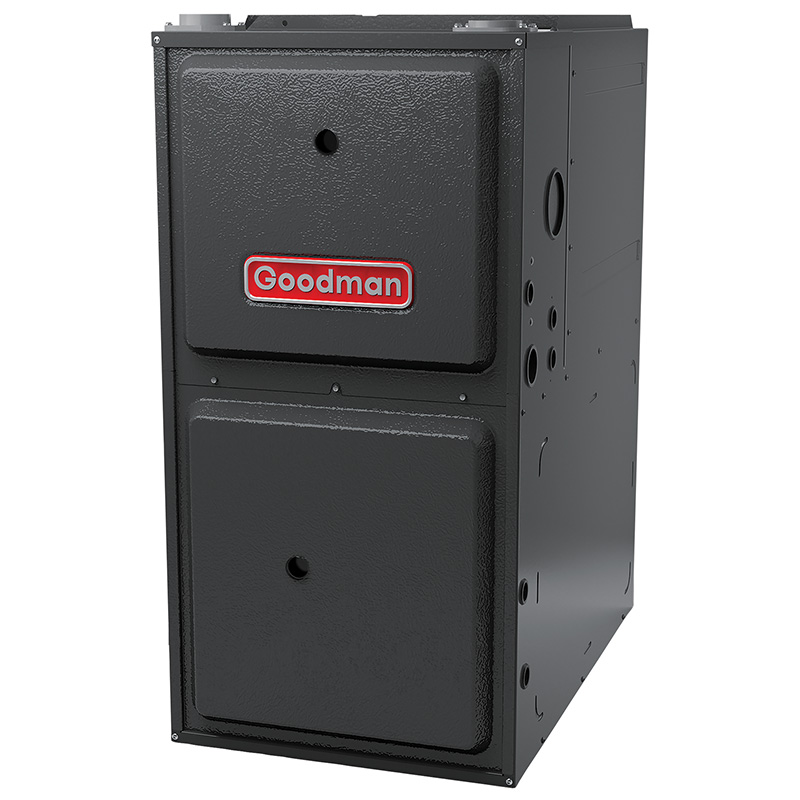
- 96% AFUE two-stage gas furnace for reduced fuel waste
- Multi-speed ECM blower motor for quieter, more efficient airflow
- Upflow configuration for basements and standard utility closets
- Designed as a matched system for simplified permitting and warranty compliance
About this system
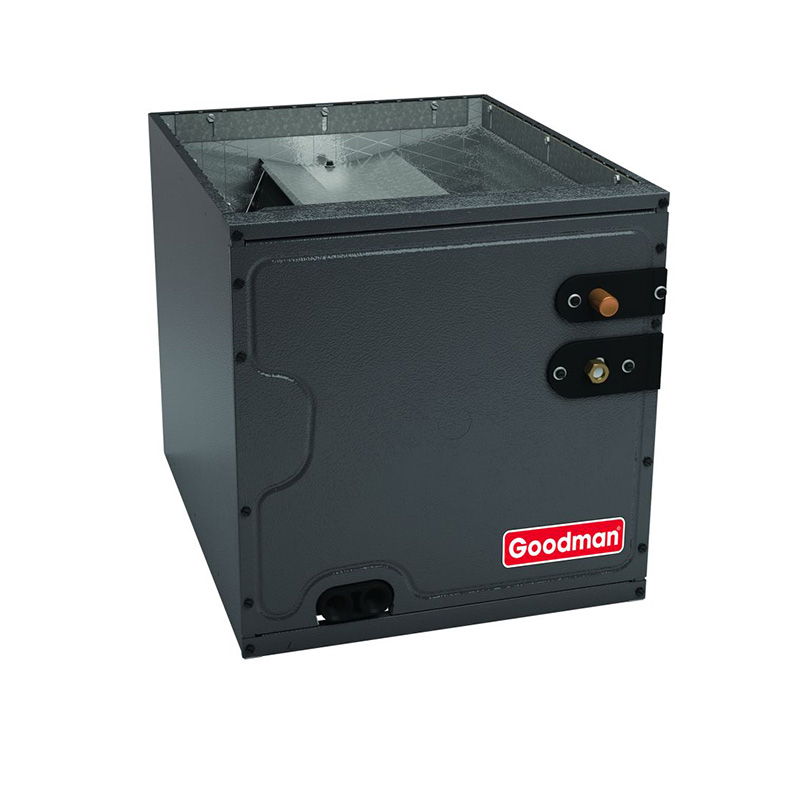
This Goodman bundle pairs a 2.5-ton, 15.2 SEER2 central air conditioner with a 60,000 BTU, 96% AFUE two-stage gas furnace sized for homes roughly in the 1,200 to 1,800 square-foot range, depending on local climate and insulation. The upflow configuration means the air handler sits at floor level and pushes conditioned air upward through overhead ductwork, which is the standard setup in most homes with a basement or utility closet. Refrigerant is R-32, a lower-global-warming-potential option that is becoming the industry norm as R-410A is phased out.
The 96% AFUE rating means the furnace converts 96 cents of every fuel dollar into usable heat, putting it in the high-efficiency tier without reaching the 97-98% AFUE of modulating condensing units. Two-stage heating and the multi-speed ECM blower allow the system to run at a reduced capacity on milder days, which lowers fuel bills, reduces temperature swings, and cuts start-up noise compared to a single-stage unit. On the cooling side, 15.2 SEER2 clears the federal minimum for most northern and southern regions and should produce meaningful savings over older 13 SEER equipment, though it sits at the lower end of the mid-efficiency range rather than at the top.
This system is a practical fit for budget-conscious homeowners replacing aging equipment who want a real efficiency upgrade without paying premium-brand prices. It rewards buyers who hire an experienced installer, since Goodman’s real-world longevity correlates closely with commissioning quality rather than the equipment itself.
This Goodman system delivers genuine high-efficiency specs at a price point 15 to 25 percent below comparable Trane, Lennox, and Carrier equipment, making it a reasonable choice for budget-focused buyers who understand the trade-offs. Two-stage heating and an ECM blower give it real comfort advantages over single-stage alternatives at the same price. Long-term reliability sits below the premium tier, and the outcome depends heavily on the quality of the installing contractor.
Overall score is the average of the five ratings above.
What we like
- 96% AFUE and two-stage operation produce measurable fuel savings over single-stage equipment
- ECM blower reduces electricity consumption and lowers operating noise
- 15 to 25 percent lower upfront cost than Trane, Lennox, or Carrier equivalents
- R-32 refrigerant is forward-compatible as R-410A is phased out
- Matched system bundle simplifies permit submissions and warranty documentation
Trade-offs
- Dual-run capacitor failures are the most frequently reported repair, typically emerging mid-life at a cost of $300 to $600
- Evaporator coil leaks appear in a meaningful share of owner reviews and can be costly to address
- Compressor lifespan averages 10 to 14 years, shorter than the 15 to 20 years commonly seen on premium brands
- A minority of owners report refrigerant leaks within the first year, generally tied to installation or initial charge issues
What homeowners and pros say about Goodman
Homeowners who post about Goodman online tend to split along a clear line. Those who had a careful, experienced installer and kept up with annual maintenance often report years of trouble-free operation and point to the lower purchase price as a win. Those who ran into problems frequently cite repair bills climbing after year 7, which matches the pattern seen in Goodman’s ConsumerAffairs rating of roughly 2.5 out of 5, a channel that attracts frustrated owners at a higher rate than satisfied ones. Google reviews collected at dealer locations average around 3.8 out of 5, and affordability is the praise that comes up most often, though those scores reflect the installer’s work as much as the equipment itself.
HVAC technicians who service Goodman equipment consistently name dual-run capacitor failure as the most common call they see on these units, usually a straightforward repair in the $300 to $600 range but one that tends to surface mid-life. More consequential are evaporator coil leaks, which appear in a meaningful share of owner accounts and carry higher repair costs. Compressor lifespan on Goodman equipment typically runs 10 to 14 years in the field, shorter than the 15 to 20 years that premium brands tend to achieve. A smaller subset of owners report refrigerant leaks within the first year, which technicians generally attribute to installation quality or initial charge rather than a defect in the unit itself. The consistent professional takeaway is that this equipment can perform well within its class, but the installer you choose matters as much as the equipment you buy.
Sources: ConsumerAffairs Goodman owner reviews, AHRI Directory of Certified Product Performance, U.S. DOE appliance and equipment efficiency standards, Goodman product specification sheets.
What it costs to run
At 15.2 SEER2, cooling this 2.5-ton system for a typical 1200-hour cooling season at the U.S. average electricity rate of $0.17/kWh works out to roughly $403 per year in cooling, about $54 less per year than a minimum-efficiency 13.4 SEER2 unit of the same size. Your real cost depends on your climate and local rate.
Method: (30,000 BTU/hr ÷ 15.2 SEER2) × 1200 hours ÷ 1000 × $0.17/kWh. Rate source: U.S. EIA average; cooling hours: moderate-climate estimate.
How it compares
| Brand | Comparable model | SEER2 | Stage | Price position |
|---|---|---|---|---|
| Goodman | GMVC96 + GSX series (this system) | 15.2 | Two-stage | Value pick |
| Carrier | Comfort 80 furnace + Performance 14 AC series | 15.2 | Single-stage | Typically 15 to 25 percent more than this Goodman bundle |
| Trane | S8X1 furnace + XR15 AC series | 15.2 | Single-stage | Typically 15 to 25 percent more than this Goodman bundle |
| Lennox | ML195 furnace + ML14XC1 AC series | 15.2 | Single-stage | Typically 15 to 25 percent more than this Goodman bundle |
Competitor rows are comparable single-stage units at similar efficiency; price is relative position, not a quote.
Questions about this system
Is 15.2 SEER2 efficient enough to qualify for a federal tax credit?
For split systems, the current federal 25C efficiency threshold is 15 SEER2 or higher in northern states and 15.2 SEER2 in southern states, so this unit sits right at the qualifying line depending on your region. Confirm the exact requirement with a tax professional and keep your installation invoice and equipment documentation, since the credit is claimed on your return.
Why does Goodman have such low scores on ConsumerAffairs when dealer Google reviews are much higher?
ConsumerAffairs skews toward dissatisfied owners who seek out a complaint channel, which explains the roughly 2.5 out of 5 average and the recurring theme of repair costs after year 7. Dealer Google reviews, which average around 3.8 out of 5, capture a broader cross-section of customers and often reflect the installer's quality as much as the equipment itself. Neither score alone is the full picture.
What maintenance can I do to reduce the chance of a capacitor or coil leak failure?
Annual professional tune-ups that include a capacitor test and refrigerant pressure check catch most capacitor wear before it becomes a no-cooling breakdown. Keeping the outdoor coil clean and the filter changed on schedule also reduces strain on the compressor and associated components.
Will a 2.5-ton unit be the right size for my home?
Tonnage selection should be based on a Manual J load calculation performed by your installer, not square footage alone, because insulation, window area, ceiling height, and local climate all affect the result. An oversized unit short-cycles, raises humidity, and accelerates wear on components; an undersized one runs constantly on peak days.
What does the Goodman warranty cover on this bundled system, and are there conditions I need to meet?
Goodman typically offers a 10-year parts limited warranty when the equipment is registered within a set window after installation, often 60 days, and the unit must be installed by a licensed HVAC contractor. Failure to register generally drops coverage to a shorter base period, and the warranty covers parts only, not labor costs, which can be significant on a coil or compressor replacement.
Specifications
| Cooling capacity | 2.5 Ton |
| Efficiency | 15.2 SEER2 |
| Furnace output | 60000 BTU |
| Furnace efficiency | 96% AFUE |
| Configuration | Upflow |
| Refrigerant | R-32 |