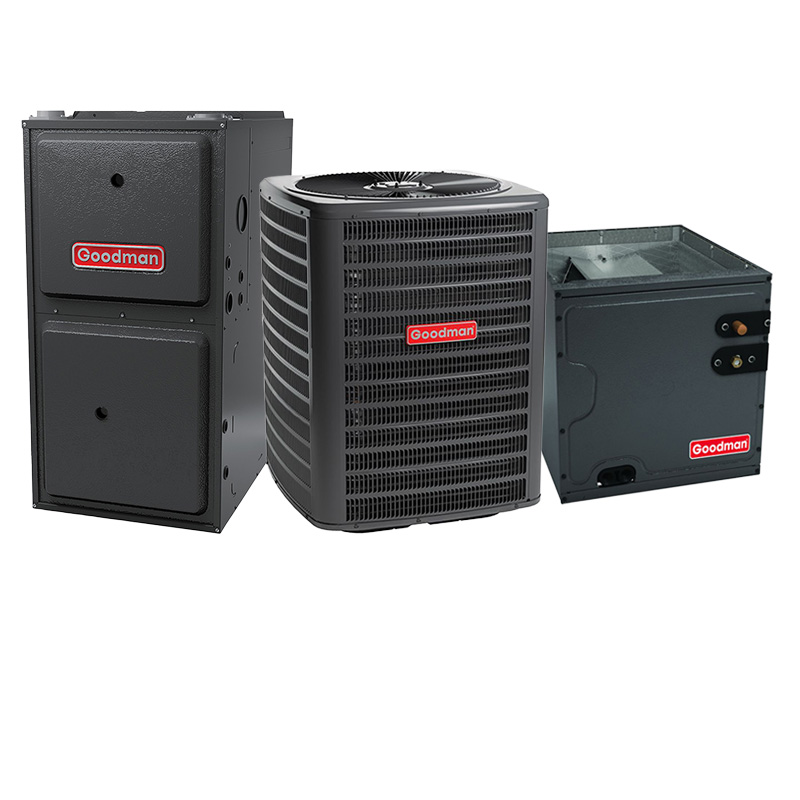
Goodman Furnace And AC – 2.5 Ton 15.2 SEER2 AC With 80000 BTU 96% AFUE Two Stage Multi-Speed ECM Gas Furnace System – Upflow | R32
View on AC Direct see your lowest price →Check current price on AC Direct →
Key features
- 2.5-ton cooling capacity rated at 15.2 SEER2 for above-baseline efficiency
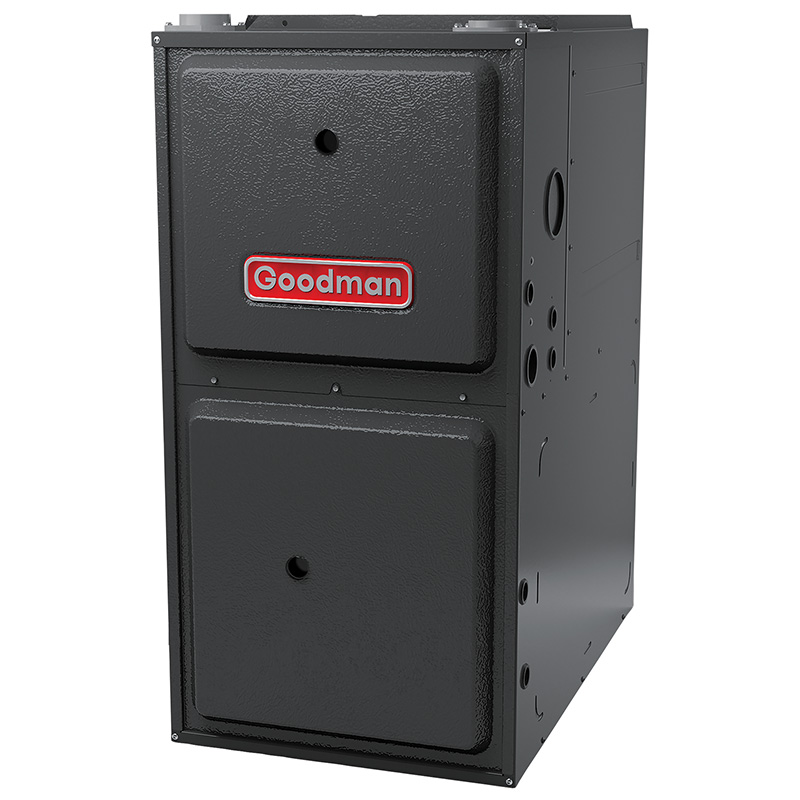
- 96% AFUE two-stage gas furnace reduces fuel waste and temperature swings
- Multi-speed ECM blower motor lowers electricity use and improves humidity control
- Upflow configuration suits basement, closet, and utility-room installations
- R-32 refrigerant: lower global warming potential than R-410A, increasingly serviceable nationwide
- Matched system sold as a bundle, simplifying compatibility and coil sizing
About this system
This Goodman bundle pairs a 2.5-ton, 15.2 SEER2 central air conditioner with an 80,000 BTU, 96% AFUE two-stage gas furnace in an upflow configuration, making it a logical fit for homes in the 1,200 to 1,800 square foot range that have a basement or utility closet where air is distributed upward through the duct system. The 96% AFUE rating means 96 cents of every dollar spent on gas goes toward heat, placing this furnace in the high-efficiency tier and qualifying it in most states for utility rebates. The R-32 refrigerant charge is a forward-looking choice: R-32 has a lower global warming potential than the R-410A it replaces and is increasingly the industry standard, so servicing options should remain straightforward for the foreseeable future.
The two-stage furnace and multi-speed ECM blower motor are meaningful upgrades over entry-level single-stage equipment. Two-stage operation means the furnace runs on a lower first stage the majority of the time, cycling on and off less frequently, which reduces temperature swings, lowers fuel consumption during mild weather, and puts less mechanical stress on components over the long run. The ECM blower adjusts airflow more precisely than a standard PSC motor, which also improves dehumidification on the cooling side and trims electricity costs year-round. Together, these features push comfort and operating efficiency noticeably beyond what a basic single-stage system delivers, even if they do not reach the ceiling set by fully variable-speed equipment.
This Goodman bundle delivers genuinely high-efficiency heating and competent cooling at a price point that is hard to match from premium brands, and the two-stage furnace with ECM blower adds real comfort value beyond entry-level alternatives. The trade-off is a brand track record that shows more component failures after year seven than Trane, Lennox, or Carrier, and a compressor lifespan that averages shorter than premium competitors. Buyers who prioritize upfront cost, plan to stay in the home for roughly ten years, and hire a licensed installer meticulously will likely find this system rewarding; those expecting fifteen-plus years of low-maintenance operation may want to budget accordingly or look at a premium brand.
Overall score is the average of the five ratings above.
What we like
- 96% AFUE places this furnace in the high-efficiency tier, with real utility bill and rebate implications
- Two-stage operation means the system runs quietly at reduced capacity most of the time, improving comfort and reducing short-cycling
- ECM blower motor cuts annual electricity consumption compared to standard PSC motors
- R-32 refrigerant is a forward-compatible choice as the industry transitions away from R-410A
- Priced roughly 15 to 25 percent below comparable Trane, Lennox, and Carrier systems, lowering the initial investment
Trade-offs
- Compressor lifespan averages 10 to 14 years versus 15 to 20 years typical of premium brands, raising long-term replacement risk
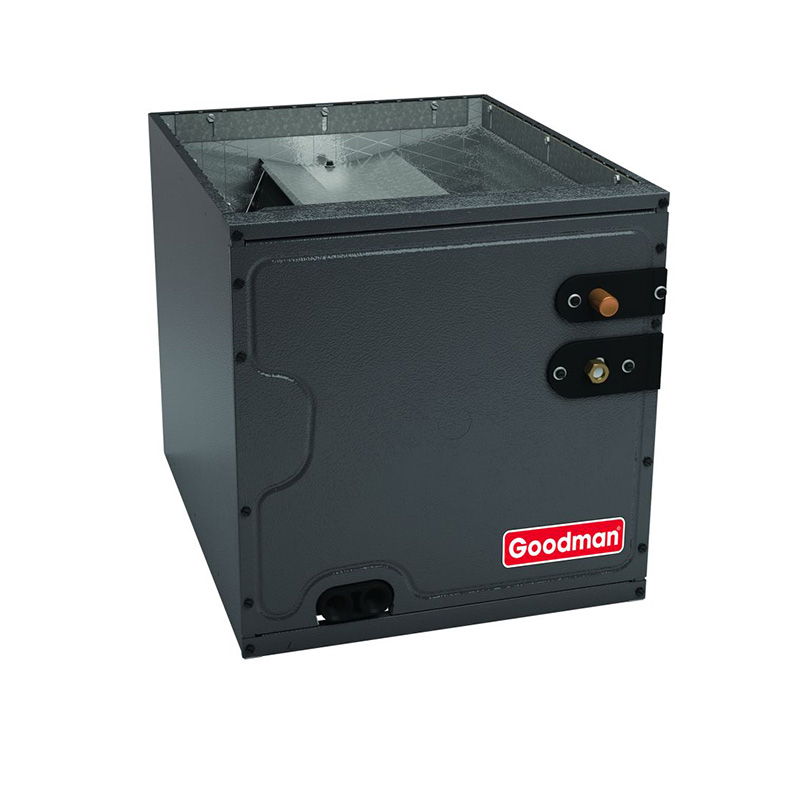
- Evaporator coil leaks appear in a meaningful share of owner reports, which can mean refrigerant loss and repair costs
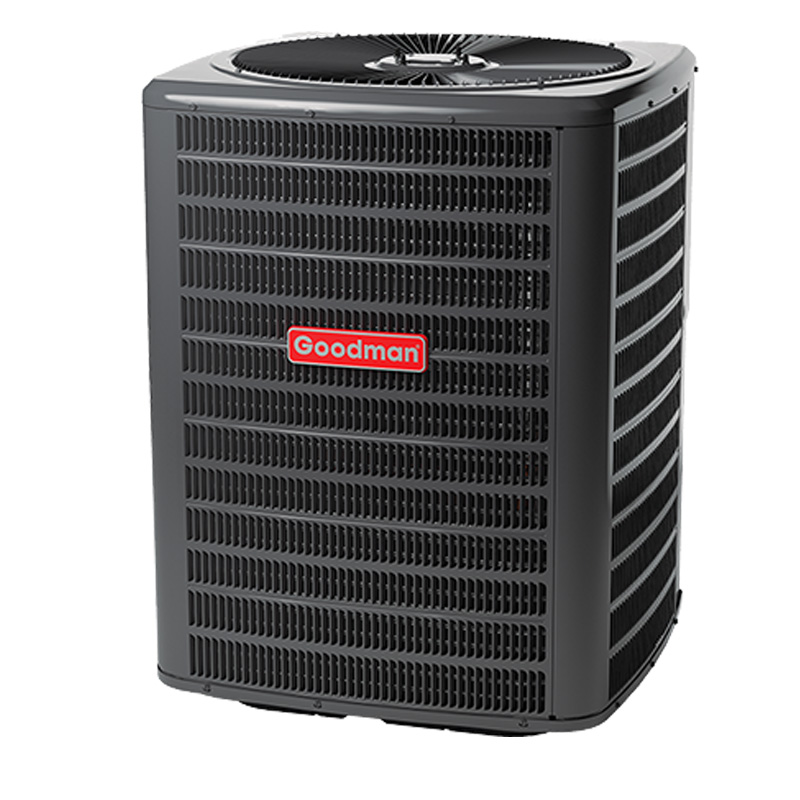
- Dual-run capacitors are a documented weak point and a recurring early service call, though the repair cost is usually modest
- A minority of owners report refrigerant leaks within the first year, a sign that install quality and initial charge are critical variables
What homeowners and pros say about Goodman
Homeowners who have lived with Goodman equipment tend to split into two camps, and both camps are reflected in the brand’s ratings. On Google dealer reviews, Goodman averages around 3.8 out of 5 across hundreds of location-level reviews, and the most consistent praise is straightforward: the system costs less to buy and it works as advertised when properly installed. Those positive voices often come from buyers who are on their second or third Goodman unit and know what to expect. On ConsumerAffairs, where the audience skews heavily toward people who have experienced problems, the brand lands around 2.5 out of 5, with the recurring complaint being repair costs that start climbing after roughly year seven. Neither number tells the full story on its own, but together they outline a realistic picture: solid value up front, with a maintenance profile that tends to become more active in the second half of the system’s life.
HVAC technicians who work on Goodman equipment regularly point to the dual-run capacitor as the call they make most often on these units. It is a low-cost fix in the 300 to 600 dollar range and not unique to Goodman, but it comes up more frequently here than on premium brands. Beyond that, evaporator coil leaks appear in a meaningful share of owner accounts, and compressor longevity on Goodman systems averages 10 to 14 years, noticeably shorter than the 15 to 20-year window typical of Trane, Lennox, or Carrier compressors. On this specific two-stage, ECM-equipped system, technicians also note that the more sophisticated controls require an experienced installer to commission correctly, and that a small but real percentage of first-year refrigerant leak calls on R-32 systems trace back to improper charging rather than factory defects. The consistent professional advice is to budget for a service contract or a repair reserve after year five and to treat installer selection as seriously as brand selection.
Sources: ConsumerAffairs Goodman owner reviews, AHRI Directory of Certified Product Performance, U.S. DOE appliance and equipment efficiency standards, Goodman product specification sheets.
What it costs to run
At 15.2 SEER2, cooling this 2.5-ton system for a typical 1200-hour cooling season at the U.S. average electricity rate of $0.17/kWh works out to roughly $403 per year in cooling, about $54 less per year than a minimum-efficiency 13.4 SEER2 unit of the same size. Your real cost depends on your climate and local rate.
Method: (30,000 BTU/hr ÷ 15.2 SEER2) × 1200 hours ÷ 1000 × $0.17/kWh. Rate source: U.S. EIA average; cooling hours: moderate-climate estimate.
How it compares
| Brand | Comparable model | SEER2 | Stage | Price position |
|---|---|---|---|---|
| Goodman | GSXH5 / GMVC96 Bundle | 15.2 | Two-stage | Value pick |
| Carrier | Comfort 24ACC6 / 59SC5 | 15.2 | Single-stage | Typically 15 to 25 percent more than this Goodman bundle |
| Trane | XR15 / S9X1 | 15.0 | Single-stage | Typically 15 to 25 percent more than this Goodman bundle |
| Lennox | Merit ML15XC1 / ML196E | 15.2 | Single-stage | Typically 15 to 25 percent more than this Goodman bundle |
Competitor rows are comparable single-stage units at similar efficiency; price is relative position, not a quote.
Questions about this system
Will this system qualify for utility rebates given the 96% AFUE and 15.2 SEER2 ratings?
Many utilities and some state programs offer rebates for furnaces at or above 95% AFUE and for air conditioners meeting current efficiency thresholds, and this system's specs put it in range for those programs. Check your local utility's rebate portal before purchasing, since eligibility requirements and dollar amounts vary significantly by region and change year to year.
How important is it to use a certified installer for this specific Goodman system?
Critically important. Goodman's own track record shows that performance and longevity lean heavily on install quality, and a meaningful share of reported first-year refrigerant leaks trace back to improper charging or line-set handling rather than factory defects. Using a licensed HVAC technician familiar with R-32 handling requirements is not optional if you want the warranty to remain intact and the system to perform as rated.
What should I expect from the two-stage furnace compared to a single-stage model?
The furnace will run at a reduced first-stage output the majority of the time, which means longer, quieter cycles that hold temperatures more evenly and consume less gas during mild weather. You will likely notice fewer cold blasts from the vents and more consistent room-to-room comfort compared to a basic single-stage furnace, though it will not reach the fine-grained control of a fully variable-speed modulating furnace.
What are the most common repairs I should budget for over the life of this system?
The dual-run capacitor on the outdoor unit is the most frequently reported failure point and typically costs 300 to 600 dollars to diagnose and replace, so it is worth treating as an expected maintenance item rather than a surprise. Evaporator coil leaks and compressor wear show up more often in Goodman owner reports after roughly year seven, and a compressor replacement or coil swap is a substantially larger expense, which makes an extended warranty or a dedicated repair fund worth considering.
Is R-32 refrigerant harder to service or more expensive to recharge than R-410A?
R-32 requires technicians to use slightly different handling procedures because it is mildly flammable, and not every technician has completed R-32 certification yet. Availability is growing quickly as manufacturers across the industry transition to it, so finding a qualified technician is becoming easier in most markets. In the near term, confirm that your installer is certified to handle R-32 before scheduling service.
Specifications
| Cooling capacity | 2.5 Ton |
| Efficiency | 15.2 SEER2 |
| Furnace output | 80000 BTU |
| Furnace efficiency | 96% AFUE |
| Configuration | Upflow |
| Refrigerant | R-32 |