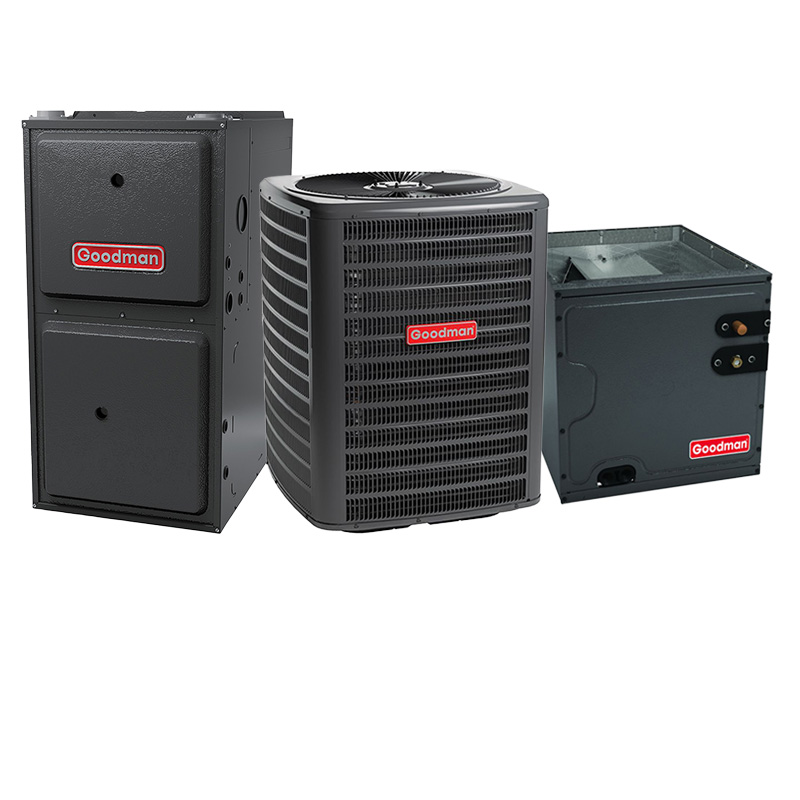
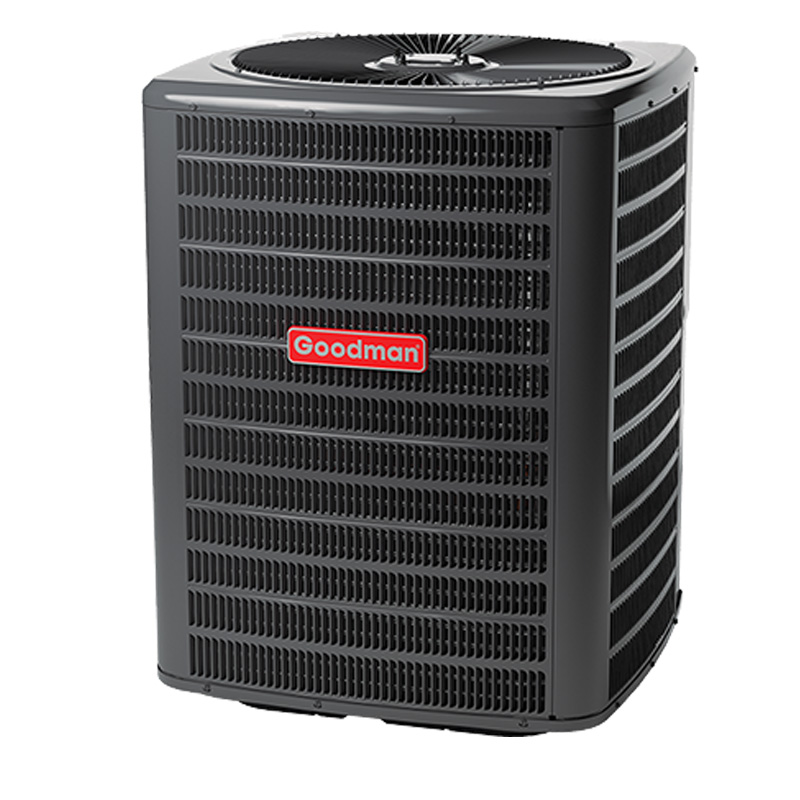
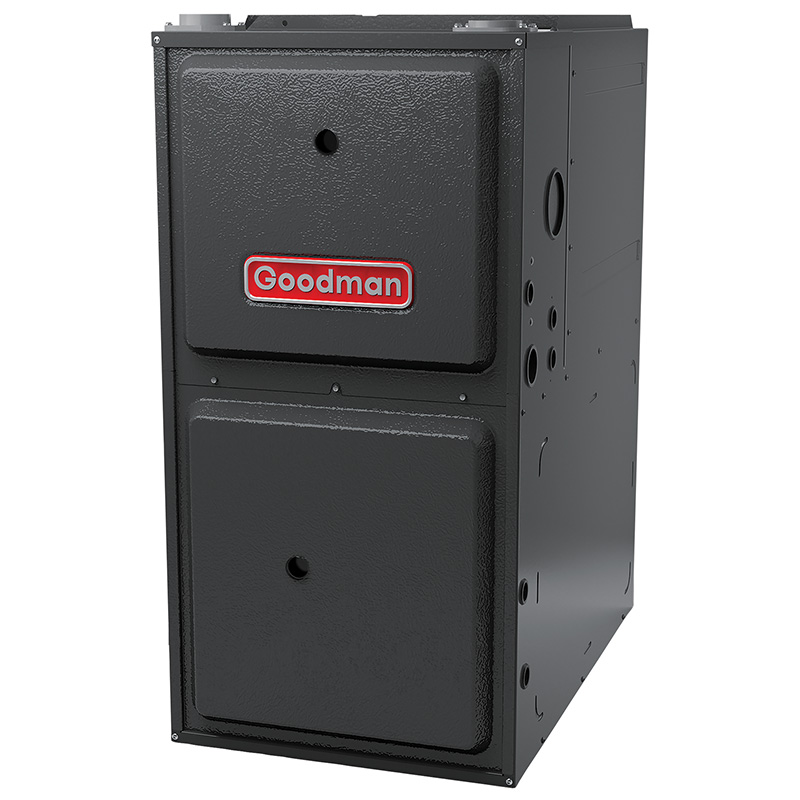
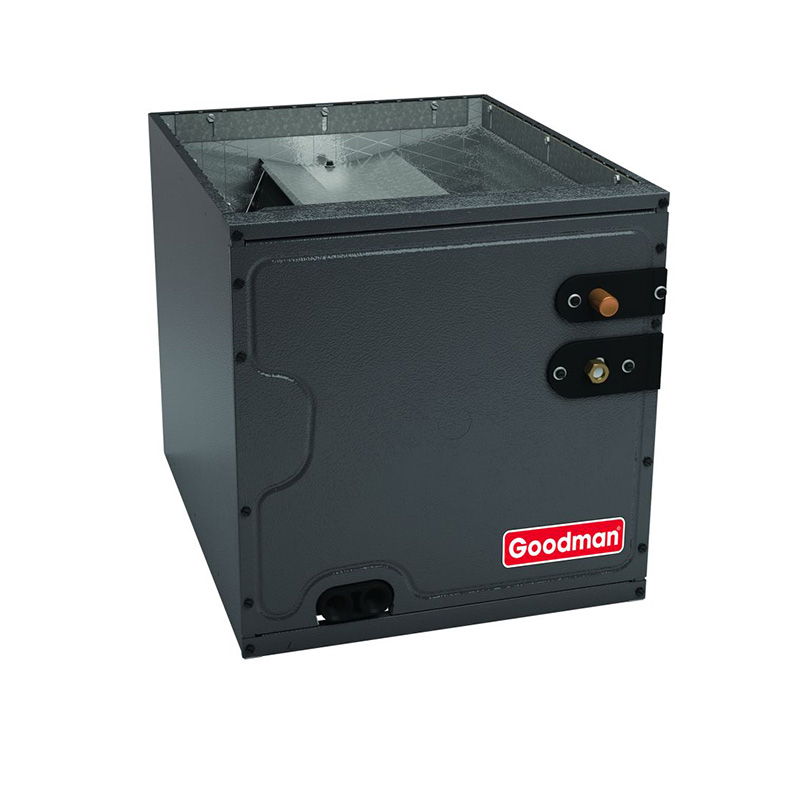
Goodman Furnace And AC – 2 Ton 14.3 SEER2 AC With 30000 BTU 96% AFUE Two Stage Multi-Speed ECM Gas Furnace System – Upflow | R32
View on AC Direct see your lowest price →Check current price on AC Direct →
Key features
- 2-ton cooling capacity suited to homes roughly 800 to 1,200 sq ft depending on climate and insulation
- 14.3 SEER2 efficiency meets 2023 federal minimums for most northern regions
- 96% AFUE two-stage gas furnace with ECM multi-speed blower for reduced cycling and lower fan electricity
- R-32 refrigerant with a global warming potential approximately 70% lower than R-410A
- Upflow configuration for installations with overhead supply ductwork
- Goodman 10-year parts limited warranty when registered within 60 days of installation
About this system
This Goodman bundle pairs a 2-ton, 14.3 SEER2 central air conditioner with a 30,000 BTU, 96% AFUE two-stage gas furnace in an upflow configuration, making it a strong candidate for smaller homes, conditioned basements with upward duct runs, or zone additions where whole-house replacement is overkill. The R-32 refrigerant charge is a meaningful step forward: R-32 has a global warming potential roughly 70 percent lower than R-410A and is increasingly the industry standard, so parts and service availability will only improve over the coming decade.
The furnace side is where this system earns its keep. A 96% AFUE rating means only about four cents of every fuel dollar escapes as exhaust, which is near the ceiling for non-condensing efficiency and qualifies for utility rebates in many states. Two-stage operation lets the burner run at a lower fire level on mild days, cutting on-off cycling, reducing temperature swings, and lowering noise compared to single-stage units. The ECM blower motor compounds those gains by ramping speed to match demand rather than running flat-out, trimming annual electricity use on the air handler side by a noticeable margin versus a standard PSC motor. For a household that heats often and wants utility savings without stepping up to a premium brand price point, this combination makes practical sense.
That said, 14.3 SEER2 sits right at the federal minimum efficiency threshold for most northern U.S. climate zones, so buyers in cooling-heavy southern markets should weigh whether the modest incremental cost to reach 16 or 17 SEER2 would pay back faster. The upflow configuration also limits placement to installations where supply air rises from the unit into overhead ductwork, so confirm your mechanical room orientation before ordering.
This Goodman bundle delivers genuinely good furnace efficiency and a modern refrigerant choice at a price point typically 15 to 25 percent below equivalent Trane, Carrier, or Lennox systems. The two-stage furnace with ECM motor is a real comfort and operating-cost upgrade over single-stage budget units, and 96% AFUE is hard to argue with. The honest caveat is that Goodman's long-term reliability record is average, not exceptional, and how long this system lasts will depend heavily on who installs it and how well it is commissioned.
Overall score is the average of the five ratings above.
What we like
- Price undercuts comparable Trane, Lennox, and Carrier bundles by an estimated 15 to 25 percent
- 96% AFUE two-stage furnace with ECM blower meaningfully reduces both gas and electricity bills versus single-stage, standard-motor alternatives
- R-32 refrigerant is lower-impact and is becoming the industry standard, supporting future serviceability
- Two-stage operation reduces temperature swings and indoor humidity spikes on mild days
- 10-year parts warranty (registered) is competitive with mid-tier offerings from premium brands
Trade-offs
- 14.3 SEER2 is entry-level cooling efficiency; homeowners in hot climates may see limited cooling season savings versus higher-SEER2 options
- Compressor lifespan averages 10 to 14 years versus 15 to 20 years reported for premium brands, meaning a mid-life replacement is more likely
- Dual-run capacitor failures and evaporator coil leaks are the most documented failure modes in owner reviews, adding potential repair costs after year seven
- Performance is highly dependent on installer quality; a poor charge or duct connection can undercut efficiency and reliability regardless of equipment specs
What homeowners and pros say about Goodman
Homeowners who post about Goodman equipment tend to cluster at the extremes. On Google dealer review pages, which average around 3.8 out of 5 stars across hundreds of reviews per location, the most common praise is straightforward: the system works, the price was fair, and the installation crew did not push unnecessary upgrades. On complaint-oriented channels like ConsumerAffairs, where Goodman scores roughly 2.5 out of 5, the recurring story is a system that ran fine for six or seven years before repair bills began stacking up, with dual-run capacitor failures and evaporator coil leaks appearing most often in the narratives. Neither picture is the complete one.
HVAC professionals tend to describe Goodman as serviceable equipment that rewards a careful installation and punishes a careless one more than premium brands do. The specific failure modes they flag align with the owner data: capacitors are considered a consumable on Goodman equipment and an easy fix, but coil leaks are more disruptive and expensive. Compressor longevity is the bigger strategic concern; a 10-to-14-year average lifespan versus the 15-to-20 years more commonly cited for Trane or Carrier compressors means this system is more likely to need a compressor or full outdoor unit replacement before the furnace wears out. For buyers who understand that trade-off and prioritize upfront savings, this two-stage, 96% AFUE bundle with its R-32 charge represents a genuinely reasonable value in the current market.
Sources: ConsumerAffairs Goodman owner reviews, AHRI Directory of Certified Product Performance, U.S. DOE appliance and equipment efficiency standards, Goodman product specification sheets.
What it costs to run
At 14.3 SEER2, cooling this 2-ton system for a typical 1200-hour cooling season at the U.S. average electricity rate of $0.17/kWh works out to roughly $342 per year in cooling, about $23 less per year than a minimum-efficiency 13.4 SEER2 unit of the same size. Your real cost depends on your climate and local rate.
Method: (24,000 BTU/hr ÷ 14.3 SEER2) × 1200 hours ÷ 1000 × $0.17/kWh. Rate source: U.S. EIA average; cooling hours: moderate-climate estimate.
How it compares
| Brand | Comparable model | SEER2 | Stage | Price position |
|---|---|---|---|---|
| Goodman | GSXH5 / GMVC96 Series (this bundle) | 14.3 | Two-stage furnace / standard AC | Value pick |
| Carrier | Comfort 24ACC6 with 59SC5 furnace | 14.3-15.2 | Single-stage | Typically 15 to 25 percent more than this Goodman bundle |
| Trane | XR14c with S9X1 furnace | 14.3-15 | Single-stage | Typically 15 to 25 percent more than this Goodman bundle |
| Lennox | Merit ML14XC1 with ML196E furnace | 14.3-15 | Single-stage | Typically 15 to 25 percent more than this Goodman bundle |
Competitor rows are comparable single-stage units at similar efficiency; price is relative position, not a quote.
Questions about this system
Is 14.3 SEER2 good enough, or should I pay more for a higher-efficiency AC unit?
14.3 SEER2 meets the 2023 federal minimum for most northern climate zones and is a reasonable baseline for moderate climates. If you are in a region with long, hot summers and high cooling loads, the payback period on a 16 or 17 SEER2 unit can be under five years, so it is worth running the numbers for your specific utility rates and usage.
What does two-stage furnace operation actually mean for my comfort and bills?
A two-stage furnace fires at a reduced capacity (typically around 65 percent) on milder days and only kicks to full output when temperatures drop significantly. This means fewer abrupt on-off cycles, more even temperatures room to room, and lower gas consumption during shoulder seasons compared to a single-stage unit of the same AFUE rating.
What are the most common repairs I should budget for over the life of this system?
Based on documented owner feedback, dual-run capacitor failures are the most frequent issue and typically cost between $300 and $600 to fix. Evaporator coil leaks appear in a meaningful share of long-term owner reviews and are more expensive to address. Setting aside a service fund after year five is a reasonable precaution.
Does this system use R-32 refrigerant, and will that make it harder to service?
Yes, this unit ships with an R-32 charge. R-32 is an A2L mildly flammable refrigerant, so technicians need specific certification and equipment to handle it safely. That said, R-32 is rapidly becoming the industry standard and service availability is growing; within a few years it should be as straightforward to service as R-410A is today.
How important is installer quality for a Goodman system specifically?
Very important. HVAC technicians consistently cite installation quality as the single biggest factor in how long a Goodman unit lasts and how efficiently it runs. A minority of owners report refrigerant leaks within the first year, which is almost always an installation or commissioning issue rather than a factory defect. Choosing a licensed, experienced contractor and verifying they perform a proper startup check is not optional with this brand.
Specifications
| Cooling capacity | 2 Ton |
| Efficiency | 14.3 SEER2 |
| Furnace output | 30000 BTU |
| Furnace efficiency | 96% AFUE |
| Configuration | Upflow |
| Refrigerant | R-32 |