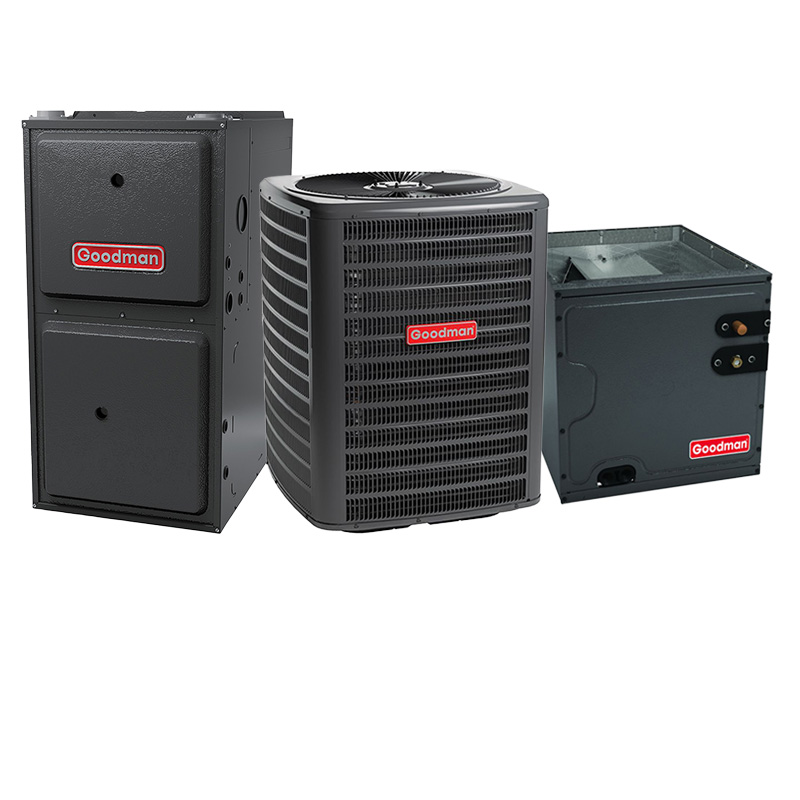
Goodman Furnace And AC – 2 Ton 14.3 SEER2 AC With 40000 BTU 96% AFUE Two Stage Multi-Speed ECM Gas Furnace System – Upflow | R32
View on AC Direct see your lowest price →Check current price on AC Direct →
Key features
- 2-ton, 14.3 SEER2 air conditioner using R-32 refrigerant
- 40,000 BTU two-stage gas furnace rated at 96% AFUE
- Multi-speed ECM blower motor for lower operating costs and better humidity control
- Upflow configuration for basement or ground-level mechanical room installs
- Two-stage heating reduces short-cycling and evens out indoor temperatures
- High-efficiency furnace tier eligible for many utility rebate programs
About this system
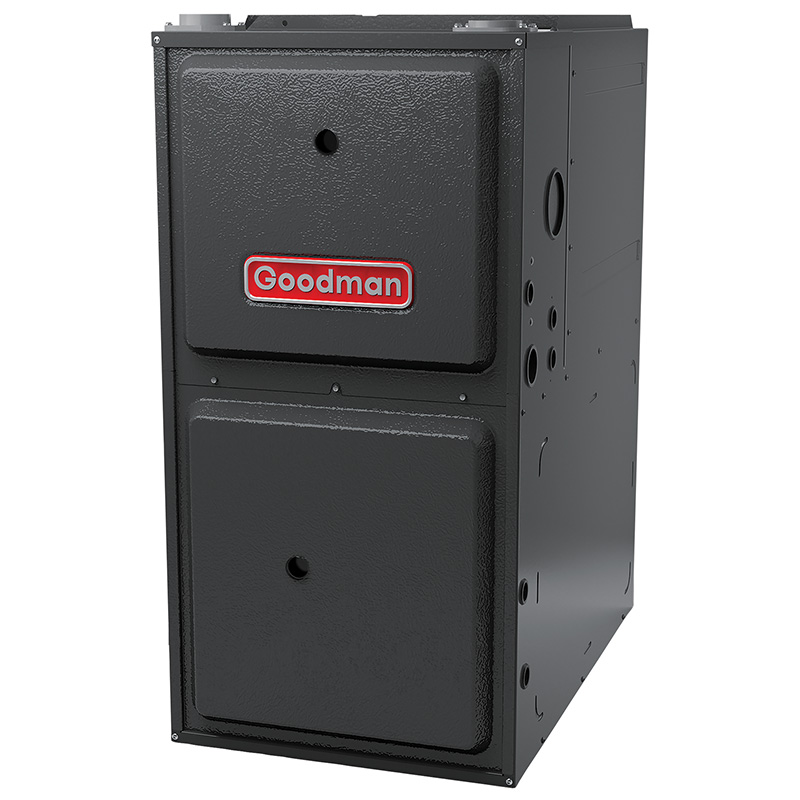
This Goodman bundle pairs a 2-ton, 14.3 SEER2 central air conditioner with a 40,000 BTU, 96% AFUE two-stage gas furnace in an upflow configuration, making it a practical choice for smaller homes, condos, or well-insulated spaces in the 700-to-1,000 square-foot range depending on climate and load. The 96% AFUE rating means the furnace converts 96 cents of every fuel dollar into usable heat, which puts it firmly in the high-efficiency tier and qualifies it for many utility rebates. Two-stage heating adds a meaningful comfort upgrade over single-stage units: the furnace runs on low fire the majority of the time, cycling less aggressively and holding steadier indoor temperatures before stepping up to full output on the coldest days.
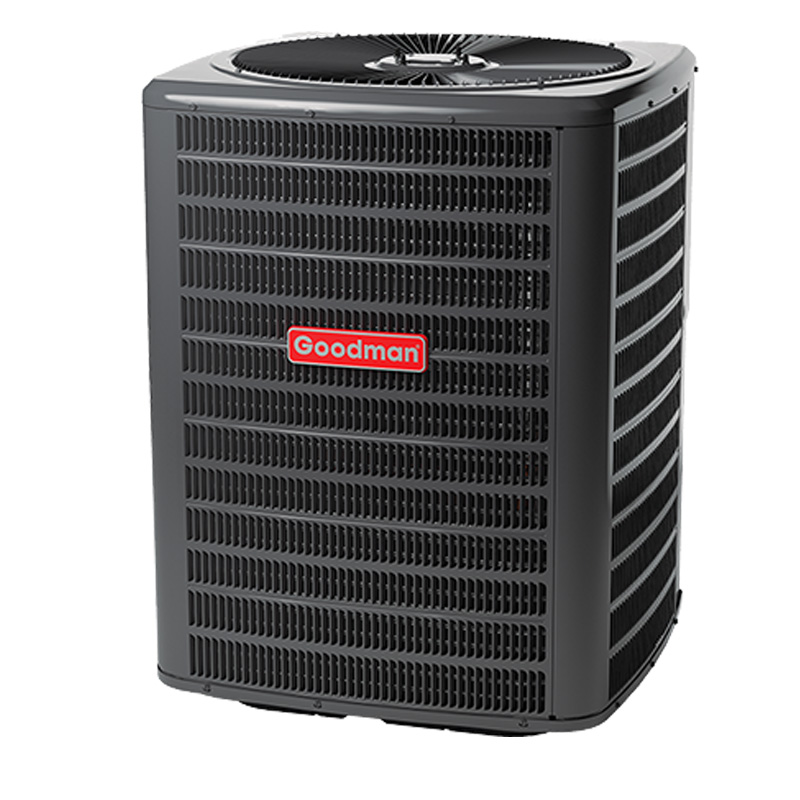
The air conditioner side uses R-32 refrigerant, a lower global-warming-potential option that is becoming the industry standard as R-410A is phased out. At 14.3 SEER2, efficiency is solid for a value-tier system, comfortably clearing the federal minimum and likely qualifying for modest rebates, though it falls short of the 16-plus SEER2 territory where energy savings become a stronger part of the value argument. The multi-speed ECM blower motor on the furnace is a genuine standout at this price point, reducing electricity consumption compared to a standard PSC motor and improving dehumidification by moving air more slowly and consistently during cooling mode.
Upflow configuration means the unit draws air in at the bottom and discharges conditioned air upward, the standard orientation for systems installed in a basement, utility closet, or ground-level mechanical room with ductwork running through the floor or ceiling above. Buyers should confirm their existing duct layout matches before ordering, as converting from a different configuration adds labor cost. This system suits budget-conscious homeowners replacing aging equipment who want a meaningful step up in furnace efficiency without stretching into premium-brand pricing.
This Goodman bundle delivers genuinely strong furnace specs, specifically the 96% AFUE two-stage operation with an ECM motor, at a price point that undercuts premium brands by a meaningful margin. The air conditioner at 14.3 SEER2 is competent rather than exceptional, and long-term ownership costs depend heavily on installation quality and a willingness to budget for component repairs around the seven-to-ten-year mark. For buyers who want efficiency upgrades without premium-brand pricing, it earns its place, provided a qualified installer does the work correctly.
Overall score is the average of the five ratings above.
What we like
- 96% AFUE furnace is in the top efficiency tier and can cut heating bills versus mid-efficiency replacements
- Two-stage furnace operation reduces temperature swings and improves comfort on mild winter days
- ECM blower motor uses significantly less electricity than standard PSC motors
- R-32 refrigerant is future-proof as R-410A equipment becomes harder to service
- Priced 15 to 25 percent below comparable Trane, Lennox, and Carrier bundles
Trade-offs
- Dual-run capacitors are the most frequently reported early failure, typically adding a repair bill of 300 to 600 dollars within the first ten years
- Compressor lifespan averages 10 to 14 years versus 15 to 20 years reported for premium brands
- A minority of owners report refrigerant leaks in year one, most often traced to install or initial charge issues rather than the equipment itself
- Evaporator coil leaks appear in a meaningful share of long-term owner reviews, which can be a costly mid-life repair
What homeowners and pros say about Goodman
Homeowners who share feedback on Goodman equipment tend to land in two distinct camps. Those who had the system professionally installed by an experienced contractor and kept up with annual maintenance often report years of trouble-free operation and point to the lower purchase price as a genuine win. Those who ran into problems frequently describe climbing repair costs after roughly the seventh year of ownership, a pattern reflected in the brand’s ConsumerAffairs rating of about 2.5 out of 5, a channel that skews toward complaints but is consistent enough to be informative. On Google dealer reviews, where the sample includes a broader range of experiences, Goodman earns around 3.8 out of 5, with affordability as the most common reason people say they would buy again.
HVAC technicians tend to be candid about this brand’s specific weak points on this system. Dual-run capacitors are the part most commonly pulled out of a service van on a Goodman call, a repair that typically runs 300 to 600 dollars and is usually straightforward. More consequential are evaporator coil leaks, which show up in a meaningful portion of long-term owner accounts and can be a significant mid-life expense. Compressor longevity is the other honest conversation to have: technicians generally expect 10 to 14 years from a Goodman compressor versus 15 to 20 from premium-brand counterparts, and that gap factors into the true total cost of ownership. The refrigerant leaks reported by a smaller subset of first-year owners are almost universally traced back to install issues rather than the factory, which underscores the standing advice that choosing the right contractor matters at least as much as choosing the equipment itself.
Sources: ConsumerAffairs Goodman owner reviews, AHRI Directory of Certified Product Performance, U.S. DOE appliance and equipment efficiency standards, Goodman product specification sheets.
What it costs to run
At 14.3 SEER2, cooling this 2-ton system for a typical 1200-hour cooling season at the U.S. average electricity rate of $0.17/kWh works out to roughly $342 per year in cooling, about $23 less per year than a minimum-efficiency 13.4 SEER2 unit of the same size. Your real cost depends on your climate and local rate.
Method: (24,000 BTU/hr ÷ 14.3 SEER2) × 1200 hours ÷ 1000 × $0.17/kWh. Rate source: U.S. EIA average; cooling hours: moderate-climate estimate.
How it compares
| Brand | Comparable model | SEER2 | Stage | Price position |
|---|---|---|---|---|
| Goodman | This system (2-ton AC + 40K BTU 96% AFUE two-stage furnace) | 14.3 | Two-stage furnace / single-stage AC | Value pick |
| Carrier | Comfort 14 Series (24ACC4) with 59SC2 furnace | 14.3 | Single-stage | Typically 15 to 25 percent more than this Goodman bundle |
| Trane | XR14c with S9X2 furnace | 14.3 | Single-stage | Typically 15 to 25 percent more than this Goodman bundle |
| Lennox | Merit 14ACX with ML196E furnace | 14.3 | Single-stage | Typically 15 to 25 percent more than this Goodman bundle |
Competitor rows are comparable single-stage units at similar efficiency; price is relative position, not a quote.
Questions about this system
Will this furnace qualify for a federal tax credit or utility rebate?
The 96% AFUE rating meets the threshold for the federal energy efficiency home improvement tax credit, which can cover a portion of the equipment cost up to the current annual cap. Many utilities also offer rebates for high-efficiency furnaces, but programs vary by location, so check the DSIRE database or your utility's website before purchasing.
My existing system uses R-410A. Can I replace just the AC portion and keep my old coil?
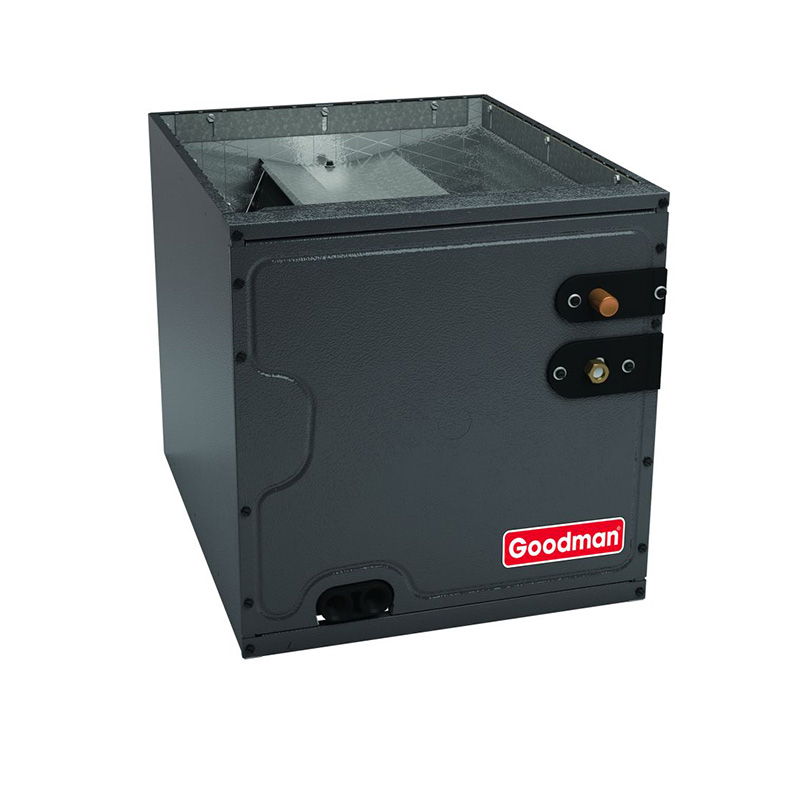
No. R-32 and R-410A are not interchangeable, and mixing components from different refrigerant systems is not safe or code-compliant. You will need a matched R-32 coil, which is typically sold separately and should be specified when ordering this system.
How important is installer choice with a Goodman system specifically?
Very important. Industry technicians consistently identify installation quality as the single biggest factor in how long a Goodman unit lasts and how reliably it operates. The first-year refrigerant leak reports that appear in owner reviews are almost always attributed to improper line set handling or an incorrect initial charge, not a manufacturing defect, so selecting a licensed, experienced installer is not optional.
What does two-stage operation actually mean for comfort in a small home?
In a smaller, well-insulated home, the furnace will spend most of its runtime on the lower first stage, which means longer, gentler heating cycles rather than short blasts of full heat. This tends to reduce temperature swings between thermostat calls and can improve comfort noticeably compared to a single-stage unit in the same space.
What should I budget for maintenance and repairs over the first ten years?
Beyond standard annual tune-ups, dual-run capacitor replacement is the most commonly reported Goodman repair and typically costs 300 to 600 dollars when it occurs. Keeping a service contract or a relationship with a reliable local technician makes sense, and budgeting for at least one or two component-level repairs over a decade is realistic based on documented owner experiences.
Specifications
| Cooling capacity | 2 Ton |
| Efficiency | 14.3 SEER2 |
| Furnace output | 40000 BTU |
| Furnace efficiency | 96% AFUE |
| Configuration | Upflow |
| Refrigerant | R-32 |