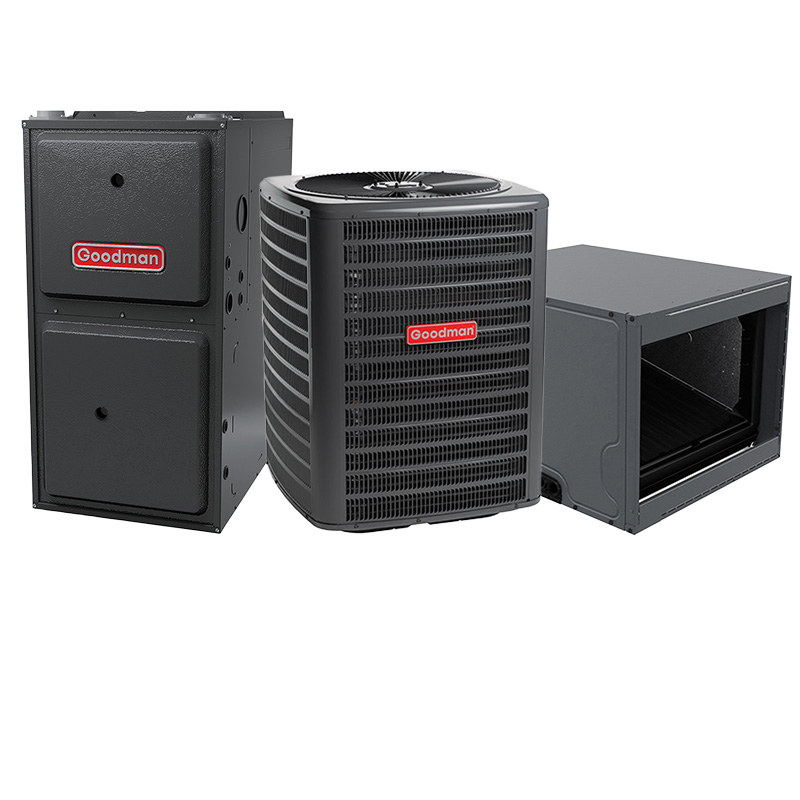
Goodman Furnace And AC – 3.5 Ton 14.5 SEER2 AC With 100000 BTU 96% AFUE Two Stage Multi-Speed ECM Gas Furnace System – Horizontal | R32
View on AC Direct see your lowest price →Check current price on AC Direct →
Key features
- 3.5-ton AC rated at 14.5 SEER2, meeting and exceeding current federal minimum efficiency standards
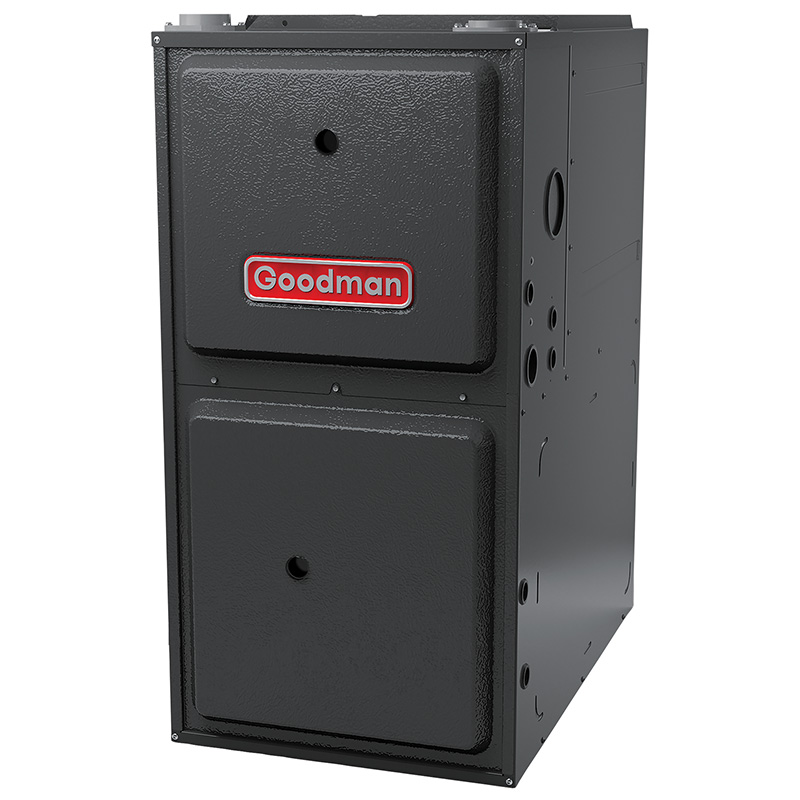
- 100,000 BTU two-stage gas furnace at 96% AFUE for high-efficiency, even heat distribution
- Multi-speed ECM blower motor reduces electrical consumption and supports variable airflow across heating and cooling modes
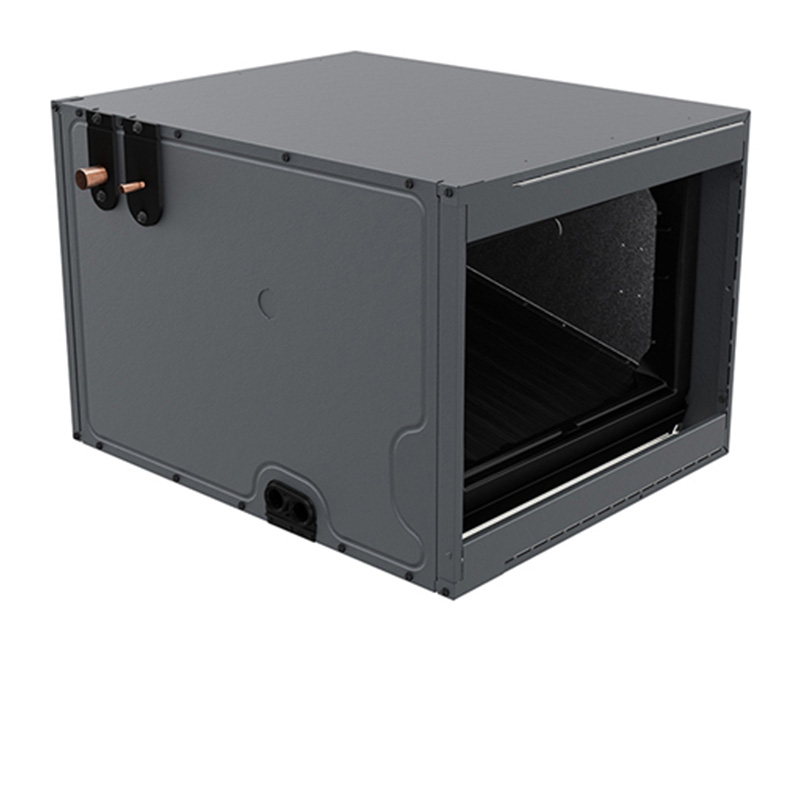
- Horizontal cabinet orientation designed for attic, crawlspace, or side-discharge installations
- R-32 refrigerant charge with lower global warming potential than legacy R-410A systems
- Two-stage operation reduces short-cycling on mild days, improving comfort and lowering runtime wear
About this system
This Goodman bundle pairs a 3.5-ton, 14.5 SEER2 split-system air conditioner with a 100,000 BTU, 96% AFUE two-stage gas furnace in a horizontal configuration, making it a practical choice for homes with attic or crawlspace installations where vertical cabinet clearance is limited. The 14.5 SEER2 rating lands at the lower edge of mid-efficiency territory, clearing the federal minimum by a comfortable margin without reaching the higher cost bracket of premium variable-speed systems. The 96% AFUE furnace is a legitimate high-efficiency unit, meaning roughly 96 cents of every dollar spent on gas goes toward actual heat rather than flue loss.
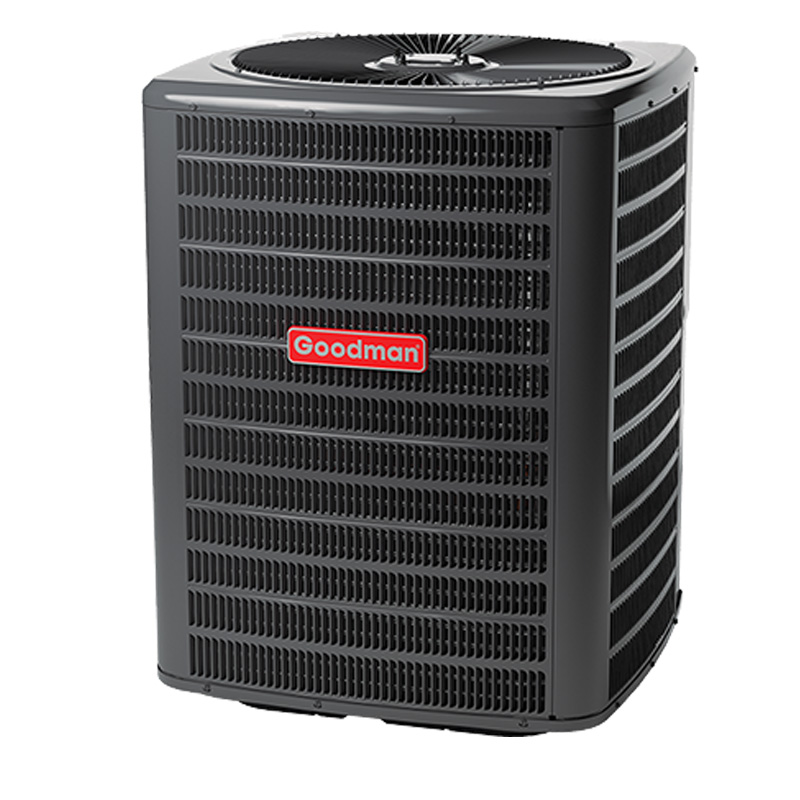
The two-stage furnace operation is a meaningful upgrade over single-stage designs. On mild days the furnace runs at its lower stage, cycling less aggressively, distributing heat more evenly, and reducing temperature swings room to room. The multi-speed ECM blower motor supports that behavior and adds a real-world efficiency advantage over standard PSC motors, particularly in blower-heavy climates or homes with long duct runs. R-32 refrigerant, used in the outdoor unit, carries a lower global warming potential than the R-410A it replaces and is the direction the industry is moving.
This system is sized for homes roughly in the 1,800 to 2,400 square foot range depending on climate zone, insulation quality, and local heat gain factors, though a proper Manual J load calculation by your installer should confirm sizing before purchase. It suits buyers who want above-code furnace efficiency and two-stage comfort without paying the premium that Trane, Lennox, or Carrier charge for comparable specifications.
This Goodman bundle offers genuine high-efficiency furnace performance and a solid mid-tier SEER2 rating at a price point 15 to 25 percent below equivalent Carrier, Trane, or Lennox packages, which is its clearest selling point. The two-stage furnace and ECM blower are real comfort upgrades over entry-level systems, but the brand's documented reliability record and component failure history mean long-term ownership costs depend heavily on install quality and your willingness to budget for potential repairs after year seven. It is a reasonable choice for cost-conscious buyers who vet their installer carefully.
Overall score is the average of the five ratings above.
What we like
- Purchase price typically 15 to 25 percent lower than comparable equipment from Trane, Carrier, or Lennox
- 96% AFUE furnace delivers high-efficiency heating with minimal flue heat loss
- Two-stage furnace reduces temperature swings and short-cycling on mild days
- ECM multi-speed blower cuts blower motor electrical costs compared to standard PSC motors
- R-32 refrigerant is a forward-compatible choice as the industry phases away from R-410A
Trade-offs
- Dual-run capacitors are the most frequently reported failure point, with repair costs typically in the $300 to $600 range, often appearing before the 10-year mark
- Evaporator coil leaks appear in a meaningful share of owner reviews and can be costly to address after the parts warranty period
- Compressor lifespan averages 10 to 14 years versus 15 to 20 years typical of premium-brand compressors
- A minority of owners report refrigerant leaks within the first year, usually tied to installation or initial charge issues rather than unit defects
What homeowners and pros say about Goodman
Homeowners who chose Goodman equipment largely echo what the numbers suggest. On Google dealer reviews, Goodman-installed systems score around 3.8 out of 5 across hundreds of location-level reviews, with affordability appearing as the most consistent point of praise. Buyers who did their homework on the brand going in tend to report satisfaction in the early years, particularly those who invested in a careful install. The picture shifts on complaint-weighted channels like ConsumerAffairs, where the brand sits around 2.5 out of 5 and the recurring theme is repair costs that start accumulating after roughly year seven. That gap between the two scores is telling: early ownership is generally fine, but the back half of the system’s life draws more criticism.
HVAC technicians who work on Goodman units regularly point to a short list of known trouble spots on this product line. Dual-run capacitor failures are the most routine service call and are considered a manageable, low-cost fix when caught early. Evaporator coil leaks are the failure mode that generates the most frustration among owners, since they can surface outside the parts warranty window and carry higher repair costs. Compressor longevity is where the brand most clearly trails Trane, Carrier, and Lennox, with typical service life in the 10 to 14 year range rather than the 15 to 20 years more commonly associated with premium-tier compressors. A smaller share of owners report refrigerant leaks within the first year, a pattern that technicians generally attribute to installation or initial charge errors rather than factory defects. For a 3.5-ton horizontal system like this one, where install complexity is higher than a standard upflow basement unit, choosing an experienced contractor is not optional advice.
Sources: ConsumerAffairs Goodman owner reviews, AHRI Directory of Certified Product Performance, U.S. DOE appliance and equipment efficiency standards, Goodman product specification sheets.
What it costs to run
At 14.5 SEER2, cooling this 3.5-ton system for a typical 1200-hour cooling season at the U.S. average electricity rate of $0.17/kWh works out to roughly $591 per year in cooling, about $48 less per year than a minimum-efficiency 13.4 SEER2 unit of the same size. Your real cost depends on your climate and local rate.
Method: (42,000 BTU/hr ÷ 14.5 SEER2) × 1200 hours ÷ 1000 × $0.17/kWh. Rate source: U.S. EIA average; cooling hours: moderate-climate estimate.
How it compares
| Brand | Comparable model | SEER2 | Stage | Price position |
|---|---|---|---|---|
| Goodman | This system (GSXH5 / GMVC96 series, horizontal bundle) | 14.5 | two-stage | Value pick |
| Carrier | Comfort 14 / Performance 96 (24ACC4 + 59TP6 series) | 14.5 | single-stage | Typically 15 to 25 percent more than this Goodman bundle |
| Trane | XR14s / S9V2 series | 14.5 | single-stage | Typically 15 to 25 percent more than this Goodman bundle |
| Lennox | Merit 14 / ML296V series | 14.5 | single-stage | Typically 15 to 25 percent more than this Goodman bundle |
Competitor rows are comparable single-stage units at similar efficiency; price is relative position, not a quote.
Questions about this system
Is 14.5 SEER2 efficient enough, or should I spend more for a higher-rated unit?
14.5 SEER2 clears the current federal minimum and will produce real energy savings over an older 10 to 13 SEER system. Stepping up to 17 or 18 SEER2 typically adds meaningful upfront cost and may take many years to recover through energy savings alone, so 14.5 SEER2 is a defensible choice unless you are in an extremely hot climate with very high cooling loads.
What does the horizontal configuration actually mean, and does it limit where this system can be installed?
Horizontal means the furnace cabinet is designed to lie on its side, with airflow moving through it horizontally rather than upward. This makes it suited for attics, crawlspaces, and closet installations where a vertical upflow or downflow cabinet will not fit. If your existing furnace sits in a basement or utility closet in an upright position, this specific configuration likely will not work without significant modification.
What are the most likely repairs I should budget for over the first 10 years?
Based on documented owner experience with Goodman equipment, dual-run capacitor replacement is the most common service call and typically costs $300 to $600 including labor. Evaporator coil leaks are the next most cited issue and can be more expensive depending on refrigerant costs and labor rates. Budgeting for at least one capacitor replacement within the first decade is a realistic expectation.
Does this system come ready for R-32 refrigerant, and will it affect service costs?
Yes, this unit is designed and pre-charged for R-32. R-32 is classified as A2L, meaning it is mildly flammable, so technicians working on it are required to use specific handling procedures and tools. Most established HVAC contractors are already equipped for R-32 service, but it is worth confirming with your tech before scheduling work, particularly in smaller or rural markets.
How much does install quality actually matter for a Goodman system?
It matters more than it does with premium brands. Technicians who work with Goodman equipment consistently note that improper refrigerant charge, poor duct connections, and incorrect airflow setup are the most common reasons these units underperform or develop early failures, including the first-year refrigerant leaks that show up in owner reviews. Using a licensed installer with demonstrated Goodman experience and requesting a post-install system performance check is strongly advisable.
Specifications
| Cooling capacity | 3.5 Ton |
| Efficiency | 14.5 SEER2 |
| Furnace output | 100000 BTU |
| Furnace efficiency | 96% AFUE |
| Configuration | Horizontal |
| Refrigerant | R-32 |