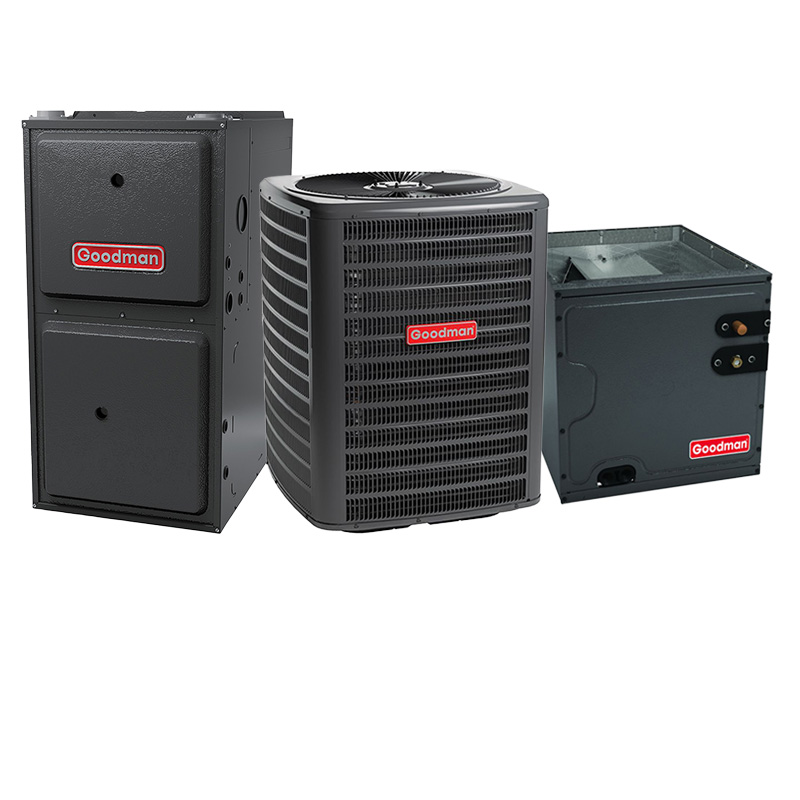
Goodman Furnace And AC – 3.5 Ton 15.2 SEER2 AC With 100000 BTU 96% AFUE Two Stage Multi-Speed ECM Gas Furnace System – Upflow | R32
View on AC Direct see your lowest price →Check current price on AC Direct →
Key features
- 3.5-ton, 15.2 SEER2 air conditioner using R-32 refrigerant
- 100,000 BTU two-stage gas furnace rated at 96% AFUE
- Multi-speed ECM blower motor reduces electricity use and noise
- Upflow configuration for basement or closet installations with overhead ductwork
- Two-stage operation provides quieter part-load performance on mild days
- Matched system bundle designed for single-installation warranty compliance
About this system
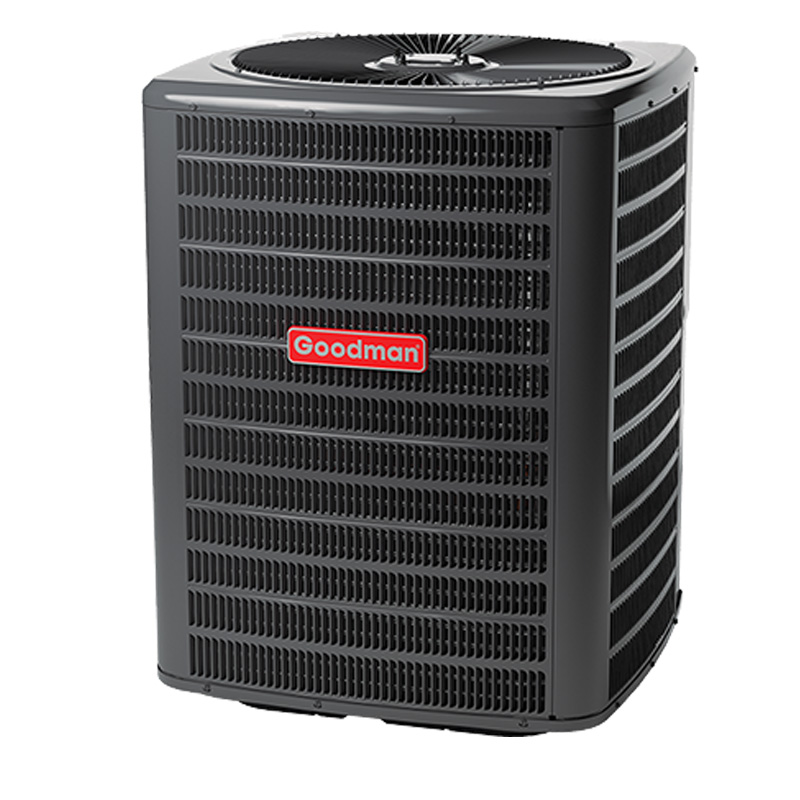
This Goodman bundle pairs a 3.5-ton, 15.2 SEER2 air conditioner with a 100,000 BTU, 96% AFUE two-stage gas furnace in an upflow configuration, making it a practical choice for mid-size homes in the 1,800 to 2,600 square foot range that need serious heating capacity alongside efficient summer cooling. The R-32 refrigerant charge is a forward-looking detail: R-32 has a lower global warming potential than the R-410A it replaces, and it is increasingly the industry standard for new residential equipment, which should make future service easier as the transition matures.
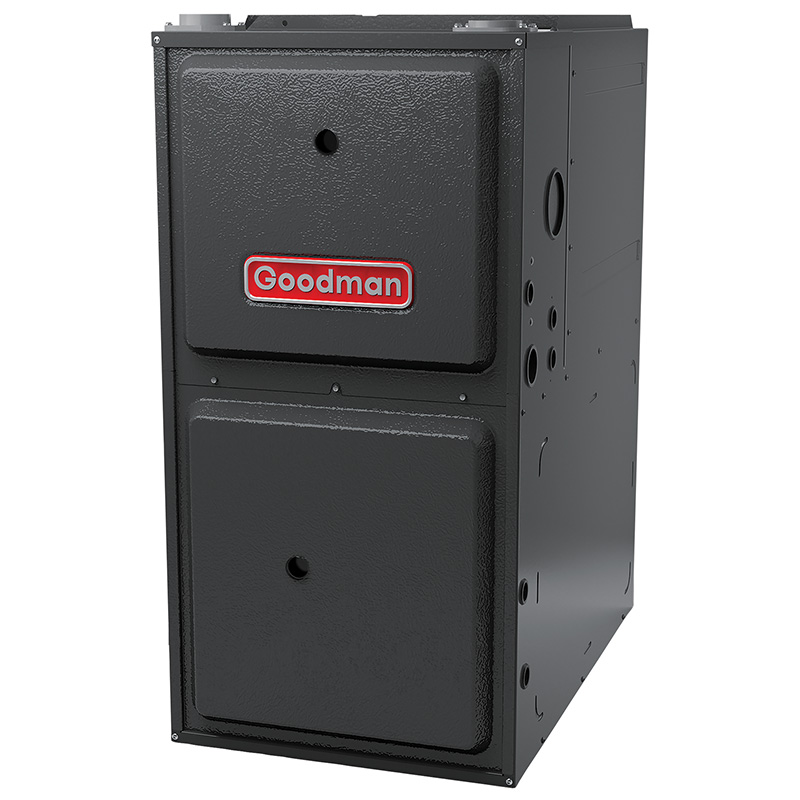
The two-stage furnace runs at a lower firing rate most of the time, only stepping up to full capacity on the coldest days. Paired with a multi-speed ECM blower motor, this setup moves air more quietly and evenly than a single-stage system, and the ECM motor draws significantly less electricity than a standard PSC motor during normal operation. The 96% AFUE rating means roughly 96 cents of every dollar spent on gas goes to usable heat, which is a strong number without reaching the premium tier of modulating furnaces. Together these components represent a solid mid-efficiency package at a price point that sits well below comparable Trane, Lennox, or Carrier bundles.
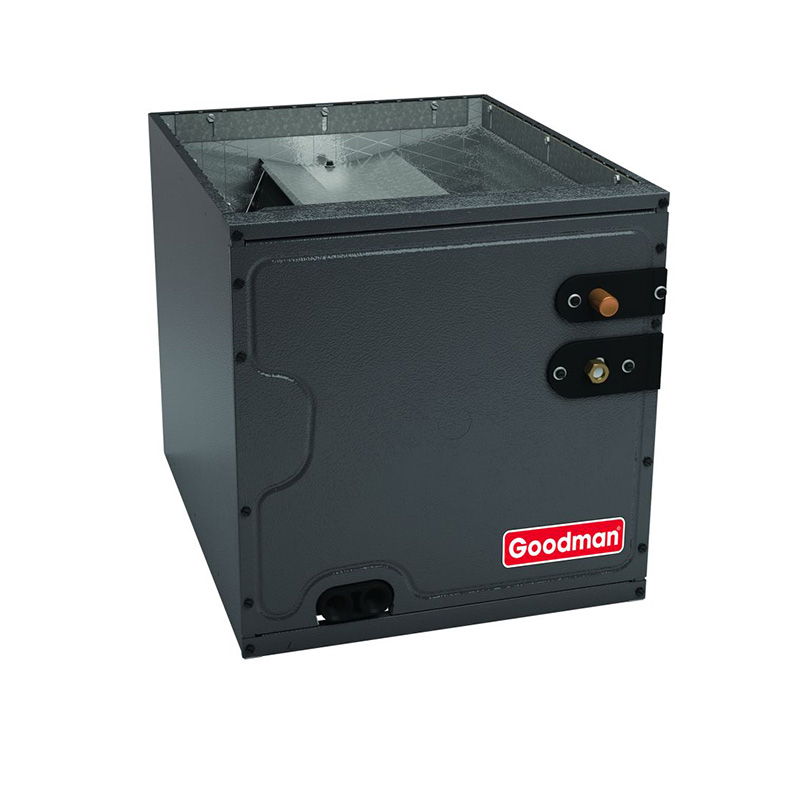
The upflow configuration directs conditioned air upward into overhead ductwork, which suits most basement or closet installations in the northern and central United States. Buyers should understand that this is a matched system sold as a bundle; having both units installed by the same licensed contractor at the same time is important for warranty coverage and for ensuring the coil, refrigerant charge, and airflow are set up correctly from day one.
This Goodman bundle delivers genuinely capable two-stage heating and mid-efficiency cooling at a price that undercuts premium brands by 15 to 25 percent, making it a reasonable choice for budget-conscious buyers who are not chasing top-tier longevity. The 96% AFUE furnace and ECM motor are real performance advantages at this price point, but Goodman's documented track record of capacitor failures, evaporator coil leaks, and compressor lifespans averaging 10 to 14 years means you should factor in higher long-term service costs compared to Trane or Carrier. If you have a skilled installer and a willingness to budget for occasional repairs after year seven, the value proposition holds up reasonably well.
Overall score is the average of the five ratings above.
What we like
- 15.2 SEER2 efficiency meets 2023 federal minimums with room to spare in most climate zones
- 96% AFUE two-stage furnace is among the more efficient options at this price level
- ECM multi-speed blower lowers electricity consumption and reduces cycling noise
- R-32 refrigerant is lower-impact and increasingly well-supported by technicians
- Priced 15 to 25 percent below comparable Carrier, Trane, and Lennox systems
Trade-offs
- Dual-run capacitors are the most commonly reported failure point, typically arising within the first several years of use
- Evaporator coil leaks appear in a meaningful share of owner accounts, a potential mid-lifecycle expense
- Compressor lifespan averages 10 to 14 years versus 15 to 20 years for premium-brand compressors
- A minority of owners report refrigerant leaks in the first year, most often linked to installation or charging errors rather than the equipment itself
What homeowners and pros say about Goodman
Homeowners who leave reviews on ConsumerAffairs give Goodman equipment roughly 2.5 out of 5 stars, and the pattern in those accounts is fairly consistent: the first several years tend to be uneventful, but repair costs climb after around year seven. The specific failure modes that come up most often are dual-run capacitor failures, evaporator coil leaks, and compressors that tend to reach end of life in the 10 to 14 year range rather than the 15 to 20 years owners of Trane or Carrier equipment more commonly report. It is worth noting that ConsumerAffairs skews toward frustrated owners, so the score overstates how common serious problems are across the full install base.
At the contractor and dealer level, Goodman scores around 3.8 out of 5 on Google reviews, where the most repeated theme is straightforward: the price is hard to argue with for what you get. HVAC technicians tend to have mixed opinions. Many appreciate that Goodman parts are widely stocked and that the two-stage ECM furnace in this bundle is genuinely well-engineered for its price tier. The more common professional concern is that Goodman’s longevity gap versus premium brands is real, and that a poorly executed installation amplifies every weakness the equipment already has. For this particular bundle, with its R-32 charge and matched coil, technicians consistently emphasize that a careful startup procedure and a verified refrigerant charge on day one are not optional steps.
Sources: ConsumerAffairs Goodman owner reviews, AHRI Directory of Certified Product Performance, U.S. DOE appliance and equipment efficiency standards, Goodman product specification sheets.
What it costs to run
At 15.2 SEER2, cooling this 3.5-ton system for a typical 1200-hour cooling season at the U.S. average electricity rate of $0.17/kWh works out to roughly $564 per year in cooling, about $75 less per year than a minimum-efficiency 13.4 SEER2 unit of the same size. Your real cost depends on your climate and local rate.
Method: (42,000 BTU/hr ÷ 15.2 SEER2) × 1200 hours ÷ 1000 × $0.17/kWh. Rate source: U.S. EIA average; cooling hours: moderate-climate estimate.
How it compares
| Brand | Comparable model | SEER2 | Stage | Price position |
|---|---|---|---|---|
| Goodman | GSXH5 / GMVC96 Series Bundle | 15.2 | Two-stage | Value pick |
| Carrier | Performance 16 (24ACC6) with 59TP6 | 15.2 to 16 | Two-stage | Typically 15 to 25 percent more than this Goodman bundle |
| Trane | XR15 (4TTR5) with S9V2 | 15 to 15.6 | Two-stage | Typically 15 to 25 percent more than this Goodman bundle |
| Lennox | Merit 16ACX with ML196V | 15.2 to 16 | Two-stage | Typically 15 to 25 percent more than this Goodman bundle |
Competitor rows are comparable single-stage units at similar efficiency; price is relative position, not a quote.
Questions about this system
Does the 10-year parts warranty apply automatically, or do I need to register the equipment?
Goodman requires product registration within a set window after installation to activate the full 10-year parts warranty; without registration, coverage typically drops to a shorter base period. Register both the furnace and the AC unit separately on Goodman's website as soon as installation is complete, and keep your contractor's paperwork as proof of install date.
Why are refrigerant leaks showing up in first-year owner reports if this is a new system?
First-year refrigerant leaks with Goodman systems are most often traced to installation errors, specifically improper line set connections or an incorrect R-32 charge, rather than a defect in the unit itself. This is one of the strongest reasons to hire an installer with documented experience on R-32 systems and to request a leak check and static pressure test before they leave the job.
Is 3.5 tons the right size for my home, or should I go up to 4 tons?
Tonnage should be determined by a Manual J load calculation based on your home's square footage, insulation levels, window area, local climate, and ceiling height, not a rule of thumb. Oversizing a two-stage system leads to short cycling, poor humidity control, and faster wear; have your HVAC contractor run the calculation before ordering.
How much does it typically cost to fix the dual-run capacitor failure that Goodman is known for?
A dual-run capacitor replacement on a Goodman AC unit generally runs between 300 and 600 dollars including labor, which is one of the lower-cost repairs in the industry. The part itself is inexpensive; most of the cost is the service call and labor. Keeping a maintenance contract can help catch a weakening capacitor before it fails mid-summer.
Can this upflow furnace be converted to a horizontal or downflow configuration if my installation requires it?
This unit is rated and listed specifically for upflow operation; installing it in a horizontal or downflow position without a model that is certified for that orientation can void the warranty and create safety issues. If your installation space requires a different airflow direction, confirm with your contractor whether a different Goodman model or a field-conversion kit applies to your specific situation.
Specifications
| Cooling capacity | 3.5 Ton |
| Efficiency | 15.2 SEER2 |
| Furnace output | 100000 BTU |
| Furnace efficiency | 96% AFUE |
| Configuration | Upflow |
| Refrigerant | R-32 |