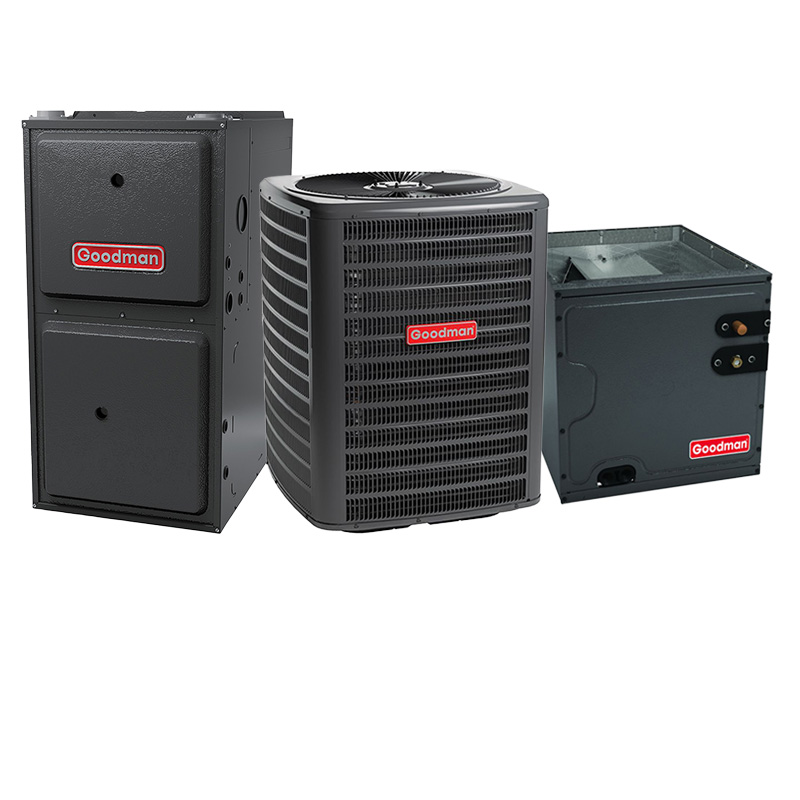
Goodman Furnace And AC – 3.5 Ton 15.2 SEER2 AC With 80000 BTU 96% AFUE Two Stage Multi-Speed ECM Gas Furnace System – Upflow | R32
View on AC Direct see your lowest price →Check current price on AC Direct →
Key features
- 3.5-ton cooling capacity with 15.2 SEER2 efficiency rating
- 80,000 BTU two-stage gas furnace at 96% AFUE
- Multi-speed ECM blower motor for lower operating costs and improved comfort
- R-32 refrigerant, a lower global-warming-potential alternative to R-410A
- Upflow configuration for basement or ground-level utility closet installs
- Factory-matched system designed for simpler commissioning and compatibility
About this system
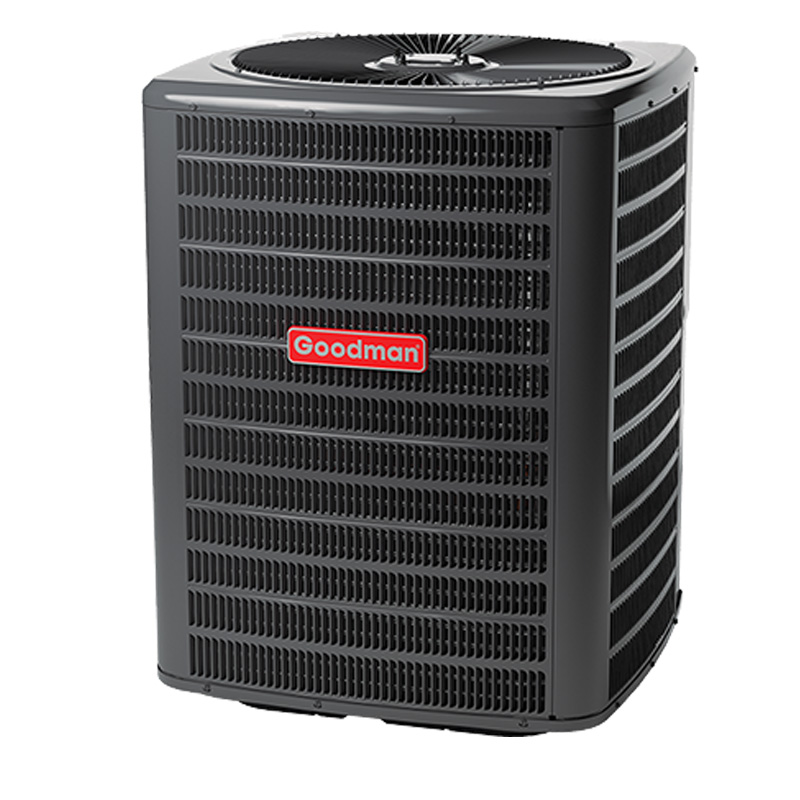
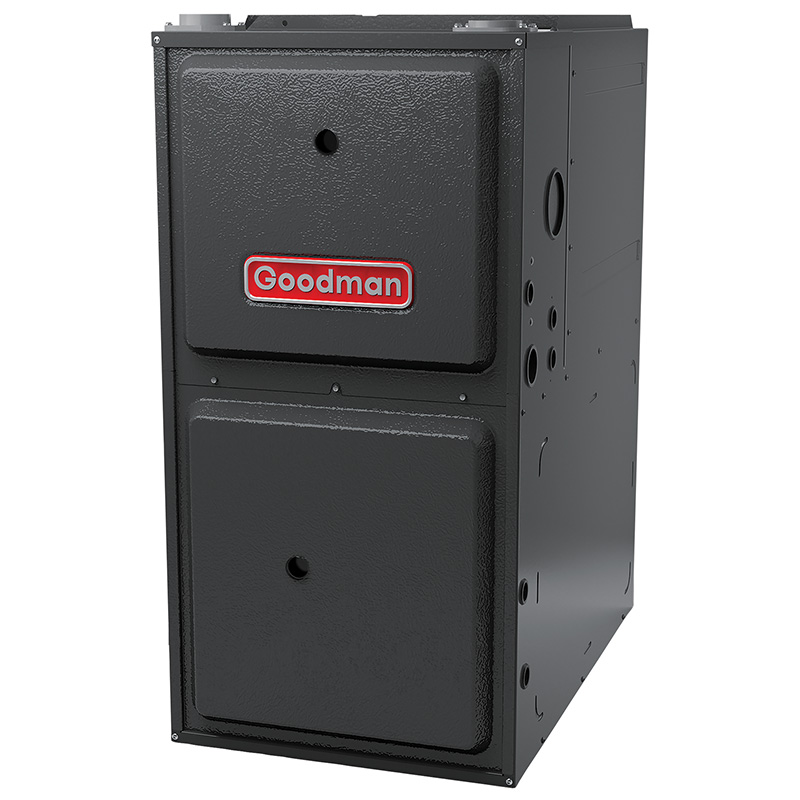
This Goodman bundle pairs a 3.5-ton, 15.2 SEER2 air conditioner with an 80,000 BTU, 96% AFUE two-stage gas furnace in an upflow configuration, making it a strong candidate for homes in the 1,800 to 2,400 square foot range that need both solid cooling efficiency and high-efficiency heating. The 96% AFUE rating means only about four cents of every heating dollar escapes as exhaust, which is meaningful savings over an 80% unit in colder climates. The two-stage furnace operation runs at a lower capacity most of the time, reducing temperature swings and cycling noise compared to single-stage equipment.
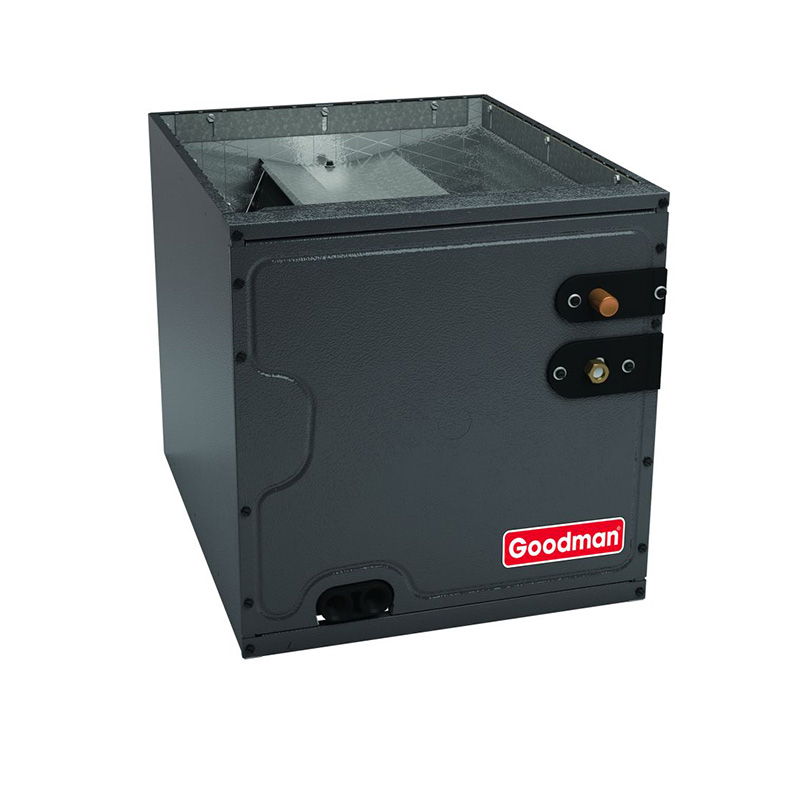
The AC side uses R-32 refrigerant, a lower global-warming-potential option that is becoming the industry standard as R-410A phases out. At 15.2 SEER2, this system clears the federal minimum for most U.S. climate zones and lands in the mid-efficiency tier, not the top, but enough to provide real energy savings over aging 13 or 14 SEER equipment. The multi-speed ECM blower motor in the furnace improves airflow consistency, reduces electricity consumption compared to a standard PSC motor, and contributes to better humidity management during cooling season. Upflow configuration suits the most common installation in homes with a basement or ground-level utility closet where supply air exits the top of the unit.
This system suits budget-conscious homeowners who want meaningful efficiency upgrades without paying the premium that Trane, Lennox, or Carrier command. It is a practical, straightforward package, but its long-term performance will depend heavily on the quality of the installation and a commitment to routine maintenance, both of which matter more with Goodman than with some competing brands.
This Goodman system delivers genuine mid-efficiency performance at a price point that is hard to argue with on paper, typically running 15 to 25 percent less than comparable Carrier, Trane, or Lennox packages. The two-stage furnace and ECM blower are real comfort upgrades over entry-level single-stage equipment, but buyers should go in aware that Goodman's long-term reliability record is uneven and that compressor and coil longevity often trail premium brands.
Overall score is the average of the five ratings above.
What we like
- Purchase price typically 15 to 25 percent below Trane, Carrier, and Lennox equivalents
- 96% AFUE furnace is among the highest efficiency tiers available, reducing annual heating costs
- Two-stage furnace reduces temperature swings and cycling noise versus single-stage operation
- ECM blower motor lowers electricity use compared to standard PSC motors
- R-32 refrigerant positions the system for longer regulatory compliance as R-410A phases out
Trade-offs
- Compressor lifespan averages 10 to 14 years, shorter than the 15 to 20 years often seen with premium brands
- Evaporator coil leaks are a documented failure mode reported across a meaningful share of owner reviews
- ConsumerAffairs rating of approximately 2.5 out of 5 reflects a pattern of repair costs rising after roughly year 7
- System longevity is more sensitive to install quality than competing brands, raising the stakes on contractor selection
What homeowners and pros say about Goodman
Homeowners who research Goodman online encounter a wide range of opinions that tend to cluster around two recurring themes: the price is genuinely hard to beat, and the outcome varies considerably based on who installed it. Goodman carries a ConsumerAffairs rating of roughly 2.5 out of 5, a score shaped by the complaint-heavy nature of that platform, where the most consistent criticism involves repair costs that climb after approximately year 7 of ownership. Google dealer reviews tell a somewhat more balanced story, averaging around 3.8 out of 5, with affordability cited most often as the reason buyers chose Goodman and were satisfied with that decision.
HVAC technicians who work on Goodman equipment regularly point to dual-run capacitor failures as the most routine service call, a repair that usually falls in the 300 to 600 dollar range and is not unique to Goodman. More significant concerns in owner communities include evaporator coil leaks, which show up in a meaningful share of reviews, and compressor longevity that averages 10 to 14 years rather than the 15 to 20 years more commonly reported for Trane, Carrier, and Lennox equipment. A minority of first-year owners have also reported refrigerant leaks, which technicians generally attribute to installation or initial charge errors rather than equipment defects. The consensus across both camps is that a Goodman system installed by a careful, experienced contractor and maintained on schedule performs adequately for its price class, while one that is rushed into service or neglected tends to validate the lower ratings.
Sources: ConsumerAffairs Goodman owner reviews, AHRI Directory of Certified Product Performance, U.S. DOE appliance and equipment efficiency standards, Goodman product specification sheets.
What it costs to run
At 15.2 SEER2, cooling this 3.5-ton system for a typical 1200-hour cooling season at the U.S. average electricity rate of $0.17/kWh works out to roughly $564 per year in cooling, about $75 less per year than a minimum-efficiency 13.4 SEER2 unit of the same size. Your real cost depends on your climate and local rate.
Method: (42,000 BTU/hr ÷ 15.2 SEER2) × 1200 hours ÷ 1000 × $0.17/kWh. Rate source: U.S. EIA average; cooling hours: moderate-climate estimate.
How it compares
| Brand | Comparable model | SEER2 | Stage | Price position |
|---|---|---|---|---|
| Goodman | GSX6/GMVC96 Bundle (this system) | 15.2 | Two-stage | Value pick |
| Carrier | Comfort 16 (24ACC6) with 58MVC | 15.2 to 16 | Single-stage to two-stage | Typically 15 to 25 percent more than this Goodman bundle |
| Trane | XR15 (4TTR5) with S9V2 | 15.2 to 16 | Single-stage | Typically 15 to 25 percent more than this Goodman bundle |
| Lennox | Merit 16ACX with ML196V | 15.2 to 16 | Single-stage to two-stage | Typically 15 to 25 percent more than this Goodman bundle |
Competitor rows are comparable single-stage units at similar efficiency; price is relative position, not a quote.
Questions about this system
What size home is a 3.5-ton system typically right for?
A 3.5-ton unit is generally appropriate for homes roughly in the 1,800 to 2,400 square foot range, though the right size depends on your climate zone, insulation levels, window area, and ceiling height. An HVAC contractor should perform a Manual J load calculation before finalizing the equipment size, since an oversized or undersized unit will underperform regardless of brand.
Is R-32 refrigerant safe and easy to service?
R-32 is classified as mildly flammable, which means technicians need specific certification and handling procedures, but it is widely used in newer residential equipment and is becoming the industry standard. Most qualified HVAC technicians are already trained for it. Regulatory support for R-32 is stronger going forward than for R-410A, which is being phased out.
What are the most common repairs on Goodman systems I should budget for?
Dual-run capacitors are the most frequently reported failure, and replacement typically runs between 300 and 600 dollars including labor. Evaporator coil leaks and refrigerant issues are also documented, with the latter sometimes appearing in the first year and often tracing back to installation or initial charge quality. Setting aside a small annual maintenance reserve and scheduling yearly tune-ups helps catch these early.
Does the two-stage furnace actually make a noticeable comfort difference?
Yes, in most homes it does. The furnace runs at lower capacity during mild weather, which means longer, quieter cycles that distribute heat more evenly and reduce the hot-and-cold swings associated with single-stage equipment. Combined with the ECM blower, this setup also tends to manage indoor humidity better during the air conditioning season.
What warranty comes with this system and what does it actually cover?
Goodman typically provides a 10-year parts warranty on registered systems, covering components including the compressor, heat exchanger, and coils. You must register the equipment within a specified window after installation to receive the full coverage period. The warranty covers parts but not labor, so an extended labor warranty from your installer or a third-party service plan is worth considering given the documented repair history after year 7.
Specifications
| Cooling capacity | 3.5 Ton |
| Efficiency | 15.2 SEER2 |
| Furnace output | 80000 BTU |
| Furnace efficiency | 96% AFUE |
| Configuration | Upflow |
| Refrigerant | R-32 |