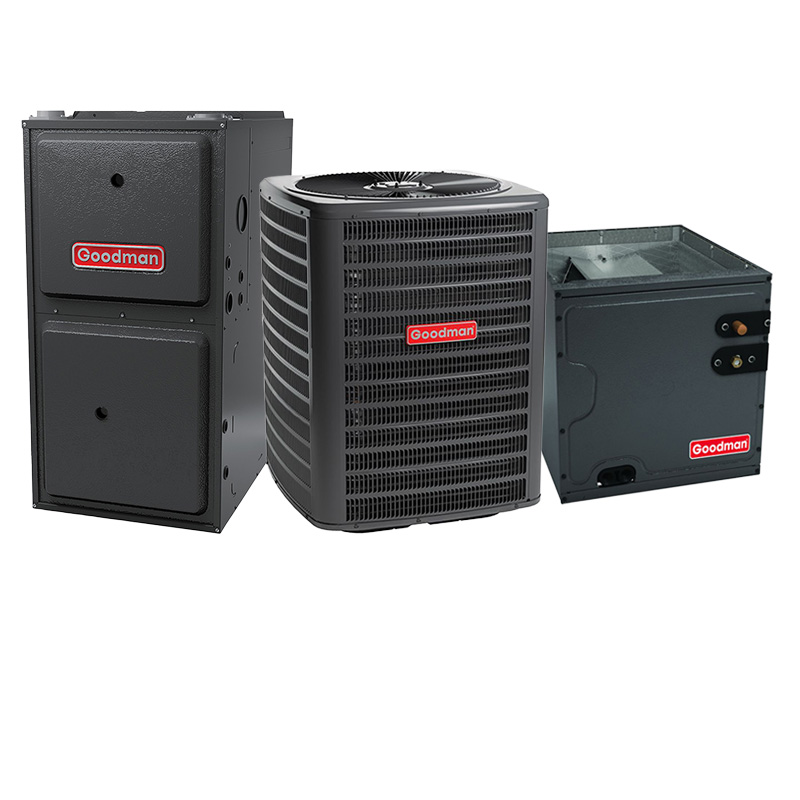
Goodman Furnace And AC – 3 Ton 14.5 SEER2 AC With 60000 BTU 96% AFUE Two Stage Multi-Speed ECM Gas Furnace System – Upflow | R32
View on AC Direct see your lowest price →Check current price on AC Direct →
Key features
- 14.5 SEER2 cooling efficiency, exceeding federal minimum standards
- 96% AFUE two-stage condensing gas furnace reduces fuel waste and short-cycling
- Multi-speed ECM blower motor lowers electricity use and improves airflow consistency
- Upflow configuration designed for basement or ground-floor air handler placement
- R-32 refrigerant with lower global-warming potential than R-410A
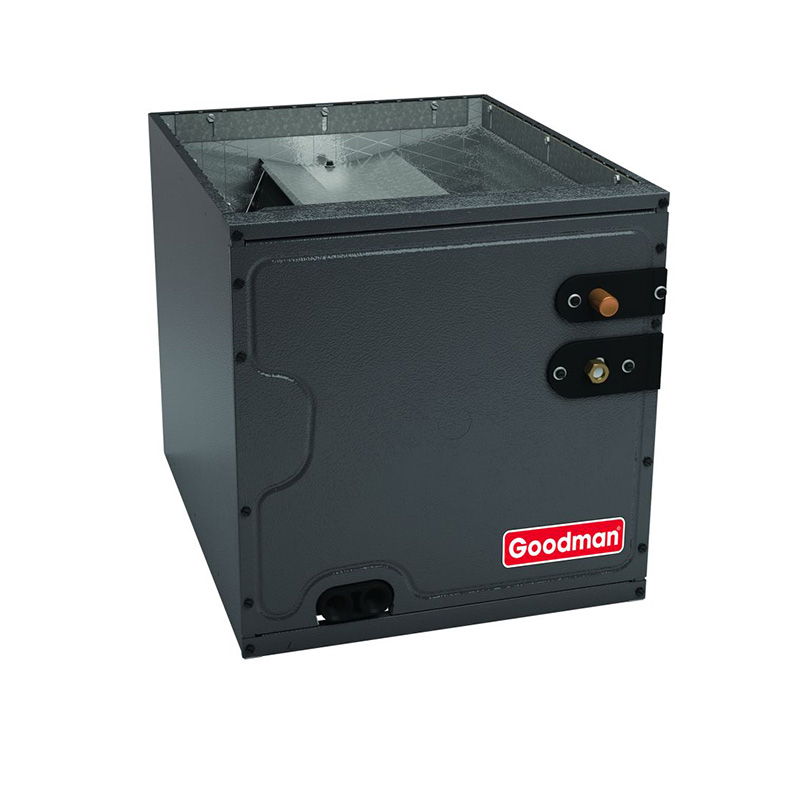
- Matched system bundle simplifies equipment compatibility and coil sizing
About this system
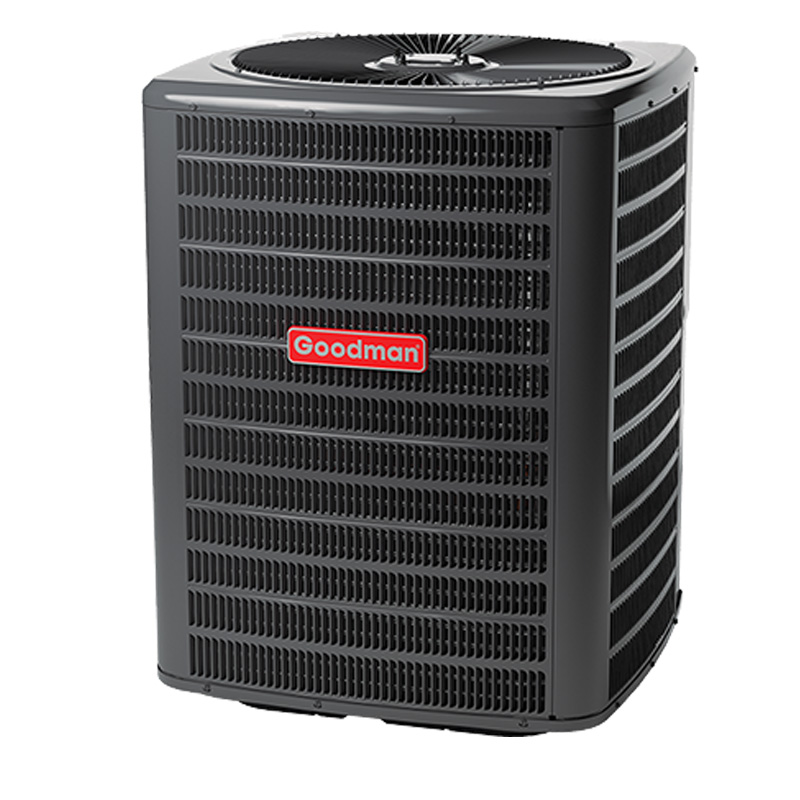
This Goodman bundle pairs a 3-ton, 14.5 SEER2 central air conditioner with a 60,000 BTU, 96% AFUE two-stage gas furnace in an upflow configuration, making it a practical choice for homes with a basement or ground-level mechanical room where conditioned air rises through the duct system. The 14.5 SEER2 rating clears the federal minimum by a modest margin, so monthly cooling bills will be lower than with an older 13 SEER unit but won’t match the savings of a 17-plus SEER2 variable-speed system. For most mid-size homes in moderate climates, that trade-off is reasonable given the lower purchase price.
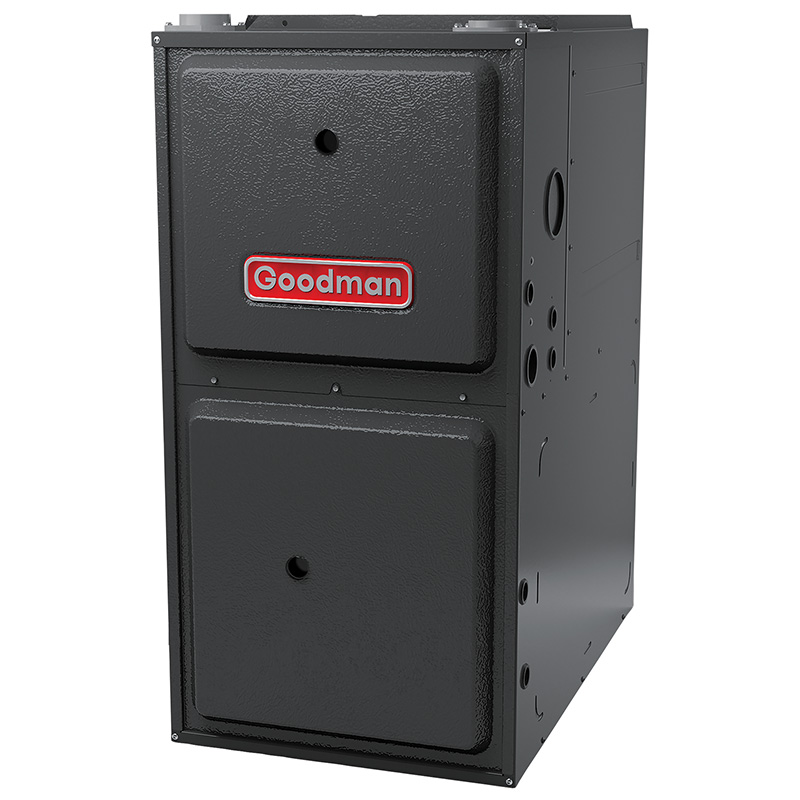
The furnace side is where this system earns its keep. A 96% AFUE rating means nearly all the gas burned becomes usable heat, placing it in the condensing-furnace tier alongside premium brands. The two-stage burner runs on low fire during mild weather, reducing short-cycling, evening out temperatures room to room, and extending burner and heat exchanger life compared with single-stage alternatives. The multi-speed ECM blower motor adds further efficiency by drawing less electricity than a standard PSC motor and ramping airflow to match demand. R-32 refrigerant has a lower global-warming potential than R-410A and is becoming the industry standard as R-410A is phased out, which should ease future service availability.
This system suits budget-conscious homeowners replacing aging equipment in a 1,200 to 1,800 square-foot home who want a meaningful furnace upgrade without moving to premium-brand pricing. It is less suited to climates with extreme summer heat where a higher SEER2 rating would pay back quickly, or to owners who want minimal long-term service exposure and are willing to pay upfront for a brand with a stronger reliability track record.
This Goodman combination delivers a genuinely efficient furnace in a two-stage, 96% AFUE package at a price point that undercuts comparable Trane, Carrier, and Lennox systems by a meaningful margin. The AC side is functional rather than impressive at 14.5 SEER2, and the brand's documented history of capacitor failures, evaporator coil leaks, and shorter average compressor life means buyers should budget for periodic service after year seven. For a homeowner prioritizing upfront cost savings and heating efficiency over long-term reliability peace of mind, this system makes a defensible choice when professionally installed.
Overall score is the average of the five ratings above.
What we like
- 96% AFUE furnace rating is top-tier and matches premium brand efficiency at a lower price
- Two-stage burner reduces temperature swings and extends furnace component life
- ECM blower motor cuts electricity consumption compared with standard PSC motors
- R-32 refrigerant is forward-compatible as R-410A is phased out industry-wide
- System pricing runs 15 to 25 percent below comparable Trane, Lennox, and Carrier bundles
Trade-offs
- Dual-run capacitors are the most commonly reported failure point, typically requiring service in the 300 to 600 dollar range
- Evaporator coil leaks appear in a meaningful share of owner reviews and can be costly to address
- Compressors average 10 to 14 years, several years shorter than the 15 to 20 year range cited for premium brands
- 14.5 SEER2 cooling efficiency offers limited savings over minimum-code units in hot climates, reducing payback versus higher-efficiency options
What homeowners and pros say about Goodman
Homeowners discussing Goodman equipment online tend to split into two camps. Those who had a skilled installer and kept up with annual maintenance frequently report years of trouble-free operation and point to the lower purchase price as a genuine advantage. Those who ran into problems more often describe capacitor failures and refrigerant issues that surfaced after year five or six, and the pattern on ConsumerAffairs, where Goodman scores around 2.5 out of 5, reflects a community of owners who sought out a place to log frustrations, skewing toward repair stories rather than satisfied silence. Google dealer reviews, which capture a broader mix of buyers, land closer to 3.8 out of 5, with affordability consistently cited as the main reason people chose the brand.
HVAC technicians tend to speak plainly about this particular system configuration. The 96% AFUE two-stage furnace draws real respect in the trades because the hardware itself is competitive with what premium brands offer at this efficiency tier. The concerns center on the AC side. Dual-run capacitor failures are the most commonly cited repair call on Goodman cooling equipment, though technicians note it is a straightforward fix rather than a system-ending problem. Evaporator coil leaks and refrigerant loss show up in a meaningful share of service histories, and compressors on Goodman units are generally expected to reach 10 to 14 years rather than the 15 to 20 years a technician might project for a Trane or Carrier compressor. For this specific R-32 system, technicians also flag the importance of verifying that the installing company has the right equipment and training for R-32 handling, since the refrigerant transition is still in progress across the industry.
Sources: ConsumerAffairs Goodman owner reviews, AHRI Directory of Certified Product Performance, U.S. DOE appliance and equipment efficiency standards, Goodman product specification sheets.
What it costs to run
At 14.5 SEER2, cooling this 3-ton system for a typical 1200-hour cooling season at the U.S. average electricity rate of $0.17/kWh works out to roughly $506 per year in cooling, about $42 less per year than a minimum-efficiency 13.4 SEER2 unit of the same size. Your real cost depends on your climate and local rate.
Method: (36,000 BTU/hr ÷ 14.5 SEER2) × 1200 hours ÷ 1000 × $0.17/kWh. Rate source: U.S. EIA average; cooling hours: moderate-climate estimate.
How it compares
| Brand | Comparable model | SEER2 | Stage | Price position |
|---|---|---|---|---|
| Goodman | GSXH503610 + GMVC960603BN (this system) | 14.5 | Two-stage | Value pick |
| Carrier | Comfort 14 (24ACC4) | 14.3 to 14.5 | Single-stage | Typically 15 to 25 percent more than this Goodman bundle |
| Trane | XR14c | 14.3 to 15.0 | Single-stage | Typically 15 to 25 percent more than this Goodman bundle |
| Lennox | Merit ML14XC1 | 14.3 to 15.0 | Single-stage | Typically 15 to 25 percent more than this Goodman bundle |
Competitor rows are comparable single-stage units at similar efficiency; price is relative position, not a quote.
Questions about this system
Is 14.5 SEER2 enough for hot-summer climates like Texas or Arizona?
It meets the federal efficiency standard and will cool your home, but in climates where AC runs six or more months a year the gap between 14.5 SEER2 and a 17 to 18 SEER2 system shows up noticeably on your electric bill. If cooling costs are a major concern, pricing out a higher SEER2 option and calculating payback over five years is worth the extra step before buying.
What does the two-stage furnace actually do differently from a standard single-stage unit?
A two-stage furnace fires at a lower output during mild weather and only ramps to full capacity when temperatures drop significantly. This reduces the on-off cycling that causes temperature swings, lowers wear on the heat exchanger, and generally results in more consistent comfort throughout the home compared with a single-stage burner.
How serious is the capacitor failure issue with Goodman equipment?
Dual-run capacitor failure is the most frequently documented repair on Goodman AC units. It is also one of the simpler and cheaper HVAC repairs, typically falling in the 300 to 600 dollar range including labor. Keeping a service agreement or scheduling annual tune-ups helps catch a weakening capacitor before it causes a compressor to fail on a hot day.
Does switching to R-32 refrigerant affect how I find a service technician?
R-32 requires technicians to use specific compatible equipment and safety practices, and not every local HVAC company has updated their tools yet. It is a good idea to confirm your installer and any future service provider are set up for R-32 work before purchasing, though availability is improving steadily as the industry transitions away from R-410A.
What warranty does Goodman include with this system, and are there conditions?
Goodman typically offers a 10-year parts limited warranty when the equipment is registered online within a set window after installation, and the unit must be installed by a licensed HVAC contractor to maintain coverage. Failing to register or using an unlicensed installer can reduce coverage to a shorter base period, so confirming registration requirements with your installer before the job is completed is important.
Specifications
| Cooling capacity | 3 Ton |
| Efficiency | 14.5 SEER2 |
| Furnace output | 60000 BTU |
| Furnace efficiency | 96% AFUE |
| Configuration | Upflow |
| Refrigerant | R-32 |