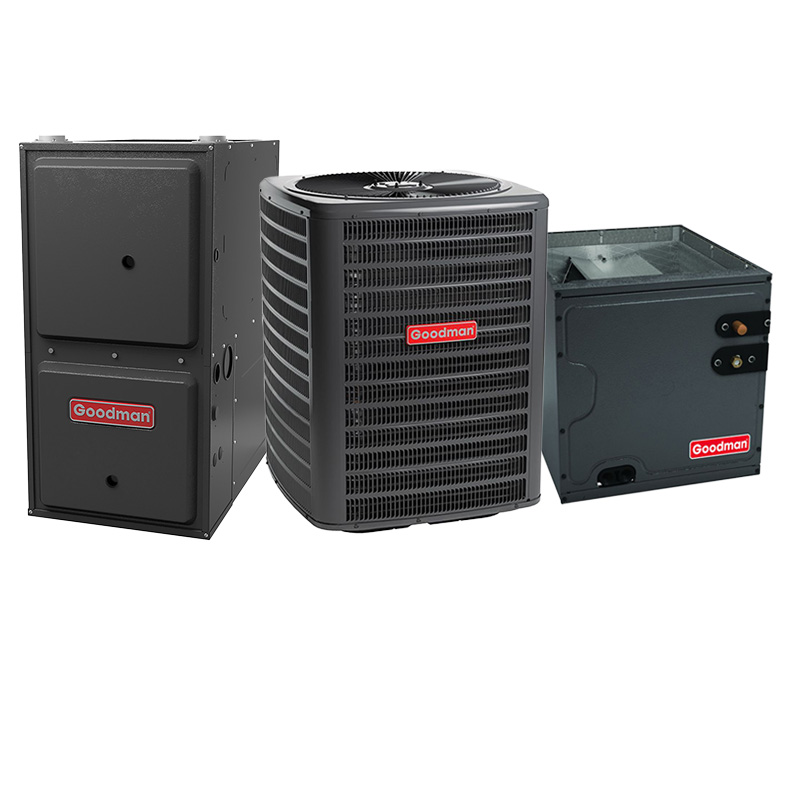
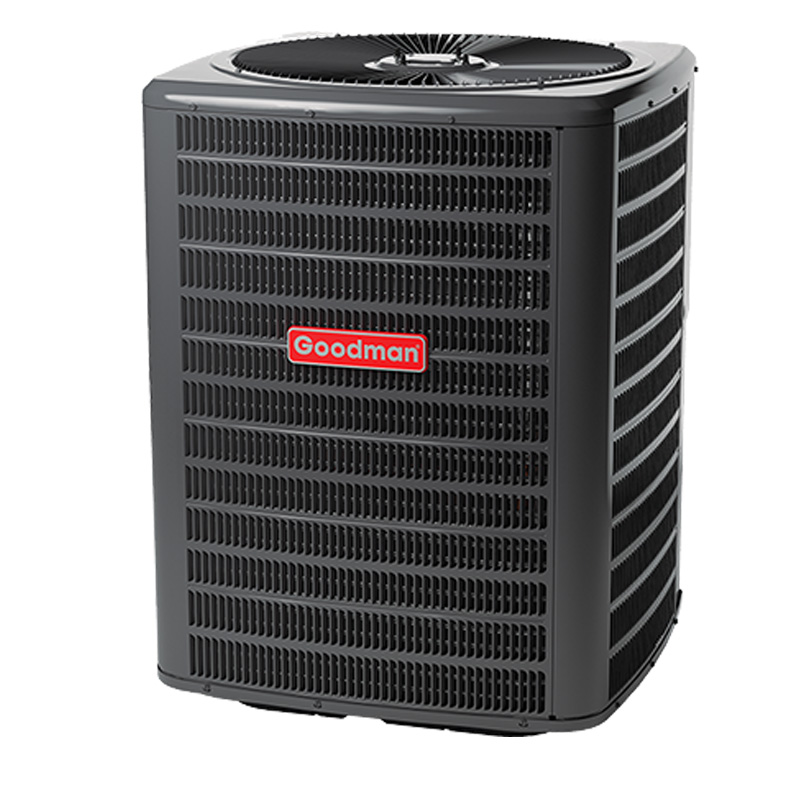
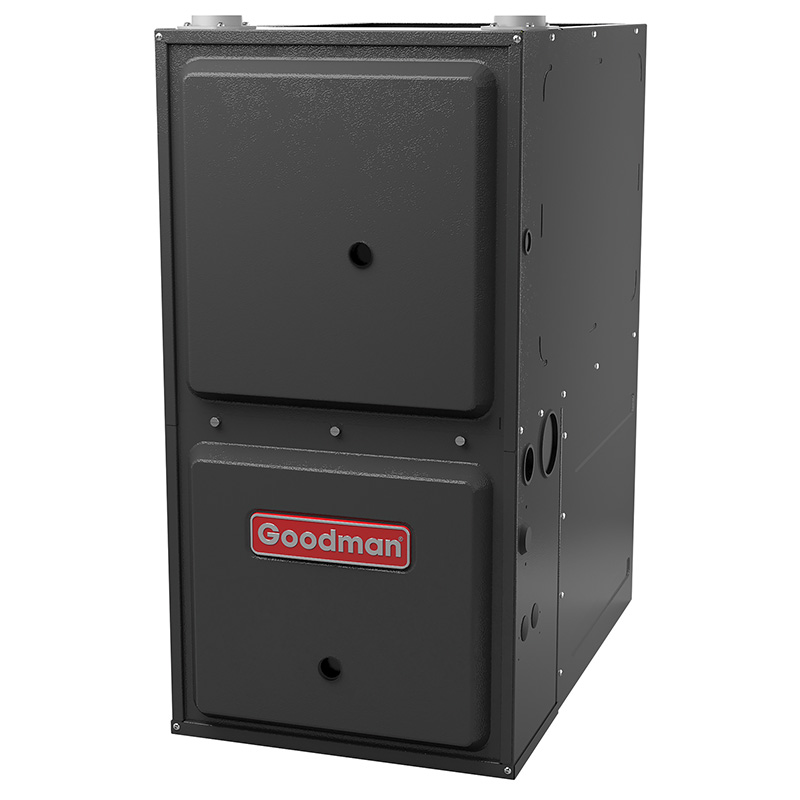
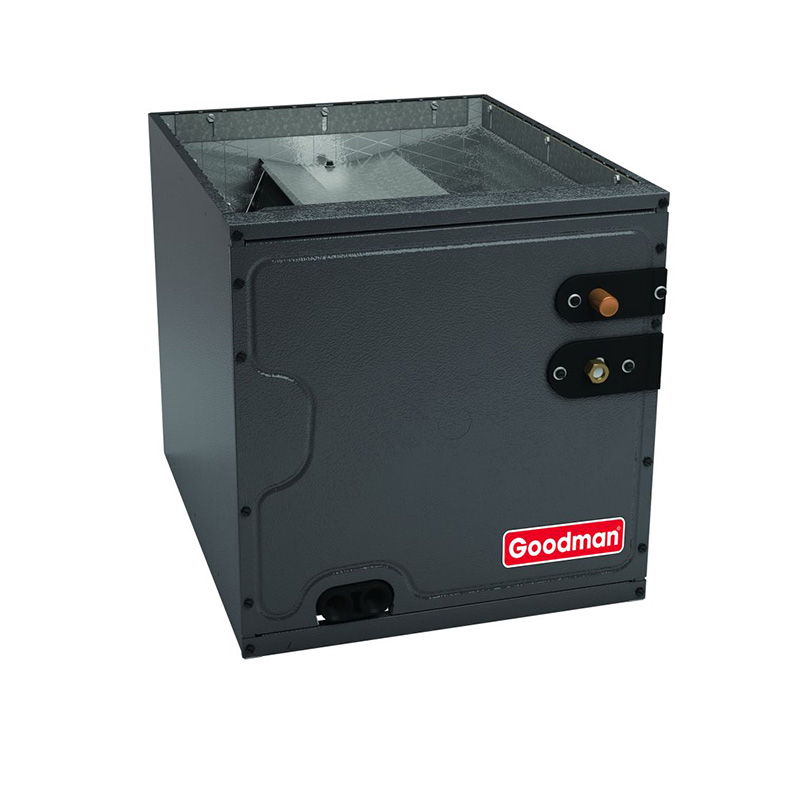
Goodman Furnace And AC – 3 Ton 14.5 SEER2 AC With 80000 BTU 96% AFUE Two Stage Multi-Speed ECM Gas Furnace System – Downflow | R32
View on AC Direct see your lowest price →Check current price on AC Direct →
Key features
- 3-ton cooling capacity with 14.5 SEER2 efficiency rating
- 80,000 BTU two-stage gas furnace at 96% AFUE
- Multi-speed ECM blower motor for quieter, lower-wattage airflow
- Downflow configuration for closet or platform-mounted air handler installations
- R-32 refrigerant with lower global-warming potential than R-410A
- Factory-matched system engineered for ARI-certified rated performance together
About this system
This Goodman bundle pairs a 3-ton, 14.5 SEER2 central air conditioner with an 80,000 BTU, 96% AFUE two-stage multi-speed ECM gas furnace in a downflow configuration. The downflow layout is purpose-built for homes where the air handler sits in a closet, utility room, or platform above the living space, discharging conditioned air downward into floor-level supply ducts. R-32 refrigerant replaces the older R-410A found in most legacy systems and carries a lower global-warming potential, which keeps this unit in step with where the industry is heading on environmental standards.
The 96% AFUE rating means nearly all the fuel burned converts to heat, which is a genuine efficiency tier for a gas furnace and will reduce heating bills compared to an 80% unit. Two-stage operation lets the furnace run at a lower capacity on mild days, cutting short-cycling and evening out temperatures room to room. The ECM (electronically commutated motor) blower uses significantly less electricity than a standard PSC motor, adding quiet, low-cost continuous airflow for filtration and humidity management. At 14.5 SEER2, the cooling side meets the current federal minimum for most U.S. climate zones and sits at the entry level of the mid-efficiency range, not at the top.
This system suits homeowners replacing aging equipment in a downflow installation who want a step up in furnace efficiency and comfort features without paying the premium that Trane, Carrier, or Lennox command. It will not deliver the variable-speed compressor performance found on higher-end Goodman or premium-brand units, so buyers who want the absolute quietest, most humidity-controlled cooling experience should look at the next tier up. That said, for a budget-conscious replacement where the install quality is solid, this bundle covers the core bases well.
This Goodman bundle is a straightforward, budget-friendly replacement for downflow installations where the priority is upgrading furnace efficiency and comfort without a premium price tag. The 96% AFUE furnace and ECM blower are genuine differentiators at this price tier, and the two-stage heating adds real comfort value. The cooling side is entry-level mid-efficiency, and long-term ownership costs depend heavily on install quality and whether any of the brand's known weak points show up.
Overall score is the average of the five ratings above.
What we like
- 96% AFUE is a high-efficiency furnace tier that meaningfully lowers heating costs versus an 80% unit
- Two-stage furnace operation reduces short-cycling and improves temperature consistency
- ECM blower motor cuts electrical consumption compared to a standard PSC motor
- R-32 refrigerant aligns with current and upcoming environmental regulations
- Priced roughly 15 to 25 percent below comparable Carrier, Trane, and Lennox systems
Trade-offs
- Dual-run capacitor failures are the most commonly reported repair, typically appearing in years 5 to 10
- Evaporator coil leaks are documented in a meaningful share of owner reports and can be a costly mid-life repair
- Compressor lifespan averages 10 to 14 years versus 15 to 20 years on premium-brand units
- 14.5 SEER2 is the minimum mid-efficiency range for cooling; buyers in hot climates may see limited energy savings compared to a 16 or 17 SEER2 option
What homeowners and pros say about Goodman
Goodman occupies a specific and well-understood position among HVAC professionals: a workable, budget-accessible brand where the outcome depends more on who installs it than on the equipment itself. On Google dealer review aggregates, Goodman systems earn around 3.8 out of 5 stars, with affordability cited most often as the reason buyers chose it and would recommend it. On ConsumerAffairs, a channel that skews toward people who have had problems, the brand sits at roughly 2.5 out of 5, with recurring complaints centered on repair costs that start climbing after about year seven. That gap between those two scores reflects a real pattern: owners who get a clean install from a competent contractor and stay on top of maintenance tend to have a reasonable experience; those who do not often find themselves dealing with the brand’s documented weak spots sooner than expected.
The specific failure modes that show up repeatedly in owner accounts for Goodman equipment are worth knowing before you buy. Dual-run capacitors fail most often, but they are a low-stakes repair in the 300 to 600 dollar range when caught early. Evaporator coil leaks are the more consequential issue, appearing in a meaningful share of reviews and representing a mid-life repair that can run significantly higher. Compressors on Goodman systems average 10 to 14 years of service life, which falls short of the 15 to 20 years that premium brands like Trane and Carrier tend to achieve. And a small but notable share of owners report refrigerant leaks within the first year, a problem that HVAC technicians almost universally trace back to improper charge or fittings at install rather than a factory defect. For this specific two-stage, ECM-equipped system, the furnace side has fewer of these concerns baked in; the heating technology here is genuinely solid for the price tier.
Sources: ConsumerAffairs Goodman owner reviews, AHRI Directory of Certified Product Performance, U.S. DOE appliance and equipment efficiency standards, Goodman product specification sheets.
What it costs to run
At 14.5 SEER2, cooling this 3-ton system for a typical 1200-hour cooling season at the U.S. average electricity rate of $0.17/kWh works out to roughly $506 per year in cooling, about $42 less per year than a minimum-efficiency 13.4 SEER2 unit of the same size. Your real cost depends on your climate and local rate.
Method: (36,000 BTU/hr ÷ 14.5 SEER2) × 1200 hours ÷ 1000 × $0.17/kWh. Rate source: U.S. EIA average; cooling hours: moderate-climate estimate.
How it compares
| Brand | Comparable model | SEER2 | Stage | Price position |
|---|---|---|---|---|
| Goodman | GSXH503610 + GCVC960804CN (this system) | 14.5 | Two-stage | Value pick |
| Carrier | Comfort 14 Series (24ACC4) | 14.3 to 14.5 | Single-stage | Typically 15 to 25 percent more than this Goodman bundle |
| Trane | XR14c | 14.3 to 15.0 | Single-stage | Typically 15 to 25 percent more than this Goodman bundle |
| Lennox | Merit 14ACX | 14.3 | Single-stage | Typically 15 to 25 percent more than this Goodman bundle |
Competitor rows are comparable single-stage units at similar efficiency; price is relative position, not a quote.
Questions about this system
What does downflow mean and how do I know if my house needs this configuration?
Downflow means the furnace pulls return air in at the top and discharges heated or cooled air out the bottom into floor-level supply ducts. This is typical for systems installed in a closet, utility room, or raised platform above the living area. If your current furnace sits upright in a closet with ductwork running under the floor, downflow is almost certainly your configuration.
Why does R-32 matter and is it harder to service than R-410A?
R-32 has about one-third the global-warming potential of R-410A, which is why manufacturers are transitioning to it ahead of federal phase-down rules. It is mildly flammable, so technicians need an A2L-rated certification to handle it, which is now standard for any HVAC tech who has kept their credentials current. Parts and refrigerant availability are growing quickly across the industry.
What is the most common repair I should budget for on a Goodman system like this?
Dual-run capacitors are the most frequently reported failure point on Goodman equipment, and they typically become an issue somewhere in years 5 to 10. The repair usually runs between 300 and 600 dollars including labor and is a quick fix. Evaporator coil leaks are also documented in a meaningful share of owner reports and are more expensive to address, so a service agreement that covers parts is worth considering.
Does the two-stage furnace actually make a noticeable difference in comfort compared to a single-stage unit?
Yes, especially in climates with long heating seasons. On mild days the furnace runs at the lower stage, which means longer, gentler heating cycles rather than short blasts of hot air. That tends to even out temperatures between rooms and reduces the temperature swings that single-stage systems produce. The ECM blower supports this by circulating air continuously at low speed between cycles.
How important is installer quality for a Goodman system specifically?
Extremely important. HVAC technicians consistently cite install quality as the single biggest factor in how long a Goodman unit lasts, more so than with premium brands that have tighter manufacturing tolerances. Proper refrigerant charge, correct duct sizing, and accurate airflow setup directly affect both efficiency and the likelihood of early failures like refrigerant leaks, which a minority of owners report within the first year and which typically trace back to install or charge issues.
Specifications
| Cooling capacity | 3 Ton |
| Efficiency | 14.5 SEER2 |
| Furnace output | 80000 BTU |
| Furnace efficiency | 96% AFUE |
| Configuration | Downflow |
| Refrigerant | R-32 |