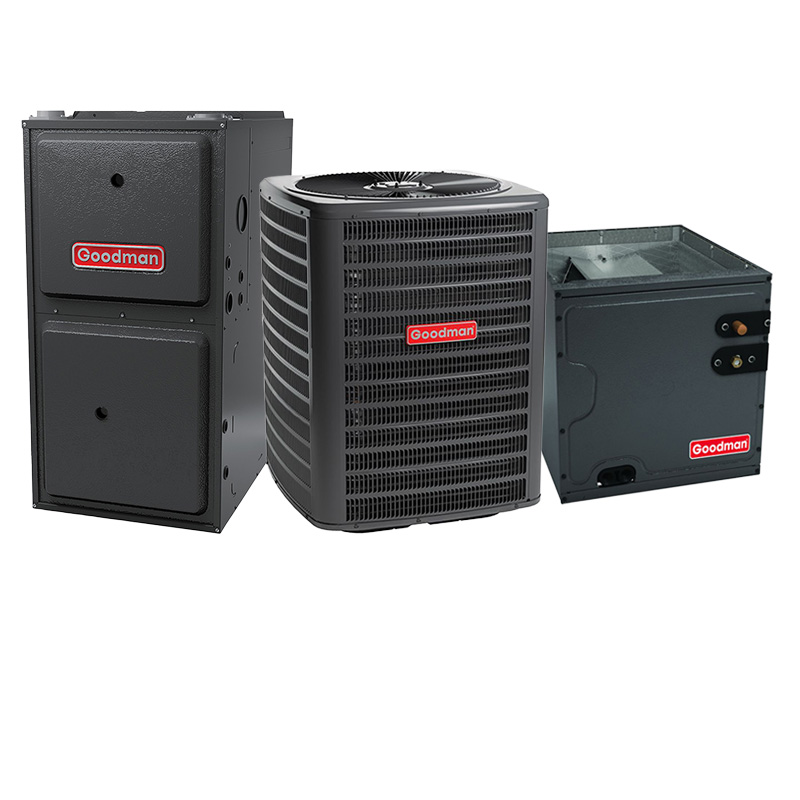
Goodman Furnace And AC – 3 Ton 15.2 SEER2 AC With 100000 BTU 96% AFUE Two Stage Multi-Speed ECM Gas Furnace System – Upflow | R32
View on AC Direct see your lowest price →Check current price on AC Direct →
Key features
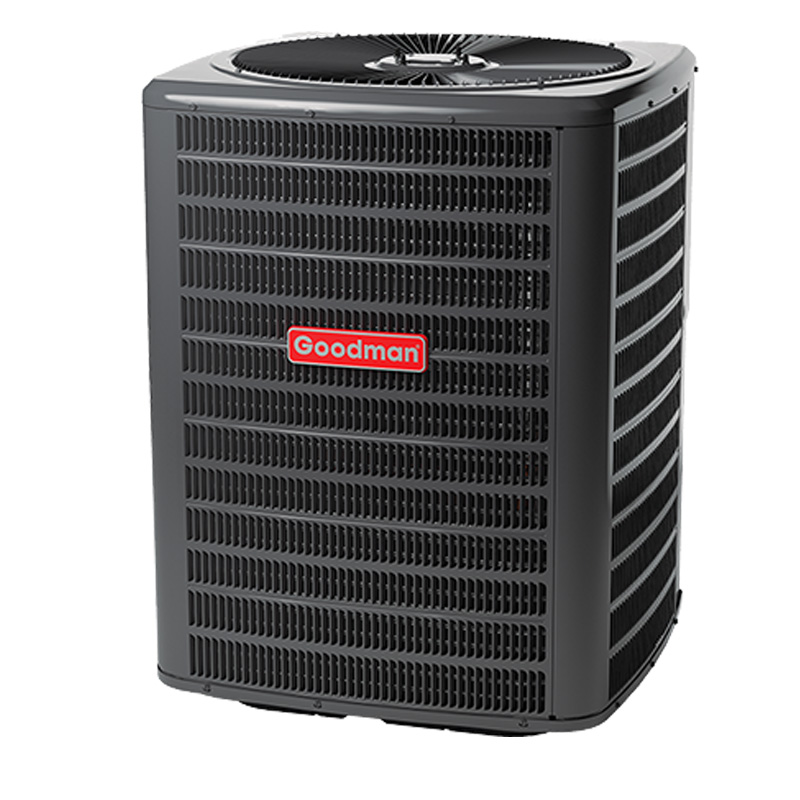
- 3-ton cooling capacity with 15.2 SEER2 efficiency rating
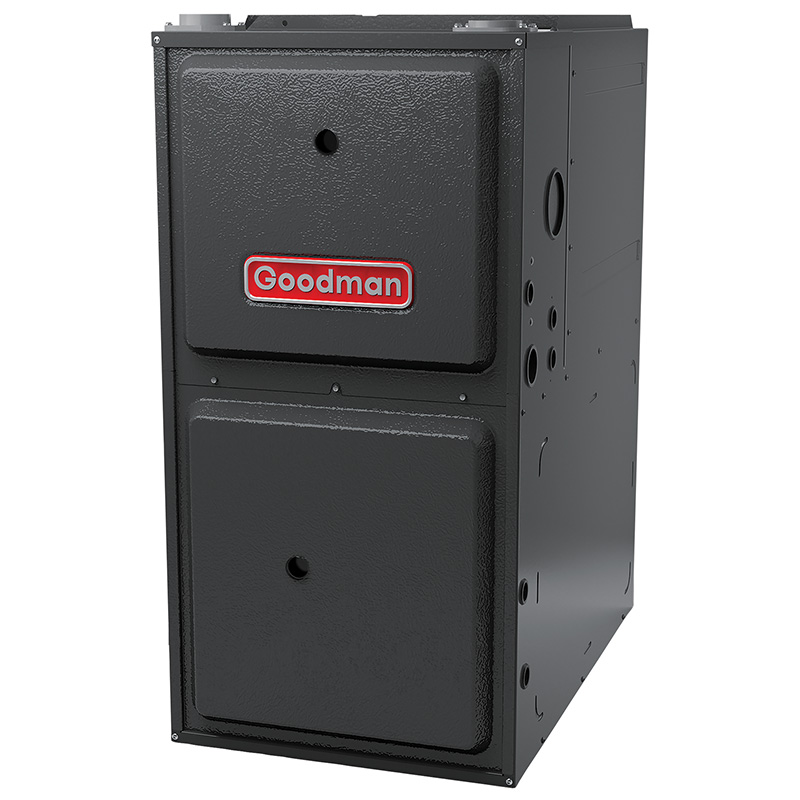
- 100,000 BTU two-stage gas furnace at 96% AFUE
- Multi-speed ECM blower motor for quieter, more even airflow
- Upflow configuration for standard basement or closet installs
- R-32 refrigerant with lower global-warming potential than R-410A
- Two-stage burner reduces runtime noise and temperature swings
About this system
This Goodman bundle pairs a 3-ton, 15.2 SEER2 central air conditioner with a 100,000 BTU, 96% AFUE two-stage gas furnace in an upflow configuration, making it a practical choice for homes in the 1,400 to 2,000 square foot range that need both heating and cooling replaced at the same time. The 96% AFUE rating means the furnace converts 96 cents of every fuel dollar into usable heat, which puts it firmly in the high-efficiency tier and can noticeably reduce gas bills compared to an older 80% unit. The two-stage burner runs at a lower flame most of the time, cycling down to full output only on the coldest days, which means quieter operation, more even temperatures room to room, and less wear on the heat exchanger over time.
The 15.2 SEER2 rating clears the federal minimums that took effect in 2023 and lands in the solid-but-not-premium tier, offering a reasonable balance between upfront cost and long-term energy savings without paying for variable-speed compressor technology. The multi-speed ECM blower motor is a genuine advantage: it ramps airflow up and down smoothly rather than blasting on and off, which improves humidity control in summer and reduces the temperature swings that single-speed motors create. The system uses R-32 refrigerant, a lower global-warming-potential option that is becoming the industry standard and should remain supported for the foreseeable future. This combination suits budget-conscious homeowners who want meaningful efficiency upgrades over builder-grade equipment without stretching into the premium price tier.
This Goodman system delivers legitimate high-efficiency specs at a price point that undercuts comparable Trane, Carrier, and Lennox bundles by roughly 15 to 25 percent, making it a credible choice for homeowners replacing aging equipment on a defined budget. The two-stage furnace and ECM blower are real comfort upgrades, not just marketing language. The trade-off is a shorter expected compressor lifespan and a brand track record that leans on installation quality more than premium competitors do.
Overall score is the average of the five ratings above.
What we like
- 96% AFUE furnace meaningfully cuts gas consumption versus standard 80% units
- Two-stage burner and ECM blower improve comfort and reduce cycling noise
- R-32 refrigerant is forward-compatible with evolving environmental regulations
- Priced 15 to 25 percent below comparable Carrier, Trane, and Lennox systems
- Upflow configuration fits the most common residential duct layout without modification
Trade-offs
- Compressor lifespan averages 10 to 14 years, shorter than the 15 to 20 years seen in premium brands
- Dual-run capacitors are the most frequently reported failure point, typically surfacing after a few seasons
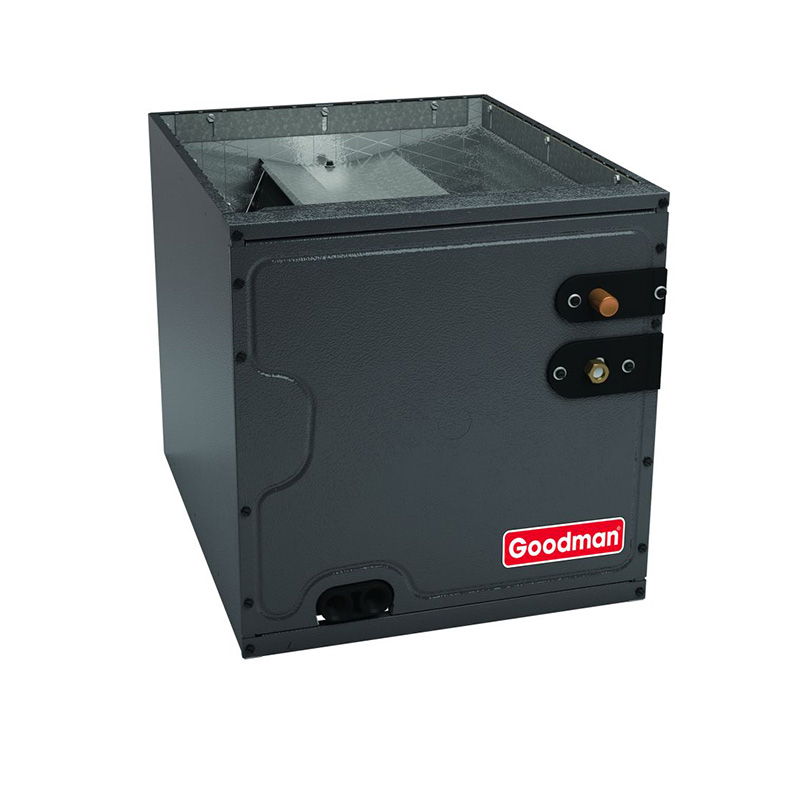
- Evaporator coil leaks appear in a meaningful share of owner reviews and can be costly to address
- A minority of owners report refrigerant leaks within the first year, usually tied to install or initial charge quality
What homeowners and pros say about Goodman
On consumer review platforms, Goodman draws a noticeably split response. The brand carries a ConsumerAffairs score of roughly 2.5 out of 5, a channel that skews toward people motivated enough by a problem to write something down. The recurring complaint there is repair costs that climb after about year seven, with capacitor failures and evaporator coil leaks cited most often. Google dealer reviews tell a softer story, averaging around 3.8 out of 5 across hundreds of location-level reviews, where the most consistent praise is straightforward: buyers got more equipment for the money than the premium brands were quoting. Those two data points together suggest Goodman is doing something right on price and something less right on long-term component durability.
On the contractor side, the conversation is more nuanced. Technicians who favor Goodman point to straightforward serviceability and widely available parts, including the dual-run capacitors that are the brand’s most documented weak point. Those who are skeptical tend to land on compressor longevity: Goodman compressors average roughly 10 to 14 years in real-world use, compared to 15 to 20 for premium competitors, a gap that matters when you are deciding whether this is a 12-year appliance or a 20-year investment. For this specific system, the two-stage furnace and ECM motor are parts that pros generally speak well of regardless of brand, and the R-32 refrigerant platform is where the whole industry is heading. The honest picture is a capable system that rewards a careful install and a proactive maintenance habit.
Sources: ConsumerAffairs Goodman owner reviews, AHRI Directory of Certified Product Performance, U.S. DOE appliance and equipment efficiency standards, Goodman product specification sheets.
What it costs to run
At 15.2 SEER2, cooling this 3-ton system for a typical 1200-hour cooling season at the U.S. average electricity rate of $0.17/kWh works out to roughly $483 per year in cooling, about $65 less per year than a minimum-efficiency 13.4 SEER2 unit of the same size. Your real cost depends on your climate and local rate.
Method: (36,000 BTU/hr ÷ 15.2 SEER2) × 1200 hours ÷ 1000 × $0.17/kWh. Rate source: U.S. EIA average; cooling hours: moderate-climate estimate.
How it compares
| Brand | Comparable model | SEER2 | Stage | Price position |
|---|---|---|---|---|
| Goodman | GLXS4BA36 + GCVC961005CN (this system) | 15.2 | two-stage | Value pick |
| Carrier | Comfort 15 Series (24ACC636) | 15.2 | single-stage | Typically 15 to 25 percent more than this Goodman bundle |
| Trane | XR15 Series (4TTR5036) | 15.2 | single-stage | Typically 15 to 25 percent more than this Goodman bundle |
| Lennox | Merit 14ACX Series (14ACX-036) | 15.0 | single-stage | Typically 15 to 25 percent more than this Goodman bundle |
Competitor rows are comparable single-stage units at similar efficiency; price is relative position, not a quote.
Questions about this system
What size home is a 3-ton, 100,000 BTU system appropriate for?
As a general rule, 3 tons of cooling suits roughly 1,400 to 2,000 square feet in a moderately insulated home in a mixed climate, though a proper Manual J load calculation by your installer is the only reliable way to confirm sizing. The 100,000 BTU furnace is on the larger end for that footprint and may short-cycle in milder weather, which is one reason the two-stage burner is a genuine benefit here rather than a luxury add-on.
Why does install quality matter more with Goodman than with premium brands?
HVAC technicians consistently note that Goodman equipment is more sensitive to installation variables such as refrigerant charge, airflow calibration, and electrical connections than Trane or Carrier units, which tend to have tighter factory tolerances. A well-installed Goodman can perform reliably for years; a poorly installed one is where the brand's lower ConsumerAffairs scores and first-year refrigerant leak reports tend to originate. Choosing an experienced, licensed installer matters more with this brand than with premium alternatives.
What is R-32 refrigerant and will it be hard to service?
R-32 is a single-component refrigerant with a lower global-warming potential than the R-410A used in most existing residential systems. It is increasingly stocked by HVAC distributors and is the direction the industry is moving, so finding a technician who can service it should not be a problem in most markets. One practical note: R-32 is mildly flammable, which is why it requires A2L-rated equipment and a certified technician for any refrigerant work.
How often do the dual-run capacitors fail, and what does it cost to fix?
Dual-run capacitor failure is the most commonly documented repair on Goodman AC units, often showing up after several seasons of use. The part itself is inexpensive, and a service call to diagnose and replace it typically runs in the $300 to $600 range depending on your market and labor rates. Keeping a service agreement or having your system checked seasonally can catch a weakening capacitor before it causes a no-cool situation in the middle of summer.
What warranty comes with this system and what does it actually cover?
Goodman typically offers a 10-year parts warranty on registered equipment, which covers major components including the compressor, heat exchanger, and coil, but it generally does not cover labor costs. Registration must be completed within a set window after installation or the coverage may default to a shorter period, so confirm the registration deadline with your installer. Labor warranties, if any, come from the installing contractor rather than Goodman directly, so ask about that coverage before the job is done.
Specifications
| Cooling capacity | 3 Ton |
| Efficiency | 15.2 SEER2 |
| Furnace output | 100000 BTU |
| Furnace efficiency | 96% AFUE |
| Configuration | Upflow |
| Refrigerant | R-32 |