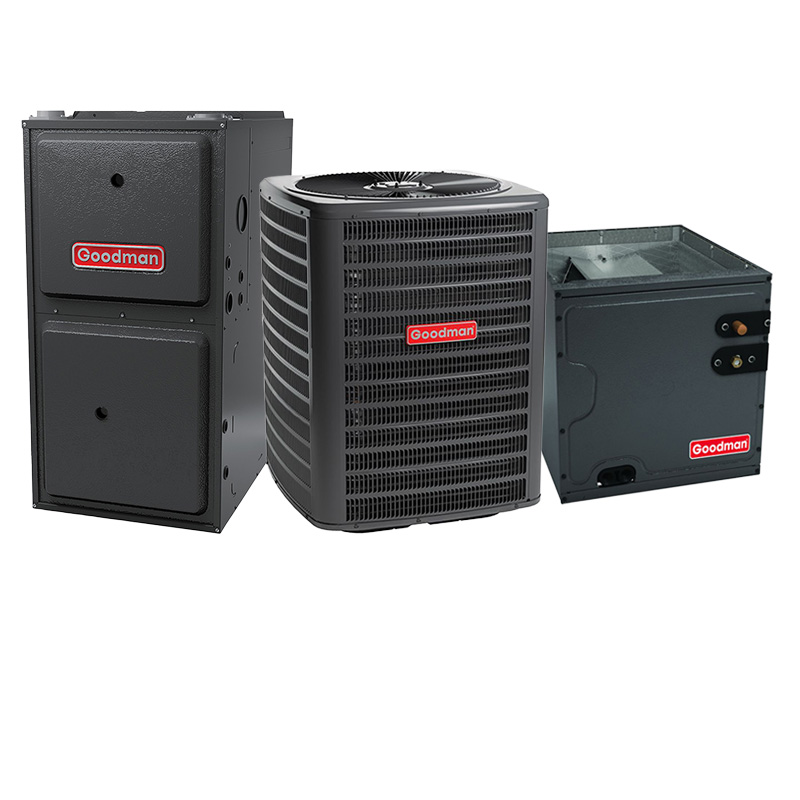
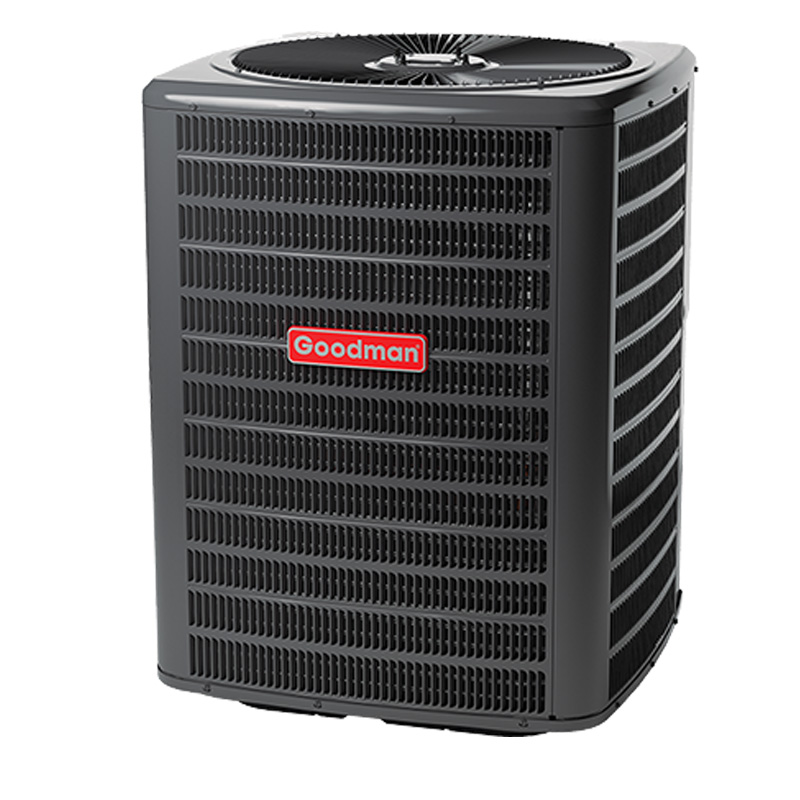
Goodman Furnace And AC – 4 Ton 14.3 SEER2 AC With 80000 BTU 96% AFUE Two Stage Multi-Speed ECM Gas Furnace System – Upflow | R32
View on AC Direct see your lowest price →Check current price on AC Direct →
Key features
- 4-ton cooling capacity rated at 14.3 SEER2 for baseline efficiency compliance
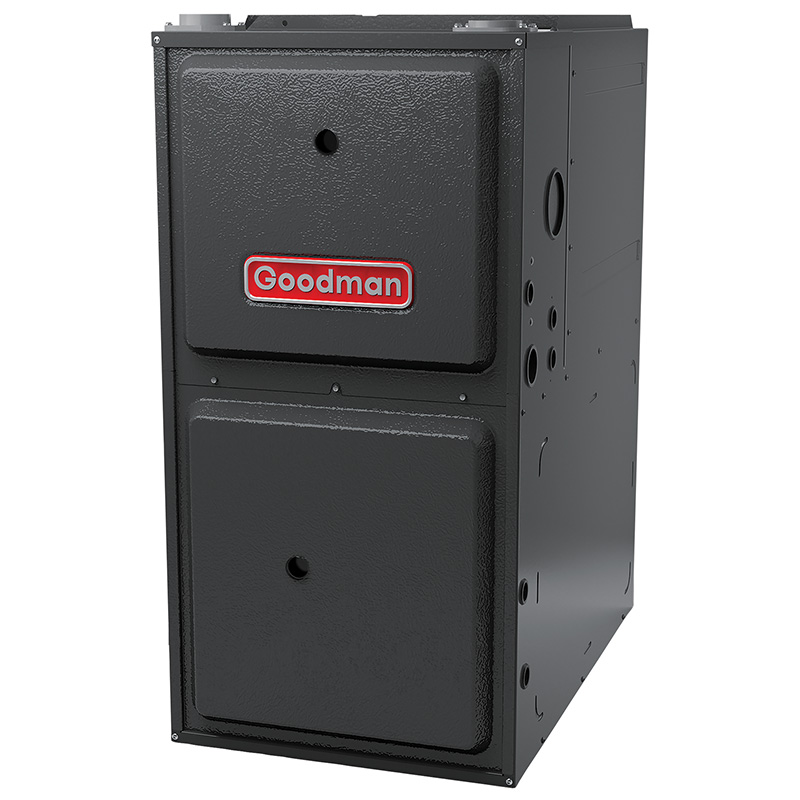
- 96% AFUE two-stage gas furnace with 80,000 BTU heating output
- Multi-speed ECM blower motor for quieter operation and better humidity management
- R-32 refrigerant with lower global warming potential than R-410A
- Upflow configuration for basement or first-floor utility closet installations
- Two-stage gas valve reduces temperature swings and lowers average fuel consumption
About this system
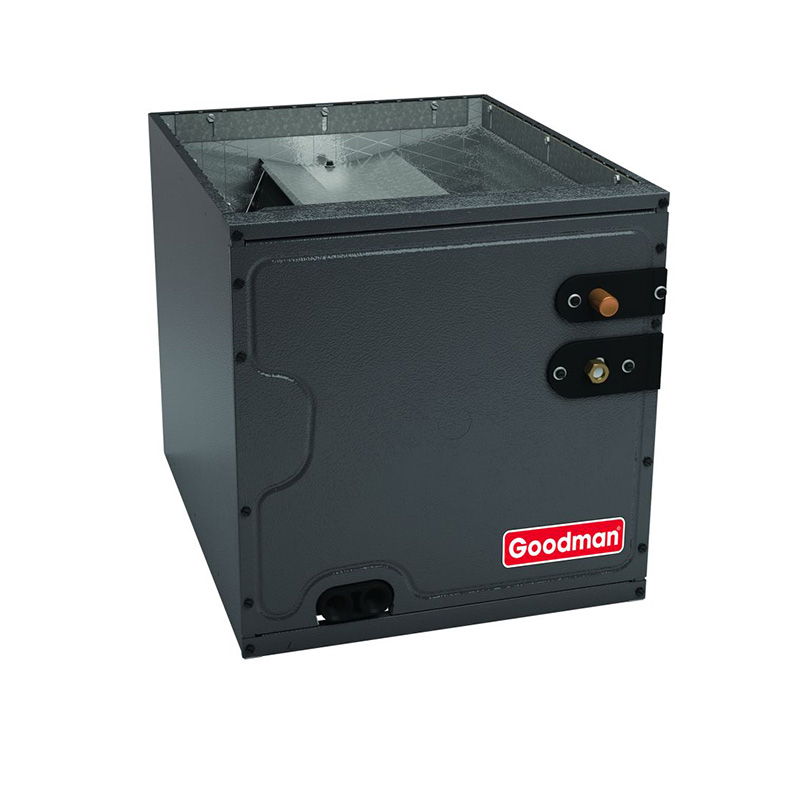
This Goodman bundle pairs a 4-ton, 14.3 SEER2 central air conditioner with an 80,000 BTU, 96% AFUE two-stage gas furnace in an upflow configuration, making it a practical choice for homes in the 2,000 to 2,600 square foot range that need both heating and cooling addressed in one purchase. The 96% AFUE rating means only about four cents of every heating dollar escapes as exhaust, placing this furnace firmly in the high-efficiency tier and qualifying it for many utility rebate programs. The multi-speed ECM blower motor adjusts airflow more precisely than a standard PSC motor, which helps with humidity control in summer and more even heat distribution in winter.
The two-stage gas valve on the furnace is worth paying attention to. On most days the unit runs on its lower stage, which reduces temperature swings, cuts cycling noise, and keeps operating costs down compared to a single-stage unit that is always either fully on or fully off. The air conditioner side uses R-32 refrigerant, a lower global-warming-potential alternative to R-410A that is increasingly common in new residential equipment as the industry moves away from older refrigerants. R-32 systems require technicians who are familiar with its slightly higher operating pressures, so confirming your installer has worked with it before is a reasonable question to ask upfront.
As an upflow unit, the furnace pulls return air in at the bottom and discharges conditioned air upward, fitting the standard basement or first-floor utility closet installation common in much of the United States. This configuration works well when the duct system runs through the ceiling or attic. Buyers who need downflow or horizontal configurations should look at different packages, as this unit is not designed for those orientations.
This Goodman system delivers solid specs at a price point that undercuts comparable Trane, Carrier, and Lennox packages by roughly 15 to 25 percent, making it a reasonable choice for budget-conscious buyers who plan to invest in a skilled installer. The two-stage furnace and ECM blower are genuinely useful upgrades over entry-level single-stage equipment, but Goodman's documented history of capacitor failures, evaporator coil leaks, and compressors averaging 10 to 14 years means long-term ownership costs can quietly erode the upfront savings. It earns its place in the market, but it is not a set-and-forget purchase.
Overall score is the average of the five ratings above.
What we like
- Upfront price is typically 15 to 25 percent lower than comparable Carrier, Trane, or Lennox systems
- 96% AFUE furnace qualifies for utility rebates in most markets and reduces monthly heating bills meaningfully
- Two-stage operation lowers temperature swings and reduces short-cycling compared to single-stage alternatives
- ECM blower motor uses significantly less electricity than standard PSC motors during continuous fan operation
- R-32 refrigerant positions the system well for the industry transition away from R-410A
Trade-offs
- Dual-run capacitors are the most commonly reported failure, typically occurring within the first several years and costing $300 to $600 to repair
- Evaporator coil leaks appear in a meaningful share of owner accounts, a more expensive and disruptive repair than a capacitor swap
- Compressor longevity averages 10 to 14 years versus 15 to 20 years typical of premium brands, which affects long-term cost of ownership
- R-32 refrigerant requires a technician with specific experience handling its higher operating pressures, narrowing the pool of qualified service providers in some areas
What homeowners and pros say about Goodman
Homeowners who post about Goodman equipment online tend to cluster at the extremes: satisfied buyers who got a clean install and years of trouble-free use, and frustrated owners dealing with repair bills that arrived earlier than expected. On ConsumerAffairs, Goodman sits at roughly 2.5 out of 5 stars, and that channel skews toward people with complaints, where the recurring pattern is repair costs becoming a burden somewhere after year seven. Google dealer reviews tell a more balanced story at around 3.8 out of 5 across hundreds of reviews per location, with affordability consistently cited as the main reason buyers chose the brand. For this particular system, the features that attract attention are the two-stage furnace and the ECM motor, which owners in milder climates say run quietly and keep room temperatures steady in a way a single-stage unit simply does not.
HVAC technicians who work on Goodman equipment regularly point to install quality as the variable that separates long-lasting units from early problem cases, which is consistent with the brand’s own positioning as equipment that requires competent setup to perform well. On the service side, dual-run capacitor failures are the call technicians report most often on Goodman condensers, and while it is a straightforward repair in the $300 to $600 range, it does happen with enough regularity to be a realistic expectation rather than a surprise. Evaporator coil leaks are documented in owner accounts and represent a more involved repair, and compressor longevity averaging 10 to 14 years falls below the 15 to 20 years technicians associate with Trane and Carrier. A minority of owners also report refrigerant leaks in the first year, which technicians typically attribute to install or charge issues rather than the equipment itself. For buyers who get a qualified installer and budget for one or two service calls over a decade, this system tends to deliver on its value promise.
Sources: ConsumerAffairs Goodman owner reviews, AHRI Directory of Certified Product Performance, U.S. DOE appliance and equipment efficiency standards, Goodman product specification sheets.
What it costs to run
At 14.3 SEER2, cooling this 4-ton system for a typical 1200-hour cooling season at the U.S. average electricity rate of $0.17/kWh works out to roughly $685 per year in cooling, about $46 less per year than a minimum-efficiency 13.4 SEER2 unit of the same size. Your real cost depends on your climate and local rate.
Method: (48,000 BTU/hr ÷ 14.3 SEER2) × 1200 hours ÷ 1000 × $0.17/kWh. Rate source: U.S. EIA average; cooling hours: moderate-climate estimate.
How it compares
| Brand | Comparable model | SEER2 | Stage | Price position |
|---|---|---|---|---|
| Goodman | GSZTO / GCVC96 Series Bundle | 14.3 | Two-stage | Value pick |
| Carrier | Comfort 14 / Performance 96 Series Bundle | 14.3 | Single-stage | Typically 15 to 25 percent more than this Goodman package |
| Trane | XR14 / S9X1 Series Bundle | 14.3 | Single-stage | Typically 15 to 25 percent more than this Goodman package |
| Lennox | Merit 14ACX / ML96V Series Bundle | 14.3 | Single-stage | Typically 15 to 25 percent more than this Goodman package |
Competitor rows are comparable single-stage units at similar efficiency; price is relative position, not a quote.
Questions about this system
Does the 14.3 SEER2 rating on the AC meet current federal minimum efficiency standards?
Yes. The federal minimum for split-system central air conditioners in most U.S. climate regions is 14.3 SEER2 as of 2023, so this unit sits right at the regulatory floor. It will keep you compliant, but it is not a high-efficiency AC in the way the furnace's 96% AFUE is high-efficiency for heating.
Can any certified HVAC technician service this system, or does R-32 require a specialist?
Any EPA Section 608 certified technician can legally work on it, but R-32 operates at higher pressures than R-410A and has specific handling requirements, so you want to confirm your service provider has hands-on experience with R-32 systems before booking. In most metro areas this is not hard to find, but it is worth asking upfront in rural markets.
What does Goodman's warranty actually cover on this system, and are there conditions I need to meet?
Goodman typically offers a 10-year parts limited warranty when the equipment is registered within 60 days of installation by a licensed contractor. If you miss the registration window it commonly drops to a shorter period, and labor is never included in manufacturer warranties, so a service call is always an out-of-pocket cost. Confirm current warranty terms at registration because they can change between model years.
How likely is the capacitor to fail, and what would that repair cost me?
Dual-run capacitor failure is the single most commonly reported issue across Goodman owner accounts, and it can show up within the first few years of use. The repair is one of the simpler HVAC fixes and typically runs $300 to $600 including a service call, so while it is an annoyance it is not catastrophic. Keeping a maintenance contract or at least scheduling annual tune-ups gives a technician a chance to catch a weakening capacitor before it causes a no-cooling situation on a hot day.
Will the two-stage furnace make a noticeable difference in my monthly gas bill compared to a single-stage 96% AFUE unit?
Two-stage operation primarily improves comfort and reduces temperature swings rather than dramatically cutting fuel use on its own, since both units carry the same 96% AFUE rating. The real savings come from the furnace running longer on low stage during mild weather rather than short-cycling on high, which can modestly reduce fuel consumption and wear. The bigger efficiency win in this package is the 96% AFUE itself compared to an 80% furnace.
Specifications
| Cooling capacity | 4 Ton |
| Efficiency | 14.3 SEER2 |
| Furnace output | 80000 BTU |
| Furnace efficiency | 96% AFUE |
| Configuration | Upflow |
| Refrigerant | R-32 |