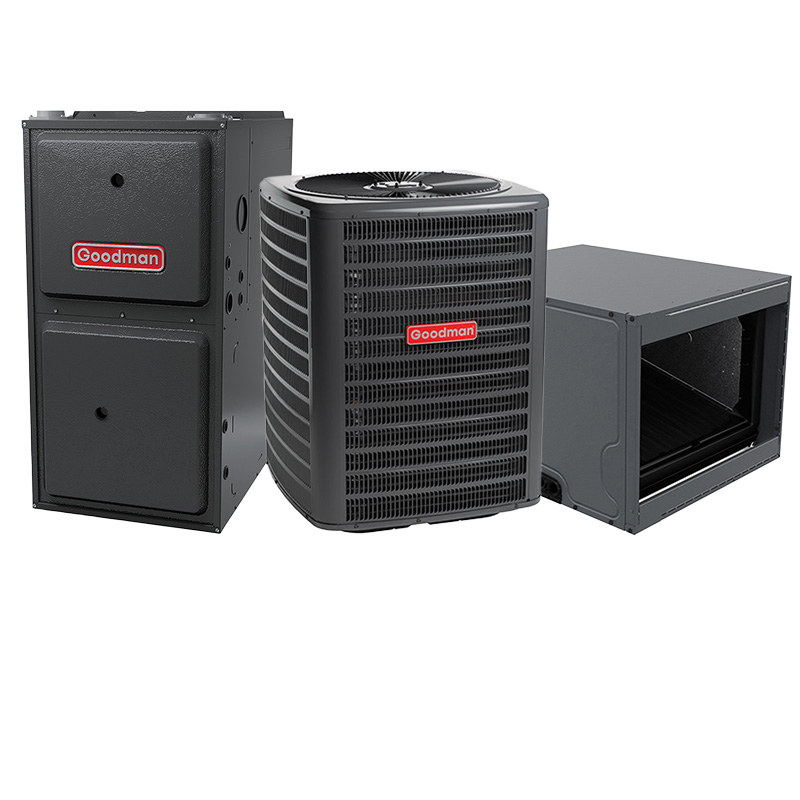
Goodman Furnace And AC – 4 Ton 14 SEER2 AC With 100000 BTU 96% AFUE Two Stage Multi-Speed ECM Gas Furnace System – Horizontal | R32
View on AC Direct see your lowest price →Check current price on AC Direct →
Key features
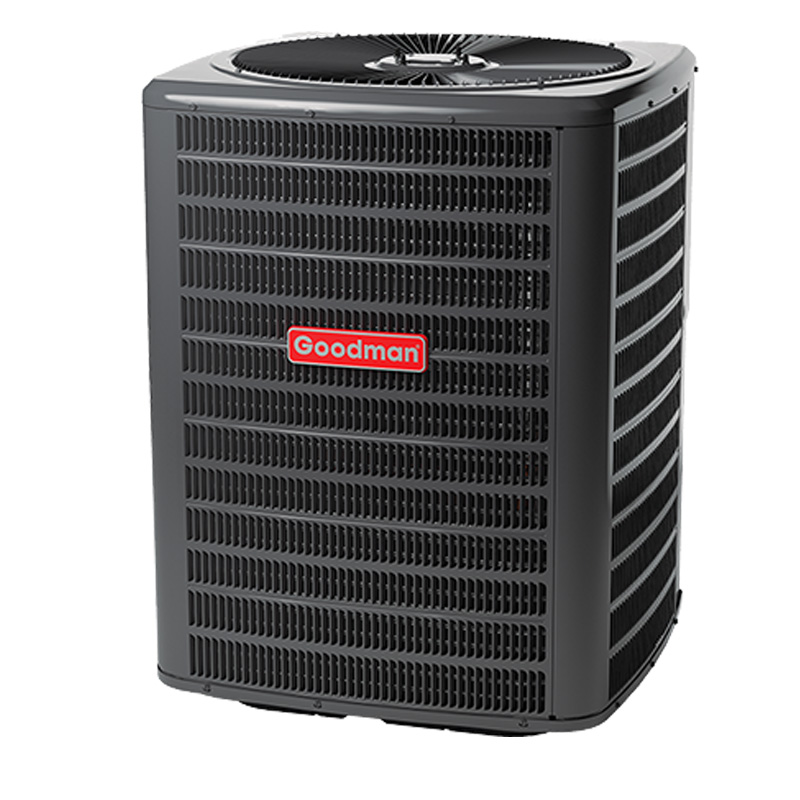
- 4-ton, 14 SEER2 central AC using R-32 refrigerant
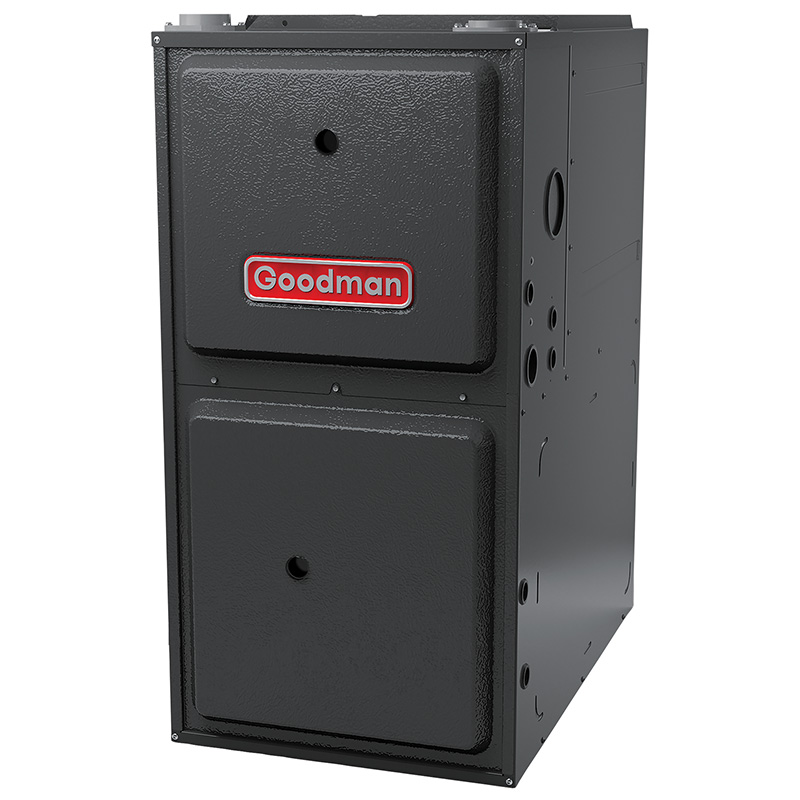
- 100,000 BTU two-stage gas furnace at 96% AFUE
- Multi-speed ECM blower motor reduces electricity draw and temperature swings
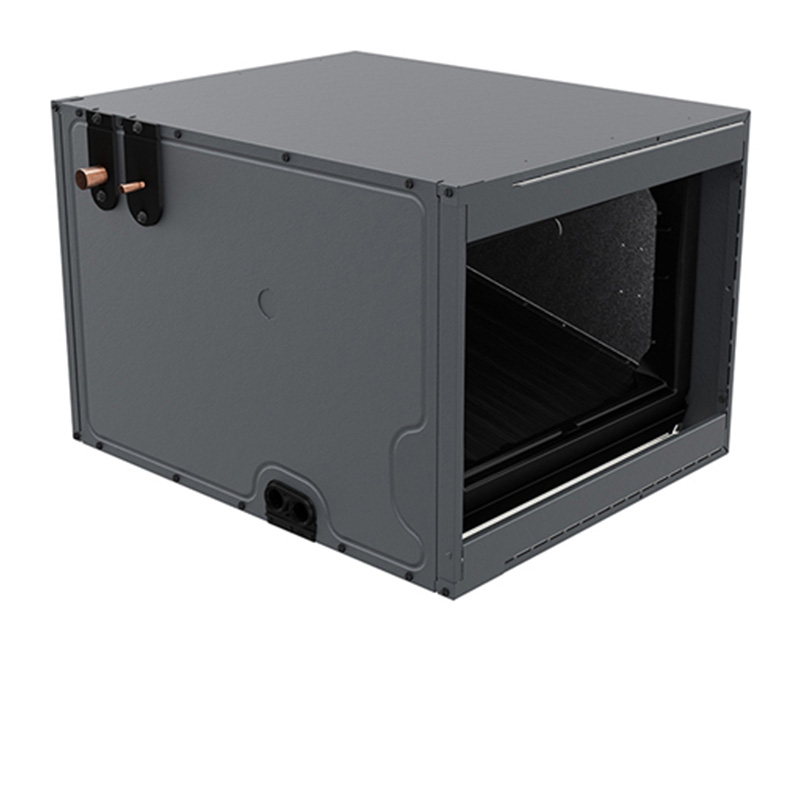
- Horizontal configuration for crawl space, attic, or side-mount installations
- Two-stage heating runs lower stage most of the time for steadier comfort and humidity control
- R-32 refrigerant has roughly 68% lower global warming potential than R-410A
About this system
This Goodman bundle pairs a 4-ton, 14 SEER2 air conditioner with a 100,000 BTU, 96% AFUE two-stage gas furnace in a horizontal configuration, making it a practical fit for homes where the air handler must sit on its side, such as in a crawl space, attic, or tight utility closet. The R-32 refrigerant charge is a forward-looking choice: R-32 has a lower global warming potential than the R-410A it replaces and is increasingly the standard for new residential equipment. At 14 SEER2, cooling efficiency clears the federal minimums for most U.S. climate zones without reaching into premium-tier pricing.
The two-stage furnace is the standout specification here. Running on a lower stage the majority of the time, it cycles less aggressively than a single-stage unit, which means longer, steadier heat cycles, better humidity control in winter, and less temperature swing between thermostat calls. The multi-speed ECM blower motor reinforces that benefit by ramping airflow gradually rather than blasting on at full speed, which also trims electricity use at the air handler. For a 4-ton load, 100,000 BTU of heating capacity is on the generous side, so proper Manual J sizing by your contractor matters before purchasing.
The horizontal configuration does narrow the installer pool slightly. Not every technician is equally practiced with horizontal furnace setups, and a poorly leveled or inadequately supported horizontal install can accelerate condensate drainage issues over time. Buyers should confirm their contractor has hands-on experience with horizontal gas furnace installs, not just standard upflow units.
This Goodman system delivers a competitive two-stage furnace and a code-compliant 14 SEER2 AC at a price point that undercuts comparable Carrier, Trane, and Lennox bundles by a meaningful margin. The trade-off is a brand track record that shows capacitor failures, evaporator coil leaks, and compressor longevity that tends to fall short of premium competitors, all risks that a careful, experienced installer can partially but not entirely offset. Buyers who prioritize upfront affordability and are comfortable budgeting for potential mid-life repairs will find this bundle reasonable; buyers who want the lowest 15-year total cost of ownership should price out a premium brand first.
Overall score is the average of the five ratings above.
What we like
- Priced roughly 15 to 25 percent below comparable Carrier, Trane, and Lennox systems
- Two-stage furnace delivers more even heating and better humidity management than single-stage alternatives at this price
- 96% AFUE is a high-efficiency rating that keeps gas bills lower than 80% AFUE equipment
- ECM blower motor cuts fan electricity consumption compared to standard PSC motors
- R-32 refrigerant is a future-ready choice as R-410A production winds down
Trade-offs
- Dual-run capacitors are the most commonly reported failure point; budget 300 to 600 dollars for a likely repair somewhere in years 5 to 10
- Compressor lifespan averages 10 to 14 years versus 15 to 20 for premium brands, meaning a possible compressor replacement before the unit is fully paid off on a long horizon
- Evaporator coil leaks appear in a notable share of owner reviews, which can mean refrigerant loss and a costly coil replacement outside the warranty window
- Horizontal configuration requires an installer experienced with that orientation; a sloppy install raises the risk of condensate drainage problems and shortened equipment life
What homeowners and pros say about Goodman
Homeowners who leave reviews on ConsumerAffairs give Goodman roughly 2.5 out of 5 stars, and that channel skews toward people who had problems, so the score reflects genuine frustration rather than a representative sample of every owner. The recurring theme in those complaints is repair costs that climb after roughly year 7, with capacitor failures, evaporator coil leaks, and compressor replacements showing up as the most cited issues. Compressor lifespan on Goodman equipment tends to run 10 to 14 years based on documented owner experience, a shorter window than the 15 to 20 years more commonly seen on premium-brand compressors. A minority of owners also report refrigerant leaks within the first year, which technicians generally attribute to install or initial charge issues rather than a defect in the equipment itself.
Google reviews aggregated across Goodman dealer locations tell a more moderate story, averaging around 3.8 out of 5 stars, where affordability is the praise that comes up most often. HVAC professionals tend to describe Goodman as equipment that performs adequately when installed correctly and maintained consistently, but that shows its cost-cutting more visibly over a long ownership horizon than Carrier, Trane, or Lennox alternatives. The horizontal furnace in this particular bundle adds an install-quality variable that matters more than on a standard upflow unit; technicians who do not regularly work with horizontal configurations can introduce drainage and leveling problems that shorten the equipment’s useful life independent of the brand’s underlying reliability profile.
Sources: ConsumerAffairs Goodman owner reviews, AHRI Directory of Certified Product Performance, U.S. DOE appliance and equipment efficiency standards, Goodman product specification sheets.
What it costs to run
At 14 SEER2, cooling this 4-ton system for a typical 1200-hour cooling season at the U.S. average electricity rate of $0.17/kWh works out to roughly $699 per year in cooling, about $32 less per year than a minimum-efficiency 13.4 SEER2 unit of the same size. Your real cost depends on your climate and local rate.
Method: (48,000 BTU/hr ÷ 14 SEER2) × 1200 hours ÷ 1000 × $0.17/kWh. Rate source: U.S. EIA average; cooling hours: moderate-climate estimate.
How it compares
| Brand | Comparable model | SEER2 | Stage | Price position |
|---|---|---|---|---|
| Goodman | GSXH504810 + GMVC961005CN (this system) | 14 | two-stage | Value pick |
| Carrier | Comfort 14 series (24ACC4) | 14 | single-stage | Typically 15 to 25 percent more than this Goodman bundle |
| Trane | XR14 series | 14 | single-stage | Typically 15 to 25 percent more than this Goodman bundle |
| Lennox | Merit 14 series (ML14XC1) | 14 | single-stage | Typically 15 to 25 percent more than this Goodman bundle |
Competitor rows are comparable single-stage units at similar efficiency; price is relative position, not a quote.
Questions about this system
Why does this system use R-32 instead of R-410A, and does that affect service costs?
R-32 is replacing R-410A industrywide because it has a significantly lower global warming potential. On the service side, R-32 requires technicians to use slightly different handling procedures and compatible recovery equipment, so confirm your local HVAC tech is set up for it before you buy. Refrigerant prices can vary by region, so ask your contractor what they charge per pound for R-32 top-offs.
What does 'horizontal configuration' actually mean, and is it harder to maintain?
A horizontal furnace is mounted on its side so that airflow moves lengthwise through the cabinet rather than upward or downward. It is common in attics and crawl spaces where vertical clearance is limited. Maintenance access can be tighter than an upright unit, and proper slope for condensate drainage is critical; a furnace installed even slightly off-level can drain poorly and eventually cause water damage or premature heat exchanger wear.
How likely am I to need a capacitor replacement, and what does that cost?
Dual-run capacitors are the single most commonly reported repair on Goodman equipment. They are also among the least expensive HVAC repairs, typically running 300 to 600 dollars including labor. Most owners who encounter this do so somewhere in the 5-to-10-year range, so it is a predictable rather than catastrophic expense, but you should factor it into your long-term ownership budget.
Is 100,000 BTU too much furnace for a home that only needs a 4-ton AC?
It can be. Furnace sizing is based on heating load, not cooling load, and the two do not always scale together depending on your climate, insulation, and home design. An oversized furnace short-cycles, which reduces efficiency and comfort. A Manual J heat load calculation by your contractor before purchase will confirm whether 100,000 BTU is appropriate or whether a lower BTU option would serve the space better.
What warranty does Goodman provide on this system, and are there conditions I need to meet?
Goodman typically offers a 10-year parts warranty when the equipment is registered within a specified window after installation, usually 60 days. Failure to register generally drops coverage to a shorter term, often five years. The warranty covers parts but not labor, which can still represent a significant out-of-pocket cost for compressor or coil replacements. Always confirm current warranty terms directly with Goodman at the time of purchase, as terms can change.
Specifications
| Cooling capacity | 4 Ton |
| Efficiency | 14 SEER2 |
| Furnace output | 100000 BTU |
| Furnace efficiency | 96% AFUE |
| Configuration | Horizontal |
| Refrigerant | R-32 |