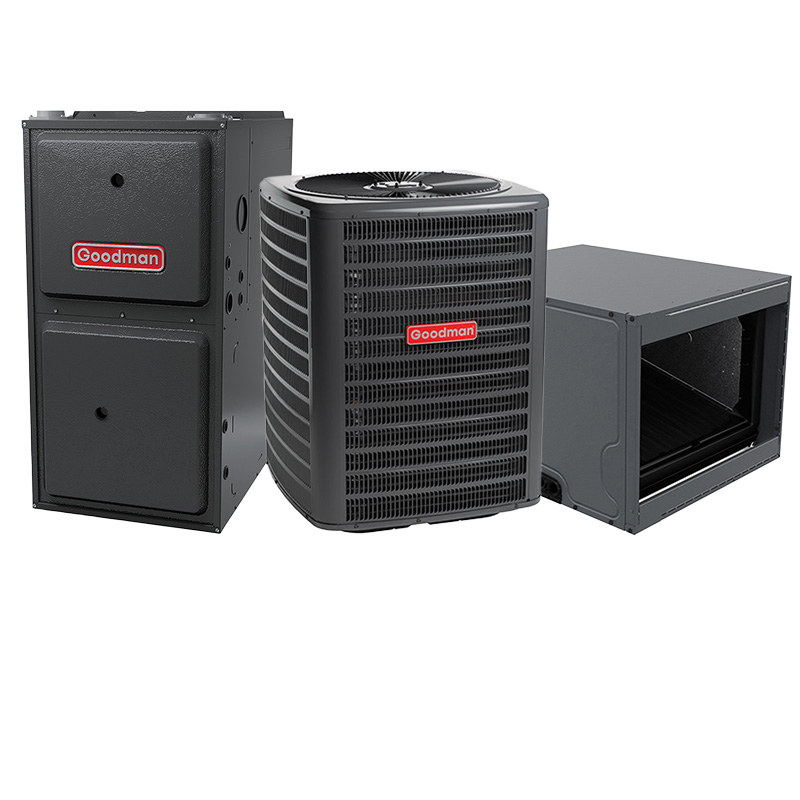
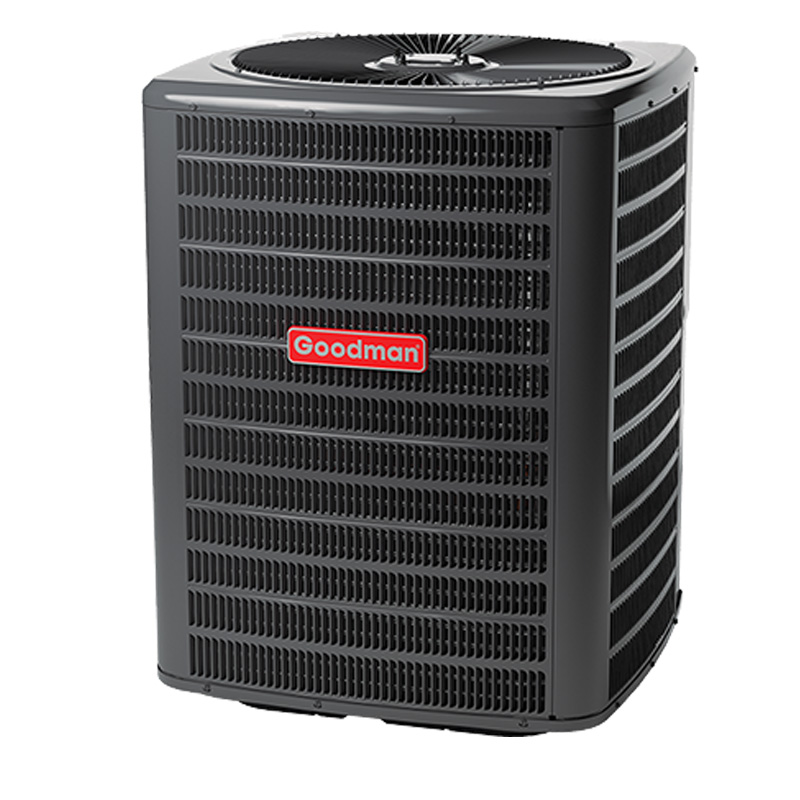
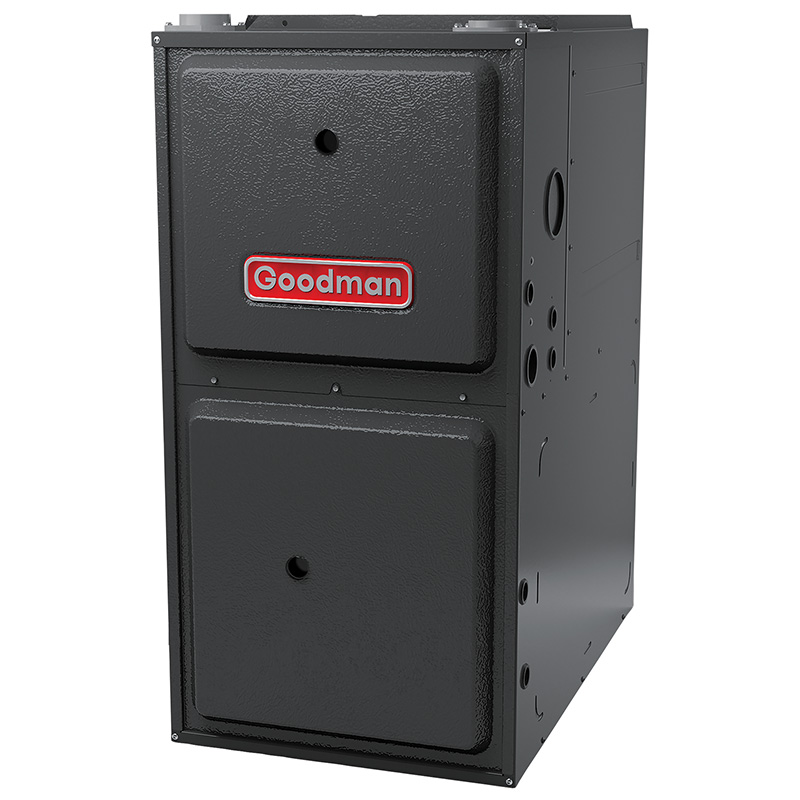
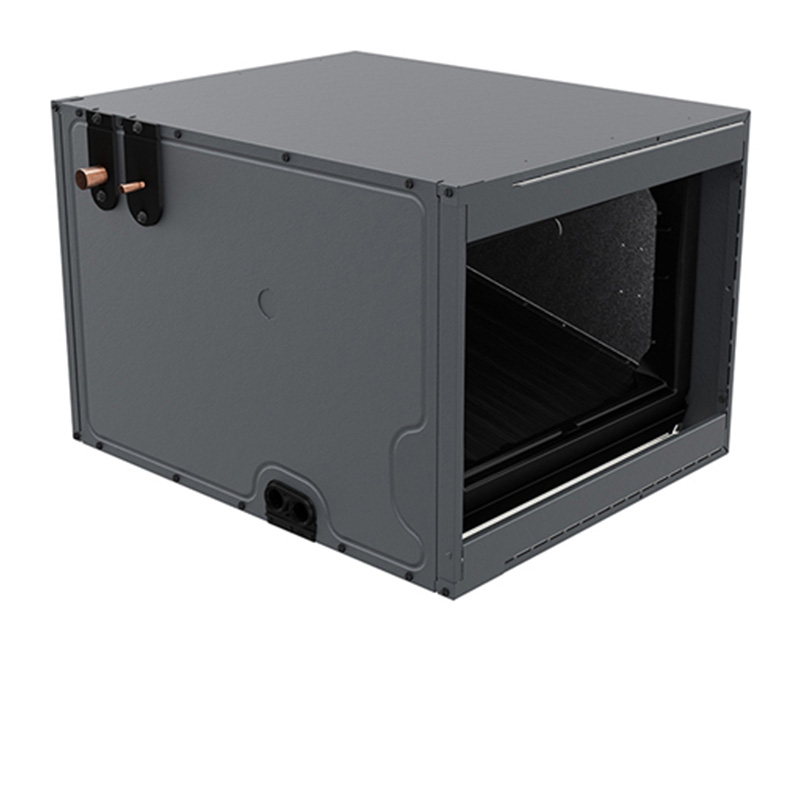
Goodman Furnace And AC – 4 Ton 14 SEER2 AC With 80000 BTU 96% AFUE Two Stage Multi-Speed ECM Gas Furnace System – Horizontal | R32
View on AC Direct see your lowest price →Check current price on AC Direct →
Key features
- 4-ton cooling capacity with 14 SEER2 efficiency rating
- 80,000 BTU output at 96% AFUE two-stage gas furnace
- Multi-speed ECM blower motor for improved humidity control and energy savings
- Horizontal installation configuration for attics, crawl spaces, and side-load air handlers
- R-32 refrigerant charge with lower global warming potential than R-410A
- Two-stage gas valve reduces temperature swings and extends equipment run cycles
About this system
This Goodman bundle pairs a 4-ton, 14 SEER2 air conditioner with an 80,000 BTU, 96% AFUE two-stage gas furnace in a horizontal configuration, making it a practical choice for homes where the air handler sits in a crawl space, attic, or other tight horizontal run. The R-32 refrigerant charge is a forward-looking detail: R-32 has a lower global warming potential than the R-410A it replaces and is increasingly the industry standard, so finding replacement refrigerant and trained technicians should become easier over time, not harder.
A 14 SEER2 rating sits right at the federal minimum threshold for most northern U.S. climates, so buyers in hotter southern markets should confirm local minimums before purchasing. The 96% AFUE furnace, however, is genuinely high-efficiency territory, meaning roughly 96 cents of every dollar spent on gas goes toward actual heat. The two-stage gas valve and multi-speed ECM blower motor together allow the furnace to run at a lower capacity on milder days, which tends to improve humidity control, reduce temperature swings, and cut monthly operating costs compared to single-stage equipment.
This system is best understood as a solid-performing, budget-conscious replacement or new-construction option for mid-sized homes, roughly 2,000 to 2,600 square feet depending on local climate and insulation. It is not the last word in efficiency or long-term durability, but it closes most of that gap at a price point that consistently runs 15 to 25 percent below comparable Trane, Lennox, and Carrier configurations.
This Goodman bundle delivers genuinely high furnace efficiency and a competent cooling setup at a price that undercuts major premium brands by a meaningful margin. The trade-off is a brand track record that places compressor and coil longevity below Carrier, Trane, and Lennox peers, and a ConsumerAffairs complaint profile that grows noisier after year seven. For budget-conscious buyers with a skilled installer, it represents fair value; for those prioritizing decade-plus reliability with minimal repair risk, premium alternatives are worth the price difference.
Overall score is the average of the five ratings above.
What we like
- 96% AFUE furnace is high-efficiency territory, reducing monthly heating costs noticeably versus 80% AFUE equipment
- Two-stage operation with ECM blower provides better comfort and humidity control than single-stage alternatives
- R-32 refrigerant is more environmentally responsible and aligns with industry direction
- Horizontal configuration opens installation options in attics and crawl spaces where upflow units cannot fit
- Price point runs 15 to 25 percent below comparable Carrier, Trane, and Lennox systems
Trade-offs
- Compressor lifespan averages 10 to 14 years versus 15 to 20 years for premium brand compressors
- Evaporator coil leaks are a documented failure mode appearing in a meaningful share of owner reviews
- Dual-run capacitors are the most commonly reported repair, typically needed before the 10-year mark
- A minority of owners report refrigerant leaks within the first year, most often tied to install or charge issues rather than factory defects
What homeowners and pros say about Goodman
Homeowners who review Goodman equipment on ConsumerAffairs give the brand roughly 2.5 out of 5 stars, a score that reflects the platform’s well-known tilt toward dissatisfied customers. Reading through those complaints, a pattern emerges: the first several years tend to pass without incident, and then repair costs start climbing around year seven or eight. The specific failure modes showing up most consistently are dual-run capacitor failures, evaporator coil leaks, and, in a smaller share of cases, refrigerant leaks that trace back to the original installation rather than the equipment itself. Compressor longevity is a real concern as well, with Goodman compressors averaging 10 to 14 years in documented owner experience versus 15 to 20 years for premium brands. That gap is worth factoring into any total cost of ownership calculation.
HVAC contractors tend to be more measured in their assessments. Google dealer reviews for Goodman installers average around 3.8 out of 5, and affordability is by far the most repeated point of praise. Technicians who work on this equipment regularly note that the brand’s reputation lives or dies on the quality of the original install, and that a well-charged, properly sized Goodman system installed by a skilled tech often outperforms expectations. For this specific horizontal two-stage bundle, the 96% AFUE furnace and ECM blower are real features that a competent installer can leverage for measurable comfort improvements, not just spec sheet figures. The honest read is that this is a capable system at a competitive price, with reliability ceilings that are lower than premium competitors and a repair profile that becomes more active in the back half of its service life.
Sources: ConsumerAffairs Goodman owner reviews, AHRI Directory of Certified Product Performance, U.S. DOE appliance and equipment efficiency standards, Goodman product specification sheets.
What it costs to run
At 14 SEER2, cooling this 4-ton system for a typical 1200-hour cooling season at the U.S. average electricity rate of $0.17/kWh works out to roughly $699 per year in cooling, about $32 less per year than a minimum-efficiency 13.4 SEER2 unit of the same size. Your real cost depends on your climate and local rate.
Method: (48,000 BTU/hr ÷ 14 SEER2) × 1200 hours ÷ 1000 × $0.17/kWh. Rate source: U.S. EIA average; cooling hours: moderate-climate estimate.
How it compares
| Brand | Comparable model | SEER2 | Stage | Price position |
|---|---|---|---|---|
| Goodman | GSZB404810 + GMVC960804CN (this system) | 14 | Two-stage | Value pick |
| Carrier | Comfort 14 Series (24ACC4) | 14 | Single-stage | Typically 15 to 25 percent more than this Goodman bundle |
| Trane | XR14c Series | 14 | Single-stage | Typically 15 to 25 percent more than this Goodman bundle |
| Lennox | Merit 14ACX Series | 14 | Single-stage | Typically 15 to 25 percent more than this Goodman bundle |
Competitor rows are comparable single-stage units at similar efficiency; price is relative position, not a quote.
Questions about this system
Is 14 SEER2 going to meet my local efficiency requirements?
14 SEER2 is the current federal minimum for most northern U.S. regions, but several southern and southwestern states require higher minimums for new installations or full system replacements. Check your state and local utility requirements before purchasing, as a non-compliant system can create issues during permitting and inspection.
What does horizontal configuration mean, and will this unit fit my install situation?
Horizontal configuration means the air handler is designed to lie on its side, drawing air in from one end and discharging it out the other. This is common in attic installations, low-clearance crawl spaces, and closet setups where a vertical upflow unit would not physically fit. Confirm with your installer that the specific unit dimensions and drain pan orientation match your existing ductwork layout before ordering.
How serious is the R-32 refrigerant change, and will it affect service costs?
R-32 is a single-component refrigerant that most modern HVAC technicians are already certified to handle, and its adoption is accelerating across the industry. In practical terms, service calls and refrigerant top-offs should not cost more than R-410A work, and availability is expected to improve as R-410A is phased down under current EPA regulations.
What are the most likely repair costs I should budget for over the first 10 years?
Dual-run capacitor failure is the most commonly documented issue with Goodman equipment and typically runs in the 300 to 600 dollar range including labor. Evaporator coil leaks are a second documented failure mode and are more expensive to address, often exceeding 1,000 dollars depending on labor rates in your area. A refrigerant leak in the first year is less common but has been reported, and is usually attributable to installation quality rather than the equipment itself.
Does the two-stage furnace actually make a noticeable comfort difference compared to a single-stage unit?
Yes, in most cases. A two-stage furnace runs at lower capacity on milder days, which means longer, gentler heating cycles that better stabilize room temperatures and give the air handler more time to pull moisture out of the air. Homeowners in climates with wide daily temperature swings or humidity concerns tend to notice the difference, particularly in shoulder seasons.
Specifications
| Cooling capacity | 4 Ton |
| Efficiency | 14 SEER2 |
| Furnace output | 80000 BTU |
| Furnace efficiency | 96% AFUE |
| Configuration | Horizontal |
| Refrigerant | R-32 |