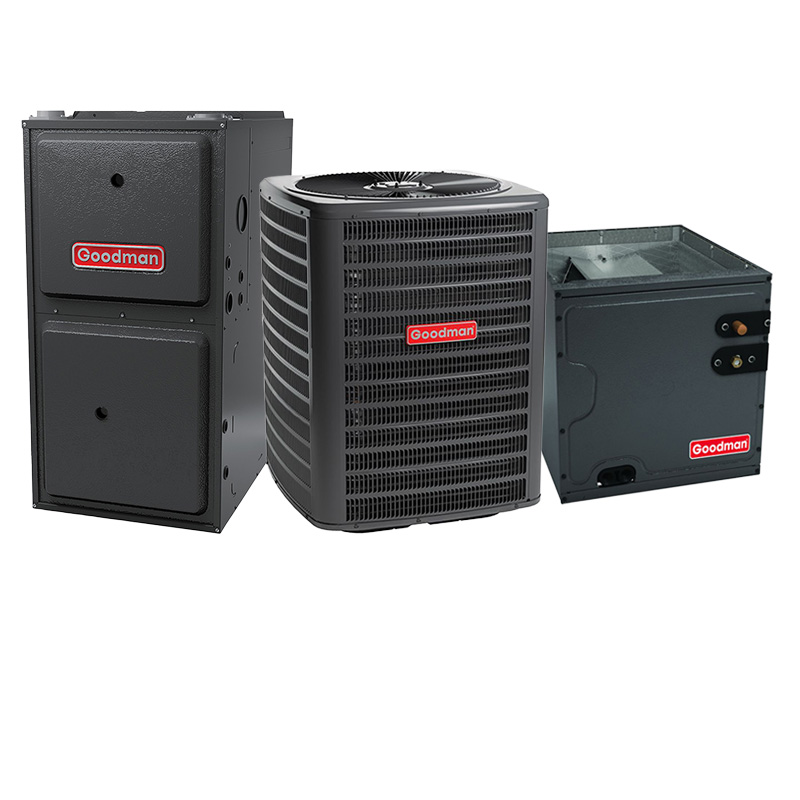
Goodman Furnace And AC – 5 Ton 14 SEER2 AC With 120000 BTU 96% AFUE Two Stage Multi-Speed ECM Gas Furnace System – Upflow | R32
View on AC Direct see your lowest price →Check current price on AC Direct →
Key features
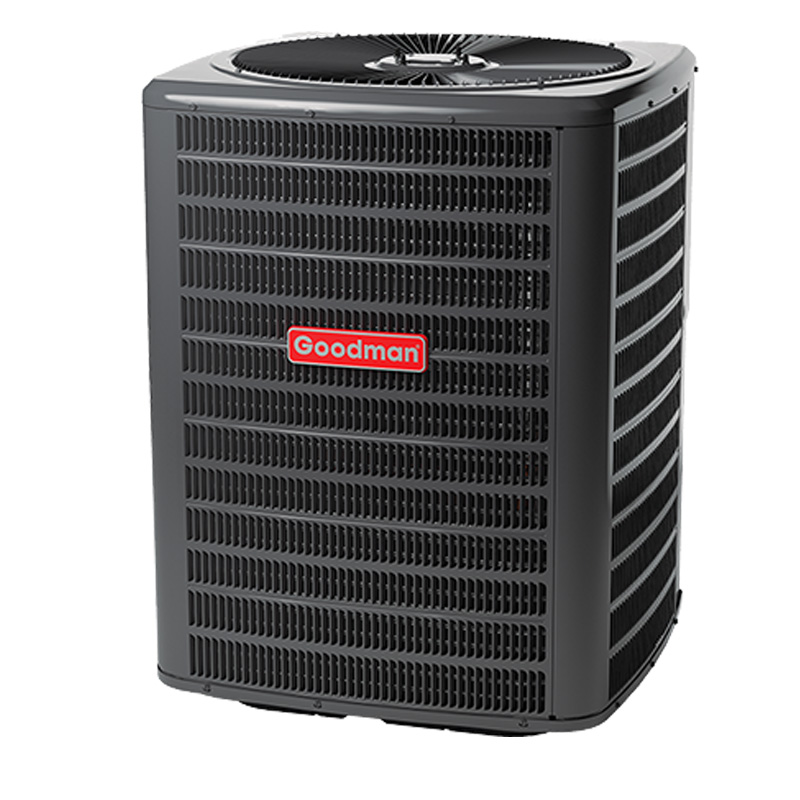
- 5-ton cooling capacity rated at 14 SEER2 for baseline energy efficiency compliance
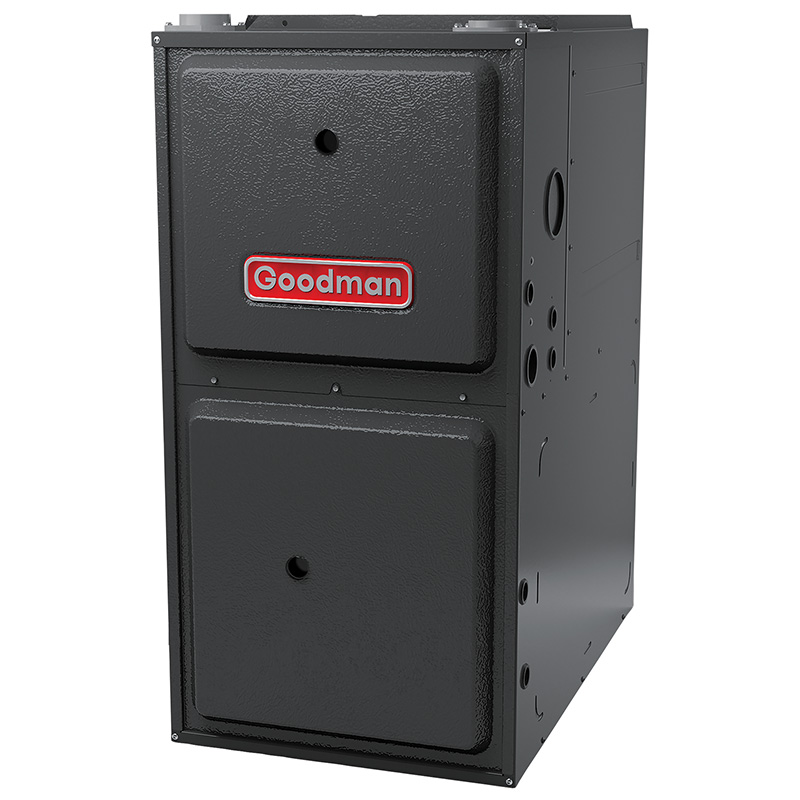
- 120,000 BTU two-stage gas furnace at 96% AFUE reduces fuel waste on mild heating days
- Multi-speed ECM blower motor improves airflow consistency and lowers operating costs versus PSC motors
- Upflow configuration suits basement and main-floor installations with standard ductwork
- R-32 refrigerant with lower global warming potential than legacy R-410A systems
- Goodman's 10-year parts warranty applies when registered within 60 days of installation
About this system
This Goodman bundle pairs a 5-ton, 14 SEER2 split-system air conditioner with a 120,000 BTU, 96% AFUE two-stage gas furnace in an upflow configuration. The combination is aimed at larger homes, typically in the 2,400 to 3,200 square foot range depending on climate and insulation, where a single-stage system would cycle too aggressively and leave uneven temperatures floor to floor. The two-stage furnace fires at a reduced output on mild days and ramps to full capacity only when conditions demand it, which smooths out hot and cold spots and can meaningfully reduce fuel bills versus a single-stage 96% unit. The multi-speed ECM blower motor adds to that comfort story by running longer at lower speeds, improving air circulation and humidity control during the cooling season.
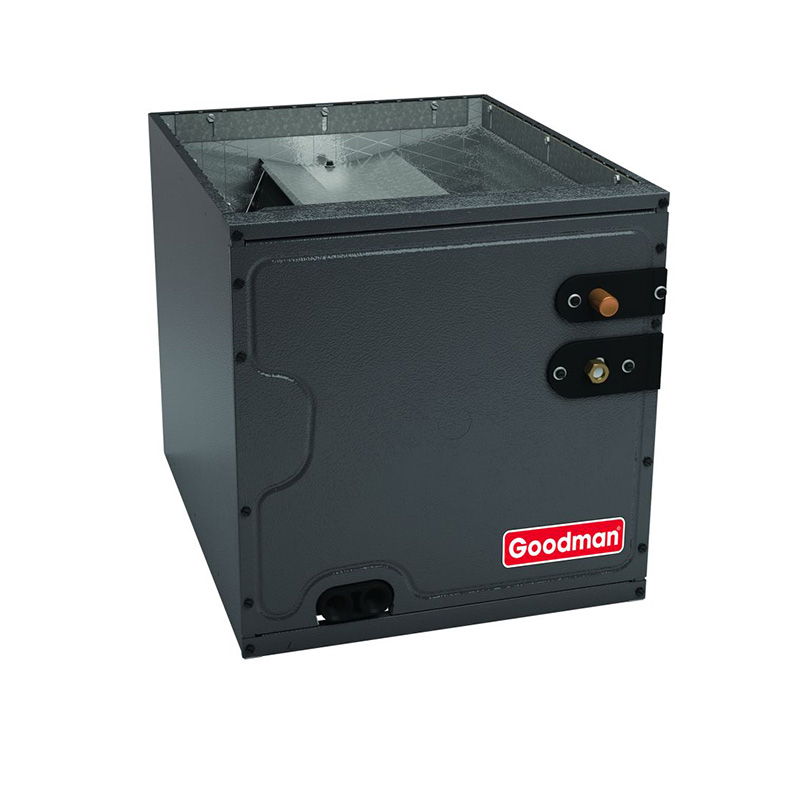
The 14 SEER2 rating on the AC side clears the current federal minimum for most U.S. regions but sits at the lower end of the efficiency range available today. Homeowners in climates with long, hot summers will recover the cost difference on a 16 or 18 SEER2 unit faster than those in moderate cooling climates, so the value calculation here depends heavily on where you live and how many months your compressor runs. The R-32 refrigerant is a forward-looking choice: it has a lower global warming potential than R-410A and is increasingly the industry standard, which should make future service and recharging straightforward as technician familiarity grows. This upflow configuration routes conditioned air upward through floor-level supply registers and suits most standard basement or main-floor installations with typical ductwork layouts.
This system offers a financially accessible entry point into two-stage, high-efficiency heating for larger homes, and the R-32 refrigerant future-proofs the refrigerant side. The trade-off is Goodman's documented history of capacitor failures, coil leaks, and compressor longevity that trails premium brands, meaning total cost of ownership over 15 years may close the gap on the upfront savings.
Overall score is the average of the five ratings above.
What we like
- Two-stage furnace operation provides noticeably more even heating than single-stage alternatives at a similar price
- 96% AFUE is near the top of standard furnace efficiency and will reduce gas bills versus 80% AFUE units
- ECM blower motor runs more quietly and uses significantly less electricity than a standard PSC motor
- Priced roughly 15 to 25 percent below comparable Carrier, Trane, and Lennox systems for the same spec tier
- R-32 refrigerant is widely supported and carries a lower environmental footprint than R-410A
Trade-offs
- Dual-run capacitor failures are the most commonly reported issue, typically appearing after year 5 to 7 and costing $300 to $600 per repair
- Evaporator coil leaks show up in a meaningful share of owner reviews and can be costly if the unit is out of the parts warranty window
- Compressor lifespan averages 10 to 14 years versus 15 to 20 years seen with premium brands, relevant on a 5-ton unit under heavy seasonal load
- A minority of owners report refrigerant leaks within the first year, which most technicians attribute to installation or initial charge quality rather than the equipment itself
What homeowners and pros say about Goodman
Homeowners who have owned Goodman equipment describe a mixed experience that tends to split along two timelines. In the first several years, many report no major issues and point to the lower purchase price as a genuine win. The picture changes around year 7 to 10, which aligns with the recurring theme on ConsumerAffairs, where Goodman holds a rating of roughly 2.5 out of 5 on that complaint-heavy platform. The most commonly cited frustrations there involve escalating repair costs, specifically dual-run capacitor failures and evaporator coil leaks, at a point in the system’s life when homeowners feel they have not yet gotten full value from the original purchase. Google dealer reviews tell a softer story, averaging around 3.8 out of 5, where the most frequent positive comment is straightforwardly about price and the most frequent criticism is about parts availability delays when something does go wrong.
HVAC technicians who work on Goodman equipment regularly tend to describe it as a serviceable product whose longevity is unusually dependent on how carefully it was installed and how consistently it is maintained. They flag the dual-run capacitor as the part most likely to need replacement first, a repair that runs $300 to $600 and is generally straightforward. Coil leaks are the concern they take more seriously, because a leaking evaporator coil on a 5-ton system is a meaningful expense. On compressor lifespan, the trade conversation is candid: Goodman compressors average 10 to 14 years in practice, which is shorter than the 15 to 20-year range technicians associate with Trane, Carrier, and Lennox at the same tonnage. For a 5-ton unit running through long cooling seasons, that gap is worth weighing honestly against the upfront savings before committing.
Sources: ConsumerAffairs Goodman owner reviews, AHRI Directory of Certified Product Performance, U.S. DOE appliance and equipment efficiency standards, Goodman product specification sheets.
What it costs to run
At 14 SEER2, cooling this 5-ton system for a typical 1200-hour cooling season at the U.S. average electricity rate of $0.17/kWh works out to roughly $874 per year in cooling, about $39 less per year than a minimum-efficiency 13.4 SEER2 unit of the same size. Your real cost depends on your climate and local rate.
Method: (60,000 BTU/hr ÷ 14 SEER2) × 1200 hours ÷ 1000 × $0.17/kWh. Rate source: U.S. EIA average; cooling hours: moderate-climate estimate.
How it compares
| Brand | Comparable model | SEER2 | Stage | Price position |
|---|---|---|---|---|
| Goodman | GSXH5 + GMVC96 (this system) | 14 | Two-stage | Value pick |
| Carrier | Comfort 14 (24ACC4) + 58SB0 | 14 | Single-stage | Typically 15 to 25 percent more than this Goodman bundle |
| Trane | XR14 (4TTR4) + S9X2 | 14 | Single-stage | Typically 15 to 25 percent more than this Goodman bundle |
| Lennox | Merit 14 (14ACX) + ML196 | 14 | Single-stage | Typically 15 to 25 percent more than this Goodman bundle |
Competitor rows are comparable single-stage units at similar efficiency; price is relative position, not a quote.
Questions about this system
Is 5 tons the right size for my house, and what happens if it is oversized?
A 5-ton system is generally appropriate for homes in the 2,400 to 3,200 square foot range, but the correct size depends on insulation, ceiling height, window area, and local climate. An oversized AC will short-cycle, meaning it reaches the thermostat setpoint quickly and shuts off before removing adequate humidity, leaving the air feeling clammy. Have a Manual J load calculation done before ordering rather than sizing by square footage alone.
What does two-stage operation actually mean for my heating bill?
A two-stage furnace operates at a lower firing rate, often around 65 percent of full capacity, during moderate weather and only runs at full 120,000 BTU output during the coldest days. Because most heating hours in a season are not at peak demand, the furnace runs longer at lower fire, which transfers heat more evenly and can reduce short-cycling losses. Combined with the 96% AFUE rating, most homeowners see lower gas consumption than they would with a single-stage 96% furnace of the same BTU rating.
How important is the installer for a Goodman system specifically?
Extremely important. HVAC technicians consistently cite install quality as the single biggest factor in how long a Goodman unit lasts, and the brand's documented first-year refrigerant leak issues are most often traced to improper line set handling or initial charge rather than factory defects. Selecting a licensed contractor who performs a proper Manual J, pressure tests the line set, and verifies charge by the manufacturer's method is not optional with any brand, but it is especially consequential here.
What is covered under the warranty and how do I activate it?
Goodman offers a 10-year parts warranty and a lifetime heat exchanger warranty when the system is registered online within 60 days of installation by a licensed contractor. If you miss the registration window, coverage drops to 5 years on parts. Labor is not covered under the manufacturer warranty, so service calls for a warranty repair still carry a technician fee, and that cost is worth factoring into your total ownership budget.
Why does this system use R-32 refrigerant and will that cause any service problems?
R-32 is a next-generation refrigerant chosen for its lower global warming potential compared to R-410A, and it is increasingly common in new residential equipment. Technician training and availability of R-32 are growing quickly, so routine service should not be a problem with a qualified contractor. One practical note: R-32 is mildly flammable, which means service procedures differ slightly from R-410A and your technician should confirm they are certified for A2L refrigerants before working on the system.
Specifications
| Cooling capacity | 5 Ton |
| Efficiency | 14 SEER2 |
| Furnace output | 120000 BTU |
| Furnace efficiency | 96% AFUE |
| Configuration | Upflow |
| Refrigerant | R-32 |