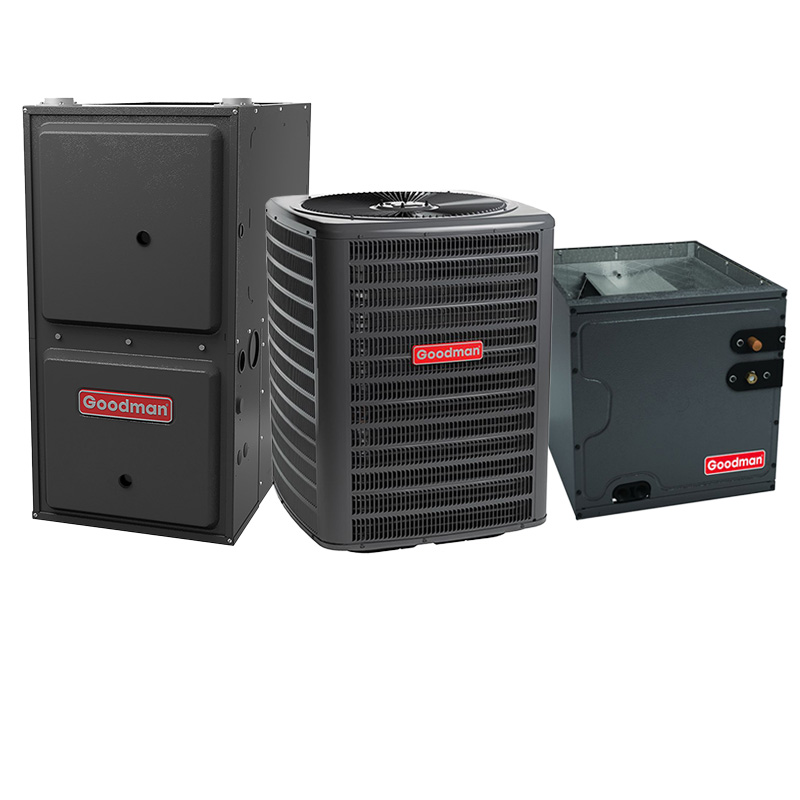
Goodman Furnace And Air Conditioner 1.5 Ton 14.5 SEER2 AC With 40000 BTU 80% AFUE Multi-Speed ECM Gas Furnace System – Downflow | R32
View on AC Direct see your lowest price →Check current price on AC Direct →
Key features
- 1.5-ton cooling capacity with 14.5 SEER2 efficiency rating
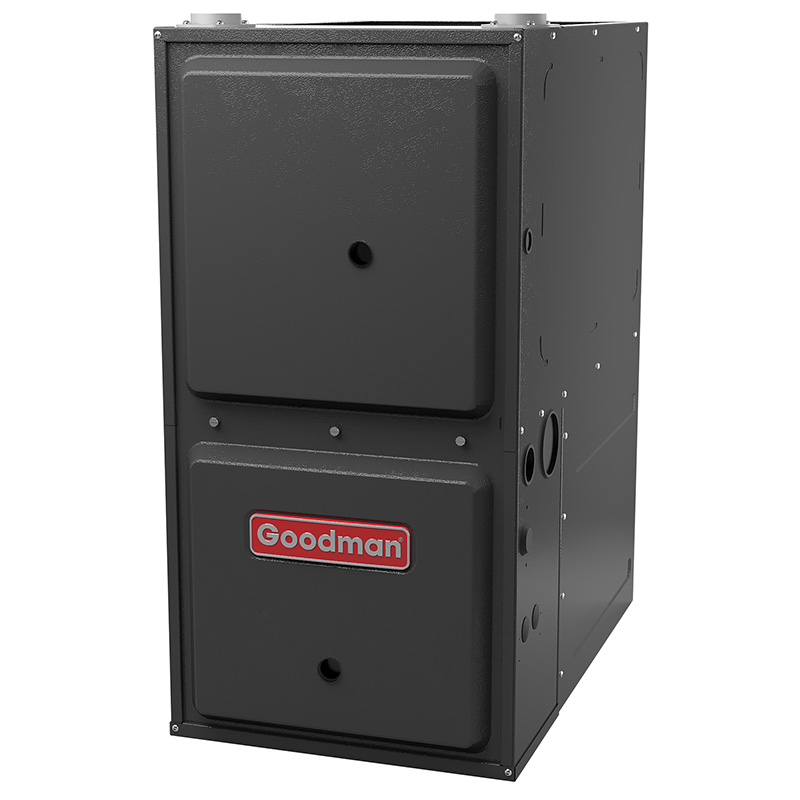
- 40,000 BTU 80% AFUE single-stage gas furnace with multi-speed ECM blower motor
- Downflow airflow configuration for closet or utility-room installations
- R-32 refrigerant with lower global-warming potential than R-410A
- ECM blower motor reduces fan electricity consumption versus standard PSC motors
- Factory-matched system designed to satisfy current federal minimum efficiency requirements
About this system
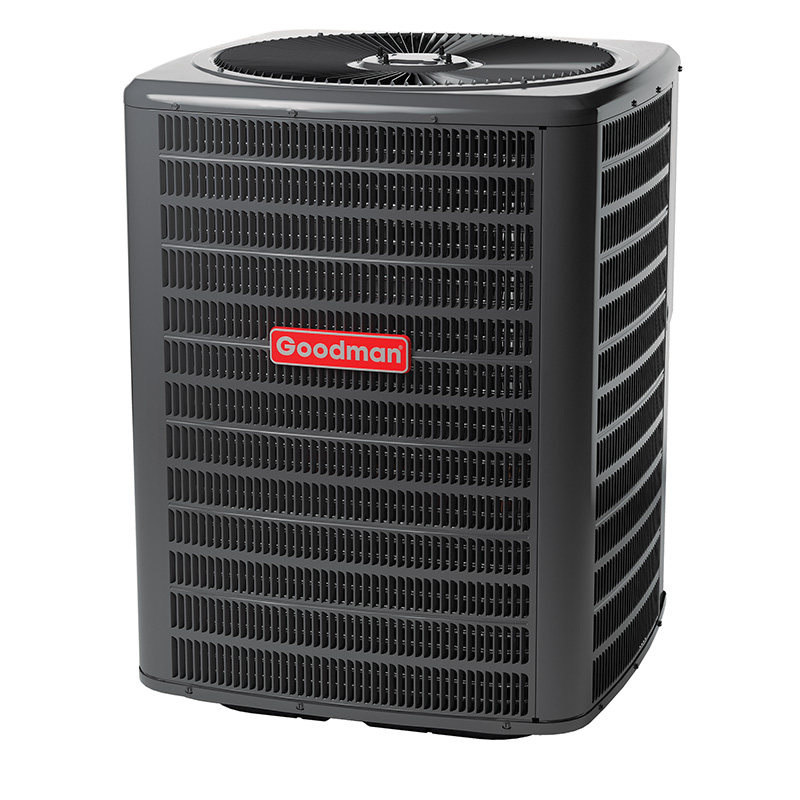
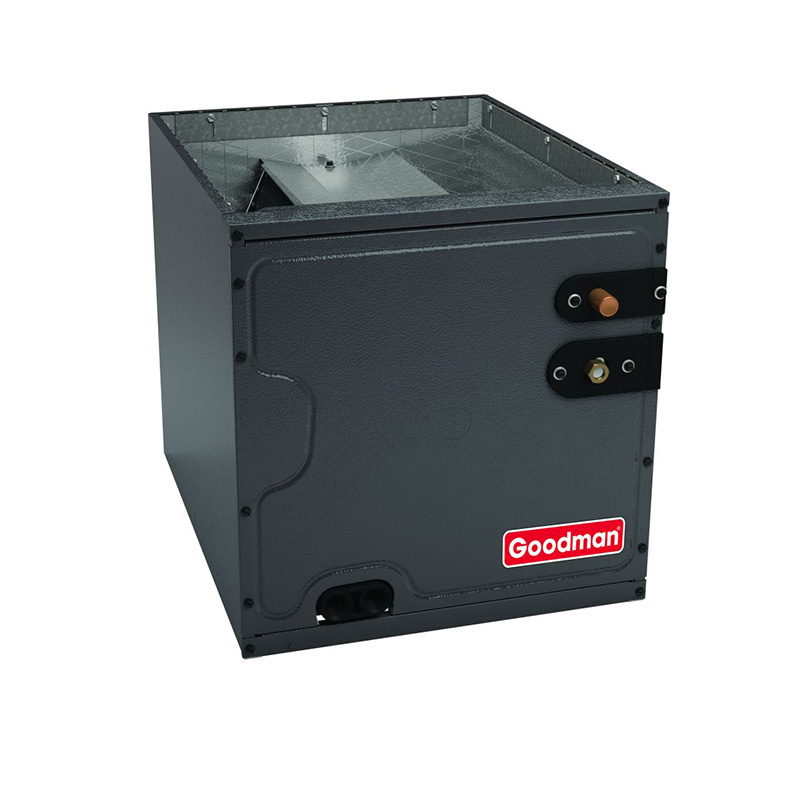
This Goodman bundle pairs a 1.5-ton, 14.5 SEER2 central air conditioner with a 40,000 BTU, 80% AFUE multi-speed ECM gas furnace in a downflow configuration, making it a practical choice for homes where the air handler sits in a closet, utility room, or above a crawl space that requires conditioned air to discharge downward. The 1.5-ton capacity is sized for smaller homes, additions, or individual zones, typically in the range of 600 to 900 square feet depending on local climate, insulation quality, and ceiling height. R-32 refrigerant gives this system a lower global-warming potential than the R-410A it replaces, and it operates at a single-stage compressor output, meaning the system runs at full capacity whenever it is on.
The 14.5 SEER2 rating meets but does not exceed current federal minimum efficiency standards in most U.S. regions, placing this unit in the entry-level efficiency tier. Homeowners in moderate climates with shorter cooling seasons will see reasonable utility bills, but those in hot, humid regions who run the AC heavily from May through September may find that stepping up to a higher SEER2 rating pays back the price difference over time. The 80% AFUE furnace is similarly an entry-level efficiency choice, meaning 20 cents of every heating dollar goes up the flue rather than into your living space. A 90% or higher AFUE condensing furnace would cut that loss in half, but it also requires a condensate drain and different venting, adding installation cost and complexity that may not pencil out in mild-winter climates.
This Goodman bundle is a straightforward, budget-conscious entry-level system that delivers adequate cooling and heating for smaller spaces without premium features or premium pricing. The specs are honest baseline numbers, not standout efficiency, and real-world longevity will depend heavily on installation quality and how quickly minor component failures like capacitors get serviced. Buyers who want lower long-term repair risk and longer compressor life should budget for a premium brand; buyers who want to minimize upfront cost and are comfortable with routine maintenance should look carefully at this system.
Overall score is the average of the five ratings above.
What we like
- Priced roughly 15 to 25 percent below comparable Trane, Carrier, and Lennox systems
- ECM blower motor reduces ongoing fan energy costs compared to older PSC motors
- R-32 refrigerant has a lower environmental impact than R-410A and is gaining wider technician familiarity
- Downflow configuration suits a specific installation need that not all systems accommodate out of the box
- Factory-matched coil and furnace pairing simplifies AHRI certification and permit documentation
Trade-offs
- 80% AFUE means 20% of heating fuel is lost up the flue, a real cost in cold climates compared to 90%-plus condensing alternatives
- Single-stage operation provides no part-load modulation, leading to more frequent on-off cycling and less precise humidity control
- Goodman compressors average 10 to 14 years in documented owner experience, notably shorter than the 15 to 20 years reported for premium brands
- Dual-run capacitor failures and evaporator coil leaks are recurring documented failure modes that add to lifetime ownership cost
What homeowners and pros say about Goodman
Homeowners who have lived with Goodman equipment share a divided experience. On Google dealer review pages, where ratings average around 3.8 out of 5 across hundreds of locations, the most consistent praise is straightforward: the systems are affordable and, when properly installed, they run without drama for the first several years. The ConsumerAffairs picture is harsher, averaging about 2.5 out of 5, though that channel attracts people who are already frustrated, and the recurring theme there is repair costs that begin to accumulate after roughly year 7. That pattern aligns with what the documented failure data shows: dual-run capacitors are the single most commonly reported breakdown, usually a 300 to 600 dollar fix when caught promptly, but a warning sign that other components are under stress. Evaporator coil refrigerant leaks also appear in a meaningful share of owner accounts and tend to be more disruptive and expensive to address.
HVAC technicians who work on Goodman equipment regularly tend to describe it the same way: competent for the price, but dependent on clean installation and consistent maintenance in a way that more robustly built premium equipment is not. The compressor lifespan question is where professionals raise the most consistent concern. Documented experience places Goodman compressors at roughly 10 to 14 years on average, which is a real gap compared to the 15 to 20 years reported for premium-brand equipment. For this specific 1.5-ton R-32 downflow bundle, the calculus is the same as for any Goodman system: the upfront savings are real and meaningful, the trade-off is a shorter expected service life and a handful of known weak points that a disciplined maintenance schedule can extend but not eliminate.
Sources: ConsumerAffairs Goodman owner reviews, AHRI Directory of Certified Product Performance, U.S. DOE appliance and equipment efficiency standards, Goodman product specification sheets.
What it costs to run
At 14.5 SEER2, cooling this 1.5-ton system for a typical 1200-hour cooling season at the U.S. average electricity rate of $0.17/kWh works out to roughly $253 per year in cooling, about $21 less per year than a minimum-efficiency 13.4 SEER2 unit of the same size. Your real cost depends on your climate and local rate.
Method: (18,000 BTU/hr ÷ 14.5 SEER2) × 1200 hours ÷ 1000 × $0.17/kWh. Rate source: U.S. EIA average; cooling hours: moderate-climate estimate.
How it compares
| Brand | Comparable model | SEER2 | Stage | Price position |
|---|---|---|---|---|
| Goodman | This system (downflow bundle, 40K BTU 80% AFUE ECM furnace + 1.5T 14.5 SEER2 AC) | 14.5 | Single-stage | Value pick |
| Carrier | Comfort Series (24ACC / 58SC pairing, similar efficiency tier) | 14.3 to 15.2 | Single-stage | Typically 15 to 25 percent more than this Goodman bundle |
| Trane | XR14 / S8X1 pairing (entry-level single-stage tier) | 14.3 to 15.0 | Single-stage | Typically 15 to 25 percent more than this Goodman bundle |
| Lennox | Merit Series (14ACX / ML180 pairing, entry efficiency tier) | 14.3 to 15.0 | Single-stage | Typically 15 to 25 percent more than this Goodman bundle |
Competitor rows are comparable single-stage units at similar efficiency; price is relative position, not a quote.
Questions about this system
Is 1.5 tons enough for my home, and how do I know if it is the right size?
A 1.5-ton system is generally appropriate for roughly 600 to 900 square feet in an average climate, but the only reliable answer comes from a Manual J load calculation performed by your installer. Oversizing causes short cycling and poor dehumidification; undersizing means the system runs constantly without reaching setpoint. Do not rely on square footage rules of thumb alone.
What does downflow configuration mean, and how do I know if my home needs it?
Downflow means the furnace takes return air in at the top and discharges heated or cooled air downward through the supply plenum at the bottom. This is typical when the air handler sits in a closet on the main floor above a crawl space, or in certain utility-room installations. Your existing ductwork and equipment location will tell you whether downflow, upflow, or horizontal is correct, and installing the wrong configuration can void the warranty and create safety issues.
What are the most common repairs I should budget for on a Goodman system like this one?
The dual-run capacitor is the most frequently documented failure point and typically runs 300 to 600 dollars to diagnose and replace. Evaporator coil refrigerant leaks are also reported by a meaningful share of owners and can be more expensive to address. Keeping a service contract or setting aside a repair fund is practical advice for any Goodman owner.
Why does this system use R-32 refrigerant, and does it affect service costs?
R-32 has a significantly lower global-warming potential than R-410A and is the direction the HVAC industry is moving under updated environmental regulations. Technician familiarity with R-32 is growing but not yet universal in every market, so confirm that your servicing contractor is trained and equipped to handle it before installation. In well-supported markets, service cost differences compared to R-410A systems are minor.
Should I upgrade to a 90% AFUE furnace instead of this 80% AFUE unit?
If you live in a climate where the heating season is long and natural gas prices are high, the fuel savings from a 90-plus percent AFUE condensing furnace can offset the higher upfront cost within several years. However, a condensing furnace requires PVC flue venting and a condensate drain line, adding installation labor. In mild-winter climates with short heating seasons, the payback period may stretch to 10 years or more, making the 80% unit a reasonable choice if budget is the priority.
Specifications
| Cooling capacity | 1.5 Ton |
| Efficiency | 14.5 SEER2 |
| Furnace output | 40000 BTU |
| Furnace efficiency | 80% AFUE |
| Configuration | Downflow |
| Refrigerant | R-32 |