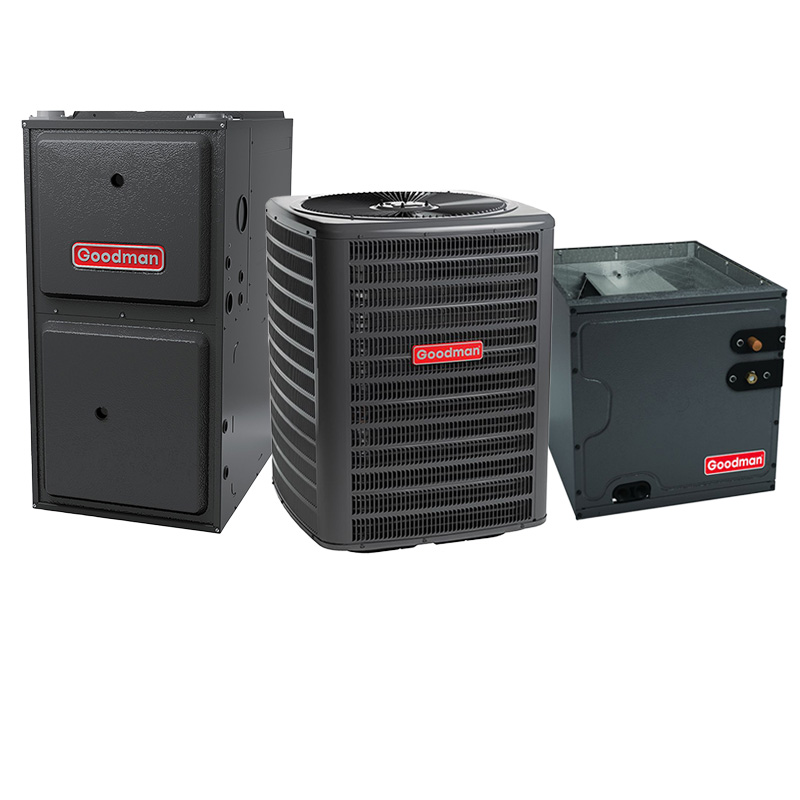
Goodman Furnace And Air Conditioner 1.5 Ton 14.5 SEER2 AC With 40000 BTU 96% AFUE Multi-Speed ECM Gas Furnace System – Upflow | R32
View on AC Direct see your lowest price →Check current price on AC Direct →
Key features
- 1.5-ton cooling capacity, 14.5 SEER2 efficiency rating
- 40,000 BTU heating output at 96% AFUE condensing efficiency
- Multi-speed ECM blower motor for quieter partial-load operation
- R-32 refrigerant, a lower global-warming-potential alternative to R-410A
- Upflow configuration for basement or closet installations with top-discharge ductwork
- Matched system design intended to simplify permit and equipment coordination
About this system
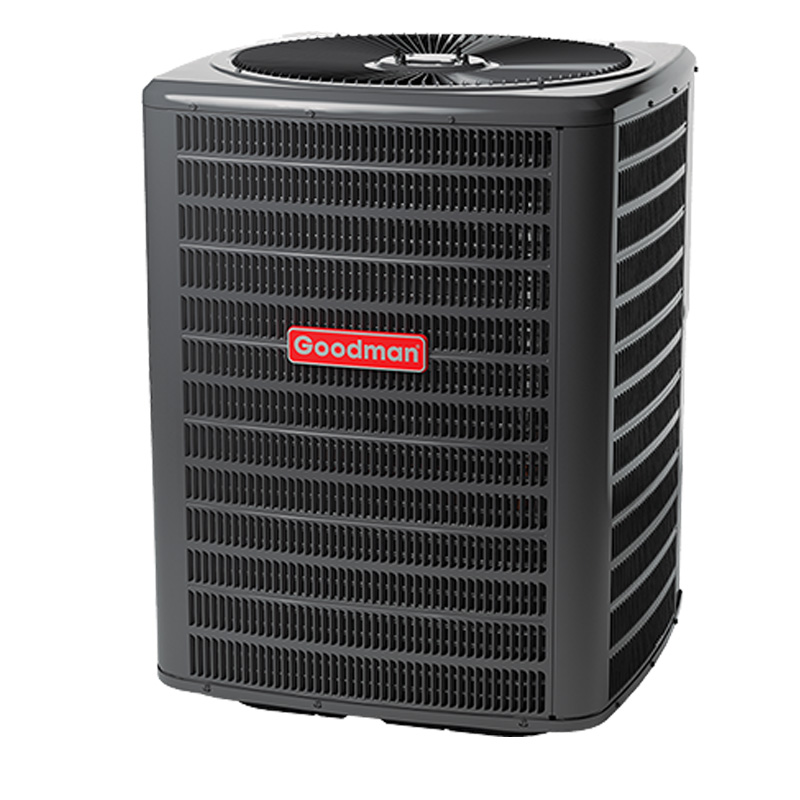
This Goodman bundle pairs a 1.5-ton, 14.5 SEER2 central air conditioner with a 40,000 BTU, 96% AFUE multi-speed ECM gas furnace in an upflow configuration. The package is sized for smaller homes, conditioned spaces up to roughly 600 to 800 square feet depending on climate and insulation, and it uses R-32 refrigerant, a lower global-warming-potential alternative to the older R-410A that is becoming the new industry standard. The 14.5 SEER2 rating sits just above the current federal minimum for most U.S. regions, which keeps equipment costs down while still clearing the efficiency bar required for installation today.
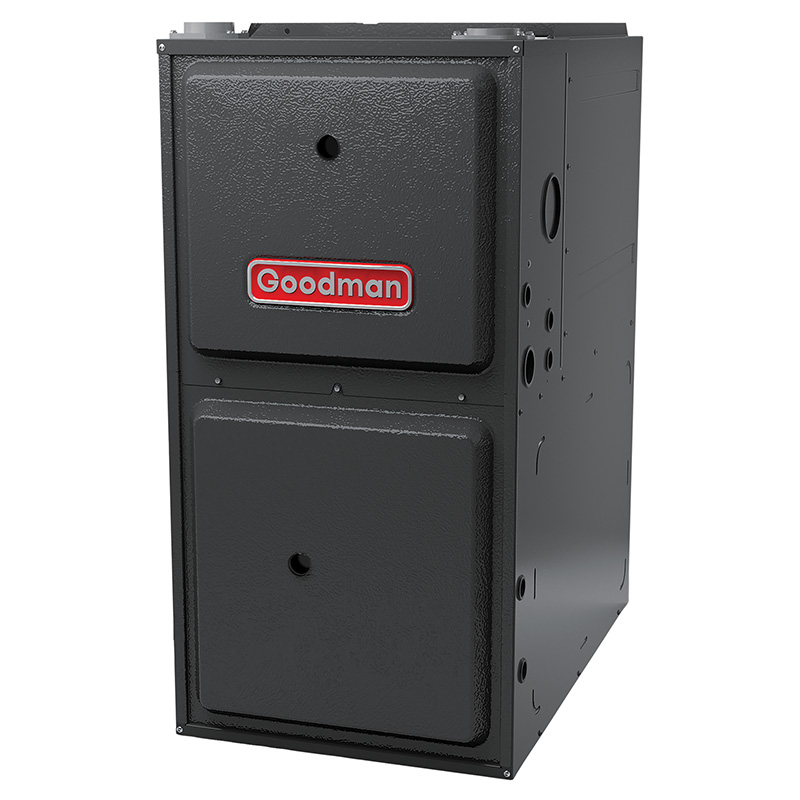
The 96% AFUE furnace is the stronger half of this system on paper. At that efficiency level, only four cents of every fuel dollar escapes as exhaust, which is a meaningful improvement over 80% AFUE equipment and can reduce heating bills noticeably in colder climates. The multi-speed ECM blower motor ramps airflow to match demand rather than running at one fixed speed, which improves comfort consistency, reduces blower noise at partial load, and lowers electricity use compared to a standard PSC motor. Upflow configuration suits the most common basement or closet installations where supply air exits the top of the unit and travels upward into the duct system. If your existing ductwork is designed for a different airflow direction, this unit is not compatible without significant duct modification.
This Goodman combo delivers an honest entry point into high-efficiency heating and code-compliant cooling at a price point that undercuts major premium brands by a meaningful margin. The 96% AFUE furnace and ECM blower are genuinely strong specs for the money, but buyers should weigh Goodman's documented mid-life repair rate and the brand's sensitivity to install quality before committing. It is a reasonable choice for budget-conscious homeowners who use a vetted installer and keep a repair fund available after year seven.
Overall score is the average of the five ratings above.
What we like
- 96% AFUE furnace is a true high-efficiency rating that reduces heating fuel costs compared to standard 80% units
- ECM multi-speed blower improves comfort consistency and lowers blower electricity draw versus single-speed motors
- R-32 refrigerant positions the system for long-term regulatory compliance as R-410A is phased out
- Priced roughly 15 to 25 percent below comparable Trane, Lennox, and Carrier equipment, leaving room in the budget for a quality installation
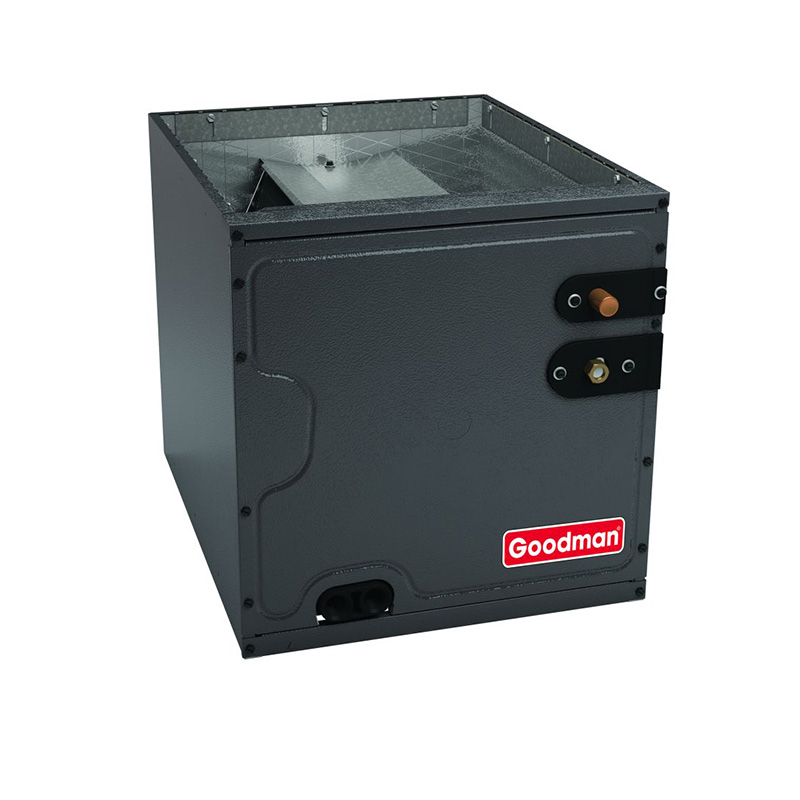
- Matched factory system simplifies coil compatibility verification and can streamline local permitting
Trade-offs
- Dual-run capacitors are the most commonly reported failure point and, while typically a low-cost fix, tend to appear after year seven when labor and service call costs add up
- Evaporator coil leaks appear in a meaningful share of owner reviews, a repair that can cost significantly more than a capacitor swap
- Compressor lifespan averages 10 to 14 years versus 15 to 20 years for premium-brand compressors, meaning earlier replacement is more likely
- A minority of owners report refrigerant leaks within the first year, usually tied to install or charge quality rather than the equipment itself, which underscores how much this brand depends on the installer
What homeowners and pros say about Goodman
Homeowners who have purchased Goodman equipment frequently point to the upfront price as the deciding factor, and that sentiment lines up with the brand’s Google dealer review average of around 3.8 out of 5, where affordability is the most repeated compliment across hundreds of location-level reviews. The picture shifts when looking at ConsumerAffairs, where Goodman sits at roughly 2.5 out of 5, a channel that skews toward dissatisfied owners and where the recurring theme is repair costs climbing after roughly year seven. For this specific 1.5-ton, 96% AFUE bundle, the furnace side tends to draw fewer complaints than the cooling side, but the documented failure modes apply to the full system: dual-run capacitors are the most commonly replaced component and usually a manageable cost, while evaporator coil leaks and compressor longevity averaging 10 to 14 years are the more consequential long-term concerns.
HVAC technicians who work on Goodman equipment regularly are largely consistent in their assessment: the hardware is functional at its price point, but how long it lasts and how quietly it runs is heavily shaped by installation quality. A rushed or undersized refrigerant charge is the most common root cause of early refrigerant leaks, which a minority of owners report within the first year. Technicians who follow manufacturer startup procedures and take time to verify airflow, charge, and static pressure tend to see better outcomes from this equipment than those who treat it as a plug-and-play install. For this small-tonnage system going into a modest-sized space, the stakes of a poor install are real but not as severe as on a large, high-tonnage job. The bottom line from the field: budget appropriately for a quality contractor, not just a cheap one, and the value proposition of this bundle holds up reasonably well through the first several years.
Sources: ConsumerAffairs Goodman owner reviews, AHRI Directory of Certified Product Performance, U.S. DOE appliance and equipment efficiency standards, Goodman product specification sheets.
What it costs to run
At 14.5 SEER2, cooling this 1.5-ton system for a typical 1200-hour cooling season at the U.S. average electricity rate of $0.17/kWh works out to roughly $253 per year in cooling, about $21 less per year than a minimum-efficiency 13.4 SEER2 unit of the same size. Your real cost depends on your climate and local rate.
Method: (18,000 BTU/hr ÷ 14.5 SEER2) × 1200 hours ÷ 1000 × $0.17/kWh. Rate source: U.S. EIA average; cooling hours: moderate-climate estimate.
How it compares
| Brand | Comparable model | SEER2 | Stage | Price position |
|---|---|---|---|---|
| Goodman | This system (1.5T 14.5 SEER2 / 96% AFUE ECM bundle) | 14.5 | Single-stage AC, multi-speed furnace | Value pick |
| Carrier | Comfort Series (24ACC / 58TP) | 14.5 | Single-stage | Typically 15 to 25 percent more than this Goodman bundle |
| Trane | XR14 / S9X1 series | 14.5 | Single-stage | Typically 15 to 25 percent more than this Goodman bundle |
| Lennox | Merit Series (13ACX / ML196) | 14.3–14.5 | Single-stage | Typically 15 to 25 percent more than this Goodman bundle |
Competitor rows are comparable single-stage units at similar efficiency; price is relative position, not a quote.
Questions about this system
Is 1.5 tons enough for my house, and how do I know this size is right?
A 1.5-ton system is generally appropriate for conditioned spaces in the range of 600 to 800 square feet, but the correct size depends on your climate zone, ceiling height, window area, and insulation level. A licensed HVAC contractor should perform a Manual J load calculation before installation. Oversizing causes short-cycling, poor humidity control, and faster wear; undersizing means the system runs continuously on hot days without reaching setpoint.
What does R-32 refrigerant mean for me as an owner, and can existing R-410A equipment or lines be used with this system?
R-32 has a lower global-warming potential than R-410A and is increasingly the industry standard for new equipment, which means refrigerant availability should remain stable long-term. However, R-32 is not interchangeable with R-410A, so existing line sets must be evaluated for compatibility and the system must be charged with R-32 only. Your installer should confirm line set condition, sizing, and flushing requirements before startup.
What is the actual Goodman warranty on this system, and what does it require to stay valid?
Goodman typically offers a 10-year parts limited warranty when the equipment is registered online within a specified window after installation, dropping to a shorter period if registration is missed. The warranty covers parts but not labor, which means a repair after year one still carries a service call and technician cost even on a covered component. Always confirm current warranty terms directly with Goodman at the time of purchase, as terms can change.
How likely am I to need a repair in the first 10 years, and what should I budget for?
Dual-run capacitor failure is the most commonly reported issue on Goodman equipment and typically runs 300 to 600 dollars including a service call. Evaporator coil leaks are a more serious documented failure mode that can cost considerably more. Setting aside a few hundred dollars per year in a maintenance and repair fund is a reasonable approach, and annual preventive tune-ups help catch developing problems before they become major failures.
Does the upflow configuration mean I need a specific duct layout, and can this unit be converted to downflow or horizontal?
Yes, upflow means conditioned air exits from the top of the furnace cabinet and must feed ductwork designed to receive air from below. This is the most common configuration for basement and utility closet installs. Upflow units are generally not field-convertible to downflow or horizontal without a different cabinet, so confirm your existing duct design before purchasing to avoid a costly mismatch.
Specifications
| Cooling capacity | 1.5 Ton |
| Efficiency | 14.5 SEER2 |
| Furnace output | 40000 BTU |
| Furnace efficiency | 96% AFUE |
| Configuration | Upflow |
| Refrigerant | R-32 |