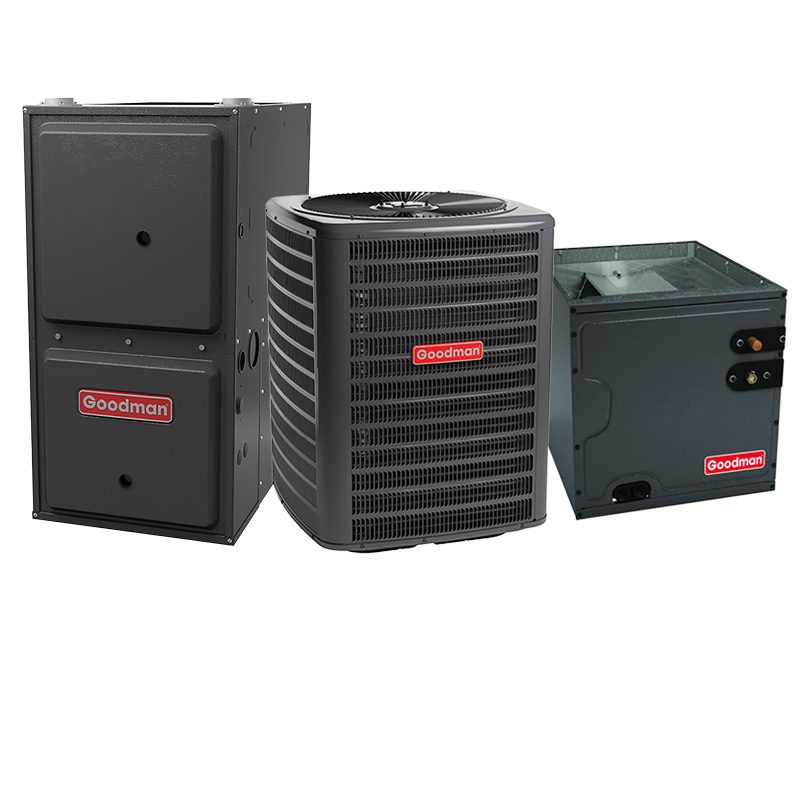
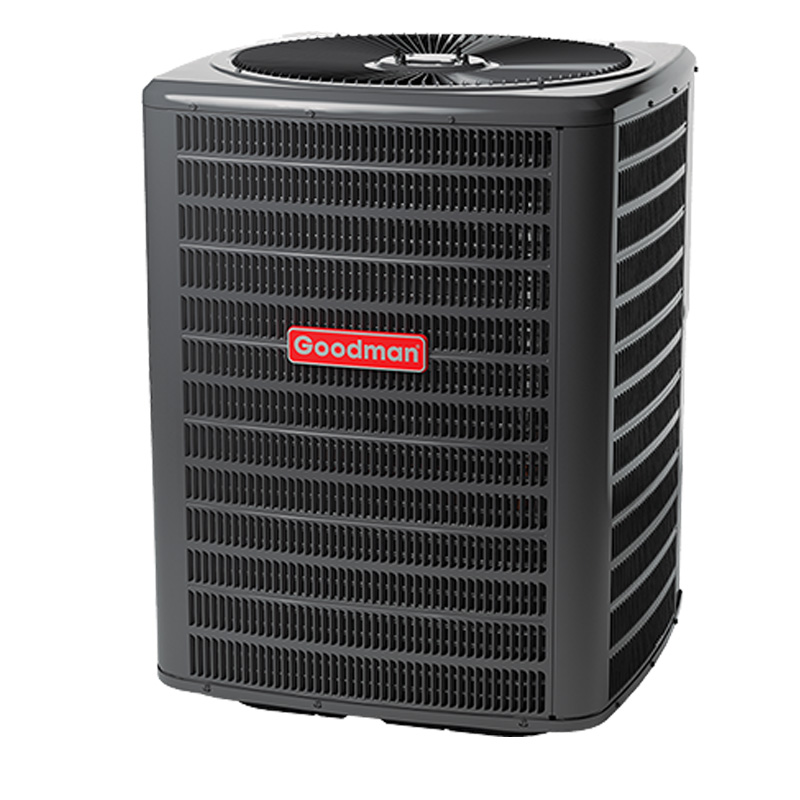
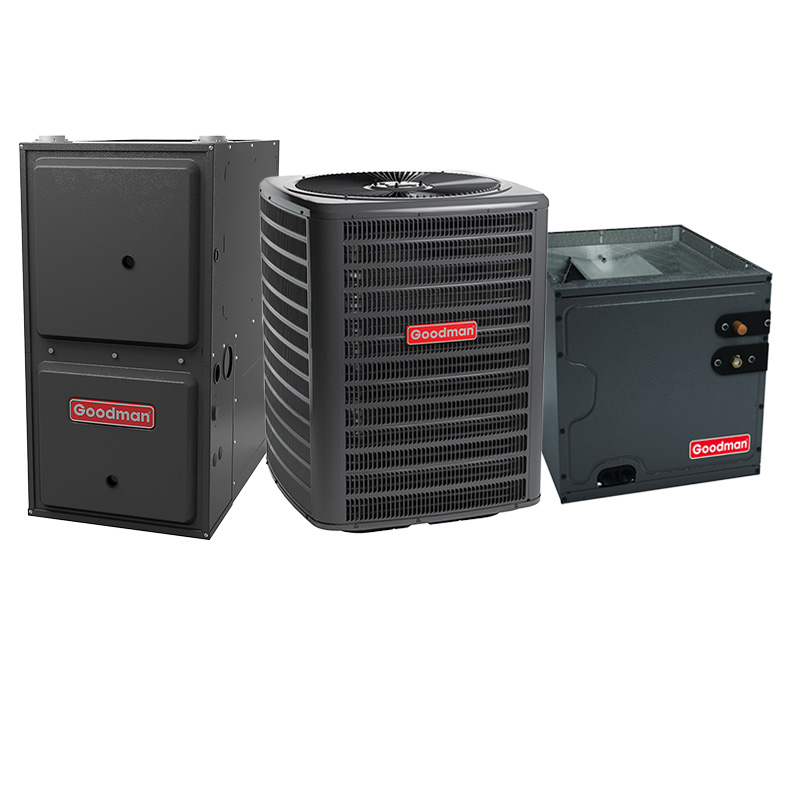
Goodman Furnace And Air Conditioner 1.5 Ton 14.7 SEER2 AC With 40000 BTU 96% AFUE Multi-Speed ECM Gas Furnace System – Downflow | R32
View on AC Direct see your lowest price →Check current price on AC Direct →
Key features
- 1.5-ton cooling capacity with 14.7 SEER2 efficiency rating
- 40,000 BTU gas furnace at 96% AFUE for high-efficiency heating
- Multi-speed ECM blower motor reduces electricity use and temperature swings
- Downflow configuration for platform, closet, or garage installations
- R-32 refrigerant with lower global warming potential than R-410A
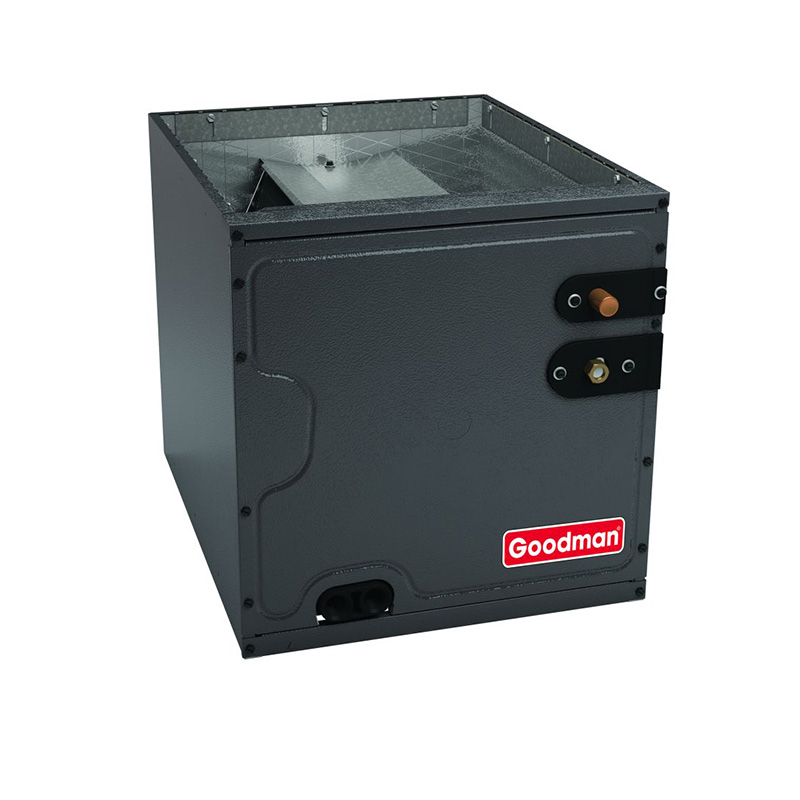
- Factory-matched system designed for straightforward coil and furnace pairing
About this system
This Goodman downflow system pairs a 1.5-ton, 14.7 SEER2 air conditioner with a 40,000 BTU, 96% AFUE multi-speed ECM gas furnace, making it a compact, high-efficiency heating and cooling package suited to smaller homes, conditioned basements, or additions where the air handler must sit above the ductwork and blow air downward. The downflow configuration is less common than upflow but is specifically required in certain platform or closet installations, so confirming your duct layout before ordering is essential. R-32 refrigerant replaces the older R-410A, offering a lower global warming potential and slightly better thermodynamic efficiency.
The 96% AFUE rating means only about 4 cents of every dollar spent on gas escapes as waste heat, which puts this furnace firmly in the high-efficiency tier and can meaningfully lower heating bills compared to an 80% AFUE unit. The multi-speed ECM blower motor modulates airflow rather than running full blast or not at all, which improves comfort, reduces temperature swings, and cuts fan electricity consumption compared to a standard PSC motor. At 1.5 tons, this system is sized for roughly 600 to 900 square feet of well-insulated living space in most U.S. climates, though a proper Manual J load calculation by a licensed contractor should always confirm the right size for your specific home.
This Goodman bundle delivers genuinely high heating efficiency and respectable cooling performance at a price point that undercuts premium brands by 15 to 25 percent, making it a practical choice for budget-conscious buyers who can secure a skilled installer. The value proposition is real, but so are the documented reliability concerns around capacitors, evaporator coil longevity, and compressor lifespan that fall short of top-tier brands. Get a quality installation and budget for a service agreement, and this system can perform well for a decade or more.
Overall score is the average of the five ratings above.
What we like
- 96% AFUE furnace delivers strong heating efficiency and can reduce monthly gas costs noticeably versus mid-efficiency units
- 14.7 SEER2 meets current federal minimums and exceeds baseline models, offering solid but not premium cooling efficiency
- ECM multi-speed blower improves comfort and runs quieter and cheaper than single-speed PSC motors
- Priced roughly 15 to 25 percent below comparable Carrier, Trane, and Lennox systems, lowering the upfront barrier
- R-32 refrigerant is more environmentally responsible and is becoming the industry standard going forward
Trade-offs
- Dual-run capacitors are the most frequently reported failure point, typically requiring a 300 to 600 dollar service call within the first decade
- Evaporator coil leaks appear in a meaningful share of owner reports, which can mean expensive refrigerant loss and coil replacement
- Compressor lifespan averages 10 to 14 years, noticeably shorter than the 15 to 20 years commonly seen with premium-brand compressors
- Downflow configuration limits which contractors are familiar with the install, raising the risk of errors that Goodman's performance is especially sensitive to
What homeowners and pros say about Goodman
Homeowners who research Goodman online will find a split picture. On ConsumerAffairs, Goodman scores around 2.5 out of 5, but that platform attracts frustrated owners far more than satisfied ones, and the recurring theme there is repair costs rising after roughly the seventh year of ownership. Google dealer reviews tell a more moderate story, with scores around 3.8 out of 5 across hundreds of reviews per location, where the most consistent praise centers on affordability rather than trouble-free ownership. Neither score should be taken as the full truth, but together they suggest a brand that delivers on price and reasonable early performance while carrying more long-term service risk than premium competitors.
HVAC technicians who work on this specific system regularly point to a few documented weak spots. Dual-run capacitors are the most commonly reported part failure, typically a straightforward and relatively low-cost fix in the 300 to 600 dollar range but one that comes up frequently enough to plan for. Evaporator coil leaks appear in a meaningful share of owner accounts and represent a more disruptive and costly repair. Compressor longevity on Goodman equipment tends to average 10 to 14 years, which is a real gap compared to the 15 to 20 years many premium-brand compressors deliver. Pros also emphasize that Goodman’s reliability is unusually dependent on installation quality, meaning a careful, experienced installer matters even more here than it would with a Trane or Carrier unit.
Sources: ConsumerAffairs Goodman owner reviews, AHRI Directory of Certified Product Performance, U.S. DOE appliance and equipment efficiency standards, Goodman product specification sheets.
What it costs to run
At 14.7 SEER2, cooling this 1.5-ton system for a typical 1200-hour cooling season at the U.S. average electricity rate of $0.17/kWh works out to roughly $250 per year in cooling, about $24 less per year than a minimum-efficiency 13.4 SEER2 unit of the same size. Your real cost depends on your climate and local rate.
Method: (18,000 BTU/hr ÷ 14.7 SEER2) × 1200 hours ÷ 1000 × $0.17/kWh. Rate source: U.S. EIA average; cooling hours: moderate-climate estimate.
How it compares
| Brand | Comparable model | SEER2 | Stage | Price position |
|---|---|---|---|---|
| Goodman | This system (14.7 SEER2 / 96% AFUE downflow bundle) | 14.7 | Single-stage | Value pick |
| Carrier | Comfort Series (24ACC6 AC + 58SB0 furnace) | 14.3 to 15.2 | Single-stage | Typically 15 to 25 percent more than this Goodman bundle |
| Trane | XR14 AC + S8X1 furnace | 14.3 to 15.0 | Single-stage | Typically 15 to 25 percent more than this Goodman bundle |
| Lennox | Merit Series (14ACX AC + ML196 furnace) | 14.3 to 15.0 | Single-stage | Typically 15 to 25 percent more than this Goodman bundle |
Competitor rows are comparable single-stage units at similar efficiency; price is relative position, not a quote.
Questions about this system
Why does this system require a downflow configuration and can I use it in a standard basement setup?
Downflow means the furnace draws return air from the top and delivers conditioned air out the bottom into ductwork below the unit. This is typically used in platform or closet installations on a main floor, not a basement where an upflow unit is usually the correct choice. Confirm your existing duct configuration with a contractor before purchasing, because using the wrong airflow direction can cause performance problems and potentially void the warranty.
Is R-32 refrigerant more expensive or harder to service than R-410A?
R-32 is increasingly common as the industry moves away from R-410A, and most modern HVAC technicians are trained to handle it. It is mildly flammable, which requires A2L-rated handling procedures, so confirm your service technician is certified for R-32 work. Parts and refrigerant availability are growing, not shrinking, so this should not be a long-term serviceability concern.
What is the most likely repair I should budget for on this Goodman system?
Based on documented owner experience, dual-run capacitors are the most commonly reported failure and typically cost 300 to 600 dollars to diagnose and replace. Evaporator coil leaks are also reported with some frequency and can be more expensive. Setting aside a small annual service budget and scheduling yearly tune-ups can catch capacitor degradation before it causes a full system shutdown.
Is 1.5 tons the right size for my home, or should I consider a larger unit?
A 1.5-ton system is generally appropriate for roughly 600 to 900 square feet in a well-insulated home, but climate zone, ceiling height, window area, and insulation quality all affect the correct size. An oversized unit will short-cycle, reducing dehumidification and increasing wear. Always ask your installing contractor to perform a Manual J load calculation before finalizing the equipment size.
How does the Goodman warranty work and what do I need to do to activate it?
Goodman typically requires online registration within a set window after installation to receive the full extended parts warranty, which for registered residential systems generally covers parts for 10 years. Without registration, coverage often drops to a shorter baseline period. Keep your installation paperwork, confirm registration was completed, and note that labor costs are not covered under the standard warranty, so a separate labor warranty from your installing contractor is worth asking about.
Specifications
| Cooling capacity | 1.5 Ton |
| Efficiency | 14.7 SEER2 |
| Furnace output | 40000 BTU |
| Furnace efficiency | 96% AFUE |
| Configuration | Downflow |
| Refrigerant | R-32 |