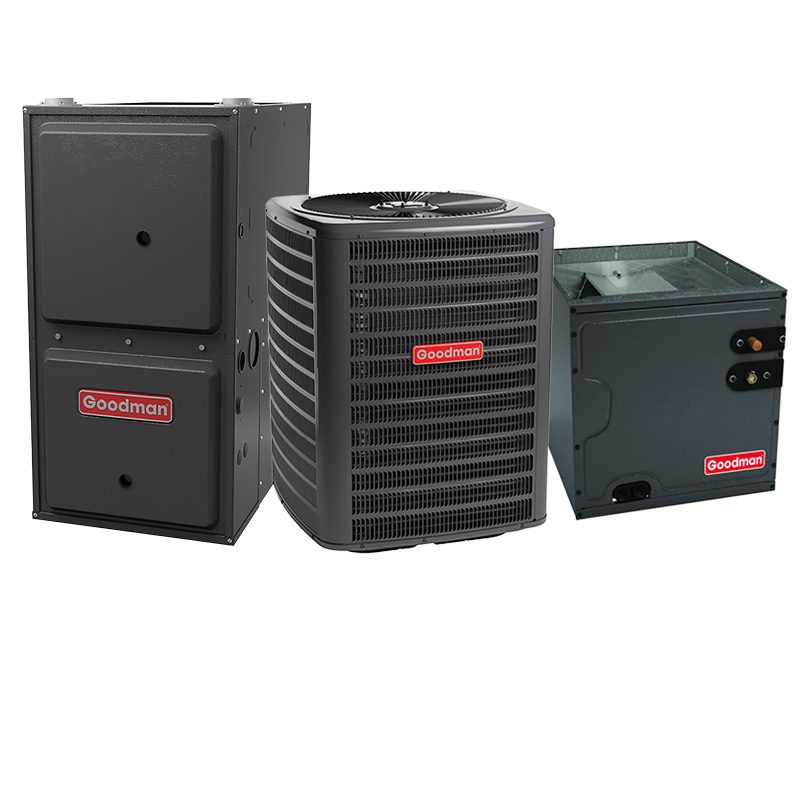
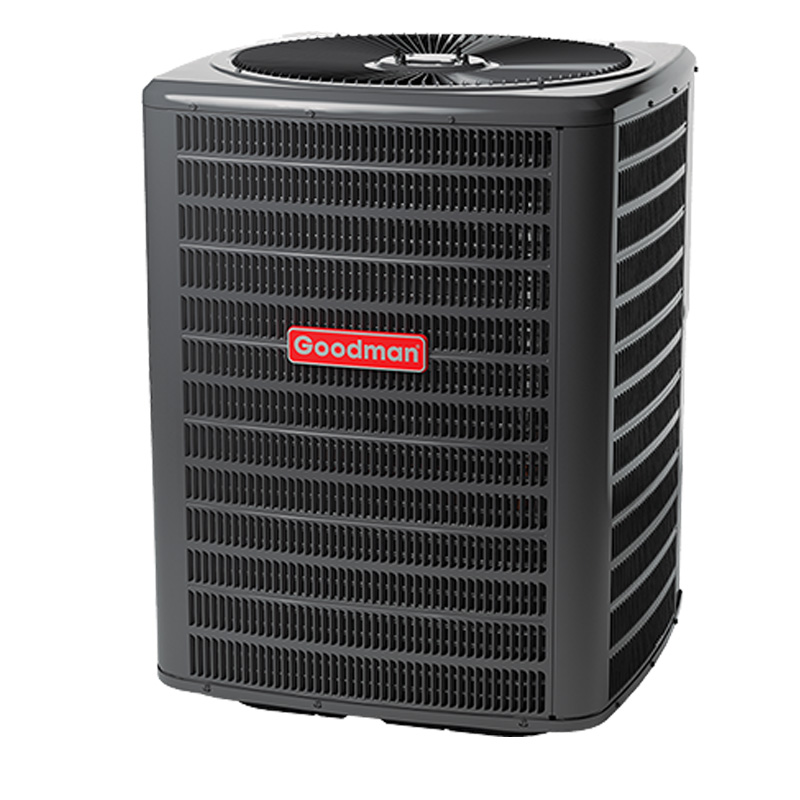
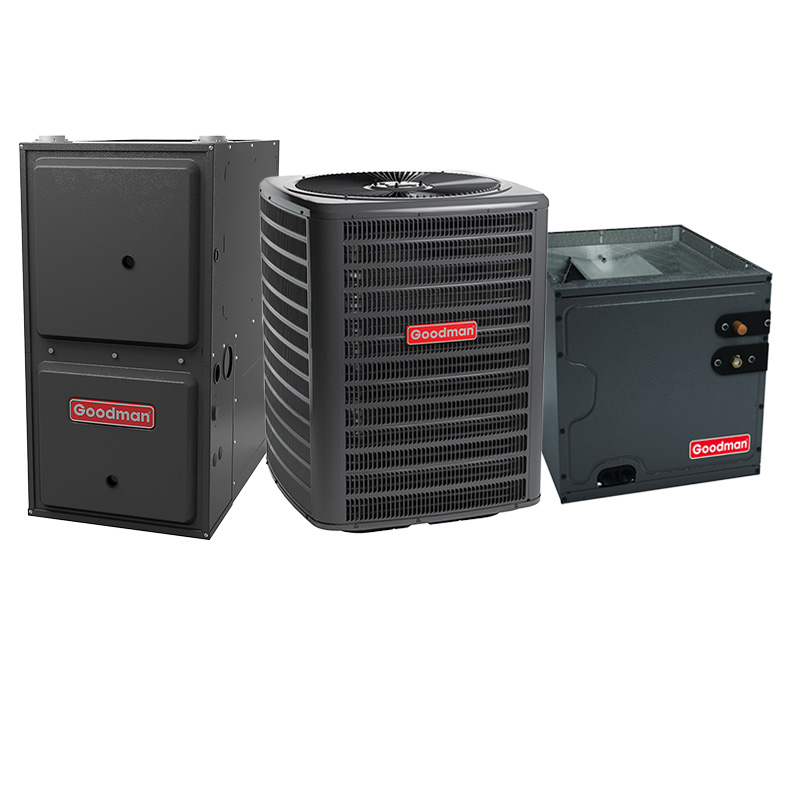
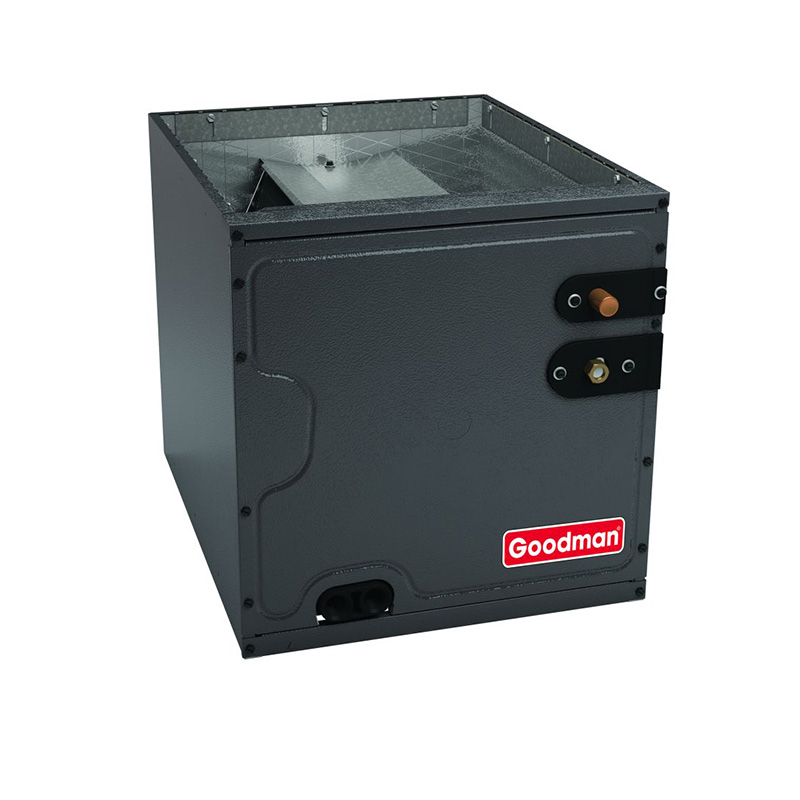
Goodman Furnace And Air Conditioner 1.5 Ton 14.7 SEER2 AC With 60000 BTU 96% AFUE Multi-Speed ECM Gas Furnace System – Downflow | R32
View on AC Direct see your lowest price →Check current price on AC Direct →
Key features
- 1.5-ton cooling capacity paired with 60,000 BTU heating output for smaller homes or zones
- 14.7 SEER2 efficiency rating meets current federal minimums with room to spare
- 96% AFUE high-efficiency gas furnace, potentially qualifying for federal tax credits
- Multi-speed ECM blower motor for quieter operation and lower blower energy use
- Downflow configuration designed for closet or platform installations above crawlspaces
- R-32 refrigerant with lower global warming potential than R-410A
About this system
This Goodman bundle pairs a 1.5-ton, 14.7 SEER2 central air conditioner with a 60,000 BTU, 96% AFUE multi-speed ECM gas furnace in a downflow configuration. The pairing targets smaller homes, cottages, or zones where heating and cooling loads are modest, and the downflow orientation suits installations where the air handler sits in a closet or utility space above a crawlspace or basement with ducts running downward. R-32 refrigerant, now appearing across the Goodman lineup, has a lower global warming potential than the R-410A it replaces and is the direction the industry is moving under updated EPA rules.
The 96% AFUE rating means roughly 96 cents of every dollar spent on gas becomes usable heat, which puts this furnace in the high-efficiency tier and makes it eligible for federal tax credits under current Inflation Reduction Act guidelines. The multi-speed ECM blower motor is more efficient than a standard PSC motor and tends to run quieter at lower speeds, which matters in a smaller system that cycles more gently. At 14.7 SEER2, the air conditioner clears the current federal minimums comfortably without reaching the premium efficiency tier, so buyers get a meaningful upgrade over older 13 SEER equipment without paying for top-tier ratings they may not recoup in a smaller home.
This Goodman bundle delivers solid specs at a price point that is genuinely hard to match from legacy premium brands, and the 96% AFUE furnace and ECM motor are real, not entry-level, features. The trade-off is that Goodman's documented repair history after year 7, a compressor lifespan that typically trails premium competitors, and installer-dependent build quality mean the long-term cost picture is less certain than the upfront savings suggest.
Overall score is the average of the five ratings above.
What we like
- Purchase price typically 15 to 25 percent below comparable Carrier, Trane, and Lennox systems
- 96% AFUE furnace is genuinely high-efficiency and may qualify for federal tax incentives
- Multi-speed ECM motor reduces blower energy consumption and lowers noise at partial load
- R-32 refrigerant is the industry-forward choice with a lower environmental footprint
- Downflow configuration covers an install scenario that many competing bundles require extra accessories to address
Trade-offs
- Compressor longevity averages 10 to 14 years versus 15 to 20 years typical of premium brands
- Dual-run capacitor failures are a documented recurring issue, usually after year 5 to 7, adding service costs
- Evaporator coil leaks show up with meaningful frequency in owner reports, a more expensive repair
- A minority of owners report refrigerant leaks within the first year, pointing to install or factory charge sensitivity that requires a skilled technician
What homeowners and pros say about Goodman
Owners and dealers who leave Google reviews tend to land around 3.8 out of 5 stars for Goodman, with affordability and straightforward installation cited most often as the reasons for recommending the brand. The picture on ConsumerAffairs is notably less positive, sitting around 2.5 out of 5, though that channel draws a disproportionate share of owners who sought out a review site because something went wrong. The recurring theme in those critical reviews is that repair costs start accumulating after roughly year 7, particularly around dual-run capacitor replacements and, in more serious cases, evaporator coil leaks that require professional refrigerant recovery and component swaps. Neither issue is unique to Goodman, but both appear more frequently in owner reports than with Trane, Carrier, or Lennox equipment at similar age.
HVAC technicians who comment publicly on Goodman tend to focus on two things: the brand’s compressors averaging 10 to 14 years in the field compared to 15 to 20 years for premium competitors, and the outsized role that install quality plays in whether a Goodman unit performs as specified. A small but documented share of owners also report refrigerant leaks within the first year, which technicians attribute to install error or factory charge issues rather than a systemic design flaw, but which underline why choosing a licensed and experienced installer matters more with this brand than with some others. For a 1.5-ton system in a smaller home where the upfront price gap is meaningful, many pros say Goodman is a reasonable choice as long as the buyer understands the service budget implications and does not treat the lower purchase price as the end of the cost story.
Sources: ConsumerAffairs Goodman owner reviews, AHRI Directory of Certified Product Performance, U.S. DOE appliance and equipment efficiency standards, Goodman product specification sheets.
What it costs to run
At 14.7 SEER2, cooling this 1.5-ton system for a typical 1200-hour cooling season at the U.S. average electricity rate of $0.17/kWh works out to roughly $250 per year in cooling, about $24 less per year than a minimum-efficiency 13.4 SEER2 unit of the same size. Your real cost depends on your climate and local rate.
Method: (18,000 BTU/hr ÷ 14.7 SEER2) × 1200 hours ÷ 1000 × $0.17/kWh. Rate source: U.S. EIA average; cooling hours: moderate-climate estimate.
How it compares
| Brand | Comparable model | SEER2 | Stage | Price position |
|---|---|---|---|---|
| Goodman | GSXH5 / GMVC96 (this bundle) | 14.7 | Single-stage / Multi-speed | Value pick |
| Carrier | Comfort 14 (24ACC4 series) | 14.3 to 15.2 | Single-stage | Typically 15 to 25 percent more than this Goodman bundle |
| Trane | XR14c series | 14.3 to 15.0 | Single-stage | Typically 15 to 25 percent more than this Goodman bundle |
| Lennox | Merit 14ACX series | 14.3 to 15.0 | Single-stage | Typically 15 to 25 percent more than this Goodman bundle |
Competitor rows are comparable single-stage units at similar efficiency; price is relative position, not a quote.
Questions about this system
Is a 1.5-ton system actually enough capacity for my house?
A 1.5-ton unit is typically appropriate for homes in the 600 to 900 square foot range in moderate climates, though the real answer depends on insulation, window area, ceiling height, and local design temperatures. You should have a Manual J load calculation done before purchase; undersizing or oversizing both cause comfort and efficiency problems that no system brand can fix.
What does the downflow configuration actually mean for my install?
Downflow means the furnace draws return air in at the top and discharges heated or cooled air downward into the duct system below. This is the correct choice when the air handler sits in a closet or platform above a crawlspace or slab with ducts running beneath the floor. If your ducts are in the attic or ceiling, you would need an upflow or horizontal unit instead.
Can my existing technician work with R-32 refrigerant, or do I need a specialist?
R-32 requires a technician with specific handling certification because it is mildly flammable, which R-410A was not. Most licensed HVAC contractors are already getting certified as the industry transitions, but you should confirm this before hiring anyone for service or installation, since improper handling is both a safety and warranty issue.
What is the Goodman warranty on this system, and what do I need to do to activate it?
Goodman typically offers a 10-year parts warranty when the system is registered within a set window after installation by a licensed contractor, and a limited lifetime heat exchanger warranty on qualifying furnaces. If you do not register, coverage usually drops to a shorter base period. Read the warranty card carefully and register promptly, because many complaint patterns around Goodman involve warranty claim disputes tied to missed registration deadlines or unverified contractor status.
How worried should I be about the capacitor and coil failure issues I have read about?
Dual-run capacitor failure is the most commonly reported Goodman issue and is generally a low-cost repair in the 300 to 600 dollar range when caught promptly, so budgeting for at least one service call in the first 10 years is realistic. Evaporator coil leaks are more expensive and show up with enough frequency in owner reviews that it is worth asking your installer about coil inspection intervals and considering an extended labor warranty if one is available in your area.
Specifications
| Cooling capacity | 1.5 Ton |
| Efficiency | 14.7 SEER2 |
| Furnace output | 60000 BTU |
| Furnace efficiency | 96% AFUE |
| Configuration | Downflow |
| Refrigerant | R-32 |