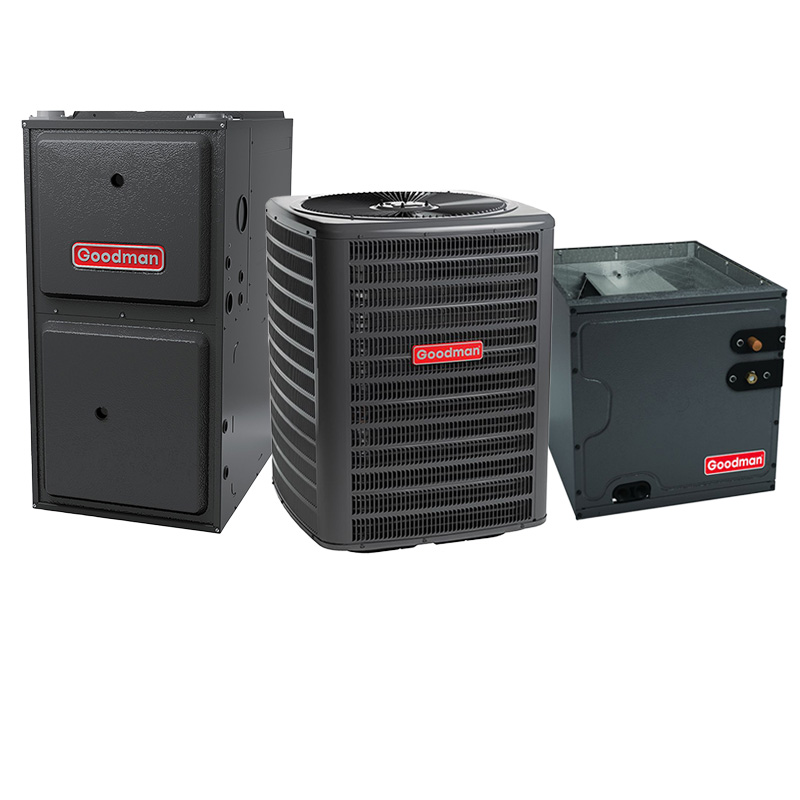
Goodman Furnace And Air Conditioner 1.5 Ton 15.2 SEER2 AC With 60000 BTU 96% AFUE Multi-Speed ECM Gas Furnace System – Upflow | R32
View on AC Direct see your lowest price →Check current price on AC Direct →
Key features
- 15.2 SEER2 cooling efficiency meets current federal minimums and may qualify for utility rebates
- 96% AFUE furnace keeps only 4% of fuel as exhaust waste, high-efficiency tier without modulating cost
- Multi-speed ECM blower motor reduces electricity use and lowers noise versus standard PSC motors
- R-32 refrigerant with a lower global warming potential than R-410A, aligned with phasedown regulations
- Upflow configuration designed for basement, closet, or utility room installs with overhead ductwork
- 1.5-ton capacity sized for smaller homes, additions, or zones roughly 600 to 900 square feet
About this system
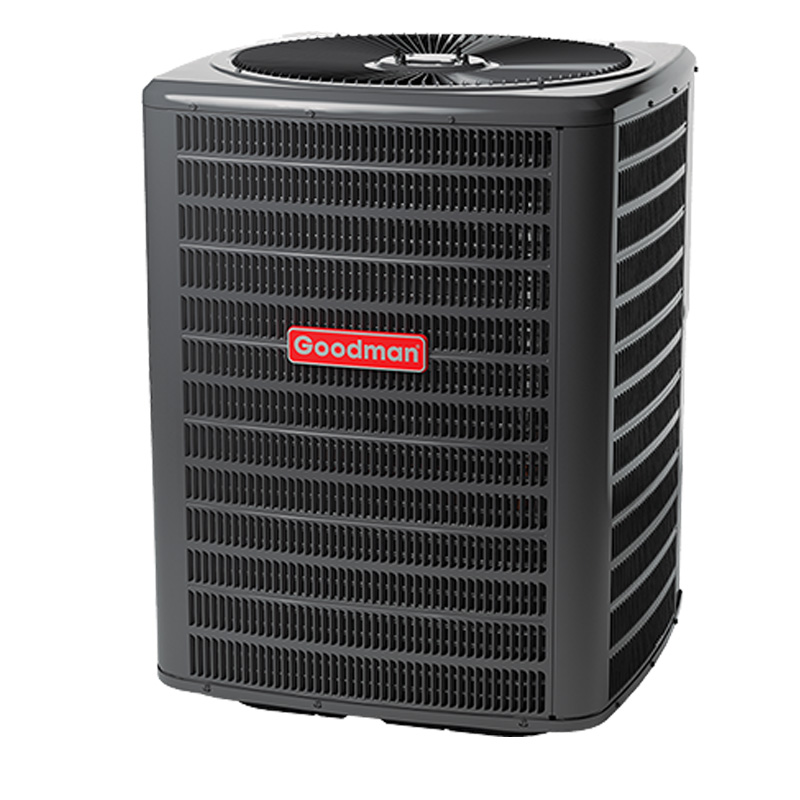
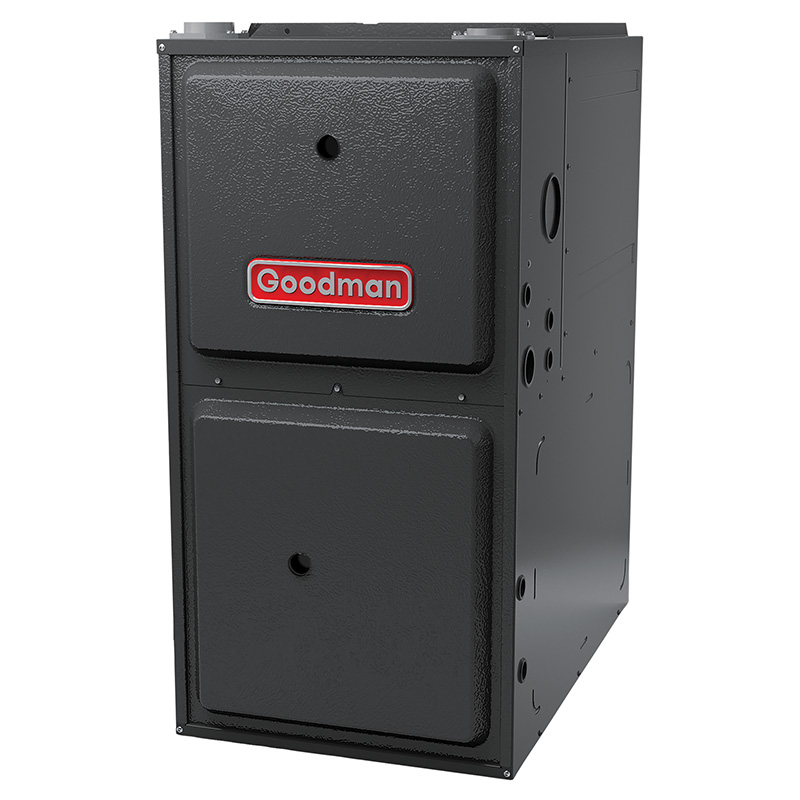
This Goodman combo pairs a 1.5-ton, 15.2 SEER2 air conditioner with a 60,000 BTU, 96% AFUE multi-speed ECM gas furnace in an upflow configuration, making it a solid fit for smaller homes, condos, or additions in the 600 to 900 square foot range that need both cooling and heating covered in a single purchase. The 96% AFUE rating means only four cents of every heating dollar escapes as exhaust, putting this furnace firmly in the high-efficiency tier without the added cost of a modulating unit. The multi-speed ECM blower motor is a meaningful upgrade over a standard PSC motor: it draws less electricity at partial loads, moves air more quietly, and helps maintain steadier temperatures between cycles.
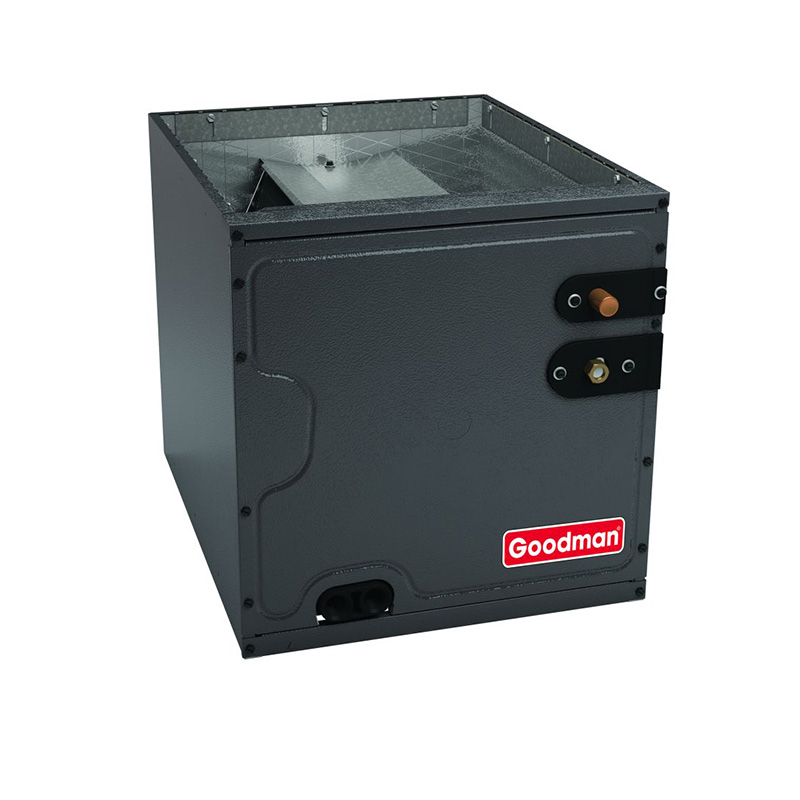
The 15.2 SEER2 efficiency rating clears the federal minimum for most U.S. climate regions and should qualify for utility rebates in many areas, though it sits at the lower end of the efficiency spectrum rather than near the top. The system uses R-32 refrigerant, a lower-global-warming-potential option that is becoming more common as R-410A is phased down. Upflow configuration means the air enters the furnace at the bottom and exits at the top, which suits homes where the air handler sits in a basement, closet, or utility room and ducts run overhead. Anyone with a horizontal or downflow setup will need a different configuration.
This Goodman combo delivers genuine high-efficiency heating and adequate cooling at a price point that typically undercuts Carrier, Trane, and Lennox by 15 to 25 percent, making it a reasonable choice for budget-conscious buyers who prioritize upfront savings over long-term brand confidence. The 96% AFUE furnace and ECM motor are real strengths, but the air conditioner sits at the low end of the efficiency range and Goodman's documented reliability track record is a real consideration for anyone planning to stay in their home long-term. How long this system lasts will depend heavily on who installs it and how well it is maintained.
Overall score is the average of the five ratings above.
What we like
- 96% AFUE furnace delivers high-efficiency heating and meaningful fuel savings over an 80% unit
- ECM multi-speed blower reduces operating noise and electricity draw compared to single-speed motors
- R-32 refrigerant is future-proofed against the R-410A phasedown currently underway
- Upfront system cost runs 15 to 25 percent below comparable Trane, Lennox, and Carrier bundles
- Buying furnace and AC together ensures refrigerant, coil, and controls are factory-matched
Trade-offs
- 15.2 SEER2 is at the efficiency floor; higher-SEER2 options exist at modest additional cost
- Dual-run capacitor failures and evaporator coil leaks are the most commonly reported repair issues
- Compressor lifespan averages 10 to 14 years versus 15 to 20 for premium-brand compressors
- A minority of owners have reported refrigerant leaks within the first year, typically linked to install or charge quality
What homeowners and pros say about Goodman
Homeowners who research Goodman before buying tend to land in two camps. Those who had a smooth install and kept up with maintenance report satisfactory performance and appreciate the lower upfront cost, which is the most common praise in Google dealer reviews that average around 3.8 out of 5 stars across dealer locations. The more critical feedback surfaces on ConsumerAffairs, where Goodman sits at roughly 2.5 out of 5, with the recurring pattern being owners who sail through the first several years and then face a cluster of repair costs after year seven, at which point the savings from the original purchase can feel like they are being spent on parts and labor.
HVAC technicians who work on Goodman equipment regularly point out that the brand’s performance leans harder on install quality than premium alternatives do. The documented failure modes worth knowing going in are dual-run capacitor failures (the most commonly reported issue, usually a straightforward low-cost fix), evaporator coil leaks that show up in a meaningful share of owner reviews, and compressor lifespans that tend to average 10 to 14 years rather than the 15 to 20 years more typical of Trane, Carrier, or Lennox compressors. A small number of owners have also reported refrigerant leaks within the first year, which technicians generally attribute to improper installation or charging rather than a product defect. For this 1.5-ton R-32 system specifically, choosing an experienced installer and registering the warranty promptly are the two steps most likely to affect how the ownership experience plays out.
Sources: ConsumerAffairs Goodman owner reviews, AHRI Directory of Certified Product Performance, U.S. DOE appliance and equipment efficiency standards, Goodman product specification sheets.
What it costs to run
At 15.2 SEER2, cooling this 1.5-ton system for a typical 1200-hour cooling season at the U.S. average electricity rate of $0.17/kWh works out to roughly $242 per year in cooling, about $32 less per year than a minimum-efficiency 13.4 SEER2 unit of the same size. Your real cost depends on your climate and local rate.
Method: (18,000 BTU/hr ÷ 15.2 SEER2) × 1200 hours ÷ 1000 × $0.17/kWh. Rate source: U.S. EIA average; cooling hours: moderate-climate estimate.
How it compares
| Brand | Comparable model | SEER2 | Stage | Price position |
|---|---|---|---|---|
| Goodman | GSXH5 / GMVC96 Series | 15.2 | Single-stage / Multi-speed | Value pick |
| Carrier | Comfort 14 / 58TP Series | 15.2 | Single-stage | Typically 15 to 25 percent more than this Goodman system |
| Trane | XR15 / S9V2 Series | 15.2 | Single-stage | Typically 15 to 25 percent more than this Goodman system |
| Lennox | Merit 14ACX / ML96V Series | 15.2 | Single-stage | Typically 15 to 25 percent more than this Goodman system |
Competitor rows are comparable single-stage units at similar efficiency; price is relative position, not a quote.
Questions about this system
Will 1.5 tons be enough to cool my home?
A 1.5-ton unit is generally sized for roughly 600 to 900 square feet under typical conditions, but the right answer depends on your climate, insulation, ceiling height, and window area. A proper Manual J load calculation by your installer is the only reliable way to confirm whether 1.5 tons is correct before purchase.
What does R-32 refrigerant mean for me as a homeowner?
R-32 has a lower global warming potential than R-410A and is part of the industry shift as R-410A gets phased down under current EPA rules. For day-to-day ownership it makes little practical difference, but it does mean service technicians need to be certified to handle it and recovery equipment must be compatible.
What are the most common repairs I should budget for on this system?
Based on documented owner experience with Goodman equipment, dual-run capacitor failure is the most frequently reported issue and typically runs 300 to 600 dollars to repair. Evaporator coil leaks appear in a meaningful share of owner reviews and are more expensive to address, so keeping up with filter changes and annual maintenance matters.
Does Goodman offer a parts warranty, and what does it cover?
Goodman typically provides a 10-year parts limited warranty when the equipment is registered within a set window after installation. The warranty covers parts but not labor, which can be a significant out-of-pocket cost if a repair is needed in years two through ten. Confirm registration requirements with your installer at the time of setup.
Does the upflow configuration matter, and can I install this in a crawlspace or attic?
Upflow means conditioned air exits the top of the furnace, which works well when the air handler sits below the duct system, such as in a basement or main-floor closet. For a crawlspace installation with ducts below or an attic install, you would need a downflow or horizontal configuration instead. Installing the wrong orientation voids the warranty and creates a safety risk.
Specifications
| Cooling capacity | 1.5 Ton |
| Efficiency | 15.2 SEER2 |
| Furnace output | 60000 BTU |
| Furnace efficiency | 96% AFUE |
| Configuration | Upflow |
| Refrigerant | R-32 |