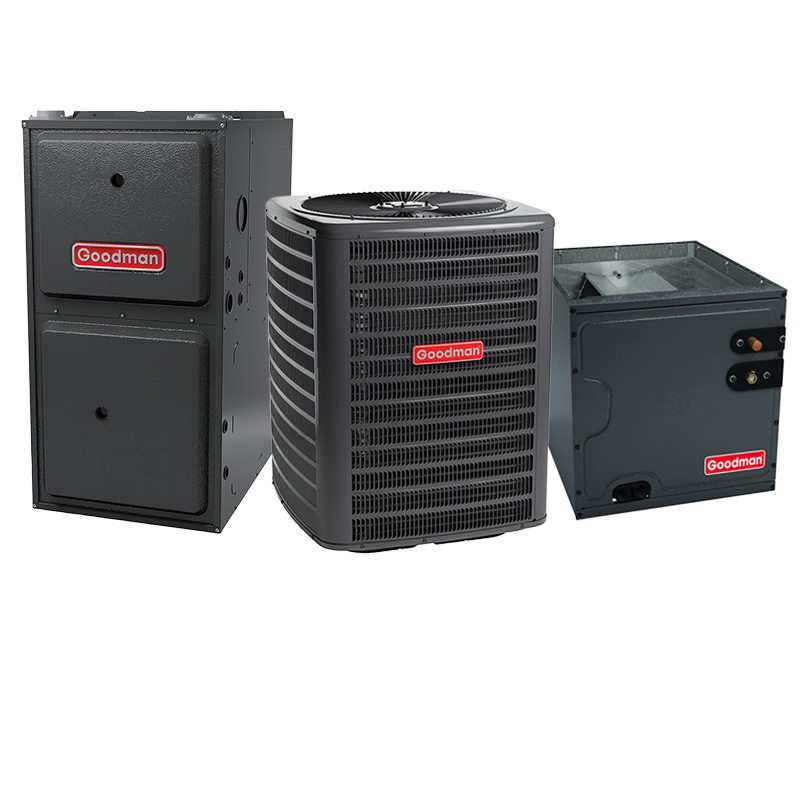
Goodman Furnace And Air Conditioner 1.5 Ton 16 SEER2 AC With 60000 BTU 80% AFUE Two Stage Multi-Speed ECM Gas Furnace System – Upflow | R32
View on AC Direct see your lowest price →Check current price on AC Direct →
Key features
- 1.5-ton cooling capacity with 16 SEER2 efficiency rating
- 60,000 BTU two-stage gas furnace at 80% AFUE
- Multi-speed ECM blower motor reduces electricity use and improves airflow consistency
- R-32 refrigerant with lower global-warming potential than R-410A
- Upflow configuration suited to basement and utility closet installations
- Two-stage gas valve reduces temperature swings and on-off cycling at partial load
About this system
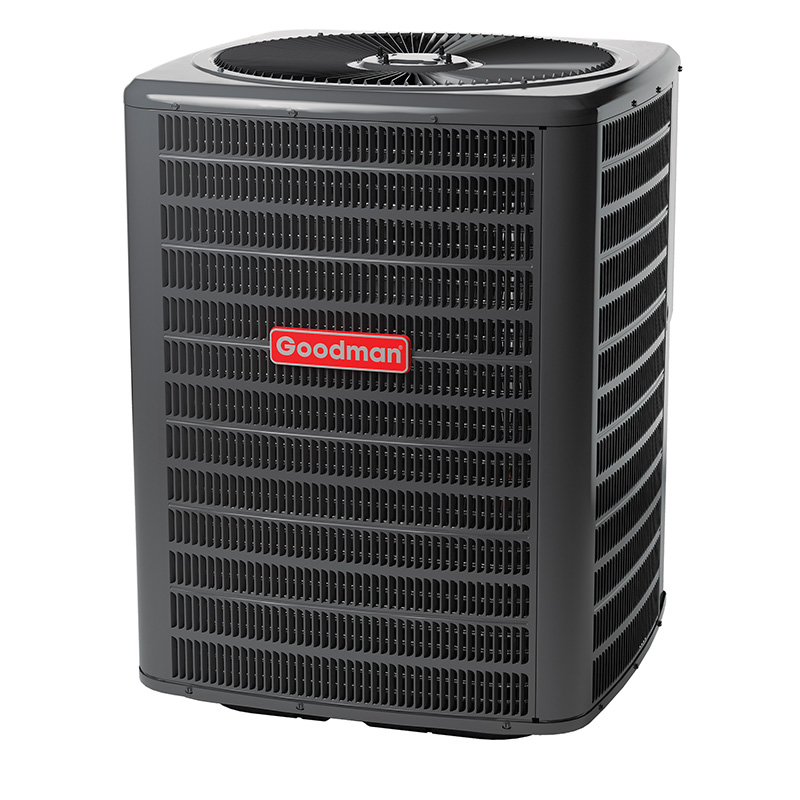
The Goodman 1.5-ton, 16 SEER2, 80% AFUE upflow system is built for smaller homes and conditioned spaces, typically in the 600 to 900 square foot range depending on climate zone and insulation. The 1.5-ton air conditioner uses R-32 refrigerant, a lower global-warming-potential option that is becoming more common in residential equipment. At 16 SEER2, this unit clears the federal minimum for most regions and sits in the mid-efficiency tier, which translates to meaningful savings over an older 13 or 14 SEER system without requiring the premium price of a 18-plus SEER2 variable-speed unit.
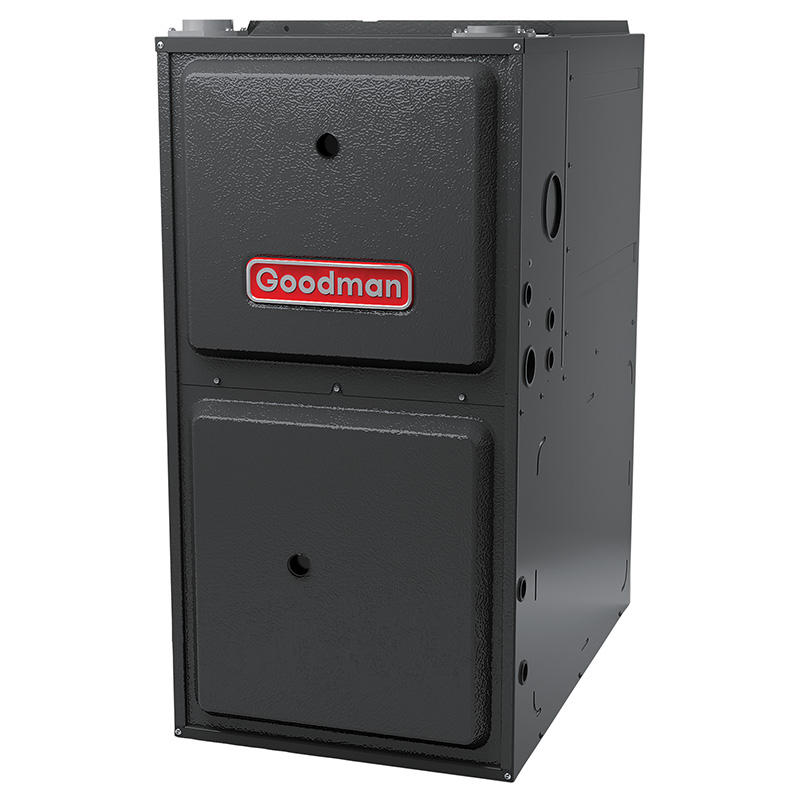
The 60,000 BTU furnace runs at 80% AFUE, meaning 80 cents of every dollar of gas goes toward usable heat. That is the baseline efficiency tier and works well in mild to moderate heating climates, though homeowners in the northern half of the country often find a 96% AFUE unit pays for itself over time. The two-stage gas valve is a genuine comfort upgrade over single-stage: most of the time the furnace runs on the lower stage, which reduces temperature swings, cuts on-off cycling, and runs more quietly. The multi-speed ECM blower motor improves airflow consistency and uses noticeably less electricity than a standard PSC motor, which adds up on monthly utility bills.
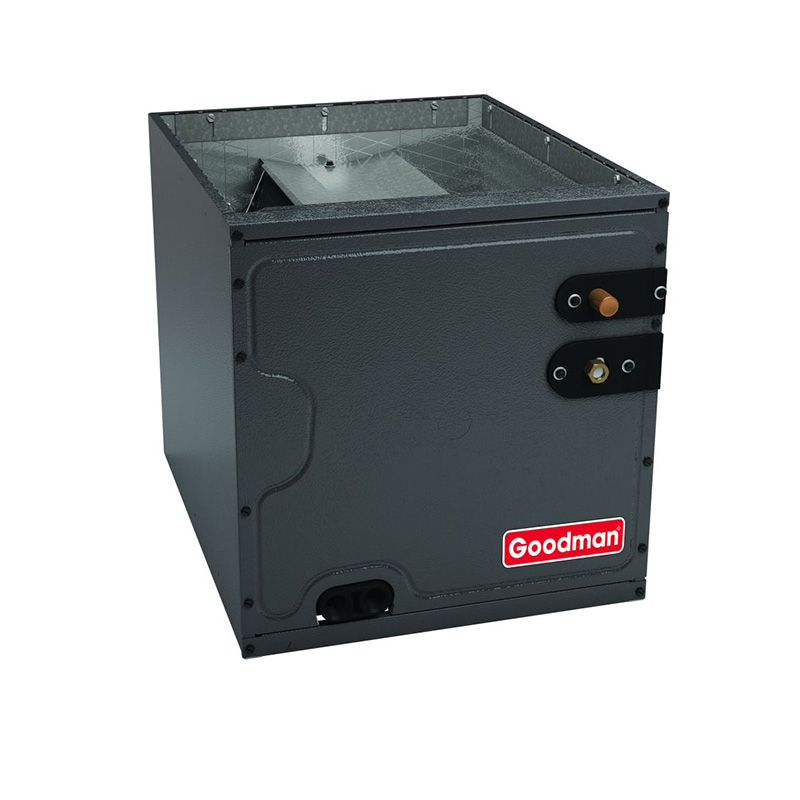
This is an upflow configuration, meaning conditioned air exits the top of the air handler and is best suited to installations in a basement, crawlspace, or utility closet where supply ducts run upward. Buyers should confirm their ductwork layout before ordering. Because Goodman prices this system 15 to 25 percent below comparable equipment from Trane, Lennox, and Carrier, it attracts homeowners who want a functional, modern system without the premium brand markup, provided they pair it with a skilled installer.
This Goodman system delivers a real two-stage, ECM-equipped package at a price point that undercuts major premium brands by 15 to 25 percent, making it a reasonable choice for budget-conscious buyers in smaller homes. The trade-off is a brand track record that includes documented failure modes around capacitors, evaporator coil leaks, and compressor longevity that lags premium competitors. How well this system performs over its lifetime depends heavily on installation quality and how quickly a minor repair like a capacitor swap gets addressed.
Overall score is the average of the five ratings above.
What we like
- Priced 15 to 25 percent below comparable Trane, Lennox, and Carrier systems
- Two-stage operation improves comfort and reduces short cycling compared to single-stage units
- ECM blower motor cuts fan electricity consumption meaningfully over the system lifetime
- R-32 refrigerant is a lower global-warming-potential option now in wider residential use
- Two-stage furnace runs quietly on low stage during mild weather, reducing indoor noise
Trade-offs
- Dual-run capacitors are the most frequently reported failure, typically after a few years of use
- Evaporator coil leaks appear in a meaningful share of owner reports, which can mean refrigerant loss and a costly repair
- Compressor lifespan averages 10 to 14 years versus 15 to 20 years on premium-brand equipment
- 80% AFUE is the baseline efficiency tier and will cost more to operate annually than a 96% AFUE furnace in colder climates
What homeowners and pros say about Goodman
On consumer review channels, Goodman tells a split story. The brand lands around 2.5 out of 5 on ConsumerAffairs, a platform that skews toward unhappy owners motivated to write something down. The recurring theme there is repair bills that start climbing after roughly year seven, with dual-run capacitor failures and evaporator coil leaks appearing most often. Google dealer reviews are noticeably more favorable, averaging around 3.8 out of 5 across locations with a few hundred reviews each, where the most common praise is straightforward: the equipment costs less than competing brands and works fine when the installation is done right. Those two data points together suggest the Goodman owner experience is more variable than premium brands, and that variability is often tied to who installed it and how carefully.
HVAC technicians tend to be pragmatic about Goodman rather than enthusiastic or dismissive. The capacitor swap is so routine on these units that experienced techs keep spares on the truck. More serious concerns are compressor longevity, which Goodman owners tend to see in the 10 to 14 year range versus the 15 to 20 years reported on Trane and Carrier equipment, and evaporator coil integrity over the long run. For this specific 1.5-ton R-32 system with a two-stage furnace, trade professionals note that the ECM motor and two-stage gas valve are genuine quality features for the price tier, and that a clean installation with correct refrigerant charge is especially important given that early refrigerant leak reports in the first year are almost always traced back to the initial setup rather than a factory defect.
Sources: ConsumerAffairs Goodman owner reviews, AHRI Directory of Certified Product Performance, U.S. DOE appliance and equipment efficiency standards, Goodman product specification sheets.
What it costs to run
At 16 SEER2, cooling this 1.5-ton system for a typical 1200-hour cooling season at the U.S. average electricity rate of $0.17/kWh works out to roughly $230 per year in cooling, about $44 less per year than a minimum-efficiency 13.4 SEER2 unit of the same size. Your real cost depends on your climate and local rate.
Method: (18,000 BTU/hr ÷ 16 SEER2) × 1200 hours ÷ 1000 × $0.17/kWh. Rate source: U.S. EIA average; cooling hours: moderate-climate estimate.
How it compares
| Brand | Comparable model | SEER2 | Stage | Price position |
|---|---|---|---|---|
| Goodman | GSXH5 / GMVC8 Series (this system) | 16 | two-stage | Value pick |
| Carrier | Comfort 24ACC6 / 58STA Series | 15.2-16 | single-stage | Typically 15 to 25 percent more than this Goodman system |
| Trane | XR15 / S8X1 Series | 15.5-16 | single-stage | Typically 15 to 25 percent more than this Goodman system |
| Lennox | Merit 14ACX / ML180 Series | 15.5-16 | single-stage | Typically 15 to 25 percent more than this Goodman system |
Competitor rows are comparable single-stage units at similar efficiency; price is relative position, not a quote.
Questions about this system
Is 1.5 tons enough for my house, or should I size up?
A 1.5-ton unit is generally appropriate for roughly 600 to 900 square feet in an average climate, though a proper Manual J load calculation by your installer is the only reliable way to confirm sizing for your specific home. Oversizing is a common mistake that causes short cycling, poor humidity control, and accelerated wear on components including the compressor.
Why does this system use R-32 instead of R-410A?
R-32 has a lower global-warming potential than R-410A and is part of the industry shift away from higher-GWP refrigerants ahead of upcoming regulatory changes. Practically speaking, R-32 requires certified technicians who are equipped to handle it, and not all service trucks carry R-32 stock yet, so confirm your local HVAC techs have access to it before you buy.
What does two-stage actually mean for day-to-day comfort?
Two-stage means the gas valve operates at a lower firing rate most of the time and only ramps up to full capacity when outdoor temperatures drop significantly or the home needs a fast recovery. In practice this means fewer hot and cold swings, quieter operation during normal weather, and longer run cycles that do a better job of removing humidity in summer when the AC is running.
What are the most likely repairs I should budget for over the first ten years?
Based on Goodman's documented failure patterns, the dual-run capacitor is the most common service call, typically a 300 to 600 dollar repair that most technicians can complete in under an hour. Evaporator coil leaks are a higher-cost concern and show up in owner reports often enough to warrant attention; a few owners also report refrigerant issues within the first year, which is usually traceable to the initial installation and charge rather than the equipment itself.
Does the upflow configuration matter if I want to install this in a closet or garage?
Yes, upflow means the return air enters the bottom of the unit and the supply air exits the top, so your ductwork must be designed to run overhead from that point. If your ducts run under the floor or you need a horizontal install, this specific configuration will not work and you would need a different orientation. Confirm the airflow direction with your installer before purchasing.
Specifications
| Cooling capacity | 1.5 Ton |
| Efficiency | 16 SEER2 |
| Furnace output | 60000 BTU |
| Furnace efficiency | 80% AFUE |
| Configuration | Upflow |
| Refrigerant | R-32 |