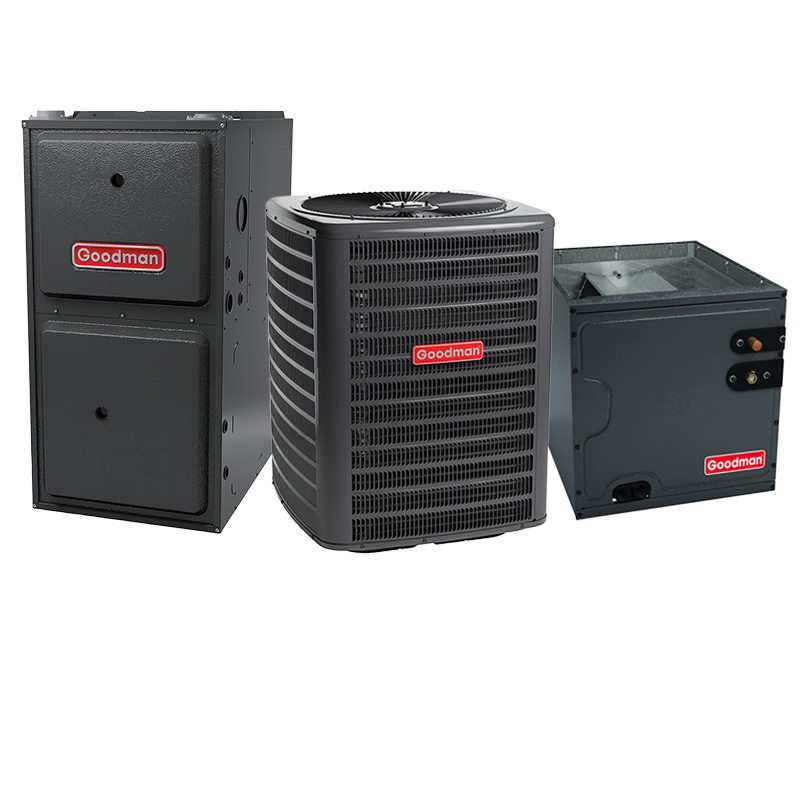
Goodman Furnace And Air Conditioner 2.5 Ton 14.5 SEER2 AC With 40000 BTU 80% AFUE Two Stage Multi-Speed ECM Gas Furnace System – Upflow | R32
View on AC Direct see your lowest price →Check current price on AC Direct →
Key features
- 2.5-ton cooling capacity suited to smaller homes roughly 1,000 to 1,400 sq ft
- 14.5 SEER2 efficiency rating meets current federal minimums for most U.S. regions
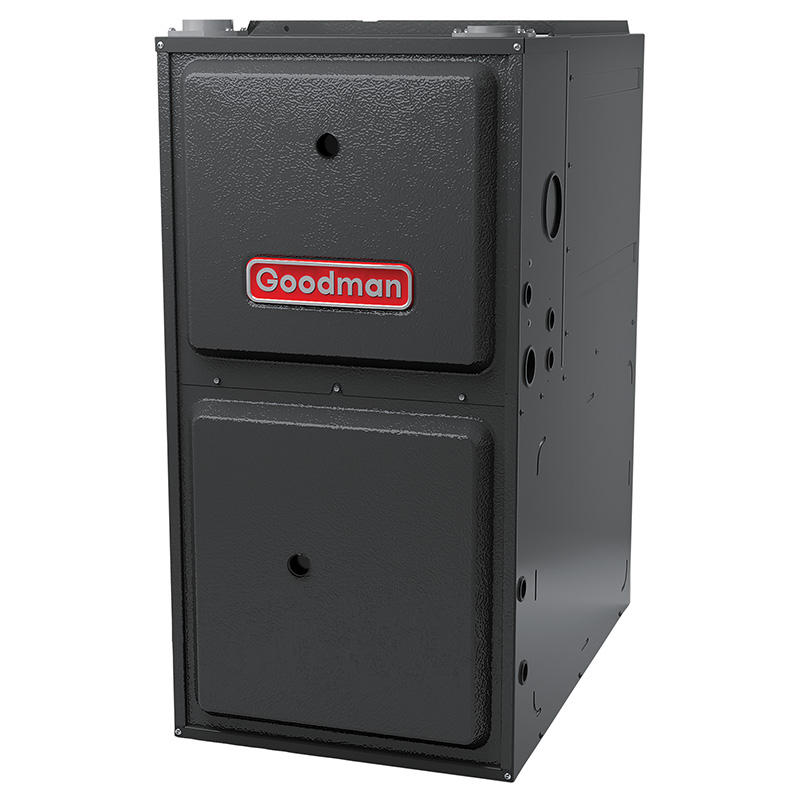
- Two-stage gas furnace at 80% AFUE with 40,000 BTU output for more even heat distribution
- Multi-speed ECM blower motor reduces electricity use and lowers operating noise vs. PSC motors
- R-32 refrigerant with lower global-warming potential than outgoing R-410A
- Upflow configuration designed for basement or ground-level utility closet installations
About this system
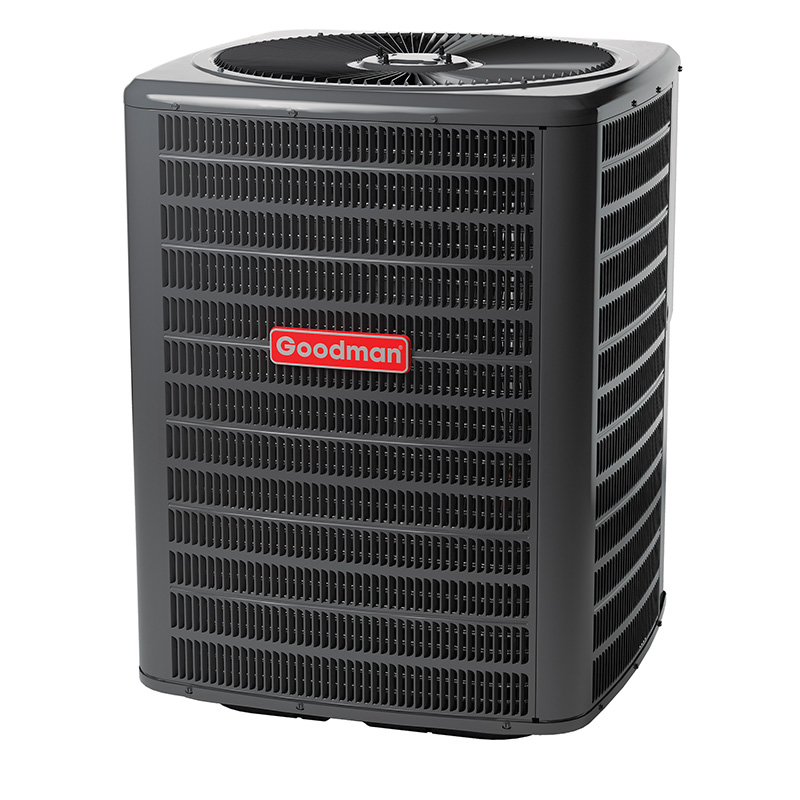
This Goodman bundle pairs a 2.5-ton, 14.5 SEER2 central air conditioner with a 40,000 BTU, 80% AFUE two-stage gas furnace in an upflow configuration, making it a straightforward fit for smaller homes or individual zones in the 1,000 to 1,400 square-foot range with a basement or utility-closet mechanical setup. The 14.5 SEER2 rating clears the current federal minimum for most U.S. climate regions, so you are getting a compliant, code-ready system rather than a high-efficiency standout. The R-32 refrigerant charge is worth noting: R-32 has a lower global-warming potential than the older R-410A it is replacing and is becoming the industry standard, which means parts and service availability should remain solid for the foreseeable future.
The two-stage furnace and multi-speed ECM blower are the most meaningful upgrades in this configuration compared to a basic single-stage system. Two-stage heating lets the furnace run on a lower fire most of the time, cycling less aggressively and producing more even temperatures room to room. The ECM motor is significantly more efficient than a standard PSC blower motor and tends to run quieter at lower speeds, which matters if the air handler is near living space. Combined, these features push comfort noticeably above the entry-level tier even though the overall system efficiency sits near the minimum threshold. Buyers who want lower utility bills above all else should look at 16 SEER2 or higher options, but for households where upfront cost is the constraint and comfort consistency still matters, this spec combination is a reasonable middle ground.
This Goodman bundle is a workable, budget-conscious choice for smaller homes where the priority is a code-compliant replacement at a price point well below premium brands. The two-stage furnace and ECM blower add genuine comfort value, but the system's long-term durability depends heavily on installation quality and the known Goodman failure modes around capacitors and evaporator coils are real considerations. Buyers should factor potential mid-life repair costs into the total ownership math.
Overall score is the average of the five ratings above.
What we like
- Priced roughly 15 to 25 percent below comparable Trane, Carrier, and Lennox systems, lowering the upfront barrier
- Two-stage furnace operation reduces temperature swings and short-cycling compared to single-stage alternatives
- ECM blower motor cuts electrical consumption on heating and cooling fan runs versus a standard PSC motor
- R-32 refrigerant is the emerging industry standard, supporting long-term parts and service access
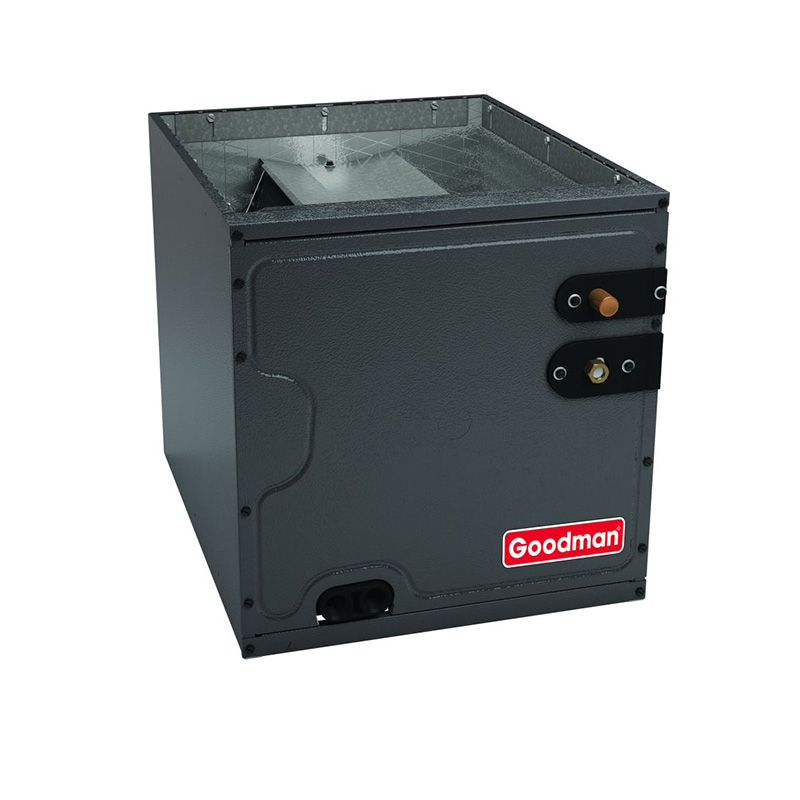
- Upflow configuration is one of the most common furnace orientations, giving installers a wide range of coil and accessory compatibility
Trade-offs
- 80% AFUE is the minimum efficiency tier for gas furnaces; a 96% AFUE unit would save meaningfully on gas in colder climates
- 14.5 SEER2 sits at the federal minimum threshold, so cooling operating costs will run higher than mid- or high-efficiency alternatives
- Dual-run capacitor failures and evaporator coil leaks are documented recurring issues in owner reviews, adding repair risk after year 7
- Compressor lifespan averages 10 to 14 years based on reported data, shorter than the 15 to 20 years typical of premium-brand compressors
What homeowners and pros say about Goodman
Homeowners who leave reviews for Goodman equipment tend to cluster at the poles. On Google dealer pages, where the brand averages around 3.8 out of 5 stars, the most consistent praise is straightforward: the price was substantially lower than competing bids and the system cooled or heated as expected out of the gate. On ConsumerAffairs, where the brand sits at roughly 2.5 out of 5 stars on a platform that skews toward people motivated enough to complain, the pattern shifts. The recurring theme there is not early failure but creeping repair costs after the system passes the seven-year mark, with dual-run capacitor failures and evaporator coil leaks cited most often as the expenses that catch owners off guard. Neither picture is complete on its own, and a fair read of both is that Goodman units frequently deliver solid early-life performance but carry more mid-life service risk than premium-brand alternatives.
HVAC technicians who service Goodman equipment regularly tend to make a consistent point: the brand’s outcome variability traces more to installation quality than to the equipment itself. A properly sized, carefully commissioned Goodman system with good airflow and a correct refrigerant charge performs reliably; one that was rushed, improperly charged, or paired with leaky ducts surfaces problems faster and more frequently. For this specific configuration, the two-stage furnace and ECM blower are genuine steps up from the most basic tier, but the documented compressor lifespan of roughly 10 to 14 years, compared to 15 to 20 years for top-tier brands, and the real-world occurrence of refrigerant leaks within the first year (almost always traced to installation issues) mean that choosing an experienced, careful installer matters at least as much as choosing the equipment itself.
Sources: ConsumerAffairs Goodman owner reviews, AHRI Directory of Certified Product Performance, U.S. DOE appliance and equipment efficiency standards, Goodman product specification sheets.
What it costs to run
At 14.5 SEER2, cooling this 2.5-ton system for a typical 1200-hour cooling season at the U.S. average electricity rate of $0.17/kWh works out to roughly $422 per year in cooling, about $35 less per year than a minimum-efficiency 13.4 SEER2 unit of the same size. Your real cost depends on your climate and local rate.
Method: (30,000 BTU/hr ÷ 14.5 SEER2) × 1200 hours ÷ 1000 × $0.17/kWh. Rate source: U.S. EIA average; cooling hours: moderate-climate estimate.
How it compares
| Brand | Comparable model | SEER2 | Stage | Price position |
|---|---|---|---|---|
| Goodman | This system (2.5T 14.5 SEER2 AC + 40K BTU 80% AFUE Two-Stage ECM Furnace) | 14.5 | Two-stage furnace / standard AC | Value pick |
| Carrier | Comfort 24ACC6 series with 58TP gas furnace | 14.5 | Single-stage | Typically 15 to 25 percent more than this Goodman bundle |
| Trane | XR14c series with S8B1 gas furnace | 14.5 | Single-stage | Typically 15 to 25 percent more than this Goodman bundle |
| Lennox | Merit ML14XC1 series with ML180 gas furnace | 14.5 | Single-stage | Typically 15 to 25 percent more than this Goodman bundle |
Competitor rows are comparable single-stage units at similar efficiency; price is relative position, not a quote.
Questions about this system
Will this system work with my existing ductwork designed for a 2.5-ton unit?
In most cases yes, but duct condition and sizing still need to be verified by your installer. Undersized or leaky ducts are one of the most common reasons a properly rated system underperforms, and Goodman equipment is particularly sensitive to install quality according to technicians who service it regularly.
Is 80% AFUE good enough, or should I upgrade to a higher-efficiency furnace?
80% AFUE means 20 cents of every gas dollar you spend goes up the flue as exhaust. In mild-winter climates that tradeoff may be acceptable, but in regions with long heating seasons a 95 or 96% AFUE furnace can pay back the price difference within a few years through lower monthly bills. This 40,000 BTU output is also on the smaller end, so buyers in colder climates should confirm it meets their heat-loss calculation before purchasing.
What is the warranty on this Goodman system and what does it actually cover?
Goodman typically offers a 10-year parts limited warranty when the unit is registered within a set window after installation, covering components like the compressor, heat exchanger, and coil. Labor is not included, which means a capacitor or coil repair in year 8 will still carry a service call and labor charge on top of any part cost. Always confirm current warranty terms with the seller at the time of purchase since they can vary by model year.
How much more expensive will repairs be compared to a premium brand system?
The parts themselves are generally affordable and widely available for Goodman units. The cost concern that shows up in owner reviews is frequency: dual-run capacitor failures, which typically run 300 to 600 dollars including labor, and evaporator coil leaks, which can run considerably more, are documented recurring issues. ConsumerAffairs reviewers specifically note repair costs climbing after roughly year 7, so budgeting for a service call or two in the back half of the system's life is prudent.
Why does this system use R-32 refrigerant and will that cause any service issues?
R-32 is replacing R-410A across the industry due to its lower environmental impact, and Goodman is among the brands rolling it out in current production. From a homeowner standpoint the main practical note is that not every technician has R-32 certification yet, though that is changing quickly as more equipment ships with it. Verify your service provider is certified to handle R-32 before scheduling any work that involves the refrigerant circuit.
Specifications
| Cooling capacity | 2.5 Ton |
| Efficiency | 14.5 SEER2 |
| Furnace output | 40000 BTU |
| Furnace efficiency | 80% AFUE |
| Configuration | Upflow |
| Refrigerant | R-32 |