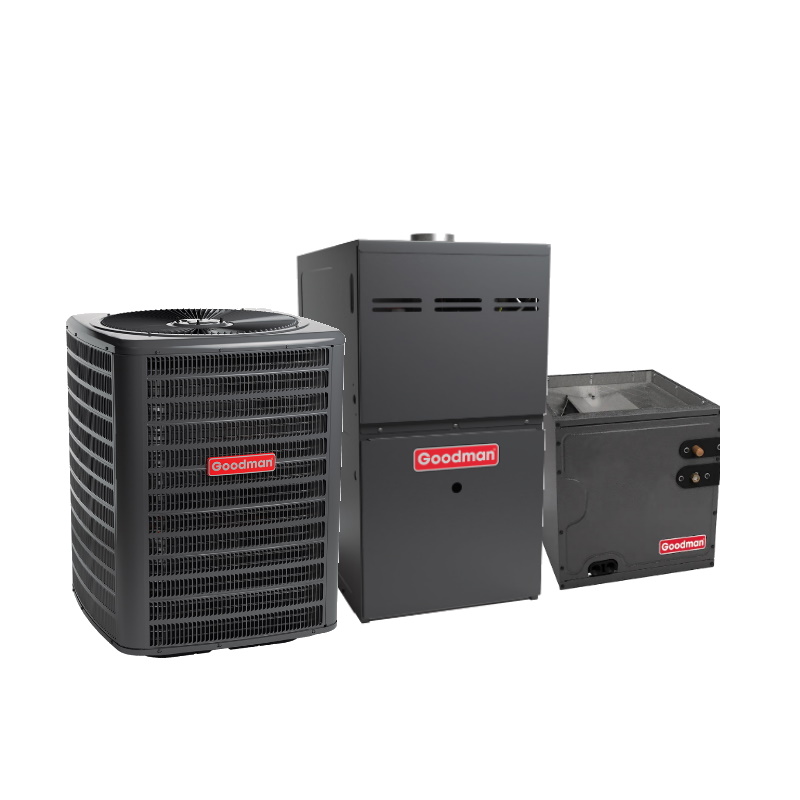
Goodman 2.5 Ton 14.5 SEER2 60000 BTU 80% Two Stage Gas System Upflow w/ 2.5 Ton Coil
View on AC Direct see your lowest price →Check current price on AC Direct →
Key features
- 2.5-ton two-stage compressor for reduced short-cycling on mild days
- 14.5 SEER2 efficiency rating meets 2023 DOE regional minimum standards
- Upflow configuration designed for vertical air handler installations
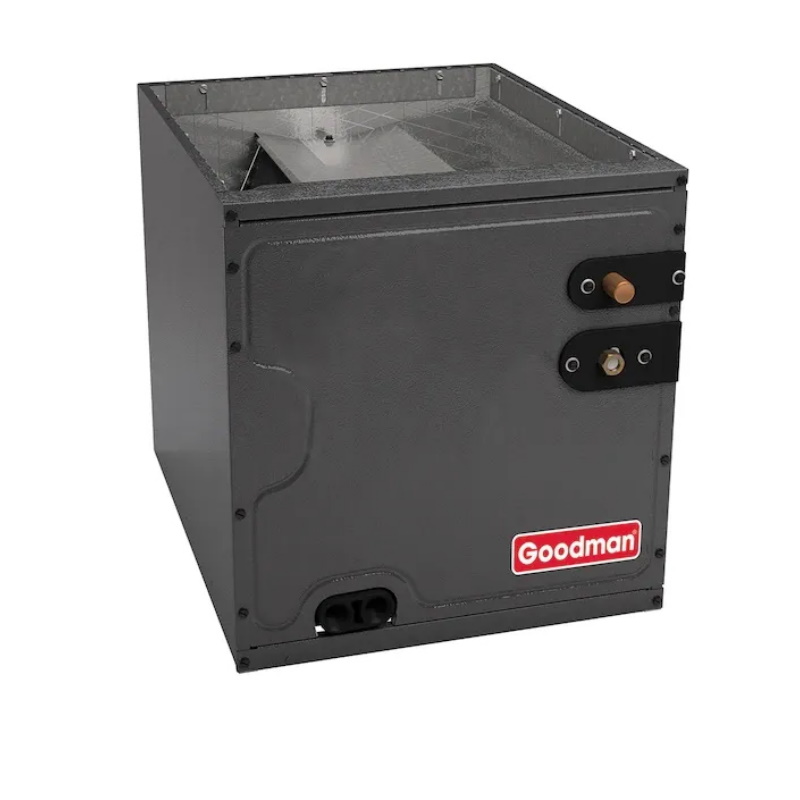
- Matched 2.5-ton evaporator coil included for a factory-confirmed pairing
- Goodman's 10-year parts limited warranty with registration within 60 days
- Priced approximately 15 to 25 percent below Trane, Lennox, and Carrier two-stage equivalents
About this system
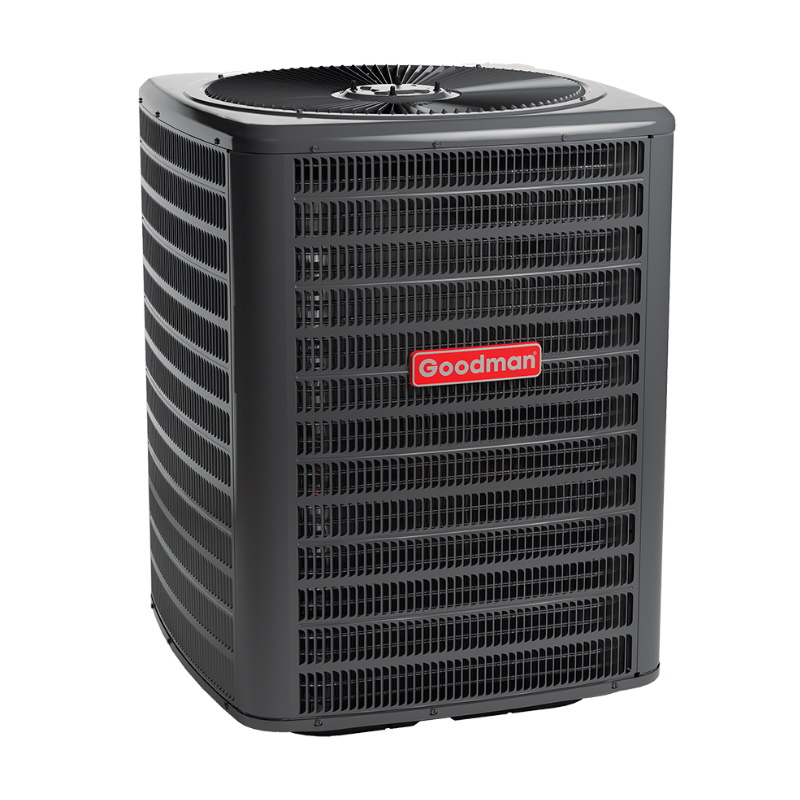
The Goodman GSXH503010 pairs a 2.5-ton, 14.5 SEER2 two-stage condenser with a matching upflow evaporator coil, making it a straightforward fit for homes in the 1,200 to 1,800 square foot range that have existing ductwork routed beneath the air handler. The two-stage compressor runs at a lower capacity on mild days and ramps to full output only when conditions demand it, which smooths temperature swings and reduces short-cycling compared to single-stage equipment at a similar efficiency rating.
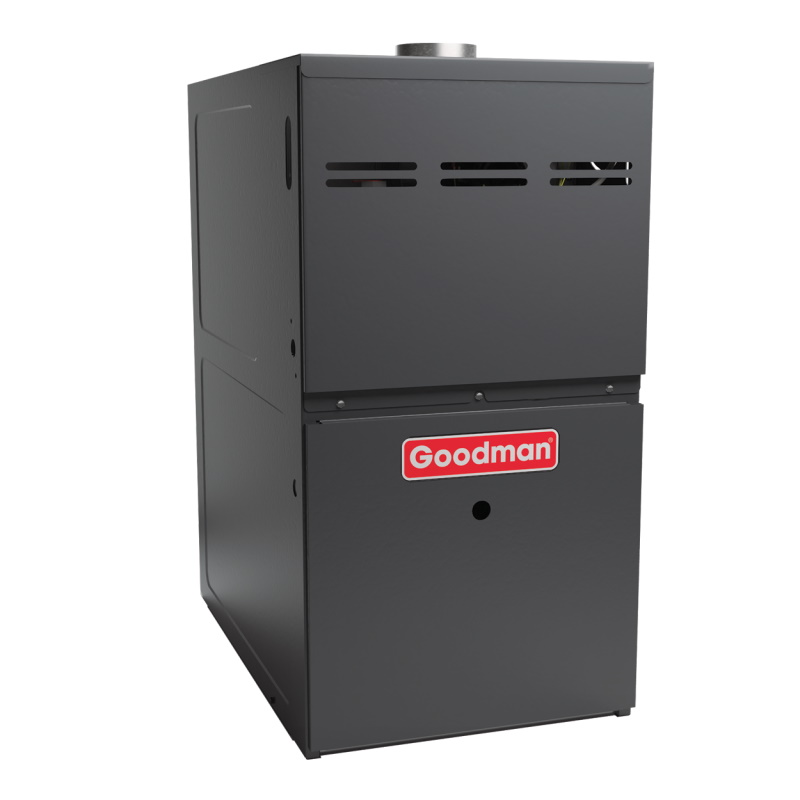
A 14.5 SEER2 rating sits at the federal minimum for most U.S. climate zones under the 2023 DOE rules, so this system clears the efficiency bar without reaching into premium territory. Paired with an 80 percent AFUE gas furnace on a combined system, it will deliver competent comfort control at a price point that typically runs 15 to 25 percent below comparable two-stage offerings from Trane, Lennox, and Carrier. That gap matters most for buyers who want two-stage comfort but are working within a tighter replacement budget. Performance over the long run, however, depends heavily on a careful install, correct refrigerant charge, and a qualified technician completing the startup procedure.
The Goodman GSXH503010 delivers genuine two-stage comfort at a value price point, which is a real advantage for budget-conscious homeowners replacing aging equipment. The trade-off is a compressor lifespan that tends to run shorter than premium brands and a track record that depends more on installation quality than most competitors. Buyers who secure a skilled installer and register the warranty promptly get the best version of what this system offers.
Overall score is the average of the five ratings above.
What we like
- Two-stage operation reduces temperature swings and short-cycling versus single-stage units at similar efficiency
- 14.5 SEER2 meets current federal minimum efficiency requirements in most climate zones
- Matched coil included, simplifying parts sourcing and confirming rated system efficiency
- Upfront cost runs notably lower than Trane, Lennox, or Carrier two-stage equivalents
- 10-year parts warranty with registration is competitive for this price tier
Trade-offs
- Compressor longevity typically averages 10 to 14 years versus 15 to 20 years seen in premium brands
- Dual-run capacitor failures are the most commonly reported issue, adding an expected service call after several years
- Evaporator coil leaks appear in a meaningful share of owner feedback, occasionally requiring costly coil replacement
- A minority of owners report refrigerant leaks within the first year, which usually points to install or charge problems rather than a factory defect
What homeowners and pros say about Goodman
Among HVAC technicians, Goodman carries a reputation as the brand you recommend when a customer’s budget is the primary constraint, not when you want to walk away from a job without follow-up calls. Google dealer reviews for Goodman installers cluster around 3.8 out of 5, with affordability showing up repeatedly as the reason customers chose the equipment in the first place. The two-stage compressor in this system earns genuine praise for comfort improvement over single-stage replacements, but pros are candid that a solid startup procedure matters more on a Goodman than on a Trane or Carrier. The specific failure modes technicians mention most are dual-run capacitors, which are a routine and low-cost fix, and evaporator coil leaks, which are more disruptive and more expensive when they occur.
On ConsumerAffairs, where complaints dominate the review pool, Goodman sits at roughly 2.5 out of 5, and the pattern in those reviews is consistent: owners who had trouble-free installs rarely post, while owners who encountered repair costs after year 7 show up in volume. The compressor lifespan picture is real and worth weighing honestly. Goodman compressors tend to average 10 to 14 years in the field, compared to 15 to 20 years reported for premium brands. For this specific two-stage system, that gap is the central trade-off buyers are making when they choose the lower entry price. Owners who registered their warranty, had a careful install, and scheduled routine maintenance have generally gotten solid years out of the equipment. Those who skipped registration or had a rushed installation are the ones writing the frustrated reviews.
Sources: ConsumerAffairs Goodman owner reviews, AHRI Directory of Certified Product Performance, U.S. DOE appliance and equipment efficiency standards, Goodman product specification sheets.
What it costs to run
At 14.5 SEER2, cooling this 2.5-ton system for a typical 1200-hour cooling season at the U.S. average electricity rate of $0.17/kWh works out to roughly $422 per year in cooling, about $35 less per year than a minimum-efficiency 13.4 SEER2 unit of the same size. Your real cost depends on your climate and local rate.
Method: (30,000 BTU/hr ÷ 14.5 SEER2) × 1200 hours ÷ 1000 × $0.17/kWh. Rate source: U.S. EIA average; cooling hours: moderate-climate estimate.
How it compares
| Brand | Comparable model | SEER2 | Stage | Price position |
|---|---|---|---|---|
| Goodman | GSXH503010 with matched 2.5-ton coil | 14.5 | Two-stage | Value pick |
| Carrier | Comfort 24ACC6 series (2.5-ton) | 14.5 to 15 | Single-stage | Typically 15 to 25 percent more than this Goodman system |
| Trane | XR14c series (2.5-ton) | 14.5 to 15 | Single-stage | Typically 15 to 25 percent more than this Goodman system |
| Lennox | Merit ML14XC1 series (2.5-ton) | 15 | Single-stage | Typically 15 to 25 percent more than this Goodman system |
Competitor rows are comparable single-stage units at similar efficiency; price is relative position, not a quote.
Questions about this system
Does the 14.5 SEER2 rating meet the 2023 federal efficiency requirements for my region?
For most northern U.S. climate zones, 14 SEER2 is the minimum, so this system clears the bar. Southern and southwestern regions require 15 SEER2 for new installations, which means this unit may not qualify for those areas. Confirm the requirement for your specific state with your installer before purchasing.
What is actually covered under the 10-year parts warranty, and what do I need to do to activate it?
Goodman's 10-year limited parts warranty covers most factory-supplied components, including the compressor and coil, when the unit is installed by a licensed contractor and registered online within 60 days of installation. Without registration, coverage drops to a shorter default period. Labor costs are not covered under any Goodman residential warranty tier.
How often do the dual-run capacitors typically fail, and how expensive is that repair?
Capacitor replacement is the most frequently reported service call on Goodman condensers, with many units needing at least one replacement somewhere in the 5 to 10 year range. The part itself is inexpensive, and the total repair cost including a technician visit typically falls in the 300 to 600 dollar range, which is a manageable out-of-warranty expense.
What does two-stage operation actually mean in day-to-day use compared to a single-stage unit?
A two-stage compressor runs at a reduced capacity, roughly 60 to 70 percent, during mild weather and shifts to full output only when temperatures are more demanding. In practice this means longer, gentler cooling cycles, more consistent indoor temperatures, and better humidity removal compared to a single-stage unit that cycles fully on and fully off. It is not the same as variable-speed operation, which modulates across a much wider range.
Is an evaporator coil leak likely, and would it be covered under warranty if it happened?
Evaporator coil leaks appear in a notable share of Goodman owner feedback, though they are far from universal. If a leak develops within the 10-year warranty period and the unit was properly registered, the replacement coil itself should be covered under the parts warranty. Labor to diagnose and replace the coil is a separate out-of-pocket cost, and a refrigerant recharge adds to the total expense.
Specifications
| Cooling capacity | 2.5 Ton |
| Efficiency | 14.5 SEER2 |
| Furnace output | 60000 BTU |
| Configuration | Upflow |
| Model | GSXH503010 |