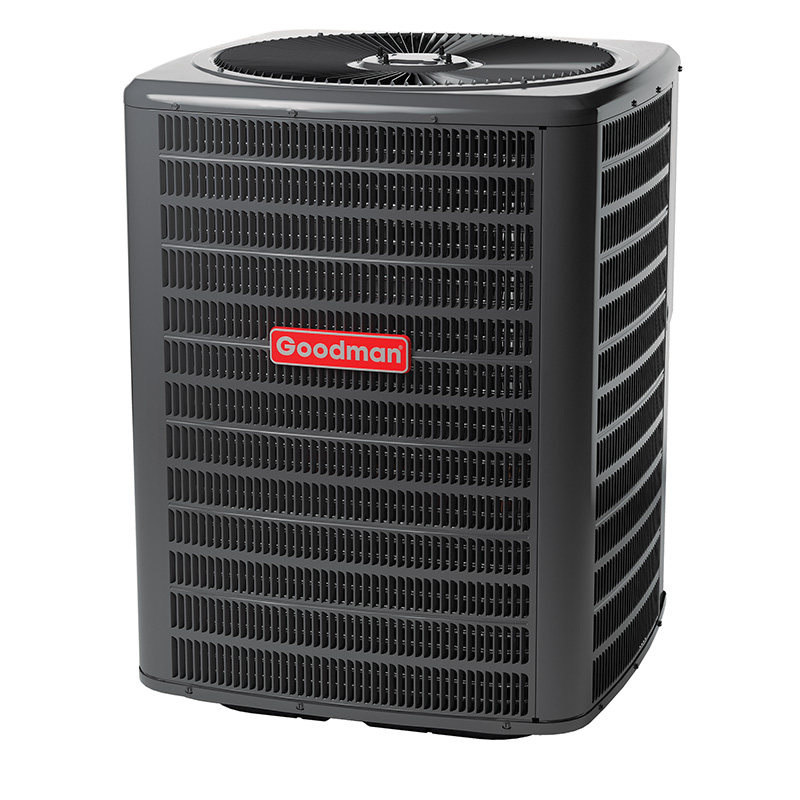
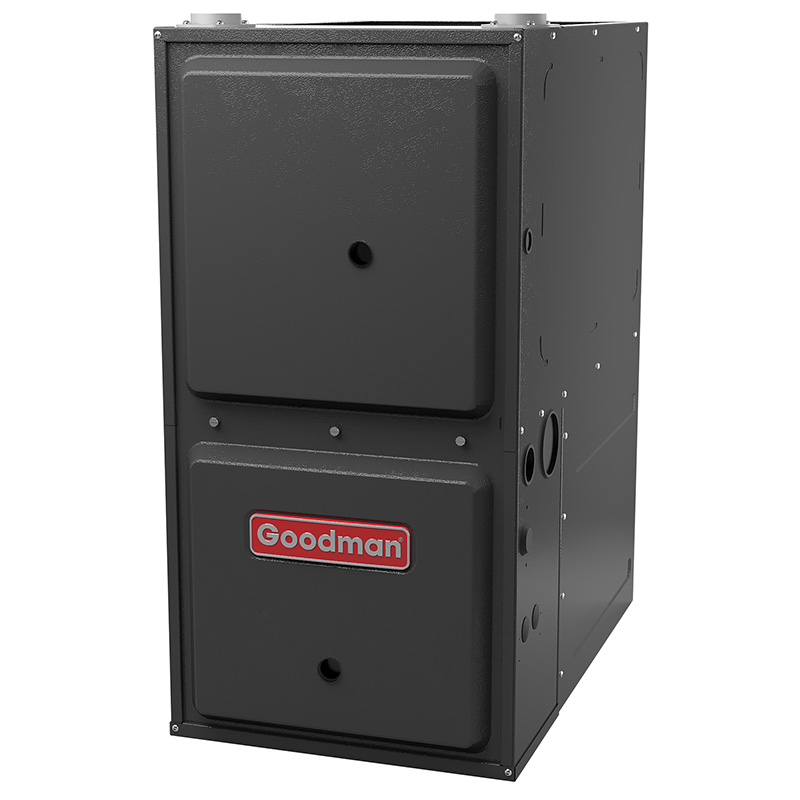
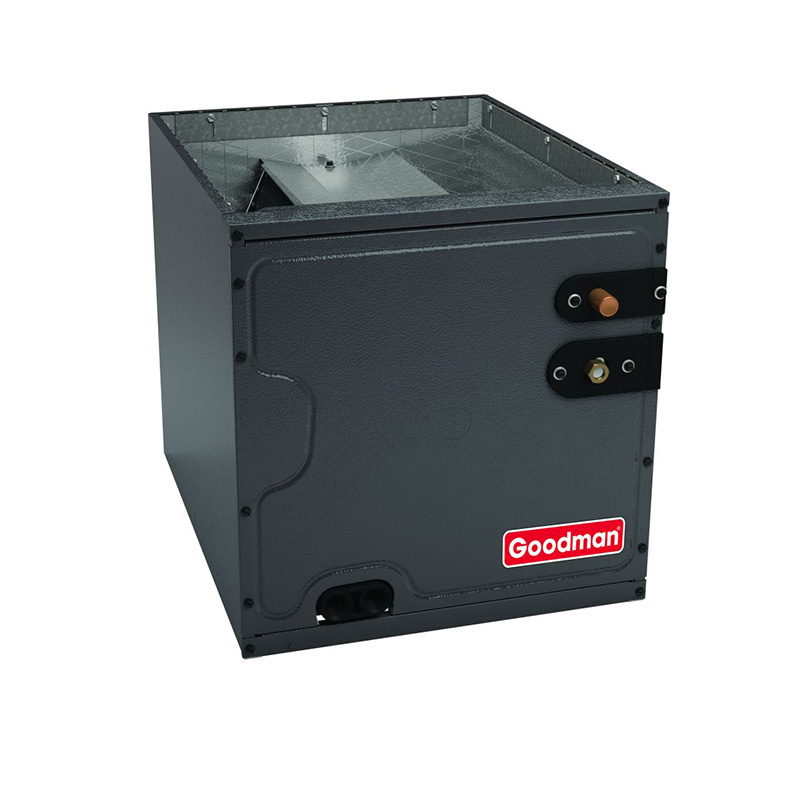
Goodman Furnace And Air Conditioner 2.5 Ton 15.2 SEER2 AC With 100000 BTU 80% AFUE Multi-Speed ECM Gas Furnace System – Downflow | R32
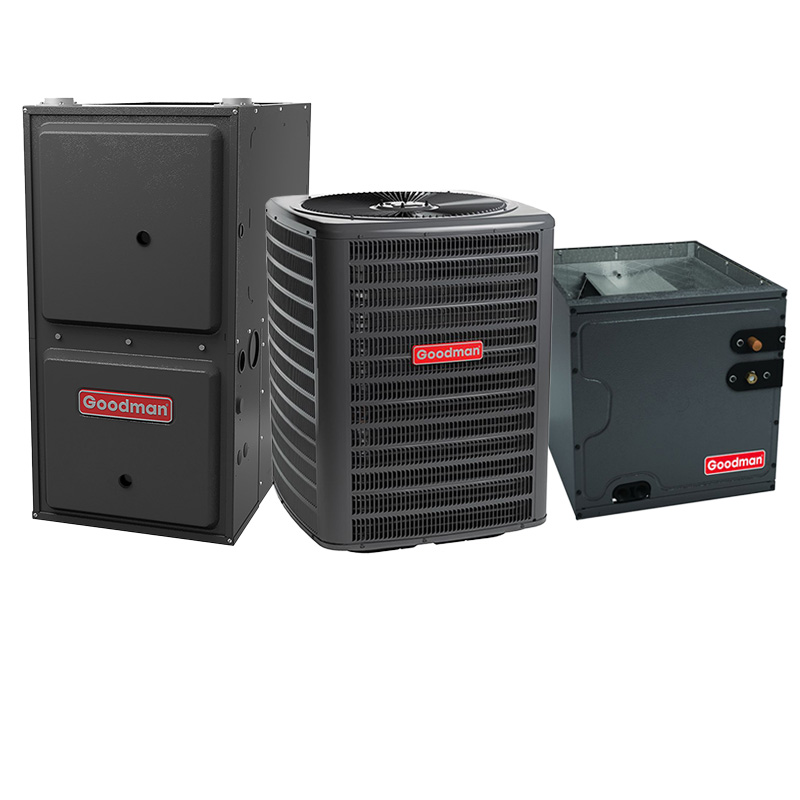
View on AC Direct see your lowest price →Check current price on AC Direct →
Key features
- 2.5-ton cooling capacity with 15.2 SEER2 efficiency rating
- 100,000 BTU output, 80% AFUE single-stage gas furnace in downflow configuration
- Multi-speed ECM blower motor for reduced fan electricity consumption
- R-32 refrigerant, lower global-warming potential than R-410A
- Designed for downflow/horizontal applications with floor-discharge plenum
- Factory-matched coil and condenser for simplified AHRI certification
About this system
This Goodman bundle pairs a 2.5-ton, 15.2 SEER2 central air conditioner with a 100,000 BTU, 80% AFUE multi-speed ECM gas furnace in a downflow configuration, meaning warm air is discharged downward through a floor-level plenum rather than upward. That setup is common in homes with basements, crawl spaces, or utility closets positioned above the conditioned area. The R-32 refrigerant charge is a forward-looking choice: R-32 has a lower global-warming potential than the R-410A it replaces and is increasingly the industry standard, so future service technicians and parts suppliers will be well-positioned to work on it.
On paper, 15.2 SEER2 sits just above the federal minimum efficiency threshold now required in most of the country, so this is a code-compliant baseline system rather than a high-efficiency one. The 80% AFUE furnace means one dollar in five of your gas spend exits the flue as exhaust heat. Homeowners in moderate climates or those replacing aging equipment on a budget will find the efficiency acceptable; those in very cold climates or facing high utility rates may want to compare the long-run fuel savings of a 96%+ AFUE unit against the upfront cost difference. The ECM blower motor does improve part-load electricity use compared with a standard PSC motor, which partially offsets the mid-tier AFUE rating.
This Goodman bundle is a workable, budget-conscious choice for homeowners who need a code-compliant replacement system and want to keep upfront costs down. Efficiency and reliability land in the middle of the market rather than at the top, and long-term satisfaction will depend heavily on how carefully the system is installed and commissioned. Buyers who can absorb a higher purchase price should at least price a <a href="https://hvac.best/glossary/two-stage/">two-stage</a> or <a href="https://hvac.best/glossary/variable-speed/">variable-speed</a> system before committing.
Overall score is the average of the five ratings above.
What we like
- Priced roughly 15 to 25 percent below comparable Carrier, Trane, and Lennox systems
- R-32 refrigerant is the emerging industry standard, improving future serviceability
- ECM blower motor reduces blower electricity draw compared with basic PSC motors
- Factory-matched bundle simplifies AHRI rating verification and warranty coordination
- Downflow configuration covers a common installation scenario underserved by some bundle kits
Trade-offs
- 80% AFUE means meaningful heating efficiency is left on the table versus 96%+ condensing furnaces
- 15.2 SEER2 is entry-level efficiency; operating costs will be higher than mid- or high-efficiency alternatives over the system's lifespan
- Dual-run capacitors are the most commonly reported repair item, and evaporator coil leaks appear in a notable share of owner accounts
- Compressor lifespan averages 10 to 14 years in owner experience, roughly 3 to 6 years shorter than premium-brand compressors tend to last
What homeowners and pros say about Goodman
Homeowners who track Goodman on ConsumerAffairs give it roughly 2.5 out of 5, a score shaped by the platform’s complaint-heavy audience, where the most consistent theme is repair costs rising after about year 7. Google dealer reviews tell a more balanced story at around 3.8 out of 5, where affordability is the praise that comes up most often. For this specific downflow bundle, the picture is consistent with the broader brand pattern: buyers who get a careful installation and register the warranty on time often report years of uneventful service, while those who encounter a rushed or improperly charged startup are more likely to show up in the complaint tallies. The R-32 refrigerant adds a minor wrinkle in that not every older service van carries A2L-rated recovery equipment yet, though that gap is closing quickly as the industry transitions.
HVAC technicians who work on Goodman equipment regularly point to dual-run capacitors as the most predictable service call, usually a straightforward fix in the $300 to $600 range when it comes up. The concern they raise more seriously is evaporator coil leaks, which appear in a notable share of owner reports and carry a steeper repair bill because labor and refrigerant are not covered under warranty. On the cooling side, compressor longevity averaging 10 to 14 years is the honest expectation, which is shorter than the 15 to 20 years more commonly seen with premium-brand compressors. Pros consistently point out that the gap between a good Goodman installation and a poor one is larger than with premium equipment, making contractor selection at least as important as the equipment choice itself.
Sources: ConsumerAffairs Goodman owner reviews, AHRI Directory of Certified Product Performance, U.S. DOE appliance and equipment efficiency standards, Goodman product specification sheets.
What it costs to run
At 15.2 SEER2, cooling this 2.5-ton system for a typical 1200-hour cooling season at the U.S. average electricity rate of $0.17/kWh works out to roughly $403 per year in cooling, about $54 less per year than a minimum-efficiency 13.4 SEER2 unit of the same size. Your real cost depends on your climate and local rate.
Method: (30,000 BTU/hr ÷ 15.2 SEER2) × 1200 hours ÷ 1000 × $0.17/kWh. Rate source: U.S. EIA average; cooling hours: moderate-climate estimate.
How it compares
| Brand | Comparable model | SEER2 | Stage | Price position |
|---|---|---|---|---|
| Goodman | This bundle (downflow, R-32) | 15.2 | Single-stage | Value pick |
| Carrier | Comfort 24ACC6 series with 80% AFUE gas furnace | 15.2 | Single-stage | Typically 15 to 25 percent more than this Goodman bundle |
| Trane | XR15 series with S8X1 80% AFUE gas furnace | 15.2 | Single-stage | Typically 15 to 25 percent more than this Goodman bundle |
| Lennox | Merit 14ACX series with ML180 80% AFUE gas furnace | 15.2 | Single-stage | Typically 15 to 25 percent more than this Goodman bundle |
Competitor rows are comparable single-stage units at similar efficiency; price is relative position, not a quote.
Questions about this system
Is downflow the right configuration for my home, and can I convert this system to upflow?
Downflow furnaces discharge air through the bottom and are designed for installations where ductwork runs below the unit, typically a basement, crawl space, or slab with under-floor ducts. Converting a downflow-specific cabinet to upflow is generally not supported by the manufacturer and would void the warranty, so confirm your duct layout with your installer before ordering.
Does R-32 refrigerant require any special handling compared with R-410A systems?
R-32 is mildly flammable (A2L classification), so technicians need to be certified to work with it and recovery equipment must be rated for A2L refrigerants. Most newly certified HVAC technicians already have this training, but it is worth confirming with your service company before scheduling any future work.
What does the Goodman warranty actually cover on this bundle, and what can void it?
Goodman typically offers a 10-year parts warranty when the system is registered within 60 days of installation by a licensed contractor; failure to register usually drops coverage to 5 years. The warranty covers parts replacement but not labor, refrigerant, or any costs caused by improper installation, which is a meaningful exclusion given that install quality is the most cited variable in Goodman system longevity.
The 100,000 BTU furnace seems large for a 2.5-ton AC. Is the furnace oversized?
BTU heating capacity and cooling tonnage do not scale together in a fixed ratio because heating and cooling loads depend on insulation levels, climate, and home size independently. A proper Manual J load calculation is the only reliable way to confirm whether 100,000 BTU is appropriate for your home; an oversized furnace short-cycles, which reduces efficiency and comfort, while an undersized one cannot maintain temperature on the coldest days.
How likely are the reported capacitor failures and coil leaks, and what do repairs typically cost?
Dual-run capacitor failure is the single most commonly reported repair across Goodman equipment and typically runs $300 to $600 including labor, which makes it a manageable out-of-pocket expense when it occurs. Evaporator coil leaks are more expensive to address and appear in a meaningful portion of owner accounts, often after the first few years of service; the 10-year parts warranty covers the coil itself but not labor or refrigerant, so a coil replacement can still carry a notable labor bill.
Specifications
| Cooling capacity | 2.5 Ton |
| Efficiency | 15.2 SEER2 |
| Furnace output | 100000 BTU |
| Furnace efficiency | 80% AFUE |
| Configuration | Downflow |
| Refrigerant | R-32 |