Goodman Furnace And Air Conditioner 2.5 Ton 15.2 SEER2 AC With 80000 BTU 80% AFUE Multi-Speed ECM Gas Furnace System – Upflow | R32
View on AC Direct see your lowest price →Check current price on AC Direct →
Key features
- 2.5-ton cooling capacity with 15.2 SEER2 efficiency rating
- 80,000 BTU output gas furnace rated at 80% AFUE
- Multi-speed ECM blower motor for improved humidity control and quieter part-load operation
- Upflow configuration for basement or ground-level air handler installations
- R-32 refrigerant charge with lower global-warming potential than R-410A
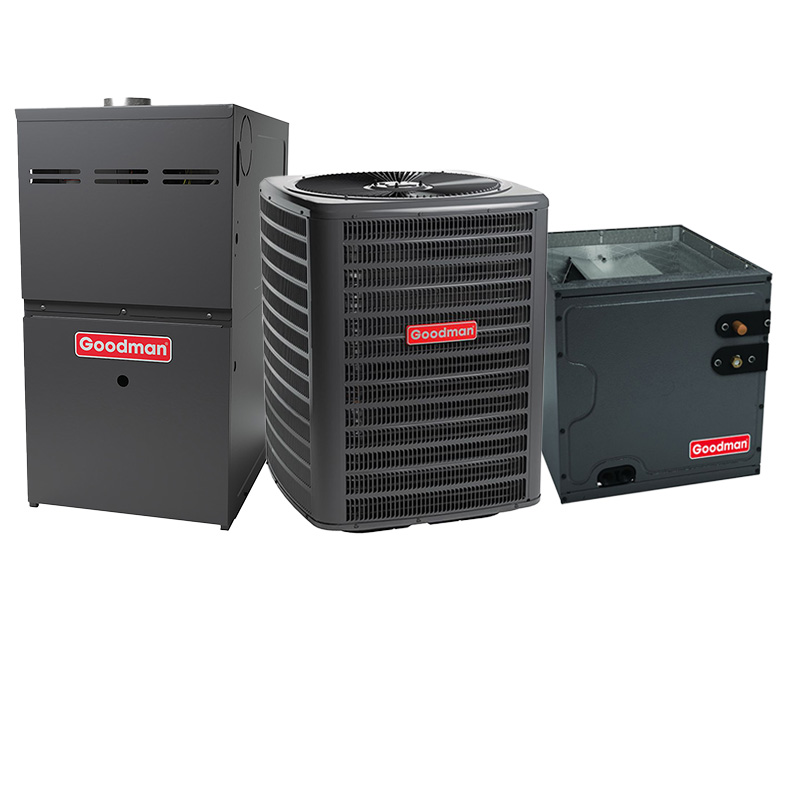
- Matched system sold as a bundle, simplifying coil compatibility and warranty registration
About this system
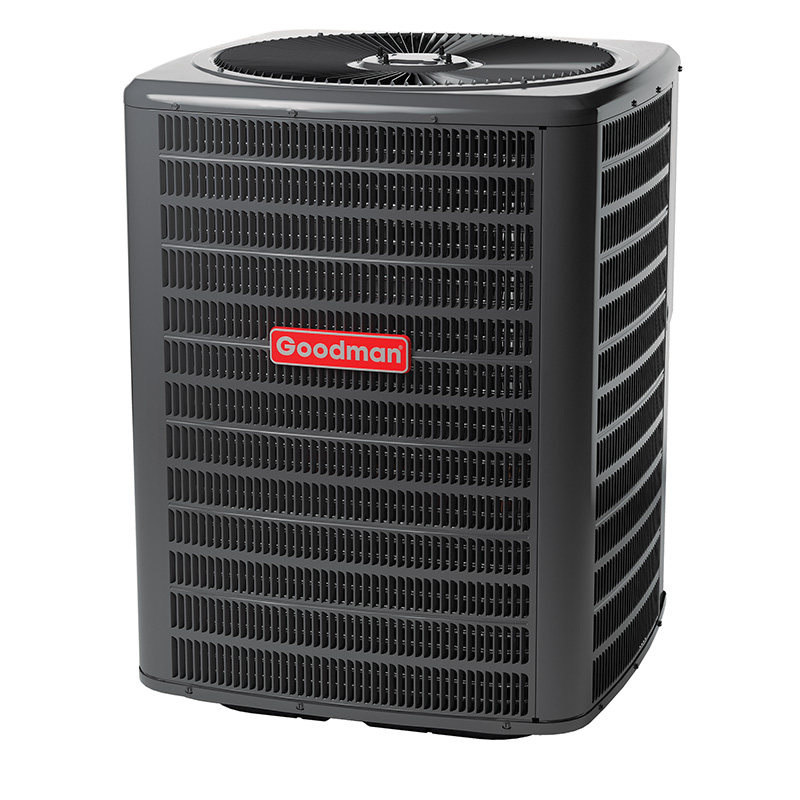
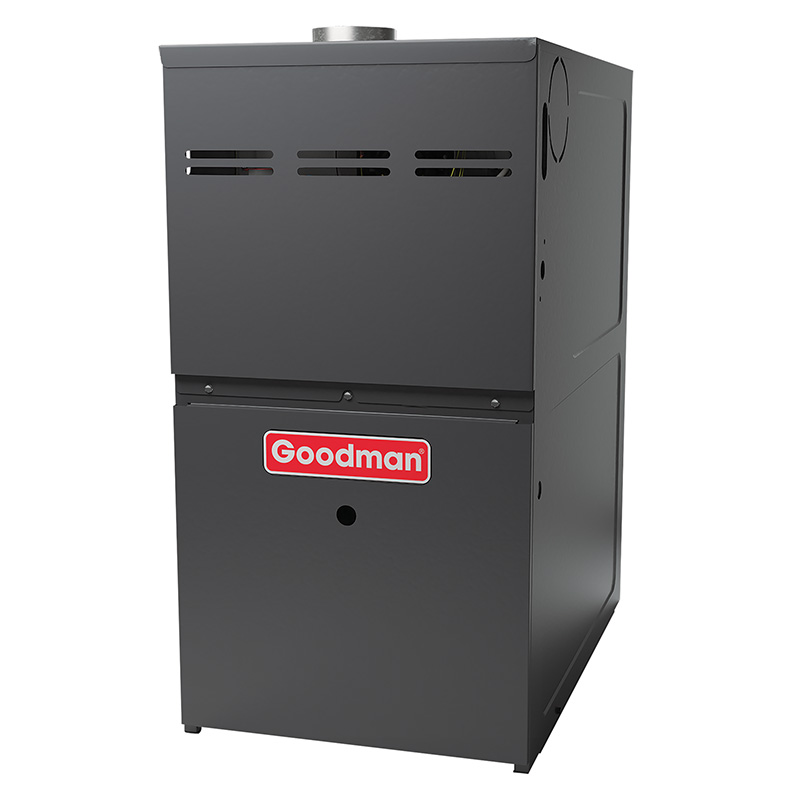
This Goodman bundle pairs a 2.5-ton, 15.2 SEER2 central air conditioner with an 80,000 BTU, 80% AFUE multi-speed ECM gas furnace in an upflow configuration, making it a practical choice for homes in the 1,200- to 1,600-square-foot range that need both heating and cooling on a single budget. The R-32 refrigerant charge is a forward-looking detail: R-32 has a lower global-warming potential than the R-410A it replaces, and it is increasingly the industry standard, so parts and service availability should stay strong for the life of the equipment. The multi-speed ECM blower motor is the standout feature on the furnace side, running at lower speeds during mild weather to improve humidity control and reduce electricity consumption compared with a standard PSC motor.
The 80% AFUE rating means roughly 20 cents of every heating dollar exits through the flue, which is the federal minimum for most northern climates. Homeowners who prioritize fuel economy may want to compare 96% AFUE two-stage options before committing, especially in cold-weather regions where the furnace runs hard for five or more months. On the cooling side, 15.2 SEER2 sits at the entry level of the current federal minimums, delivering adequate but not exceptional efficiency. The system is best understood as a cost-effective replacement unit for straightforward upflow installations rather than a premium efficiency upgrade.
This Goodman system offers a genuinely competitive entry price for a matched furnace-and-AC bundle, and the ECM blower motor adds real comfort value above a basic single-speed unit. The trade-off is a well-documented shorter compressor lifespan than premium brands and a repair cost profile that tends to climb after year seven, so buyers should weigh the upfront savings against likely service expenses over a 12- to 15-year ownership window.
Overall score is the average of the five ratings above.
What we like
- Priced 15 to 25 percent below comparable Trane, Carrier, and Lennox bundles
- ECM multi-speed blower improves dehumidification and lowers blower electricity use versus PSC motors
- R-32 refrigerant is industry-forward and broadly serviceable
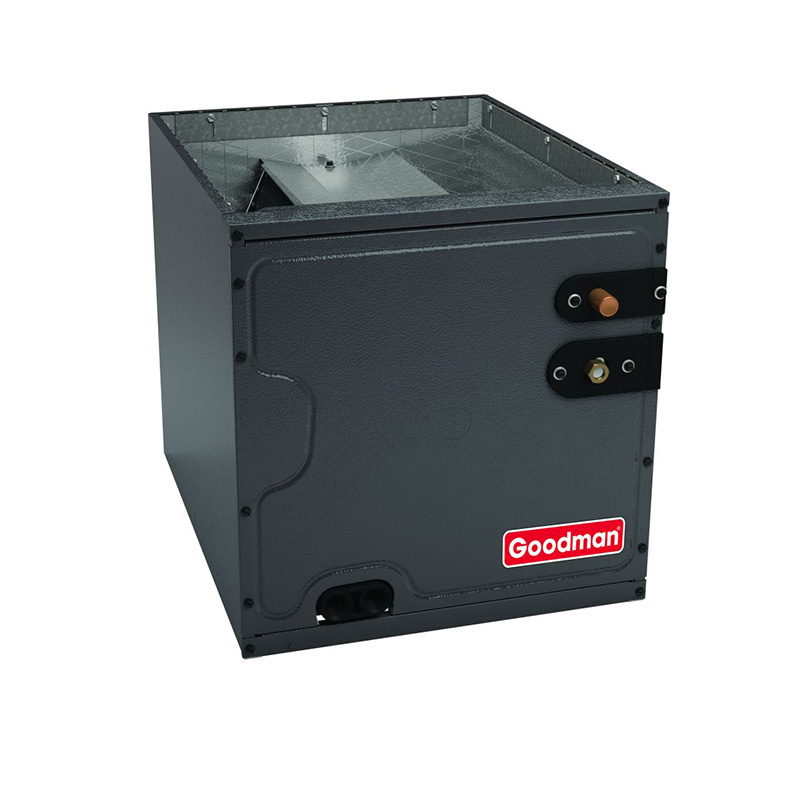
- Matched coil-and-condenser pairing simplifies installation and warranty compliance
- 10-year parts warranty when registered by a licensed contractor
Trade-offs
- 80% AFUE is the federal minimum floor, leaving meaningful heating-cost savings on the table versus 96% AFUE alternatives
- Compressor lifespan averages 10 to 14 years, shorter than the 15 to 20 years reported for premium-brand compressors
- Dual-run capacitor failures are the most commonly reported repair, typically appearing within the first seven years
- A minority of owners report refrigerant leaks in the first year, usually tied to install or initial charge quality rather than the equipment itself
What homeowners and pros say about Goodman
Homeowners who have installed Goodman equipment tend to split along a predictable line: those who got a clean, careful install by an experienced technician generally report years of trouble-free operation and point to the price as a genuine win, while those who encountered sloppy workmanship or a rushed refrigerant charge often end up on platforms like ConsumerAffairs, where the brand’s aggregate score sits at roughly 2.5 out of 5. The recurring complaint in those negative reviews is not a catastrophic first-year failure but rather a steady accumulation of repair bills that starts around year seven, when dual-run capacitors and, in some cases, evaporator coil leaks begin to surface. Google dealer reviews paint a more balanced picture, averaging around 3.8 out of 5 across hundreds of dealer-level reviews, with affordability consistently named as the reason buyers chose Goodman in the first place.
HVAC technicians who work on Goodman equipment regularly tend to describe it as serviceable and parts-accessible, not a brand they avoid, but one where the install quality matters more than with some competitors. The compressor lifespan question comes up often: Goodman compressors typically average 10 to 14 years in field reports, compared with 15 to 20 years for premium-brand units. That gap is worth factoring into total cost of ownership, especially for this 2.5-ton system where the compressor is a meaningful replacement cost. The R-32 refrigerant on this unit is a genuine positive note among technicians, who appreciate the lower charge volume and the fact that R-32 servicing infrastructure is expanding industry-wide. The overall picture is a brand that delivers on its core promise of accessible pricing, with trade-offs in long-term durability that informed buyers should price into their decision rather than discover later.
Sources: ConsumerAffairs Goodman owner reviews, AHRI Directory of Certified Product Performance, U.S. DOE appliance and equipment efficiency standards, Goodman product specification sheets.
What it costs to run
At 15.2 SEER2, cooling this 2.5-ton system for a typical 1200-hour cooling season at the U.S. average electricity rate of $0.17/kWh works out to roughly $403 per year in cooling, about $54 less per year than a minimum-efficiency 13.4 SEER2 unit of the same size. Your real cost depends on your climate and local rate.
Method: (30,000 BTU/hr ÷ 15.2 SEER2) × 1200 hours ÷ 1000 × $0.17/kWh. Rate source: U.S. EIA average; cooling hours: moderate-climate estimate.
How it compares
| Brand | Comparable model | SEER2 | Stage | Price position |
|---|---|---|---|---|
| Goodman | This system (2.5T 15.2 SEER2 / 80K BTU 80% AFUE ECM bundle) | 15.2 | Single-stage | Value pick |
| Carrier | Comfort Series (24ACC / 58SC pairing) | 15-16 | Single-stage | Typically 15 to 25 percent more than this Goodman bundle |
| Trane | XR15 / S8X1 bundle | 15-15.2 | Single-stage | Typically 15 to 25 percent more than this Goodman bundle |
| Lennox | Merit Series (ML15 / ML196 pairing) | 15-15.5 | Single-stage | Typically 15 to 25 percent more than this Goodman bundle |
Competitor rows are comparable single-stage units at similar efficiency; price is relative position, not a quote.
Questions about this system
Is 15.2 SEER2 going to cost me noticeably more to run than a higher-efficiency unit?
At 15.2 SEER2 you are at the current federal minimum efficiency level, which means a 16- or 18-SEER2 system would reduce cooling electricity use by roughly 5 to 15 percent annually. Whether that pays off in your payback window depends on how hot your summers are and your local electricity rate, so it is worth running the numbers before choosing this tier.
What does 80% AFUE actually mean for my heating bill?
It means 80 cents of every dollar of gas burned becomes usable heat, while 20 cents goes up the flue as exhaust. A 96% AFUE furnace would recover most of that lost 20 percent, typically cutting heating costs by 15 to 18 percent in cold climates. For mild-winter regions the payback gap between 80% and 96% AFUE narrows considerably.
Why does Goodman's ConsumerAffairs score look so low compared with its Google dealer reviews?
ConsumerAffairs scores around 2.5 out of 5 because the platform skews toward people with complaints, and the recurring theme in Goodman reviews is repair costs rising after roughly year seven. Google dealer reviews average around 3.8 out of 5 across locations, with affordability as the most-cited positive. Neither number tells the full story on its own.
What are the most likely repairs I should budget for over the system's life?
Dual-run capacitor failure is the most commonly reported issue and is typically a straightforward repair in the 300 to 600 dollar range. Evaporator coil leaks appear in a meaningful share of owner reviews and cost more to address. A small number of owners have reported refrigerant leaks in the first year, which generally points to install or initial charge problems rather than a defect in the equipment itself.
Does the upflow configuration mean I need a specific type of installation space?
Yes. Upflow means conditioned air exits from the top of the air handler and is distributed through ductwork above it, which suits basements, utility closets on the ground floor, or crawl-space installations where the ducts run overhead. If your existing system is a downflow or horizontal unit, your installer will need to assess whether the duct layout can be adapted before ordering this configuration.
Specifications
| Cooling capacity | 2.5 Ton |
| Efficiency | 15.2 SEER2 |
| Furnace output | 80000 BTU |
| Furnace efficiency | 80% AFUE |
| Configuration | Upflow |
| Refrigerant | R-32 |