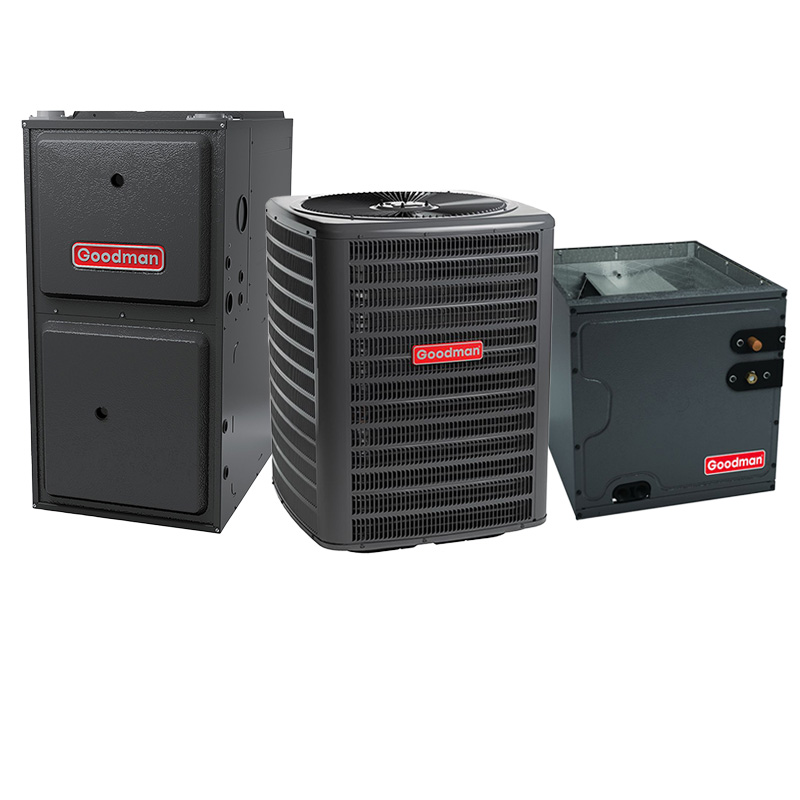
Goodman Furnace And Air Conditioner 2.5 Ton 15.2 SEER2 AC With 80000 BTU 96% AFUE Multi-Speed ECM Gas Furnace System – Upflow | R32
View on AC Direct see your lowest price →Check current price on AC Direct →
Key features
- 15.2 SEER2 cooling efficiency meets current federal minimum standards with a small margin above the floor
- 96% AFUE gas furnace extracts nearly all heat from combustion, leaving minimal flue loss
- Multi-speed ECM blower motor reduces electricity use and improves humidity control versus single-speed motors
- R-32 refrigerant offers a lower global-warming potential than legacy R-410A systems
- Upflow cabinet design fits basement and ground-level closet installations with overhead ductwork
- Factory-matched system simplifies equipment selection and supports a single warranty source
About this system
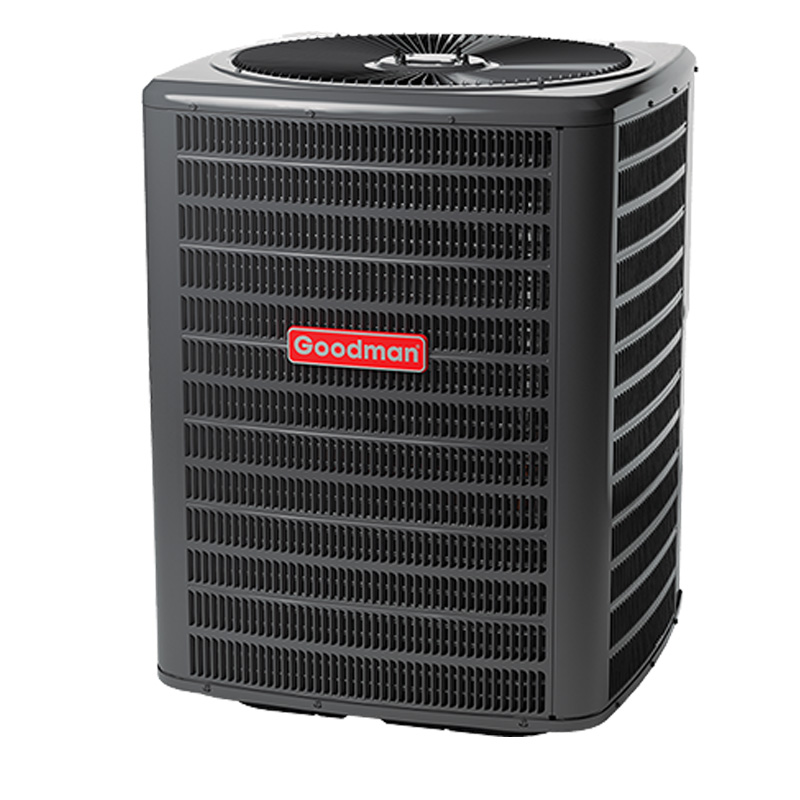
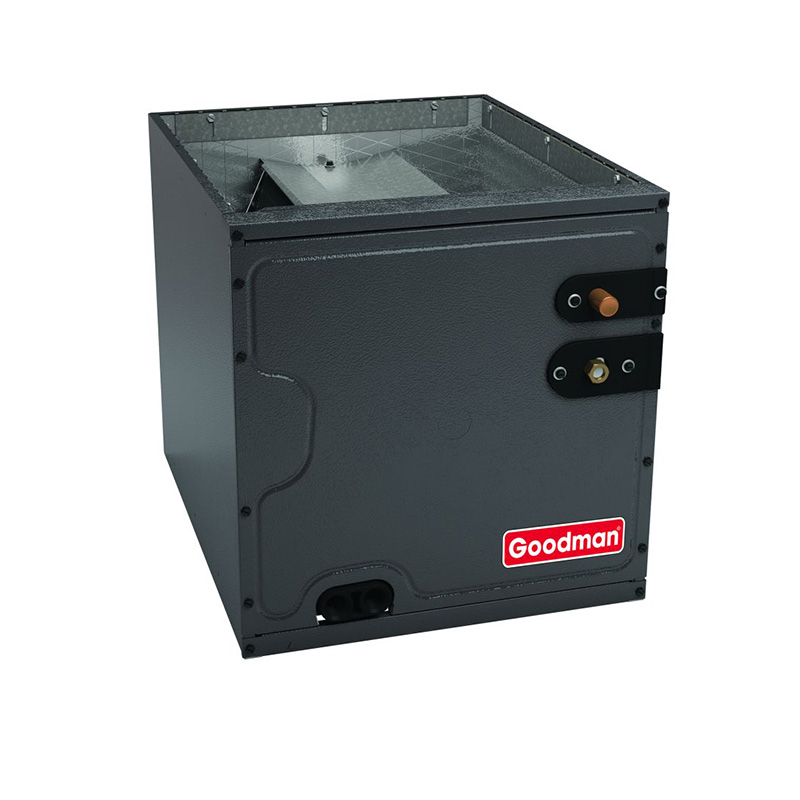
This Goodman bundle pairs a 2.5-ton, 15.2 SEER2 central air conditioner with an 80,000 BTU, 96% AFUE multi-speed ECM gas furnace in an upflow configuration. The combination is well-suited to homes in the 1,200 to 1,800 square-foot range that need a complete heating and cooling replacement without the price premium of a flagship brand. The 96% AFUE rating means only four cents of every dollar spent on gas escapes as waste heat, which is a genuine efficiency win for climates with cold winters. The R-32 refrigerant is a lower global-warming-potential option compared to the older R-410A it replaces, and it is the direction the industry is heading, so servicing compatibility will improve over time rather than shrink.
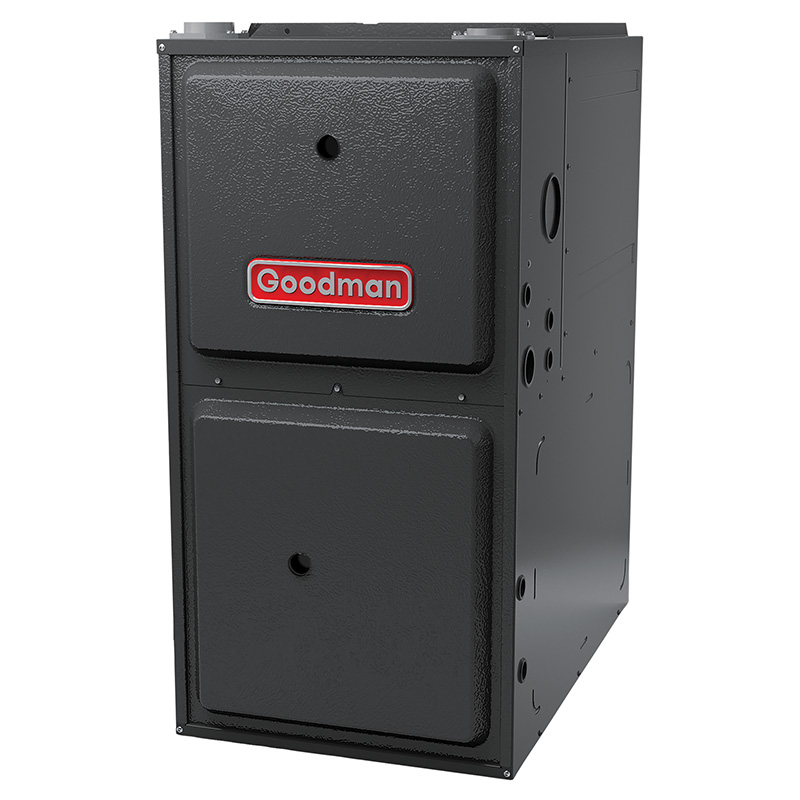
The multi-speed ECM blower motor is worth noting. Unlike a basic single-speed motor that simply runs at full blast or not at all, the ECM steps through speeds to match demand, which reduces electrical consumption during mild weather and keeps indoor humidity more stable. It is not the same as a true variable-speed communicating system, but it is a meaningful upgrade over entry-level equipment. Upflow configuration means warm or conditioned air exits the top of the furnace and rises into the duct system, making this the right fit for a basement or closet installation where ductwork runs above the unit. Buyers who have a horizontal attic application or a downflow setup will need a different configuration entirely.
This Goodman bundle delivers solid rated efficiency at a price point that undercuts Carrier, Trane, and Lennox by a meaningful margin, making it a reasonable pick for budget-conscious buyers who can afford a reliable installer. The trade-off is a brand track record that shows more component failures in the 7-plus year range and compressor longevity that trails premium competitors. If installation quality is high and the warranty is registered promptly, most owners get years of adequate service before those concerns surface.
Overall score is the average of the five ratings above.
What we like
- 96% AFUE furnace rating translates to real winter utility savings in colder climates
- 15.2 SEER2 clears the federal efficiency floor, so the system qualifies for common utility rebate programs
- R-32 refrigerant is serviceable now and increasingly supported by technicians as the industry transitions
- Multi-speed ECM motor improves comfort and lowers fan electricity costs compared to single-speed alternatives
- System price runs 15 to 25 percent below comparable Carrier, Trane, and Lennox setups, freeing budget for a quality installation
Trade-offs
- Dual-run capacitors are the most frequently reported failure point, typically needing replacement in the 300 to 600 dollar range
- Evaporator coil leaks appear in a meaningful share of owner reviews and can become expensive if refrigerant must be recharged repeatedly
- Compressor lifespan averages 10 to 14 years, noticeably shorter than the 15 to 20 years owners commonly report from premium brands
- A minority of owners report refrigerant leaks within the first year, most often tied to installation or initial charge problems rather than a factory defect
What homeowners and pros say about Goodman
Homeowners and HVAC pros who follow Goodman closely tend to land in two camps. On ConsumerAffairs, the brand scores around 2.5 out of 5, a channel where dissatisfied owners are far more likely to leave a record than satisfied ones. The recurring complaint there is repair costs climbing after roughly year 7, with dual-run capacitor failures being the most commonly cited specific problem. Those capacitor replacements are generally a low-cost fix in the 300 to 600 dollar range, but evaporator coil leaks and, for some owners, refrigerant loss within the first year paint a more expensive picture. Compressor lifespan averaging 10 to 14 years, compared to 15 to 20 for premium brands, is the longer-term concern that shapes how pros evaluate Goodman for buyers who want to stay in a home for two decades.
Google dealer reviews tell a different story, averaging around 3.8 out of 5 across locations where affordability is by far the most common praise. Installers who work with Goodman regularly note that the brand’s performance leans heavily on installation quality, and that a well-charged, properly sized Goodman system installed by an experienced technician can deliver years of trouble-free service. The price gap versus Carrier, Trane, and Lennox, typically 15 to 25 percent lower, is real and meaningful for buyers on a fixed budget. The honest read is that you are trading some component longevity and brand-reliability margin for upfront savings, and whether that trade makes sense depends almost entirely on how long you plan to stay in the home and how much you budget for eventual service calls.
Sources: ConsumerAffairs Goodman owner reviews, AHRI Directory of Certified Product Performance, U.S. DOE appliance and equipment efficiency standards, Goodman product specification sheets.
What it costs to run
At 15.2 SEER2, cooling this 2.5-ton system for a typical 1200-hour cooling season at the U.S. average electricity rate of $0.17/kWh works out to roughly $403 per year in cooling, about $54 less per year than a minimum-efficiency 13.4 SEER2 unit of the same size. Your real cost depends on your climate and local rate.
Method: (30,000 BTU/hr ÷ 15.2 SEER2) × 1200 hours ÷ 1000 × $0.17/kWh. Rate source: U.S. EIA average; cooling hours: moderate-climate estimate.
How it compares
| Brand | Comparable model | SEER2 | Stage | Price position |
|---|---|---|---|---|
| Goodman | This system (2.5T 15.2 SEER2 AC + 80K BTU 96% AFUE ECM Furnace) | 15.2 | Multi-speed | Value pick |
| Carrier | Comfort Series (24ACC6 AC + 59TP6 Furnace) | 15.2 | Single-stage | Typically 15 to 25 percent more than this Goodman bundle |
| Trane | XR15 AC + S9X2 Furnace | 15.0 to 15.5 | Single-stage | Typically 15 to 25 percent more than this Goodman bundle |
| Lennox | Merit Series ML15 AC + ML196 Furnace | 15.0 to 15.5 | Single-stage | Typically 15 to 25 percent more than this Goodman bundle |
Competitor rows are comparable single-stage units at similar efficiency; price is relative position, not a quote.
Questions about this system
Does using R-32 refrigerant mean I will have trouble finding a technician to service this system?
R-32 requires a technician who has completed the updated EPA 608 certification and uses compatible recovery equipment. Availability is growing quickly as R-32 becomes the industry standard, but in some rural areas you may need to confirm your service provider is equipped before signing a maintenance contract. This is less of a concern in metro areas.
What does multi-speed ECM actually mean for day-to-day comfort, and is it as good as variable-speed?
The ECM motor steps between a few preset speeds rather than ramping continuously like a true variable-speed communicating motor. In practice, you get quieter low-demand operation and better humidity control than a single-speed system, but the precision of a fully variable system costs more and is found on higher-tier equipment. For most homeowners replacing a basic older system, the ECM is a noticeable improvement.
How important is the installer choice with a Goodman system specifically?
Industry technicians consistently name install quality as the single biggest factor in Goodman system longevity. The documented first-year refrigerant leak issues in owner reviews are almost always traced back to improper charging or line-set handling rather than factory problems. Paying for a licensed, experienced installer who pressure-tests and verifies the charge is not optional with this brand.
Will this system qualify for the federal energy-efficiency tax credit?
The 25C tax credit for home energy improvements requires a gas furnace to meet a 97% AFUE threshold in most climate zones, which this 96% AFUE unit does not satisfy. The air conditioner side requires a higher SEER2 than 15.2 to qualify in most regions. Check current IRS guidance and your utility's rebate programs, as local rebates may still apply even when the federal credit does not.
What does Goodman's warranty actually cover, and are there conditions I need to meet?
Goodman offers a 10-year parts warranty on registered equipment, which drops to 5 years if you do not register within 60 days of installation. The warranty covers parts but not labor, which means a compressor replacement inside the warranty window still carries a potentially significant labor bill. Confirm with your installer whether they offer a separate labor warranty, since Goodman's coverage alone does not make a major repair free.
Specifications
| Cooling capacity | 2.5 Ton |
| Efficiency | 15.2 SEER2 |
| Furnace output | 80000 BTU |
| Furnace efficiency | 96% AFUE |
| Configuration | Upflow |
| Refrigerant | R-32 |