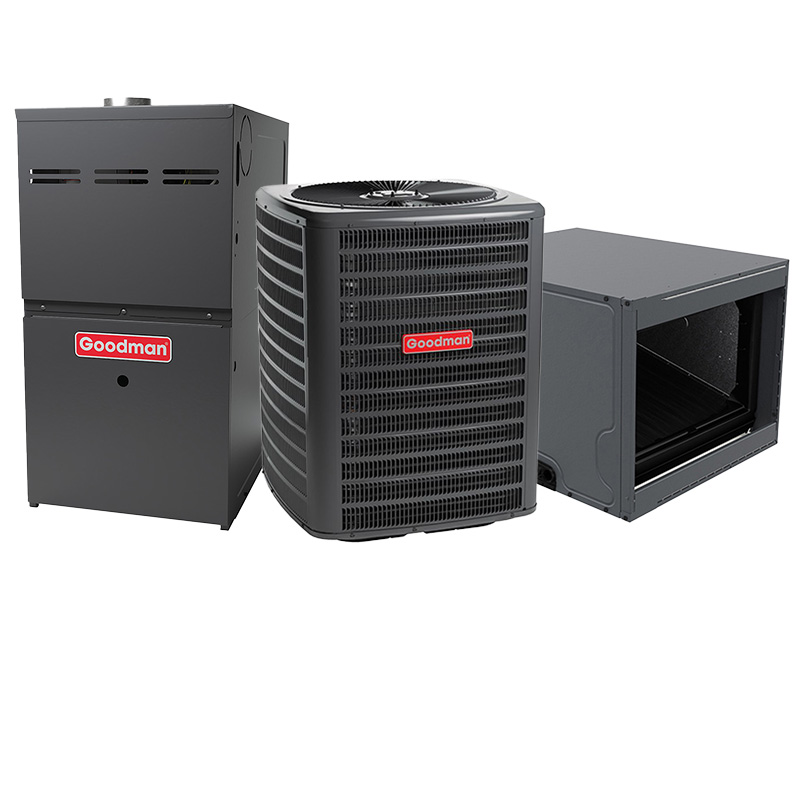
Goodman Furnace And Air Conditioner 2.5 Ton 16 SEER2 AC With 60000 BTU 80% AFUE Multi-Speed ECM Gas Furnace System – Horizontal | R32
View on AC Direct see your lowest price →Check current price on AC Direct →
Key features
- 2.5-ton cooling capacity suited to homes roughly 1,200 to 1,600 sq ft
- 16 SEER2 efficiency rating meets current federal standards with room to save over older equipment
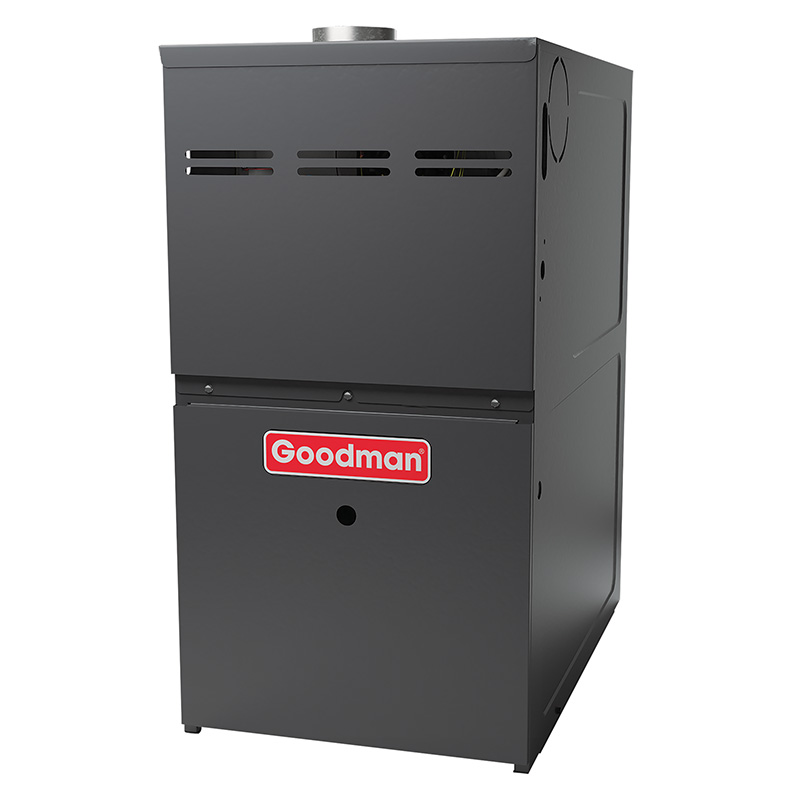
- 60,000 BTU, 80% AFUE multi-speed ECM gas furnace for consistent airflow and moderate fuel efficiency
- Horizontal configuration designed for attic, crawlspace, or closet installs with limited vertical clearance
- R-32 refrigerant with lower global-warming potential than outgoing R-410A
- Multi-speed ECM blower motor reduces electricity use and improves dehumidification versus single-speed motors
About this system
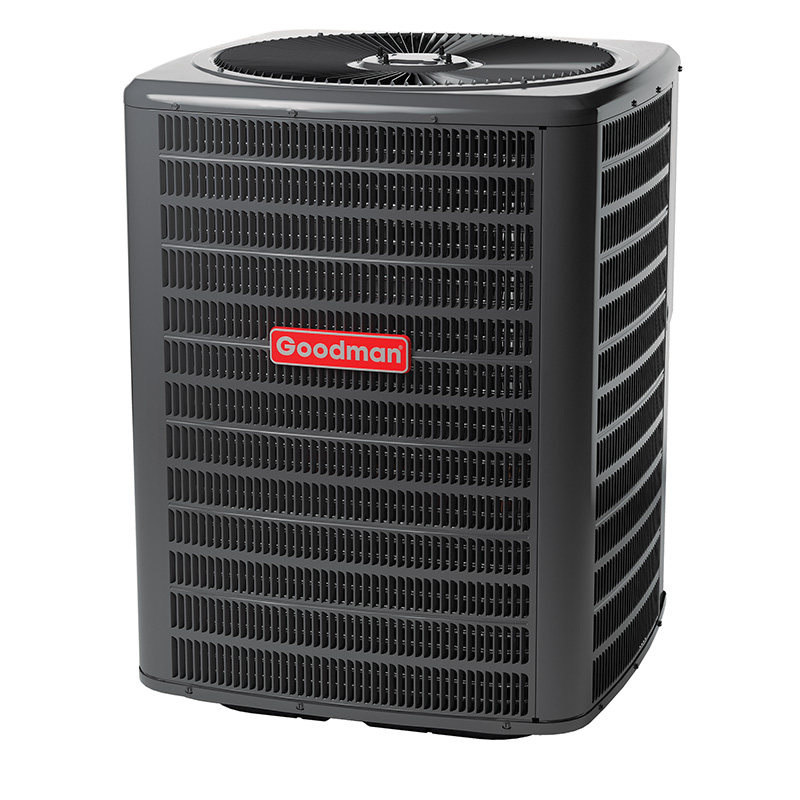
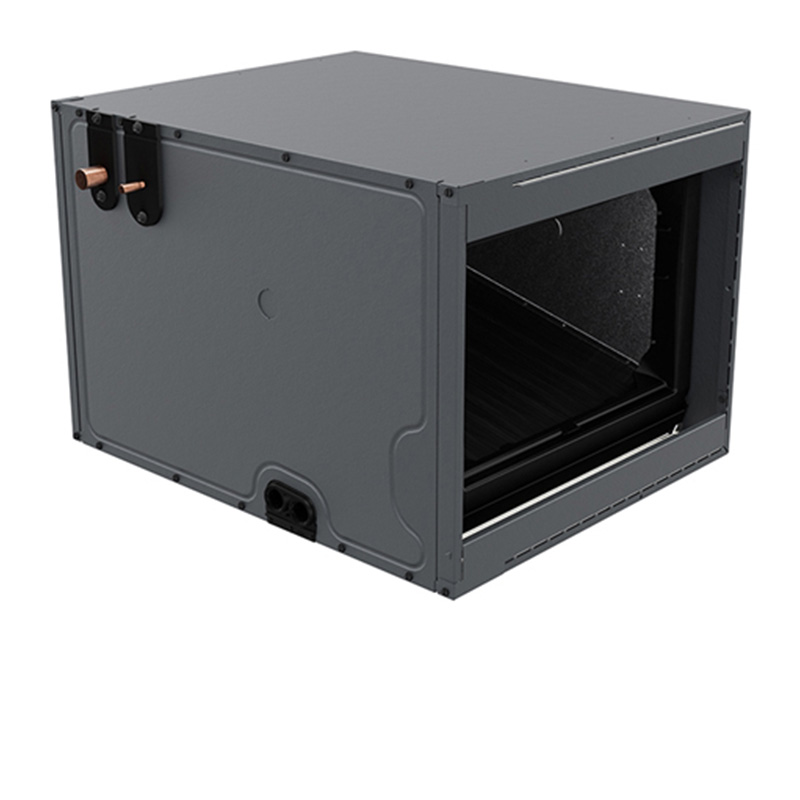
This Goodman 2.5-ton system pairs a 16 SEER2 air conditioner with a 60,000 BTU, 80% AFUE multi-speed ECM gas furnace in a horizontal configuration, making it a practical fit for homes in the 1,200 to 1,600 square foot range where attic or crawlspace installs are the norm. The horizontal orientation is designed specifically for tight mechanical spaces where an upflow or downflow unit simply will not fit, and the multi-speed ECM blower motor improves airflow consistency and trims electricity consumption compared with older single-speed PSC motors. The system runs on R-32 refrigerant, a lower-global-warming-potential option that is becoming more common as the industry moves away from R-410A.
The 16 SEER2 rating lands at the practical mid-range for efficiency: meaningfully better than minimum-efficiency equipment but well short of the 18-plus SEER2 tier where variable-speed compressors and more sophisticated controls come into play. The 80% AFUE furnace means 20 cents of every dollar in gas goes up the flue, so homeowners in colder climates or regions with high natural gas prices may want to compare the long-run operating costs against a 96% AFUE system. That said, for moderate climates and budget-focused buyers, the combination of a mid-efficiency furnace and a solid cooling SEER2 number hits a reasonable balance between upfront cost and monthly bills.
This Goodman bundle is a competent, budget-accessible system for buyers who want modern efficiency and R-32 refrigerant without paying premium-brand prices. Its long-term cost picture depends heavily on installation quality and a willingness to budget for component repairs after the seven-year mark, particularly capacitors and evaporator coils. It is a reasonable choice if price is a real constraint, but not the pick if you want the lowest probability of mid-life repair bills.
Overall score is the average of the five ratings above.
What we like
- Priced roughly 15 to 25 percent below comparable Carrier, Trane, and Lennox systems
- 16 SEER2 rating exceeds minimum federal efficiency, reducing cooling costs versus older equipment
- ECM multi-speed blower motor improves humidity control and lowers blower electricity use
- R-32 refrigerant is more environmentally friendly and is increasingly supported by technicians
- Horizontal configuration fills a genuine need for homes with attic or crawlspace mechanical systems
Trade-offs
- Dual-run capacitors are the most frequently reported failure, typically occurring after year 5 to 7 and costing $300 to $600 per repair
- Evaporator coil leaks appear in a meaningful share of owner reports and can be a more expensive fix
- Compressor lifespan averages 10 to 14 years versus 15 to 20 years for premium-brand equipment
- 80% AFUE furnace leaves one-fifth of fuel unconverted to heat, a real ongoing cost in cold or high-gas-cost regions
What homeowners and pros say about Goodman
Homeowners who chose Goodman equipment tend to split into two camps: those who got a solid, trouble-free run of seven or more years and credit the savings at purchase, and those who ran into repair bills in the back half of ownership and wish they had spent more upfront. On ConsumerAffairs, Goodman scores roughly 2.5 out of 5, but that platform draws complaints disproportionately, and the recurring theme there is repair costs climbing after about year seven. Google dealer reviews tell a more balanced story, with Goodman landing around 3.8 out of 5 across hundreds of dealer-level reviews, where affordability is the praise that comes up most often.
Among HVAC technicians, the conversation about Goodman almost always circles back to installation. Pros consistently say that a well-installed Goodman outperforms a sloppily installed premium brand, and that the gap in hardware quality is real but smaller than the gap a bad install creates. The documented weak points on Goodman AC equipment are specific: dual-run capacitors fail at a higher-than-average rate, typically costing $300 to $600 to fix and usually catchable with proactive maintenance; evaporator coil leaks show up in a meaningful share of owner accounts; and compressors tend to average 10 to 14 years versus the 15 to 20 years reported for Trane and Carrier equipment. A small minority of owners also report refrigerant leaks in the first year, which technicians generally attribute to installation or initial charge issues rather than the hardware itself. For this horizontal-configuration system specifically, the install complexity is a real factor worth discussing with your contractor before the job starts.
Sources: ConsumerAffairs Goodman owner reviews, AHRI Directory of Certified Product Performance, U.S. DOE appliance and equipment efficiency standards, Goodman product specification sheets.
What it costs to run
At 16 SEER2, cooling this 2.5-ton system for a typical 1200-hour cooling season at the U.S. average electricity rate of $0.17/kWh works out to roughly $382 per year in cooling, about $75 less per year than a minimum-efficiency 13.4 SEER2 unit of the same size. Your real cost depends on your climate and local rate.
Method: (30,000 BTU/hr ÷ 16 SEER2) × 1200 hours ÷ 1000 × $0.17/kWh. Rate source: U.S. EIA average; cooling hours: moderate-climate estimate.
How it compares
| Brand | Comparable model | SEER2 | Stage | Price position |
|---|---|---|---|---|
| Goodman | GSZTO / GMVC / Horizontal Bundle (this system) | 16 | Single-stage | Value pick |
| Carrier | Performance 16 Series (24ACC6) | 16 | Single-stage | Typically 15 to 25 percent more than this Goodman bundle |
| Trane | XR16 Series | 16 | Single-stage | Typically 15 to 25 percent more than this Goodman bundle |
| Lennox | Merit 16 Series (ML16XC1) | 16 | Single-stage | Typically 15 to 25 percent more than this Goodman bundle |
Competitor rows are comparable single-stage units at similar efficiency; price is relative position, not a quote.
Questions about this system
Is a horizontal furnace and AC system harder to install or service than a standard upflow unit?
Yes, horizontal equipment is generally more demanding to install correctly because the unit must be level for proper condensate drainage and airflow, and working in an attic or crawlspace is physically harder for technicians. Poor installation is the most commonly cited cause of early problems in Goodman equipment, so choosing an experienced installer who has worked with horizontal configurations specifically is especially important here.
What maintenance should I plan for to avoid the most common Goodman failure points?
The dual-run capacitor is the most frequently reported failure on Goodman AC units and is an inexpensive part, so having a technician check and replace it proactively at your annual tune-up after year five is a smart move. Keeping the evaporator coil clean and ensuring refrigerant charge is correct at installation reduces the risk of coil leaks, which are the second most documented issue.
Why does this system use R-32 refrigerant, and does that affect service costs?
R-32 has a lower global-warming potential than R-410A and is being adopted broadly as the industry phases out older refrigerants. Most HVAC technicians are already certified to handle R-32, but in some rural markets you may want to confirm your service provider has experience with it before purchase.
How much could I save on heating bills by choosing a 96% AFUE furnace over this 80% AFUE unit?
In simple terms, a 96% AFUE furnace converts 96 cents of every fuel dollar to heat versus 80 cents here, a 16-percentage-point gap. In a colder climate spending $1,200 a year on gas, that difference could be roughly $190 per year in savings, which means the payback on the higher-efficiency furnace upgrade could be reached in three to five years depending on price difference and local gas rates.
What does Goodman's warranty actually cover on this system, and are there conditions I need to meet?
Goodman typically offers a 10-year parts warranty when the equipment is registered online within a set window after installation, and a lifetime heat exchanger warranty on qualifying furnaces. If you do not register in time, the default coverage is shorter, so completing registration promptly after install is important. The warranty covers parts but not labor, which is a common source of frustration in online reviews when a covered repair still results in a meaningful out-of-pocket service bill.
Specifications
| Cooling capacity | 2.5 Ton |
| Efficiency | 16 SEER2 |
| Furnace output | 60000 BTU |
| Furnace efficiency | 80% AFUE |
| Configuration | Horizontal |
| Refrigerant | R-32 |