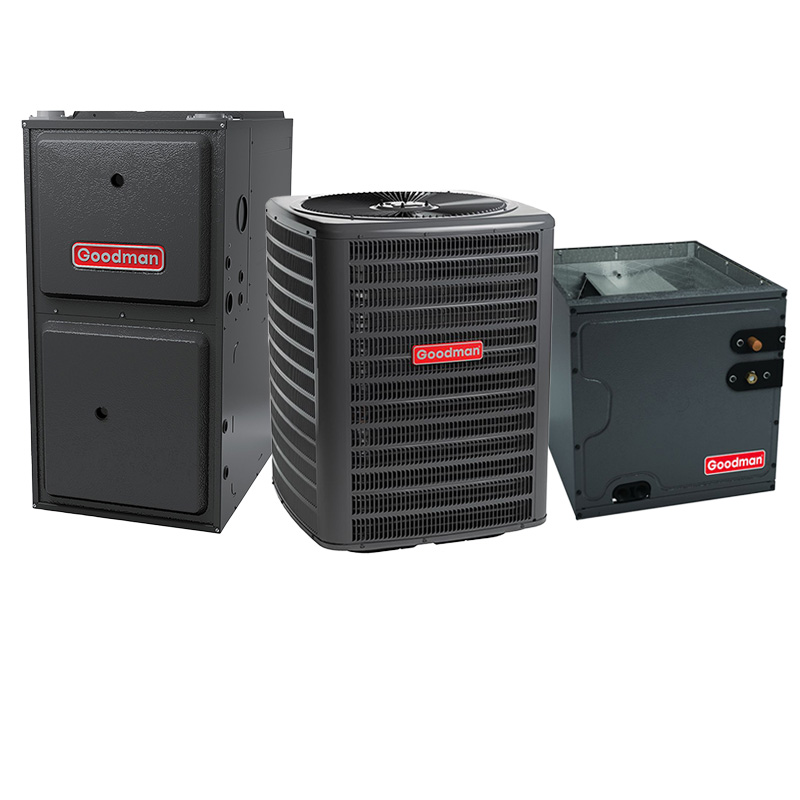
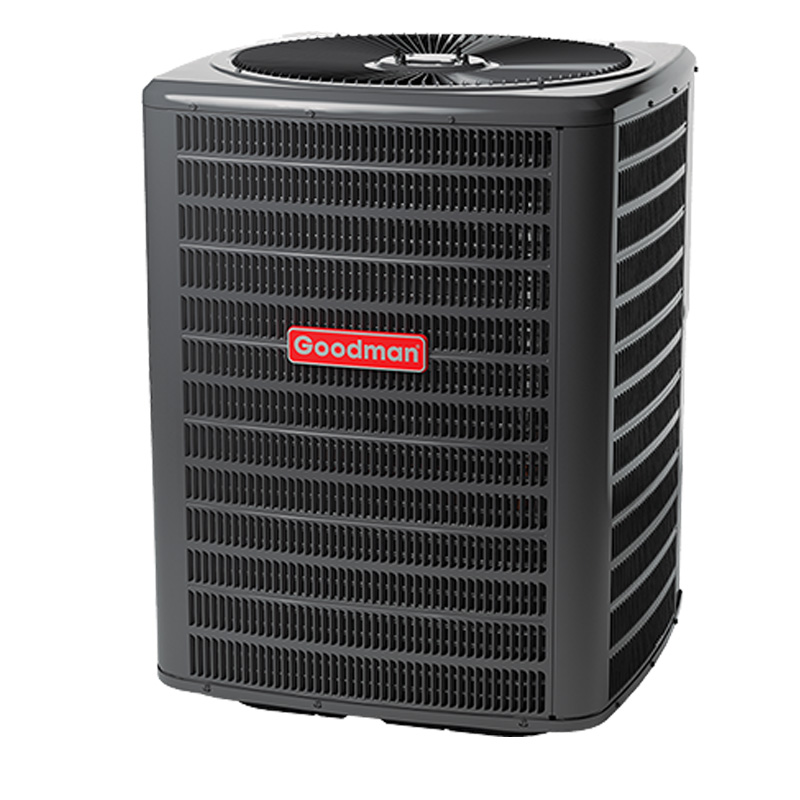
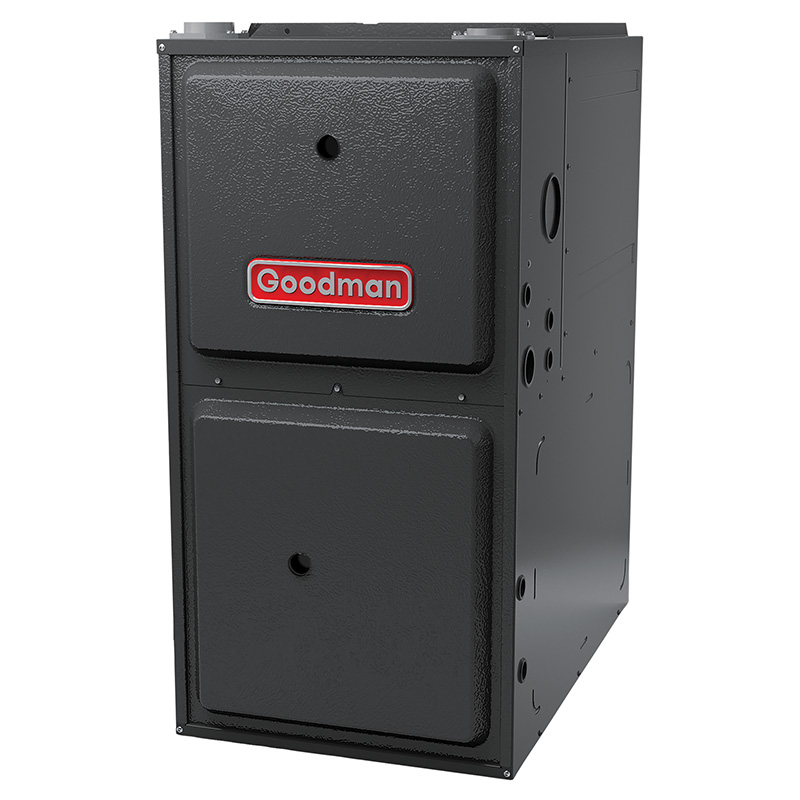
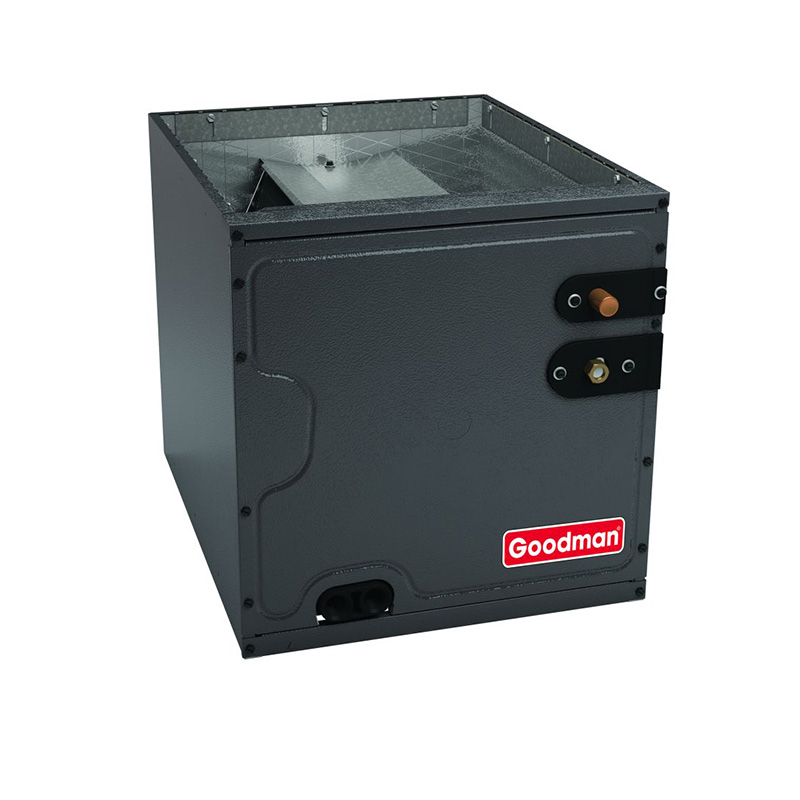
Goodman Furnace And Air Conditioner 2 Ton 14.3 SEER2 AC With 40000 BTU 96% AFUE Multi-Speed ECM Gas Furnace System – Upflow | R32
View on AC Direct see your lowest price →Check current price on AC Direct →
Key features
- 2-ton cooling capacity, 14.3 SEER2 efficiency, meets 2023 federal minimum standards
- 40,000 BTU 96% AFUE gas furnace, high-efficiency two-stage condensing operation
- Multi-speed ECM blower motor reduces fan energy use and improves humidity control vs. single-speed
- R-32 refrigerant with lower global warming potential than R-410A
- Upflow configuration designed for basement or utility closet installations with overhead duct runs
- Goodman's 10-year parts limited warranty when registered within 60 days of installation
About this system
This Goodman bundle pairs a 2-ton, 14.3 SEER2 central air conditioner with a 40,000 BTU, 96% AFUE multi-speed ECM gas furnace in an upflow configuration. The combination targets smaller homes and well-insulated spaces in the 700 to 1,000 square foot range, or any situation where a contractor has already done a Manual J load calculation pointing to a 2-ton cooling load. The 14.3 SEER2 rating clears the federal minimum efficiency threshold that took effect in 2023, so it is code-compliant across all U.S. climate zones, though it sits at the lower end of the efficiency spectrum rather than the upper.
The furnace side is where this system genuinely earns attention. A 96% AFUE rating means 96 cents of every dollar spent on gas converts to usable heat, which qualifies as high-efficiency territory and is a meaningful upgrade over 80% AFUE equipment. The multi-speed ECM blower motor adjusts airflow to match demand rather than running at a fixed speed, which moderates humidity control, reduces blower noise at lower demand, and cuts fan electricity use compared to a single-speed PSC motor. R-32 refrigerant replaces the older R-410A in newer Goodman outdoor units; it has a lower global warming potential and slightly higher efficiency potential, though it is mildly flammable and requires technicians certified to handle it. The upflow configuration suits installations where the furnace sits in a basement or utility closet with supply air moving upward into the duct system.
This system is a practical fit for budget-conscious homeowners replacing aging equipment in a smaller home, rental property owners managing costs across multiple units, or buyers who want high-efficiency heating without paying a premium-brand price premium. It is less suited to anyone prioritizing long-term compressor longevity or who wants variable-speed cooling comfort without a larger investment.
This Goodman bundle delivers a high-efficiency furnace and a code-compliant air conditioner at a price point that is hard to match from Carrier, Trane, or Lennox. The 96% AFUE furnace with an ECM blower is a genuine strength, while the 14.3 SEER2 air conditioner is functional rather than impressive and the brand's documented track record on compressors and coils means buyers should budget for potential repairs after year seven.
Overall score is the average of the five ratings above.
What we like
- 96% AFUE furnace is a true high-efficiency unit that meaningfully lowers annual heating costs vs. 80% AFUE equipment
- ECM multi-speed blower reduces fan electricity consumption and runs quieter at partial load compared to single-speed motors
- Priced 15 to 25 percent below comparable Carrier, Trane, and Lennox systems, leaving room in the budget for a quality install
- R-32 refrigerant has a lower global warming potential than R-410A and future-proofs the system against phase-out timelines
- 10-year registered parts warranty is competitive at this price tier and covers the most expensive components
Trade-offs
- 14.3 SEER2 is the federal minimum, not a high-efficiency rating, so cooling operating costs will be higher than 16+ SEER2 alternatives
- Compressors on Goodman units average 10 to 14 years versus 15 to 20 years reported for premium brands, raising long-term replacement risk
- Evaporator coil leaks and dual-run capacitor failures are the two most commonly documented failure modes, with capacitors typically costing $300 to $600 to repair
- A minority of owners report refrigerant leaks within the first year, often traced to install quality, meaning contractor selection is critical to system performance
What homeowners and pros say about Goodman
Homeowners who follow Goodman on review platforms land in two fairly distinct camps. On ConsumerAffairs, where the platform skews toward dissatisfied buyers, Goodman scores around 2.5 out of 5, and the pattern in those complaints is consistent: the system runs without incident for the first several years, then repair costs begin climbing around year seven. Dual-run capacitor failures come up repeatedly as the first repair event, typically a $300 to $600 fix that most technicians can handle in under an hour. More frustrating for owners are evaporator coil leaks, which are more expensive and more disruptive, and compressor lifespans that tend to average 10 to 14 years rather than the 15 to 20 years owners of Carrier or Trane equipment sometimes report. A smaller subset of owners describe refrigerant leaks in year one, and most technicians who weigh in on those cases point to install quality rather than a factory defect.
On Google dealer reviews, where the audience includes satisfied buyers and recent install customers, Goodman averages around 3.8 out of 5 across locations, and affordability is the word that appears most often in positive feedback. HVAC pros who work on a range of brands tend to describe Goodman as decent equipment that performs to its price point, with the consistent caveat that a sloppy install hurts it more than it would hurt a premium brand. For this specific system, the 96% AFUE ECM furnace draws more praise from technicians than the base-tier outdoor unit does, because the furnace spec is genuinely strong relative to the price. The honest takeaway is that this bundle rewards buyers who invest in a thorough installation and budget for routine maintenance and the occasional capacitor replacement, while it is likely to disappoint anyone expecting premium-brand durability from a value-brand price.
Sources: ConsumerAffairs Goodman owner reviews, AHRI Directory of Certified Product Performance, U.S. DOE appliance and equipment efficiency standards, Goodman product specification sheets.
What it costs to run
At 14.3 SEER2, cooling this 2-ton system for a typical 1200-hour cooling season at the U.S. average electricity rate of $0.17/kWh works out to roughly $342 per year in cooling, about $23 less per year than a minimum-efficiency 13.4 SEER2 unit of the same size. Your real cost depends on your climate and local rate.
Method: (24,000 BTU/hr ÷ 14.3 SEER2) × 1200 hours ÷ 1000 × $0.17/kWh. Rate source: U.S. EIA average; cooling hours: moderate-climate estimate.
How it compares
| Brand | Comparable model | SEER2 | Stage | Price position |
|---|---|---|---|---|
| Goodman | GSXN4 / GMVC96 Series | 14.3 | Single-stage (AC) / Multi-speed (furnace) | Value pick |
| Carrier | Comfort 14 (24ACC4) Series | 14.3 | Single-stage | Typically 15 to 25 percent more than this Goodman bundle |
| Trane | XR14c Series | 14.3 | Single-stage | Typically 15 to 25 percent more than this Goodman bundle |
| Lennox | Merit ML14XC1 Series | 14.3 | Single-stage | Typically 15 to 25 percent more than this Goodman bundle |
Competitor rows are comparable single-stage units at similar efficiency; price is relative position, not a quote.
Questions about this system
Is 14.3 SEER2 going to cost me more to run than a higher-rated unit?
Yes, in direct comparison. A 16 SEER2 system running the same cooling hours will use roughly 10 to 12 percent less electricity than a 14.3 SEER2 unit. In a mild climate or for a small home with low cooling loads, the annual dollar difference may be modest, but in hot climates with long cooling seasons the gap adds up over a decade.
What does R-32 refrigerant mean for me as a homeowner?
R-32 has a lower environmental impact than R-410A and is more widely available as R-410A supply tightens under phase-down regulations. From a homeowner standpoint, the main practical note is that any technician servicing this system must be certified for R-32 handling because it is classified as mildly flammable, so confirm that qualification when scheduling service.
How important is it that I get a quality contractor for this Goodman install?
More important than with premium brands, based on how technicians describe Goodman performance. The brand's ratings and documented failure patterns, including early refrigerant leaks, are heavily linked to install quality rather than the equipment alone. A proper Manual J load calculation, correct refrigerant charge, and tight duct connections are not optional extras here.
What are the most likely repairs I should plan for over the life of this system?
Dual-run capacitors are the most frequently reported failure on Goodman outdoor units and are typically a straightforward repair in the $300 to $600 range. Evaporator coil leaks appear in a meaningful share of owner accounts and are more expensive to address. Compressors on Goodman equipment tend to average 10 to 14 years, so budgeting for a potential compressor or full system replacement around that window is prudent.
Do I need to register the system to get the 10-year warranty, and what does it actually cover?
Yes, registration with Goodman within 60 days of installation is required to activate the 10-year parts limited warranty. Without registration the coverage typically drops to five years. The warranty covers parts but not labor, refrigerant, or diagnostic costs, so extended labor warranties offered by some dealers or third-party plans can fill that gap if that exposure concerns you.
Specifications
| Cooling capacity | 2 Ton |
| Efficiency | 14.3 SEER2 |
| Furnace output | 40000 BTU |
| Furnace efficiency | 96% AFUE |
| Configuration | Upflow |
| Refrigerant | R-32 |