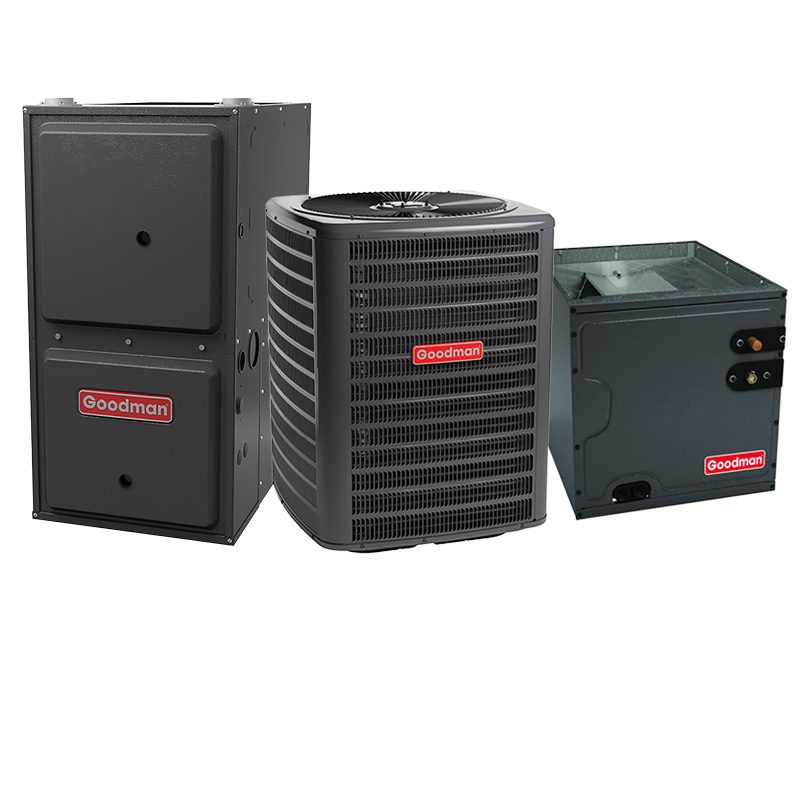
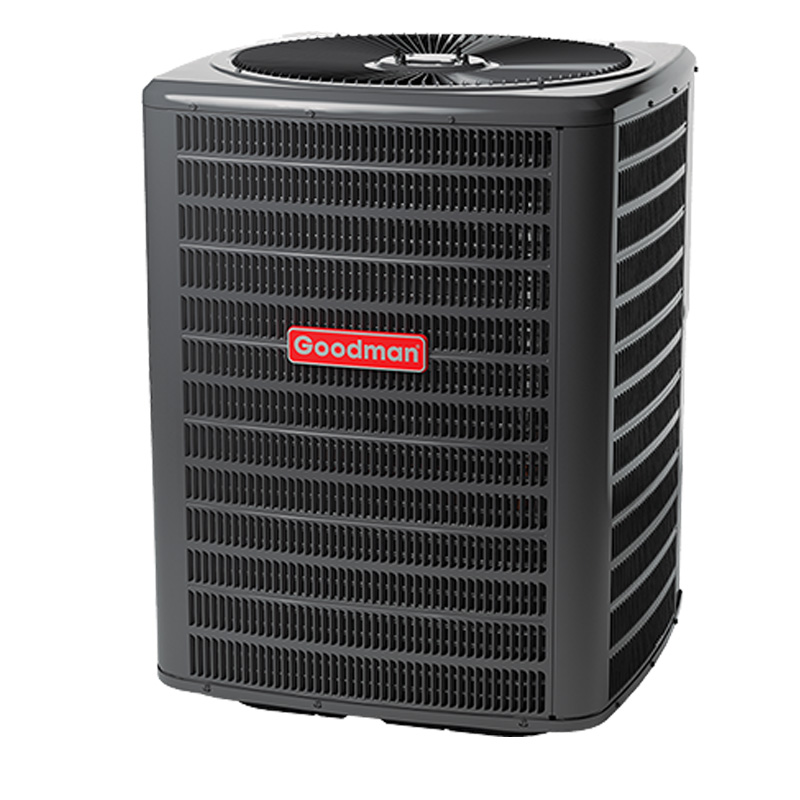
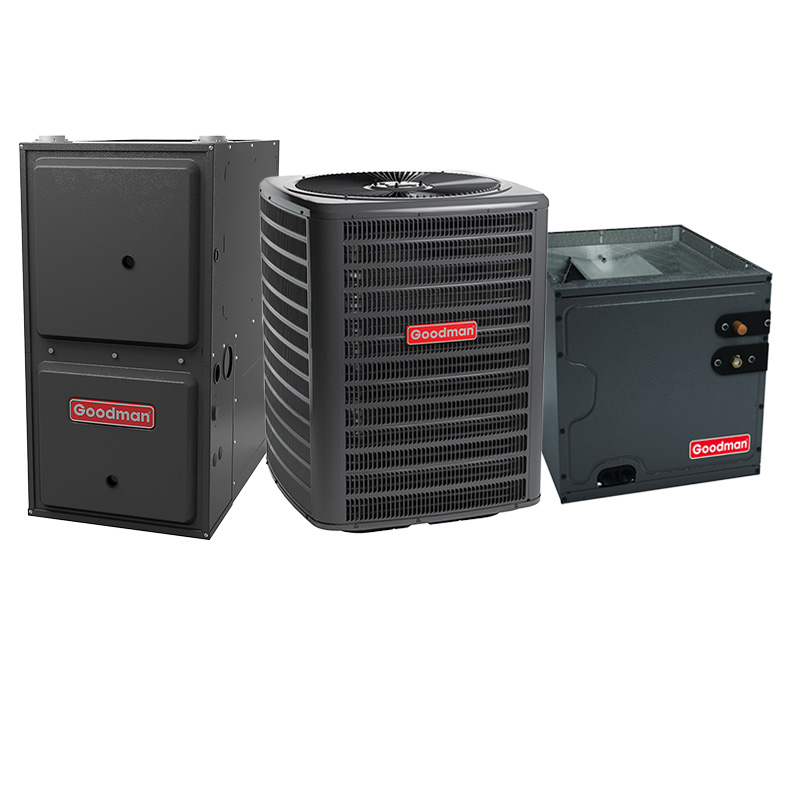
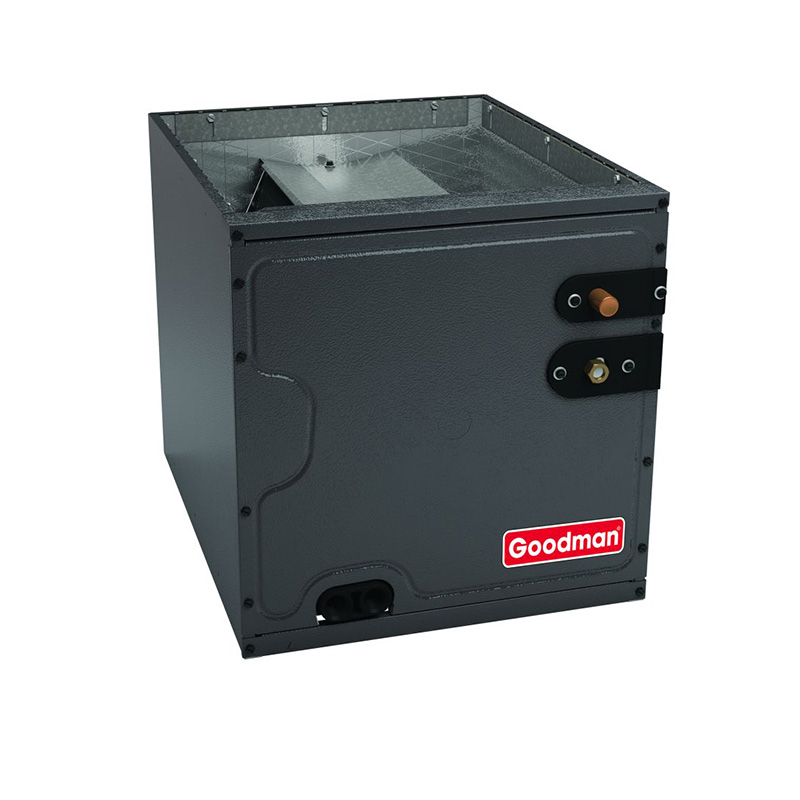
Goodman Furnace And Air Conditioner 2 Ton 14.3 SEER2 AC With 60000 BTU 96% AFUE Multi-Speed ECM Gas Furnace System – Downflow | R32
View on AC Direct see your lowest price →Check current price on AC Direct →
Key features
- 14.3 SEER2 cooling efficiency meets current federal minimums for most U.S. regions
- 96% AFUE gas furnace converts nearly all fuel to usable heat
- Multi-speed ECM blower motor reduces electricity use and noise versus single-speed PSC motors
- Downflow configuration designed for installations where supply air discharges through the floor
- R-32 refrigerant offers lower global-warming potential than legacy R-410A
- 2-ton (24,000 BTU/h) cooling capacity suited to smaller homes or individual zones
About this system
This Goodman bundle pairs a 2-ton, 14.3 SEER2 central air conditioner with a 60,000 BTU, 96% AFUE multi-speed ECM gas furnace in a downflow configuration, making it a purpose-built choice for homes where the air handler sits above a finished basement or in a closet that discharges air downward. The R-32 refrigerant charge is a forward-looking detail: R-32 carries a lower global-warming potential than the older R-410A it is replacing across the industry, and its higher energy density can improve heat-transfer efficiency at the margins. At 14.3 SEER2 the cooling side clears the federal minimum for most U.S. climate zones without stretching into premium territory, which keeps the purchase price accessible.
The 96% AFUE furnace is where this system earns its keep in colder climates. That rating means 96 cents of every dollar spent on gas becomes usable heat, a meaningful step above the 80% AFUE units that still populate many older homes. The multi-speed ECM blower motor adjusts airflow in steps rather than running full-blast all the time, which smooths temperature swings, cuts blower electricity draw compared with a standard PSC motor, and tends to run quieter at lower speeds. Together, the combination suits a smaller home or a zone in a larger one where a 2-ton load matches the Manual J calculation, particularly where budget is a priority and the homeowner is comfortable working with a qualified installer to get the setup right.
This Goodman bundle delivers solid efficiency numbers and a real cost advantage over premium brands, making it a reasonable choice for budget-conscious buyers who hire an experienced installer and stay on top of maintenance. The trade-off is a reliability record that trails Trane, Lennox, and Carrier in long-term durability, and a complaint history that rises noticeably after year seven. Buyers who want a worry-free fifteen-year system should weigh the savings against those documented risks before deciding.
Overall score is the average of the five ratings above.
What we like
- 96% AFUE furnace delivers high fuel efficiency and meaningful gas savings in cold climates
- Purchase price runs 15 to 25 percent below comparable Carrier, Trane, and Lennox equipment
- R-32 refrigerant is a future-friendly choice as the industry moves away from R-410A
- ECM multi-speed blower lowers operating costs and improves comfort versus single-speed motors
- Downflow layout solves a specific installation need that not every brand addresses at this price point
Trade-offs
- Dual-run capacitors are the most commonly reported failure, typically appearing within the first decade and costing $300 to $600 to repair
- Evaporator coil leaks show up in a meaningful share of owner reports, which can mean costly refrigerant loss and coil replacement
- Compressor lifespan averages 10 to 14 years versus 15 to 20 years for premium-brand compressors at similar usage
- A minority of owners report refrigerant leaks in the first year, usually traced to installation or charging errors rather than the unit itself
What homeowners and pros say about Goodman
On ConsumerAffairs, Goodman as a brand sits at roughly 2.5 out of 5 stars, a score shaped heavily by owners who sought out a review platform specifically because something went wrong. The recurring pattern in those complaints is repair costs that climb after about year seven, with dual-run capacitor failures and evaporator coil leaks appearing most often. Refrigerant leaks in the first year also surface in a subset of early reviews, though technicians familiar with the brand generally attribute those to installation or charging errors rather than factory defects. On Google, dealer-level reviews for Goodman installers run closer to 3.8 out of 5, where the most consistent praise is straightforward: the equipment costs less, and for buyers who could not otherwise afford a new system, that matters.
Among HVAC professionals, the conversation about Goodman tends to center on the installer variable. Technicians who work with the brand regularly point out that a correctly installed, properly charged Goodman system performs close to what the specs promise, while a rushed or undersized installation exaggerates every weakness the brand already carries. The compressor lifespan concern is real: independent service data suggests Goodman compressors average 10 to 14 years, shorter than the 15 to 20 years more commonly seen in premium-brand equipment. For this specific downflow bundle with an R-32 charge, pros also note that finding a service tech already equipped for R-32 and familiar with downflow configurations is worth a phone call before, not after, the system goes in.
Sources: ConsumerAffairs Goodman owner reviews, AHRI Directory of Certified Product Performance, U.S. DOE appliance and equipment efficiency standards, Goodman product specification sheets.
What it costs to run
At 14.3 SEER2, cooling this 2-ton system for a typical 1200-hour cooling season at the U.S. average electricity rate of $0.17/kWh works out to roughly $342 per year in cooling, about $23 less per year than a minimum-efficiency 13.4 SEER2 unit of the same size. Your real cost depends on your climate and local rate.
Method: (24,000 BTU/hr ÷ 14.3 SEER2) × 1200 hours ÷ 1000 × $0.17/kWh. Rate source: U.S. EIA average; cooling hours: moderate-climate estimate.
How it compares
| Brand | Comparable model | SEER2 | Stage | Price position |
|---|---|---|---|---|
| Goodman | GSX14 / GMVC96 bundle (this system) | 14.3 | Single-stage / Multi-speed | Value pick |
| Carrier | Comfort 14 series (CA14NA / 58STA bundle) | 14.3 | Single-stage | Typically 15 to 25 percent more than this Goodman bundle |
| Trane | XR14c / S9X1 bundle | 14.3 | Single-stage | Typically 15 to 25 percent more than this Goodman bundle |
| Lennox | Merit 14ACX / ML96V bundle | 14.3 | Single-stage / Variable-speed | Typically 15 to 25 percent more than this Goodman bundle |
Competitor rows are comparable single-stage units at similar efficiency; price is relative position, not a quote.
Questions about this system
Is a downflow furnace harder to install than an upflow model, and does it limit which contractors can do the job?
Downflow units are less common than upflow configurations, so not every HVAC technician works with them regularly. The unit itself is not inherently more complex, but the ductwork below the unit and the need to seal the supply plenum correctly are details where an inexperienced installer can create airflow problems. Ask specifically whether the contractor has installed downflow Goodman or comparable equipment before.
What does the switch to R-32 refrigerant mean for me as an owner?
R-32 is mildly flammable, which means only EPA-certified technicians with the right equipment should handle it during service or repair. Practically speaking, this is unlikely to affect your day-to-day experience, but it is worth confirming that any service company you call in the future is equipped to work with R-32 rather than assuming all HVAC shops have already transitioned their tools and certifications.
How worried should I be about the capacitor failure reports I have read about Goodman units?
Dual-run capacitor failures are the most frequently documented issue with Goodman equipment and they do happen, typically somewhere in the first ten years of operation. The good news is that a capacitor swap is usually a straightforward, low-cost repair in the $300 to $600 range. Scheduling annual tune-ups where the technician checks capacitor readings can catch a weakening capacitor before it leaves you without cooling on a hot day.
Will the 2-ton size be enough for my home, or should I go up to a 2.5-ton system?
Tonnage should be determined by a Manual J load calculation based on your home's square footage, insulation, window area, and climate zone, not by rule of thumb. An oversized system will short-cycle, leaving the air humid and wearing the compressor faster; an undersized one will run constantly and struggle on peak days. Have a contractor run the calculation before purchasing this or any system.
What warranty comes with this system, and what do I need to do to keep it valid?
Goodman typically offers a 10-year parts limited warranty on registered equipment, which requires registration within a set window after installation. Failure to register usually drops coverage to a shorter base period. The warranty covers parts but not labor, which is a meaningful distinction since a compressor replacement under warranty still carries a substantial labor bill. Read the current warranty certificate for this specific model before purchase, as terms can vary.
Specifications
| Cooling capacity | 2 Ton |
| Efficiency | 14.3 SEER2 |
| Furnace output | 60000 BTU |
| Furnace efficiency | 96% AFUE |
| Configuration | Downflow |
| Refrigerant | R-32 |