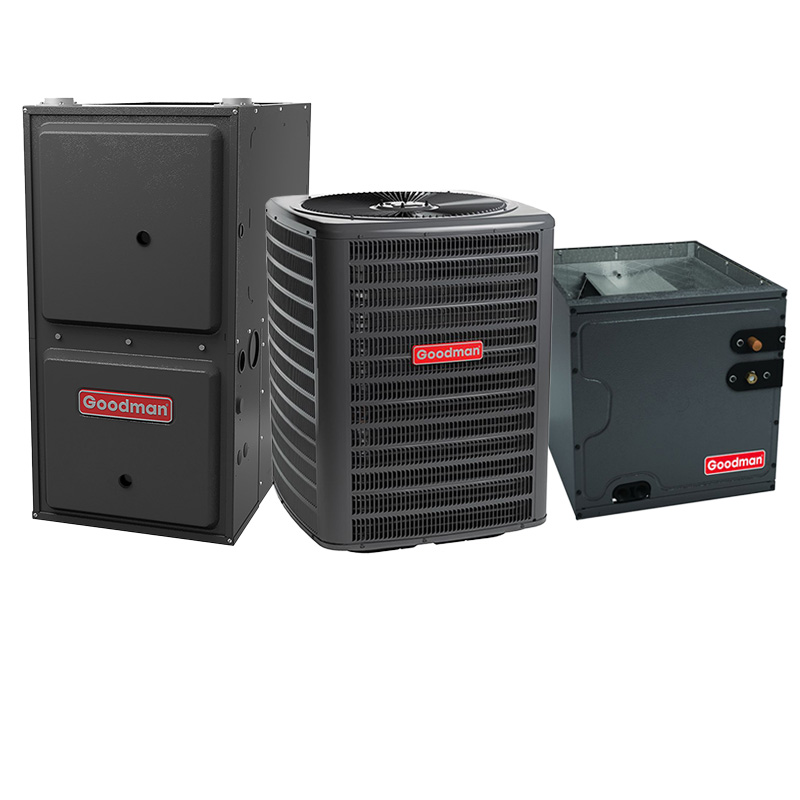
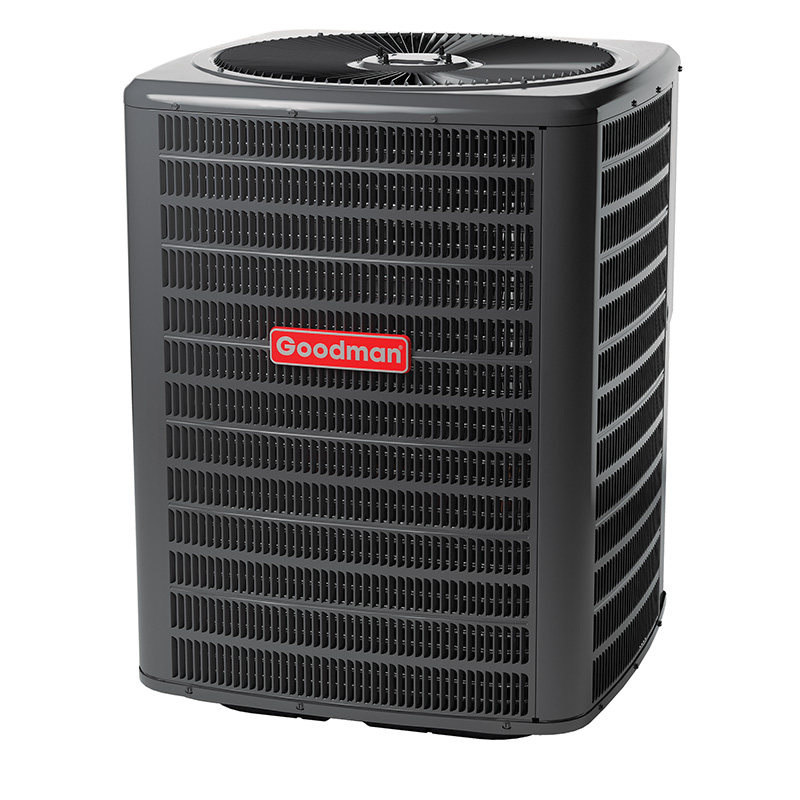
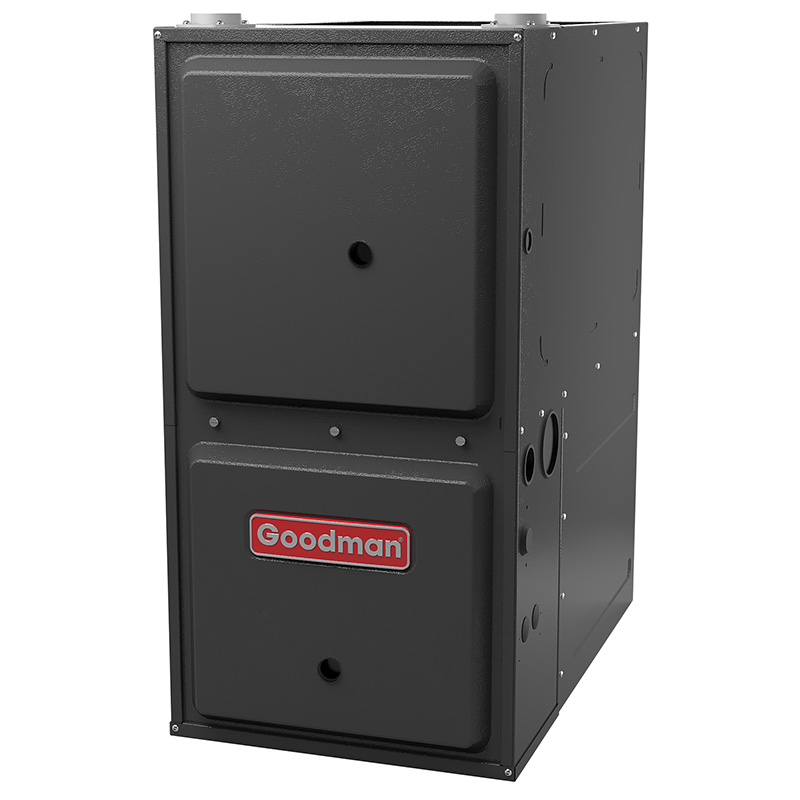
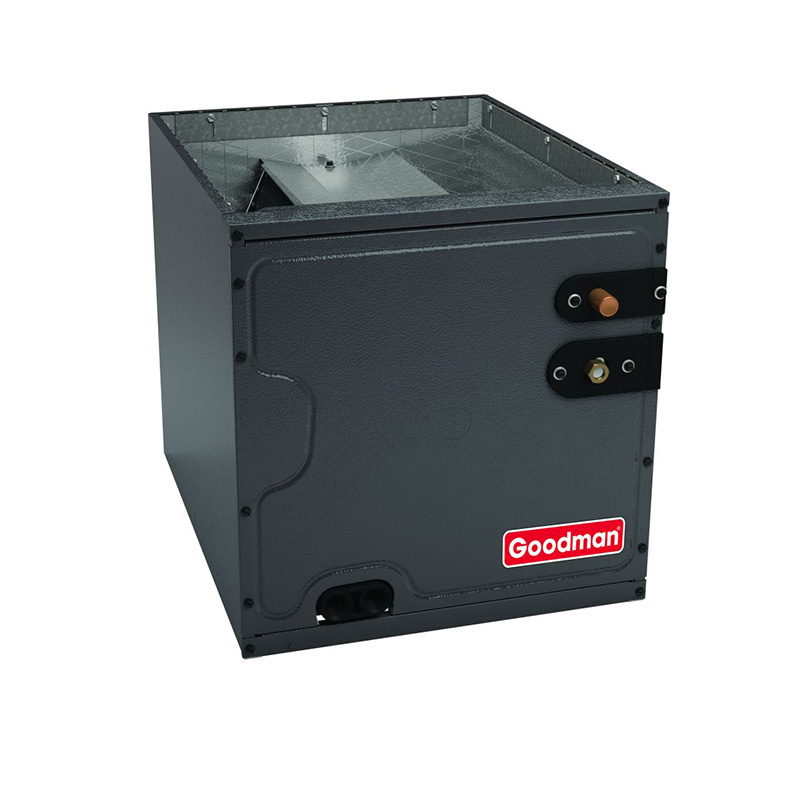
Goodman Furnace And Air Conditioner 2 Ton 14.5 SEER2 AC With 40000 BTU 80% AFUE Multi-Speed ECM Gas Furnace System – Downflow | R32
View on AC Direct see your lowest price →Check current price on AC Direct →
Key features
- 2-ton cooling capacity, suitable for approximately 900-1,200 sq ft with proper load calculation
- 14.5 SEER2 efficiency rating meets current federal minimum standards for most U.S. regions
- 40,000 BTU, 80% AFUE multi-speed ECM gas furnace in downflow configuration
- R-32 refrigerant with lower global warming potential than legacy R-410A
- ECM blower motor adjusts airflow for quieter operation and improved humidity control
- Matched system qualifies as a manufacturer-verified combination for warranty and performance purposes
About this system
This Goodman bundle pairs a 2-ton, 14.5 SEER2 central air conditioner with a 40,000 BTU, 80% AFUE multi-speed ECM gas furnace in a downflow configuration, meaning supply air exits the bottom of the cabinet and is typically installed in an attic, closet, or platform above the living space. R-32 refrigerant replaces older R-410A in this unit, offering a lower global warming potential and slightly better thermodynamic efficiency per pound of charge. At 2 tons, the system is sized for roughly 900 to 1,200 square feet of well-insulated space, though actual sizing should always be confirmed with a Manual J load calculation.
The multi-speed ECM blower motor is one of this package’s genuine strengths. Unlike single-speed PSC motors, an ECM adjusts airflow to match demand, which reduces electricity consumed by the air handler, improves humidity removal, and runs more quietly at lower speeds. The 80% AFUE rating means 80 cents of every dollar of gas becomes usable heat, which meets federal minimums for most northern climate zones but falls short of the 90-plus percent efficiency available in condensing furnaces. Buyers who prioritize lower upfront cost over long-term gas savings, or who live in mild climates with limited heating seasons, will find this tier the most practical fit.
This system suits a budget-minded homeowner replacing aging equipment in a smaller home, a landlord equipping a rental property, or anyone in a mild-to-moderate heating climate who wants a straightforward, code-compliant system without paying premium-brand prices. Because Goodman’s real-world longevity is closely tied to installation quality, pairing this equipment with an experienced, licensed contractor is as important as the equipment choice itself.
This Goodman bundle delivers a code-compliant, entry-level matched system at a price point that is genuinely hard to beat among new equipment. The ECM motor and R-32 refrigerant are meaningful upgrades for the tier, but buyers should weigh documented post-year-7 repair costs and a compressor lifespan that typically trails premium brands by several years. It is a reasonable choice if installed by a skilled contractor and approached with realistic long-term maintenance expectations.
Overall score is the average of the five ratings above.
What we like
- Priced roughly 15 to 25 percent below comparable Trane, Carrier, and Lennox matched systems
- ECM multi-speed blower improves humidity control and reduces blower motor energy use versus PSC motors
- R-32 refrigerant is more environmentally favorable and easier to charge precisely than R-410A
- Downflow configuration suits attic, platform, and closet installations common in smaller homes and condos
- Matched factory combination simplifies warranty validation and coil compatibility confirmation
Trade-offs
- 80% AFUE is the federal minimum for many regions and will cost more to operate than 90-plus percent condensing alternatives over a full heating season
- Compressor lifespan averages 10 to 14 years, meaningfully shorter than the 15 to 20 years reported for premium brands
- Dual-run capacitor failures and evaporator coil leaks are the most frequently reported repair issues by owners
- A minority of owners have reported refrigerant leaks within the first year, typically tied to installation or initial charge quality rather than the unit itself
What homeowners and pros say about Goodman
Homeowners who post about Goodman equipment online tend to cluster into two camps, and understanding why matters for this purchase. Google dealer reviews sit around 3.8 out of 5 across many locations, where affordability comes up most often as the reason buyers are satisfied. ConsumerAffairs scores land closer to 2.5 out of 5, a lower figure that reflects the complaint-heavy nature of that platform and the recurring pattern of repair costs rising after roughly year seven of ownership. Neither number tells the whole story on its own, but together they suggest a brand that delivers acceptable early-life performance at a lower price while trailing premium competitors in long-term durability.
HVAC technicians who work on Goodman equipment regularly point to two specific components as the most common service calls: dual-run capacitors, which fail more often than on premium brands but are typically a low-cost fix in the 300 to 600 dollar range, and evaporator coil leaks, which show up in enough owner reports to be worth noting before purchase. Compressor lifespan is another honest consideration. Goodman compressors average 10 to 14 years in practice, compared to 15 to 20 years for Trane, Carrier, and Lennox equivalents. A small share of owners have also reported refrigerant leaks within the first year, which technicians consistently attribute to installation quality rather than a factory defect. That last point reinforces what experienced installers say about this brand across the board: the equipment is capable, but the contractor you hire matters as much as the unit itself.
Sources: ConsumerAffairs Goodman owner reviews, AHRI Directory of Certified Product Performance, U.S. DOE appliance and equipment efficiency standards, Goodman product specification sheets.
What it costs to run
At 14.5 SEER2, cooling this 2-ton system for a typical 1200-hour cooling season at the U.S. average electricity rate of $0.17/kWh works out to roughly $338 per year in cooling, about $27 less per year than a minimum-efficiency 13.4 SEER2 unit of the same size. Your real cost depends on your climate and local rate.
Method: (24,000 BTU/hr ÷ 14.5 SEER2) × 1200 hours ÷ 1000 × $0.17/kWh. Rate source: U.S. EIA average; cooling hours: moderate-climate estimate.
How it compares
| Brand | Comparable model | SEER2 | Stage | Price position |
|---|---|---|---|---|
| Goodman | GSX/GMVC 2-ton 14.5 SEER2 bundle (this system) | 14.5 | Single-stage AC, multi-speed furnace | Value pick |
| Carrier | Comfort 14 (24ACC) series matched system | 14-15 | Single-stage | Typically 15 to 25 percent more than this Goodman bundle |
| Trane | XR14 / XR series matched system | 14.5-15 | Single-stage | Typically 15 to 25 percent more than this Goodman bundle |
| Lennox | Merit 14 (ML14) series matched system | 14-14.5 | Single-stage | Typically 15 to 25 percent more than this Goodman bundle |
Competitor rows are comparable single-stage units at similar efficiency; price is relative position, not a quote.
Questions about this system
Is 80% AFUE good enough, or should I pay more for a 96% condensing furnace?
80% AFUE meets federal minimums in most regions and keeps upfront costs down, but you lose 20 cents of every gas dollar to exhaust heat. In climates with long, cold winters and high gas rates, a 96% condensing furnace can recover its cost premium in 5 to 8 years of fuel savings. In mild climates with short heating seasons, the payback window is much longer and the 80% unit is often the more practical choice.
What is R-32 refrigerant and will it be hard to find a tech who can service it?
R-32 is a single-component refrigerant with a lower global warming potential than R-410A and is increasingly common in newer residential equipment. Most licensed HVAC technicians are already trained to handle it, and availability is growing, but it is still worth confirming your service contractor has experience with R-32 before signing a maintenance agreement.
My house is about 1,100 square feet. Is 2 tons the right size?
Two tons is in the typical ballpark for 900 to 1,200 square feet, but square footage alone is not a reliable sizing method. Factors like ceiling height, insulation, window area, and local climate all matter. Ask your installer to perform a Manual J load calculation before finalizing the equipment size; an oversized or undersized unit will underperform regardless of brand.
What are the most likely repair costs I should budget for with a Goodman system?
Dual-run capacitor failure is the most commonly reported issue, typically running 300 to 600 dollars including labor and a relatively straightforward repair. Evaporator coil leaks appear in a meaningful share of owner reports and can cost significantly more depending on the coil and refrigerant charge. Goodman owner feedback on ConsumerAffairs, rated around 2.5 out of 5, notes that repair costs tend to climb noticeably after about year seven.
Does the downflow configuration limit where this system can be installed?
Yes. A downflow furnace is designed so that air enters the top of the cabinet and exits the bottom, which suits installations on a platform, in an attic, or in a closet above the duct system. It is not interchangeable with an upflow or horizontal unit without significant duct reconfiguration, so confirm your existing duct layout and mechanical space match this orientation before purchasing.
Specifications
| Cooling capacity | 2 Ton |
| Efficiency | 14.5 SEER2 |
| Furnace output | 40000 BTU |
| Furnace efficiency | 80% AFUE |
| Configuration | Downflow |
| Refrigerant | R-32 |