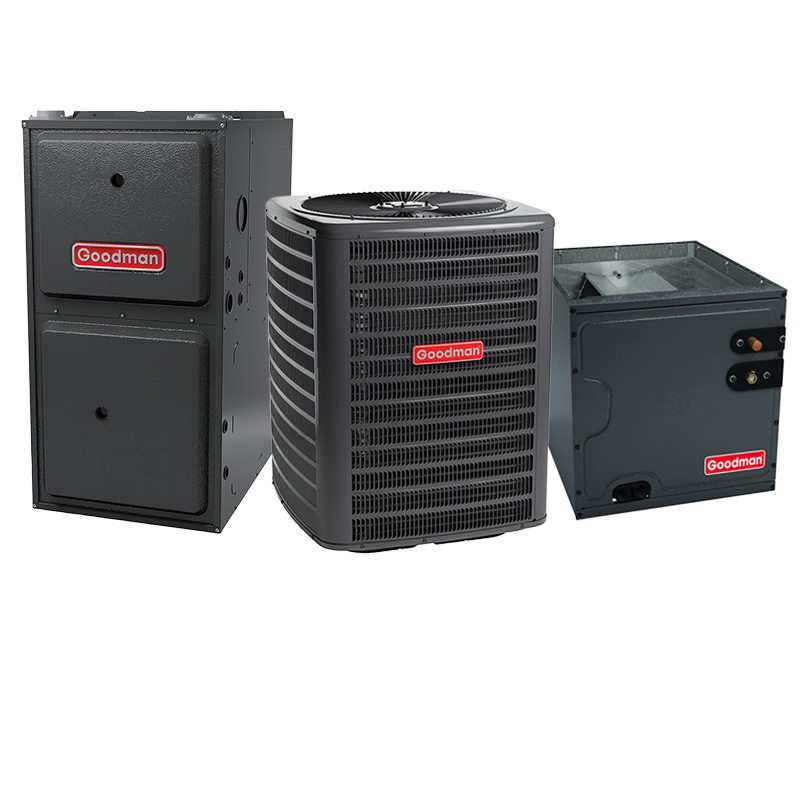
Goodman Furnace And Air Conditioner 2 Ton 14.5 SEER2 AC With 40000 BTU 80% AFUE Two Stage Multi-Speed ECM Gas Furnace System – Upflow | R32
View on AC Direct see your lowest price →Check current price on AC Direct →
Key features
- 2-ton, 14.5 SEER2 air conditioner using R-32 refrigerant
- 40,000 BTU two-stage gas furnace at 80% AFUE
- Multi-speed ECM blower motor for quieter, lower-energy operation
- Upflow cabinet design for basement or utility-room installations
- Two-stage heating reduces temperature swings on mild days
- R-32 refrigerant with lower global warming potential than R-410A
About this system
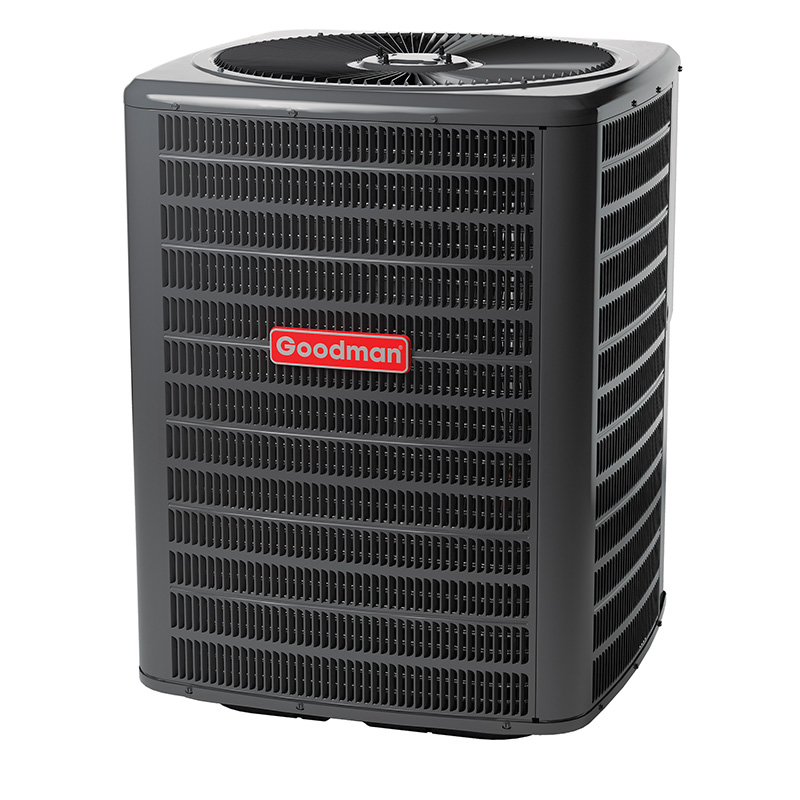
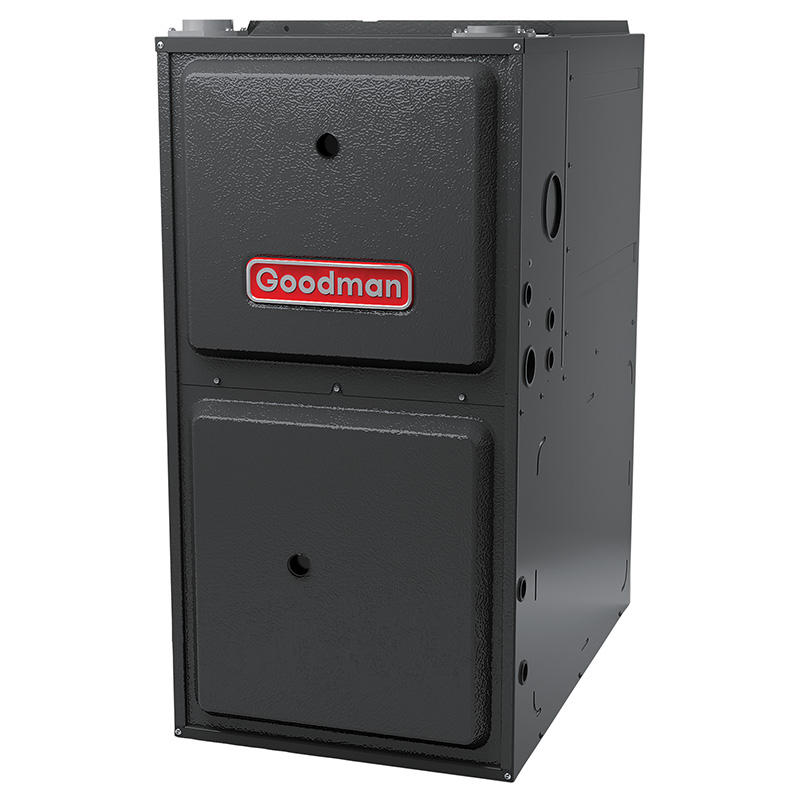
This Goodman bundle pairs a 2-ton, 14.5 SEER2 central air conditioner with a 40,000 BTU, 80% AFUE two-stage gas furnace in an upflow configuration, making it a practical fit for smaller homes typically in the 700 to 1,100 square foot range that sit in moderate climates. The two-stage furnace runs at a lower fire rate on mild days and steps up only when temperatures drop sharply, which smooths out temperature swings and keeps the blower from cycling on and off constantly. The multi-speed ECM blower motor is meaningfully more efficient than a standard PSC motor and runs quieter at lower stages, a real day-to-day comfort advantage over single-stage budget systems.
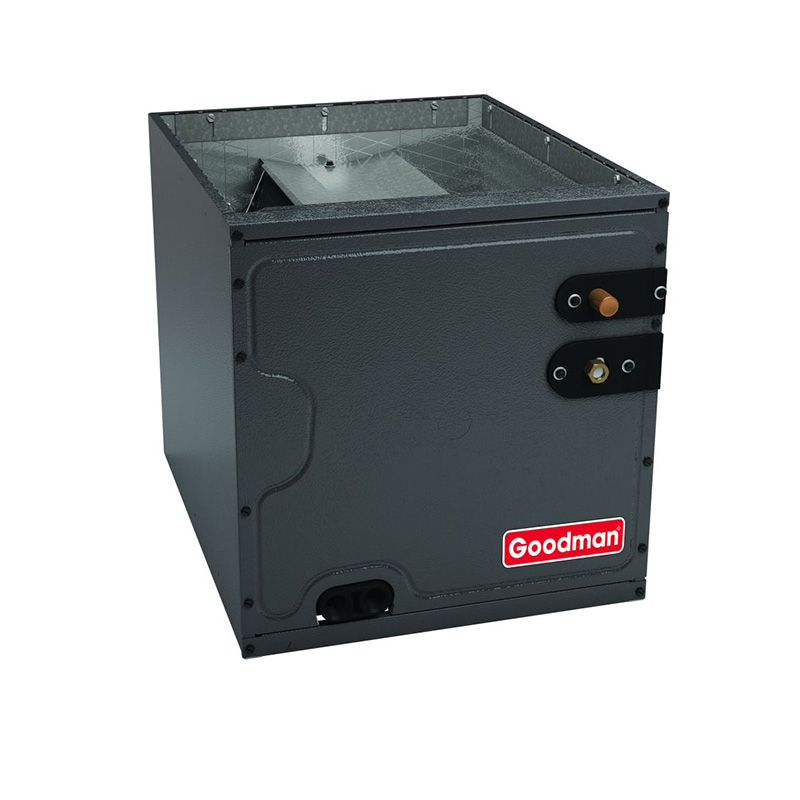
On the cooling side, 14.5 SEER2 clears the federal minimum efficiency threshold that took effect in 2023 but does not rank among the high-efficiency options in the lineup. Homeowners in climates with long, hot summers will notice the limit on energy savings compared to a 17 or 18 SEER2 unit; those in milder zones will find the trade-off acceptable. The system uses R-32 refrigerant, which has a lower global warming potential than the legacy R-410A it replaces in newer Goodman equipment and is becoming the industry standard. Upflow configuration means the unit draws return air from the bottom and discharges conditioned air upward, suiting installations in basements, closets, or utility rooms where ductwork runs overhead.
Goodman positions this bundle as an accessible entry point for homeowners replacing aging equipment on a defined budget, or for contractors equipping rental and light-commercial properties where first cost matters more than peak efficiency. The brand consistently prices 15 to 25 percent below Trane, Lennox, and Carrier on comparable equipment, and this system reflects that pattern. The trade-off, documented in real owner feedback, is that long-term reliability depends heavily on the quality of installation and how diligently annual maintenance is kept up.
This Goodman bundle delivers a functional, code-compliant two-stage heating and cooling system at a price point that is hard to match from major brands, making it a reasonable choice for budget-conscious buyers willing to plan for maintenance. The 14.5 SEER2 efficiency rating is adequate but not competitive for high-cooling climates, and long-term ownership costs depend significantly on installer quality and upkeep. Buyers who want premium component longevity or hands-off reliability should weigh the lower upfront cost against Goodman's documented repair history past year seven.
Overall score is the average of the five ratings above.
What we like
- Priced 15 to 25 percent below comparable Trane, Lennox, and Carrier systems
- Two-stage furnace improves comfort and reduces on-off cycling versus single-stage units
- ECM blower motor cuts fan energy use and lowers operating noise at partial load
- R-32 refrigerant is forward-looking and easier to service as R-410A is phased out
- Upflow configuration fits the most common residential duct layouts in basements and closets
Trade-offs
- 14.5 SEER2 is at the federal minimum tier, so cooling energy savings are limited in hot climates
- 80% AFUE furnace loses more heat up the flue than 90-plus models; higher heating bills over time
- Goodman compressors average 10 to 14 years, shorter than the 15 to 20 years typical of premium brands
- Evaporator coil leaks and dual-run capacitor failures are the most frequently reported repair issues after year seven
What homeowners and pros say about Goodman
Homeowners who research Goodman online encounter a split picture. On ConsumerAffairs, the brand scores around 2.5 out of 5, a channel that skews toward people writing in frustration after a repair bill. The recurring pattern in those reviews is not early failure but rather costs that start climbing after roughly year seven, particularly around dual-run capacitors and evaporator coil leaks, two failure modes that show up consistently enough to factor into any long-term ownership budget. Google dealer reviews are more balanced, landing around 3.8 out of 5 across hundreds of reviews per location, where affordability is the single most praised attribute and where many satisfied owners note years of uneventful operation before any service call.
HVAC technicians tend to frame Goodman differently than the online ratings suggest. They point out that install quality is the dominant variable in how any system performs and how long it lasts, and that Goodman equipment installed carefully and maintained annually performs closer to its rated life. That said, techs also note that Goodman compressors realistically average 10 to 14 years versus the 15 to 20 years common on Trane or Carrier, and that first-year refrigerant leaks, when they do occur on any brand, are almost always a charging or install issue rather than a manufacturing defect. For this specific two-stage, R-32 bundle, the practical takeaway is straightforward: the lower purchase price is real, the comfort advantage of two-stage operation over single-stage alternatives at the same price is also real, and the trade-off is a system whose longevity ceiling is modestly lower than premium alternatives and whose repair history rewards proactive maintenance.
Sources: ConsumerAffairs Goodman owner reviews, AHRI Directory of Certified Product Performance, U.S. DOE appliance and equipment efficiency standards, Goodman product specification sheets.
What it costs to run
At 14.5 SEER2, cooling this 2-ton system for a typical 1200-hour cooling season at the U.S. average electricity rate of $0.17/kWh works out to roughly $338 per year in cooling, about $27 less per year than a minimum-efficiency 13.4 SEER2 unit of the same size. Your real cost depends on your climate and local rate.
Method: (24,000 BTU/hr ÷ 14.5 SEER2) × 1200 hours ÷ 1000 × $0.17/kWh. Rate source: U.S. EIA average; cooling hours: moderate-climate estimate.
How it compares
| Brand | Comparable model | SEER2 | Stage | Price position |
|---|---|---|---|---|
| Goodman | GSX15 / GMVC8 Series Bundle | 14.5 | Two-stage | Value pick |
| Carrier | Comfort 14 Series (24ACC4) | 14.3 | Single-stage | Typically 15 to 25 percent more than this Goodman bundle |
| Trane | XR14 Series | 14.5 | Single-stage | Typically 15 to 25 percent more than this Goodman bundle |
| Lennox | Merit ML14 Series | 14.3 | Single-stage | Typically 15 to 25 percent more than this Goodman bundle |
Competitor rows are comparable single-stage units at similar efficiency; price is relative position, not a quote.
Questions about this system
Is 14.5 SEER2 going to cost me noticeably more to run than a higher-efficiency unit?
Yes, particularly in climates with long summers. Compared to an 18 SEER2 system, a 14.5 SEER2 unit can use roughly 20 to 25 percent more electricity for the same cooling output. In milder climates with shorter cooling seasons the gap in annual dollars is smaller, but it compounds over a 10 to 15 year ownership period.
What does two-stage heating actually mean for my day-to-day comfort?
The furnace fires at a lower output level on mild days and only steps up to full capacity when the temperature drops sharply. This means fewer wide temperature swings, longer lower-speed blower runs that filter air more consistently, and less of the cold-air blast you get at startup with single-stage furnaces.
What are the most likely repairs I should budget for over 10 years?
Based on documented Goodman owner experience, dual-run capacitors are the most common failure, typically a straightforward repair in the 300 to 600 dollar range. Evaporator coil leaks appear in a meaningful share of owner reports and cost more to address. Compressor replacement becomes a real possibility after year 10 to 14, which is earlier than premium-brand averages.
Does this system work with my existing R-410A lineset and evaporator coil?
No, R-32 and R-410A are not interchangeable. If your existing line set and indoor coil are rated only for R-410A, your installer will need to evaluate whether the line set can be repurposed and must replace the coil with an R-32-compatible model. This is a critical question to raise with your contractor before purchasing.
What warranty does this Goodman system carry, and are there conditions I need to know about?
Goodman typically offers a 10-year parts warranty on registered systems, but registration must be completed within a set window after installation or coverage drops to a shorter term. Labor is not covered under the manufacturer warranty, so a service call still costs money even on a parts-covered repair. Confirm the current warranty terms at registration because Goodman has adjusted coverage tiers over time.
Specifications
| Cooling capacity | 2 Ton |
| Efficiency | 14.5 SEER2 |
| Furnace output | 40000 BTU |
| Furnace efficiency | 80% AFUE |
| Configuration | Upflow |
| Refrigerant | R-32 |