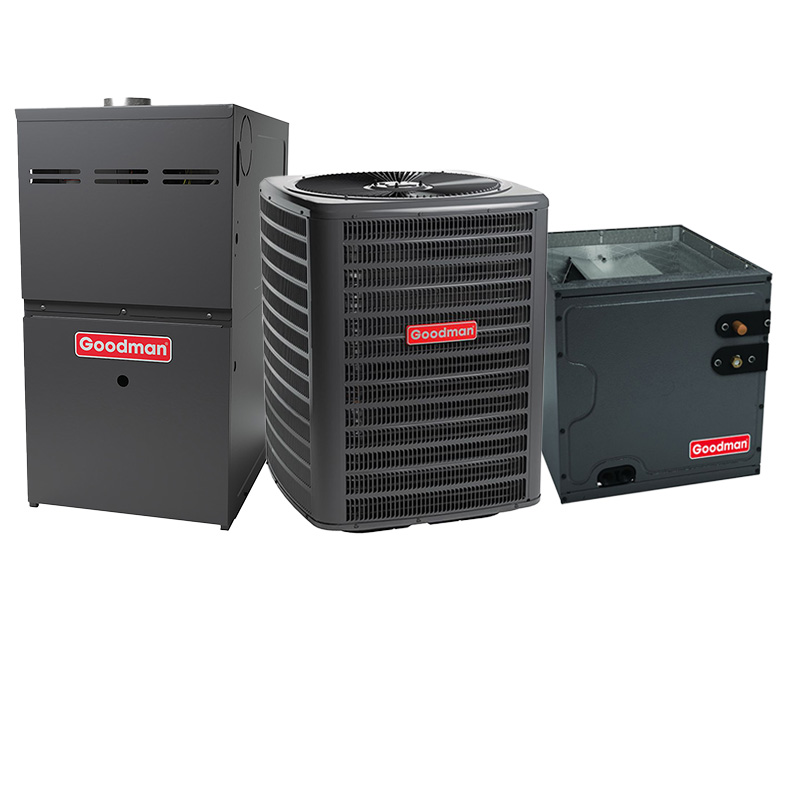
Goodman Furnace And Air Conditioner 2 Ton 15.2 SEER2 AC With 60000 BTU 80% AFUE Multi-Speed ECM Gas Furnace System – Upflow | R32
View on AC Direct see your lowest price →Check current price on AC Direct →
Key features
- 2-ton, 15.2 SEER2 cooling efficiency meets the 2023 DOE minimum-efficiency standards for most U.S. regions
- 60,000 BTU output, 80% AFUE single-stage gas furnace for moderate-winter climate heating
- Multi-speed ECM blower motor reduces fan energy use and improves humidity removal versus single-speed PSC motors
- R-32 refrigerant charge: lower global-warming potential than R-410A, widely available for service
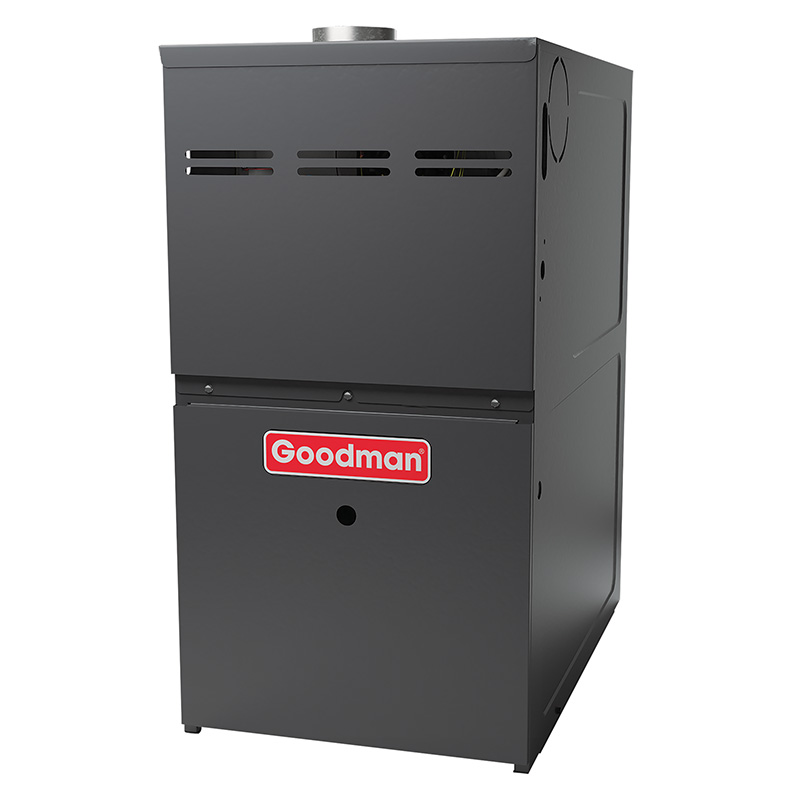
- Upflow configuration designed for installations where the furnace sits in a basement or closet blowing air upward
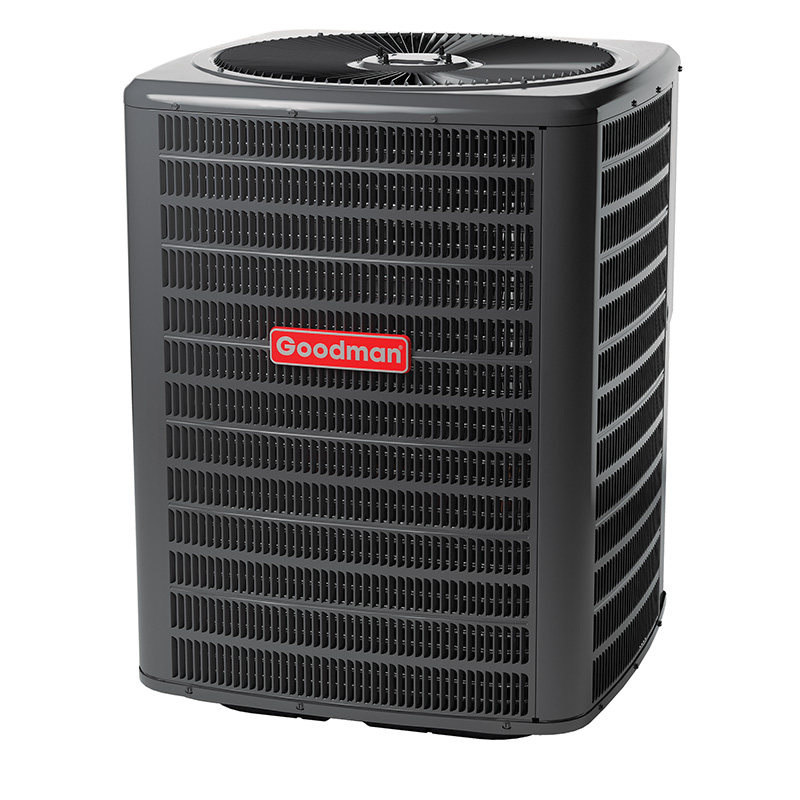
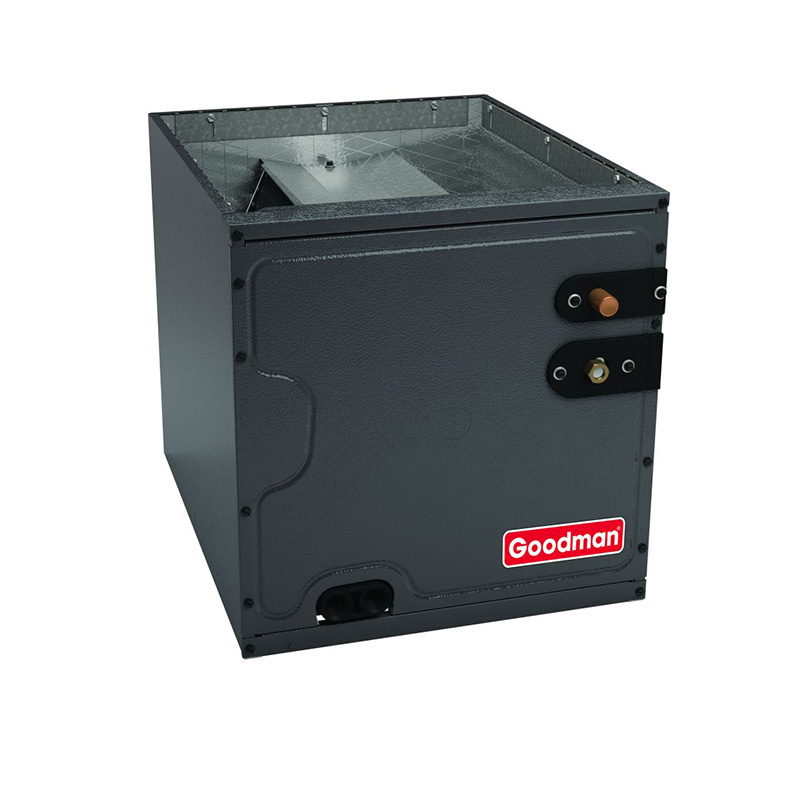
- Matched coil-and-condenser system rated together to achieve the published SEER2 efficiency figure
About this system
This Goodman bundle pairs a 2-ton, 15.2 SEER2 central air conditioner with a 60,000 BTU, 80% AFUE multi-speed ECM gas furnace in an upflow configuration, making it a practical choice for smaller homes or well-insulated spaces in the 800 to 1,200 square foot range that need both heating and cooling replaced at once. The R-32 refrigerant charge reflects a move toward a lower global-warming-potential refrigerant that is becoming the new standard as R-410A phases out, so parts and service should remain accessible for the foreseeable future. Buying the air handler and furnace as a matched system also helps ensure the coil and condensing unit are rated together for the published SEER2 figure.
The 80% AFUE rating means roughly 20 cents of every heating dollar exits through the flue, which is the minimum efficiency tier allowed in most U.S. climate zones and a reasonable baseline for moderate-winter climates. The multi-speed ECM blower motor is a meaningful upgrade over a simple single-speed PSC motor: it ramps airflow up and down to match demand, which reduces temperature swings, cuts fan electricity use noticeably, and does a better job pulling humidity out of the air on cool summer days. That said, this is still a single-stage cooling system, so the compressor is either fully on or fully off rather than modulating, which limits the dehumidification and comfort ceiling compared with two-stage or variable-capacity equipment.
Goodman positions this bundle as an entry-level-to-mid-range system for budget-conscious homeowners or landlords who want a complete replacement without the premium price tag of a Trane, Lennox, or Carrier system. The trade-off is a compressor life expectancy that historically tracks shorter than premium brands, and a brand reputation built largely on affordability rather than long-term durability. For buyers with modest heating demands and a competent installer, it can deliver solid value; for buyers in extreme climates or those expecting to stay in the home for 15-plus years, the calculus is less clear.
This Goodman bundle is an honest value option for homeowners replacing an aging system on a tight budget, offering a modern refrigerant, a capable ECM blower, and matched equipment at a price typically 15 to 25 percent below comparable Carrier, Trane, or Lennox systems. The 80% AFUE and single-stage cooling are entry-level specs, not premium ones, and the brand's documented history of capacitor failures, coil leaks, and shorter compressor life means long-term ownership costs can close the gap with pricier alternatives. Installation quality will determine more about how this system performs and lasts than almost any other factor.
Overall score is the average of the five ratings above.
What we like
- Purchase price typically 15 to 25 percent below Carrier, Trane, and Lennox equivalents, reducing upfront cost significantly
- Multi-speed ECM blower improves comfort and humidity control compared with single-speed alternatives at this price tier
- R-32 refrigerant is a forward-looking choice with lower environmental impact and good parts availability
- Matched system configuration supports the rated 15.2 SEER2 efficiency when correctly installed
- Upflow furnace design suits common basement and closet installations without requiring an add-on air handler
Trade-offs
- Compressor lifespan averages 10 to 14 years in documented owner experience, versus 15 to 20 years for premium brands
- Dual-run capacitor failures are the most commonly reported repair issue, typically adding $300 to $600 in service costs in the first decade
- Evaporator coil leaks appear in a meaningful share of owner reviews and can be costly to address out of warranty
- Single-stage cooling means the compressor cannot modulate, limiting dehumidification performance and comfort consistency on mild days
What homeowners and pros say about Goodman
Homeowners who leave reviews on ConsumerAffairs give Goodman equipment an average of about 2.5 out of 5, a score shaped heavily by the platform’s complaint-driven nature, where the loudest voices tend to be owners dealing with repair bills that climbed after roughly the seventh year of ownership. Capacitor failures and evaporator coil leaks are the two issues that surface most often in those accounts. Google dealer reviews tell a somewhat different story, averaging around 3.8 out of 5 across hundreds of reviews per location, where the most frequent praise is straightforwardly about price: buyers got a functional system installed for less than competing quotes. The gap between those two scores reflects the split personality of this brand.
HVAC technicians tend to view Goodman with a pragmatic shrug. They note that capacitor swaps are routine and inexpensive, that coil leaks are real but not universal, and that the compressors tend to average 10 to 14 years of service rather than the 15 to 20 years seen in premium equipment. The consensus among experienced installers is that a well-commissioned Goodman system in a home with clean ductwork and proper refrigerant charge will perform adequately for a decade or more, while a poorly installed one will generate callbacks regardless of the price paid for it. For this specific bundle, the ECM blower is the component that draws the most positive unprompted comments from technicians, who credit it with better airflow balance and lower operating noise compared with older single-speed motors at the same price point.
Sources: ConsumerAffairs Goodman owner reviews, AHRI Directory of Certified Product Performance, U.S. DOE appliance and equipment efficiency standards, Goodman product specification sheets.
What it costs to run
At 15.2 SEER2, cooling this 2-ton system for a typical 1200-hour cooling season at the U.S. average electricity rate of $0.17/kWh works out to roughly $322 per year in cooling, about $43 less per year than a minimum-efficiency 13.4 SEER2 unit of the same size. Your real cost depends on your climate and local rate.
Method: (24,000 BTU/hr ÷ 15.2 SEER2) × 1200 hours ÷ 1000 × $0.17/kWh. Rate source: U.S. EIA average; cooling hours: moderate-climate estimate.
How it compares
| Brand | Comparable model | SEER2 | Stage | Price position |
|---|---|---|---|---|
| Goodman | GSX15/GMVC8 Series Bundle | 15.2 | Single-stage | Value pick |
| Carrier | Comfort 15 (24ACC6) Series | 15.2 | Single-stage | Typically 15 to 25 percent more than Goodman |
| Trane | XR15 (4TTR5) Series | 15.2 | Single-stage | Typically 15 to 25 percent more than Goodman |
| Lennox | Merit ML15 Series | 15.2 | Single-stage | Typically 15 to 25 percent more than Goodman |
Competitor rows are comparable single-stage units at similar efficiency; price is relative position, not a quote.
Questions about this system
Will 2 tons and 60,000 BTU be enough for my house?
A rough rule of thumb puts 2-ton cooling at roughly 800 to 1,200 square feet, depending heavily on insulation, window area, ceiling height, and local climate. The 60,000 BTU heating output is similarly sized for smaller homes in moderate climates. A proper Manual J load calculation by your installer is the only reliable way to confirm this system is sized correctly for your specific home; oversizing or undersizing causes real comfort and efficiency problems.
What does R-32 refrigerant mean for me as an owner?
R-32 is the replacement refrigerant as the industry moves away from R-410A. It has roughly one-third the global-warming potential of R-410A and is increasingly standard, meaning service technicians and parts should remain readily available. The main practical implication is that not all older technicians carry R-32 yet, so confirm your service provider is equipped to handle it before scheduling a call.
What are the most likely repair costs I should plan for?
Dual-run capacitor failure is the single most commonly reported repair on Goodman equipment, typically costing $300 to $600 for parts and labor and usually occurring within the first 10 years. Evaporator coil leaks are a secondary concern documented in owner reviews and can be more expensive depending on whether the coil needs replacement. Budgeting for a capacitor replacement at some point during ownership is a reasonable precaution.
Does the upflow configuration matter, and can I install it in a different orientation?
Yes, orientation matters. The upflow furnace in this system is specifically built and certified to move air vertically upward out of the top, which matches basement and first-floor closet installations that feed ceiling ductwork. Installing it in a downflow, horizontal, or other orientation it was not designed for is incorrect and unsafe. If your home requires a different configuration, you will need a furnace rated for that specific orientation.
How does Goodman's warranty compare with Carrier or Trane on this type of system?
Goodman typically offers a 10-year parts limited warranty when the unit is registered within a specified window after installation, which is broadly comparable to the base warranties on Carrier and Trane residential equipment. The key differences often show up in compressor coverage details and labor warranties, which Goodman does not generally cover. Confirm registration requirements with your installer, because missing the registration window can reduce coverage to a shorter unregistered term.
Specifications
| Cooling capacity | 2 Ton |
| Efficiency | 15.2 SEER2 |
| Furnace output | 60000 BTU |
| Furnace efficiency | 80% AFUE |
| Configuration | Upflow |
| Refrigerant | R-32 |