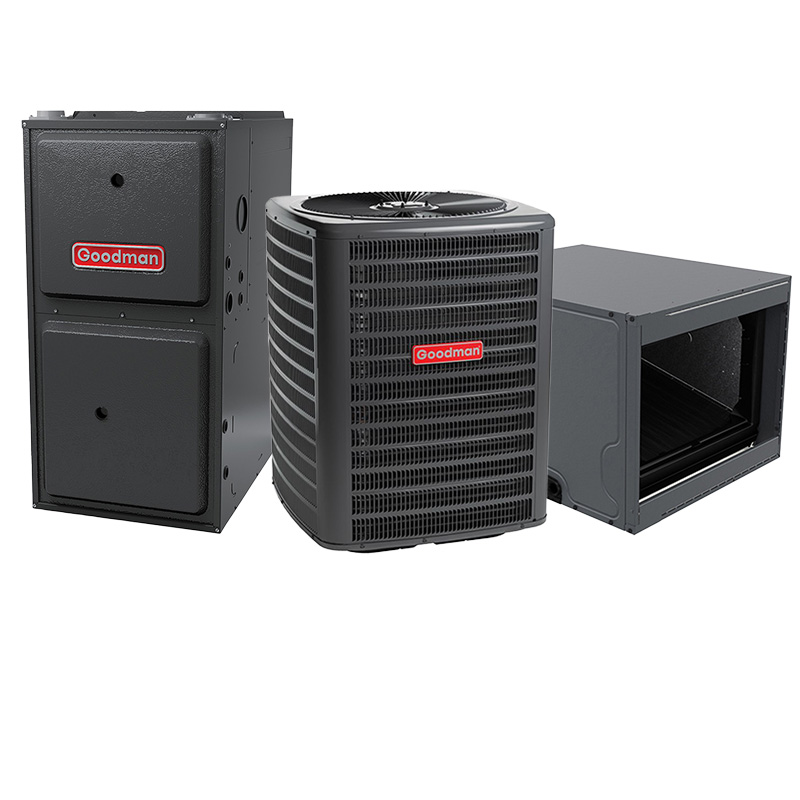
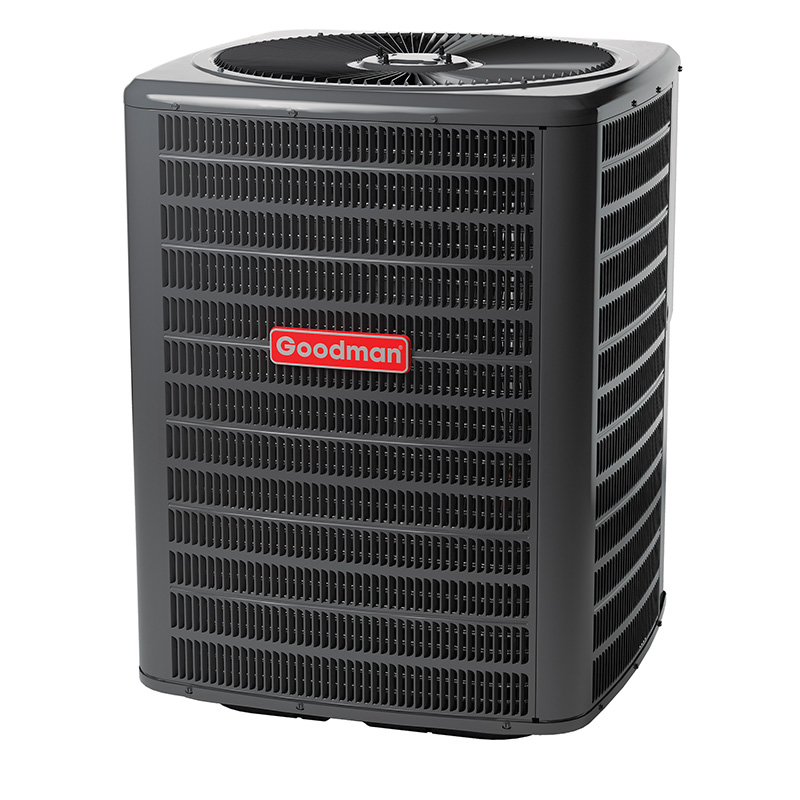
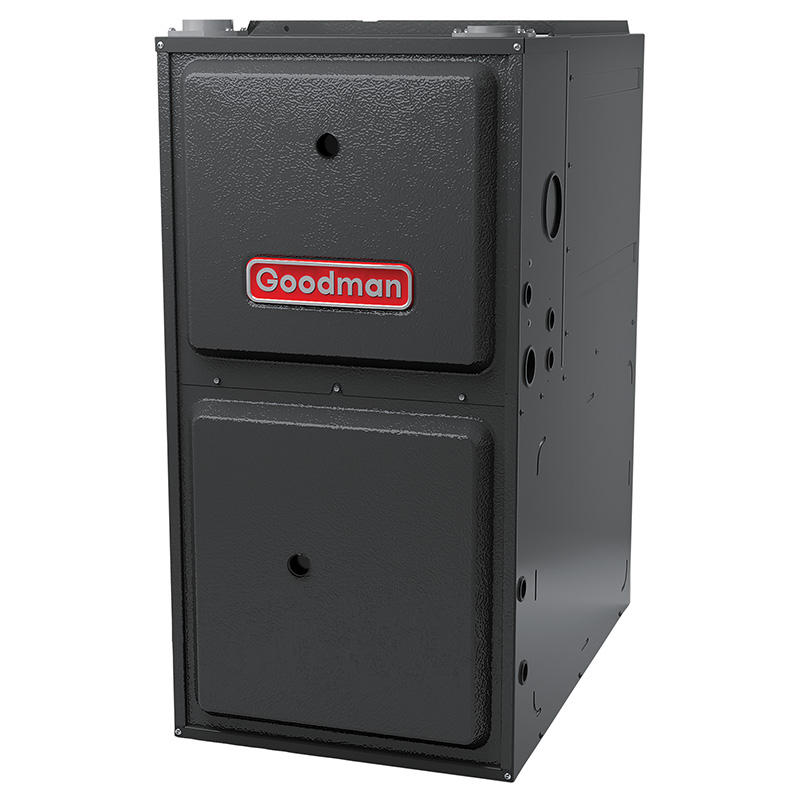
Goodman Furnace And Air Conditioner 2 Ton 15.2 SEER2 AC With 60000 BTU 80% AFUE Two Stage Multi-Speed ECM Gas Furnace System – Horizontal | R32
View on AC Direct see your lowest price →Check current price on AC Direct →
Key features
- 15.2 SEER2 cooling efficiency meets current federal minimums for most U.S. climate zones
- 60,000 BTU two-stage gas furnace operates at reduced fire rate for longer, steadier heating cycles
- 80% AFUE rating means 80 cents of every fuel dollar becomes usable heat
- Multi-speed ECM blower motor reduces electrical draw at part load and improves humidity control
- R-32 refrigerant has lower global-warming potential than the R-410A it replaces
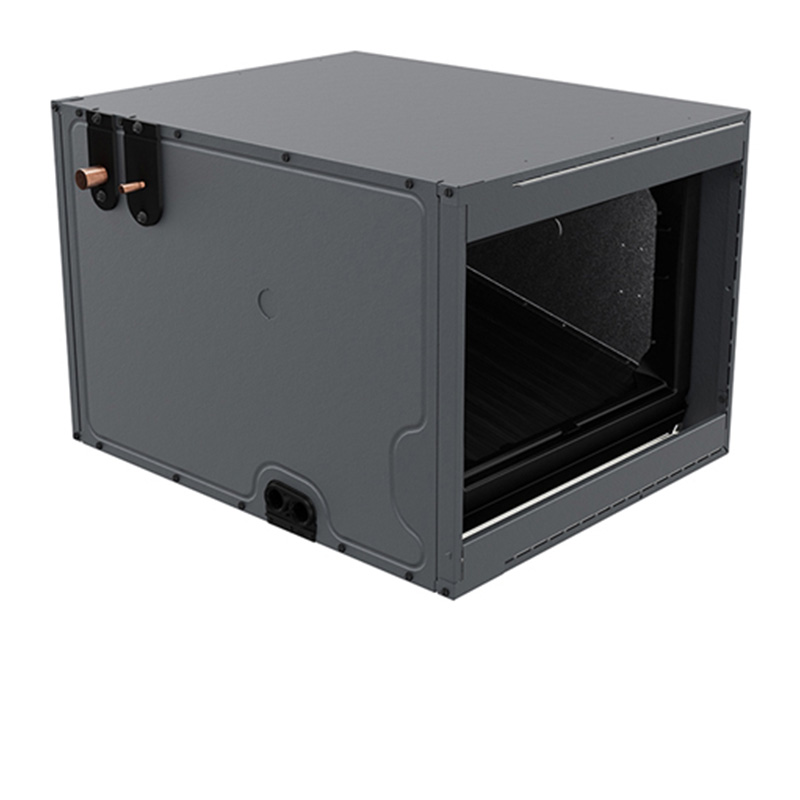
- Horizontal cabinet orientation designed for attic, crawlspace, or closet installations
About this system
This Goodman two-ton system pairs a 15.2 SEER2 air conditioner with a 60,000 BTU, 80% AFUE two-stage gas furnace in a horizontal configuration, making it a practical choice for homes where attic or crawlspace installations are the only option. The R-32 refrigerant charge runs at lower global-warming potential than the older R-410A it replaces, and the multi-speed ECM blower motor adjusts airflow in smaller increments than a fixed-speed motor, which helps with humidity control and reduces temperature swings between cycles. At two tons, this system is sized for roughly 900 to 1,400 square feet of conditioned space, depending on your climate, insulation, and duct layout.
The two-stage furnace operation means the unit runs on a lower fire rate the majority of the time, firing at full capacity only when outdoor temperatures drop sharply. That longer, gentler burn cycle does more to even out room temperatures than a single-stage furnace can manage. On the cooling side, 15.2 SEER2 clears the current federal minimum for most U.S. climate zones and sits in the entry-level efficiency tier, so monthly operating costs will be moderate rather than low. Homeowners in mild climates or those who run the AC only a few months a year will recover the price gap between this and a higher-SEER2 unit slowly, if at all. Those in hot, humid climates running the system heavily from May through September will see a more meaningful efficiency benefit from the ECM blower, which pulls significantly less wattage than a PSC motor at part load.
Goodman positions this bundle as a value-oriented complete system, and the horizontal configuration limits its install locations but is purpose-built for spaces where vertical units simply will not fit. Anyone comparing this against premium brands should weigh the upfront savings honestly against Goodman’s documented mid-life repair frequency, particularly around year seven and beyond.
This Goodman bundle offers a real upfront savings over comparable Carrier, Trane, or Lennox equipment, and the two-stage furnace with ECM blower delivers genuinely better comfort than a basic single-stage system at this price point. The trade-off is a documented pattern of repair costs climbing after year seven, a compressor lifespan that tends to run shorter than premium brands, and warranty coverage that is competitive on paper but depends on professional installation being registered correctly. It is a reasonable choice for budget-conscious buyers who go in with clear eyes about long-term ownership costs.
Overall score is the average of the five ratings above.
What we like
- Purchase price runs roughly 15 to 25 percent below comparable Trane, Carrier, and Lennox systems
- Two-stage furnace operation improves comfort and reduces temperature swings versus single-stage units
- ECM blower motor lowers electricity use at part load compared to standard PSC motors
- R-32 refrigerant is an environmentally improved charge with lower global-warming potential
- Horizontal configuration fills a real installation gap for attic and crawlspace applications
Trade-offs
- Dual-run capacitors are the most frequently reported failure point, typically showing up before the 10-year mark and costing 300 to 600 dollars to repair
- Evaporator coil leaks appear in a meaningful share of owner reviews and can be costly to address outside the warranty window
- Compressor lifespan averages 10 to 14 years versus 15 to 20 years typical of premium brands, which matters for total cost of ownership calculations
- 80% AFUE is the lowest efficiency tier available for gas furnaces and will carry higher annual fuel costs than 96% AFUE alternatives, especially in cold climates
What homeowners and pros say about Goodman
Homeowners who buy Goodman equipment tend to split into two camps fairly quickly. Those who had a careful installation and kept up with annual maintenance often report years of trouble-free service, and that experience lines up with the roughly 3.8 out of 5 score Goodman earns across Google dealer reviews, where affordability is the most frequently cited positive. The other camp shows up more heavily on complaint-oriented channels: ConsumerAffairs rates Goodman at around 2.5 out of 5, and the dominant theme in those reviews is repair bills that start stacking up after year seven, which tracks with the brand’s documented failure profile. The dual-run capacitor is the most commonly reported breakdown and is usually a straightforward, low-cost fix in the 300 to 600 dollar range, but evaporator coil leaks and compressor failures carry a heavier price tag and show up with enough regularity to be a real ownership consideration.
HVAC technicians who work on Goodman equipment regularly tend to say the same thing: the quality of the installation matters as much as the equipment itself, and a well-commissioned Goodman system in a properly sized duct system will outperform a carelessly installed premium brand unit every time. For this specific horizontal system, that caveat carries extra weight because attic and crawlspace installs introduce variables around refrigerant line length, drain slope, and access that can affect long-term performance. The R-32 refrigerant charge adds another wrinkle, since not every service technician is yet equipped for A2L refrigerants, which can complicate routine service calls in some markets. Compressor lifespan averaging 10 to 14 years versus the 15 to 20 years typical of premium brands is the most honest long-term consideration for buyers weighing whether the upfront savings hold up over the full ownership period.
Sources: ConsumerAffairs Goodman owner reviews, AHRI Directory of Certified Product Performance, U.S. DOE appliance and equipment efficiency standards, Goodman product specification sheets.
What it costs to run
At 15.2 SEER2, cooling this 2-ton system for a typical 1200-hour cooling season at the U.S. average electricity rate of $0.17/kWh works out to roughly $322 per year in cooling, about $43 less per year than a minimum-efficiency 13.4 SEER2 unit of the same size. Your real cost depends on your climate and local rate.
Method: (24,000 BTU/hr ÷ 15.2 SEER2) × 1200 hours ÷ 1000 × $0.17/kWh. Rate source: U.S. EIA average; cooling hours: moderate-climate estimate.
How it compares
| Brand | Comparable model | SEER2 | Stage | Price position |
|---|---|---|---|---|
| Goodman | 2-Ton 15.2 SEER2 AC with 60K BTU 80% AFUE Two-Stage ECM Horizontal Bundle | 15.2 | Two-stage | Value pick |
| Carrier | Comfort 24ACC6 with 58MVC Gas Furnace | 15.2 | Single-stage | Typically 15 to 25 percent more than this Goodman bundle |
| Trane | XR15 with S8X1 Gas Furnace | 15.0 | Single-stage | Typically 15 to 25 percent more than this Goodman bundle |
| Lennox | Merit 14ACX with ML180 Gas Furnace | 15.0 | Single-stage | Typically 15 to 25 percent more than this Goodman bundle |
Competitor rows are comparable single-stage units at similar efficiency; price is relative position, not a quote.
Questions about this system
Does this system require a special refrigerant certification to work on since it uses R-32?
Yes. R-32 is an A2L refrigerant, meaning it is mildly flammable, and not all HVAC technicians are currently equipped or certified to handle it. Before scheduling service or installation, confirm your contractor has A2L-specific training and the appropriate recovery equipment, as this is becoming a common point of confusion as the industry transitions away from R-410A.
What does the horizontal configuration actually mean for where this unit can be installed?
It means the air handler cabinet is designed to lie on its side, routing supply and return air horizontally rather than vertically. This is the correct configuration for attic installations and some crawlspace setups, but it cannot be substituted for an upflow or downflow vertical unit without purchasing a different cabinet. Confirm your duct layout with your installer before ordering.
Is 80% AFUE going to cost me significantly more to operate than a higher-efficiency furnace?
In warmer climates where the furnace runs lightly, the annual dollar difference between 80% and 96% AFUE may be small enough that payback on a higher-efficiency unit takes well over a decade. In colder climates with long heating seasons, the gap widens considerably, and a 96% AFUE furnace often pays back its price premium in seven to ten years through fuel savings alone.
How important is it to register the warranty after installation, and what coverage does Goodman actually provide?
Registration is critical. Goodman's full parts warranty, which extends to ten years on most components including the compressor and heat exchanger, requires the unit to be registered by a licensed contractor within a set window after installation. Unregistered units typically fall back to a shorter base warranty, so confirm with your installer that registration is completed and get documentation for your records.
What are the most likely repair bills I should budget for over the first ten years of ownership?
Based on documented Goodman failure patterns, the dual-run capacitor is the most common early repair, typically running 300 to 600 dollars including labor and representing a relatively minor fix. Evaporator coil leaks are a costlier possibility, often running into the thousands depending on refrigerant pricing and whether the coil itself needs replacement. Setting aside a maintenance fund of 150 to 200 dollars per year starting in year five is a reasonable approach.
Specifications
| Cooling capacity | 2 Ton |
| Efficiency | 15.2 SEER2 |
| Furnace output | 60000 BTU |
| Furnace efficiency | 80% AFUE |
| Configuration | Horizontal |
| Refrigerant | R-32 |