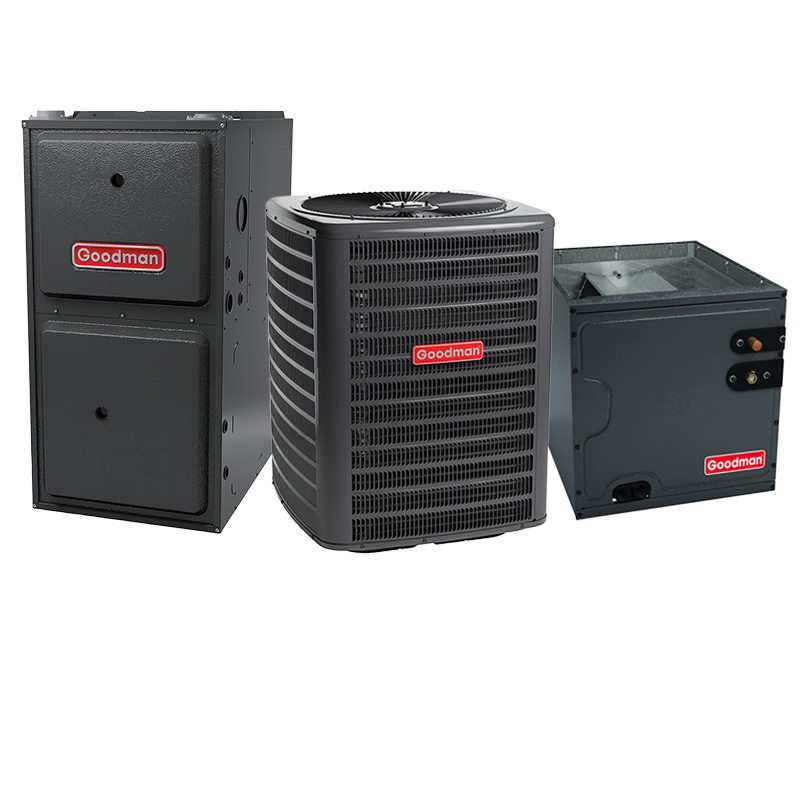
Goodman Furnace And Air Conditioner 2 Ton 16 SEER2 AC With 80000 BTU 80% AFUE Two Stage Multi-Speed ECM Gas Furnace System – Upflow | R32
View on AC Direct see your lowest price →Check current price on AC Direct →
Key features
- 16 SEER2 cooling efficiency, meeting current federal minimums with room to save versus older equipment
- 80,000 BTU two-stage gas furnace holds lower fire most of the time and steps up only when temperatures demand it
- 80% AFUE rating means 80 cents of every dollar of gas becomes heat, standard efficiency tier
- Multi-speed ECM blower motor reduces fan electricity use and supports steadier airflow and humidity control
- R-32 refrigerant with lower global warming potential than R-410A, aligned with industry direction
- Upflow configuration designed for systems where supply air exits the top and returns enter the bottom or sides
About this system
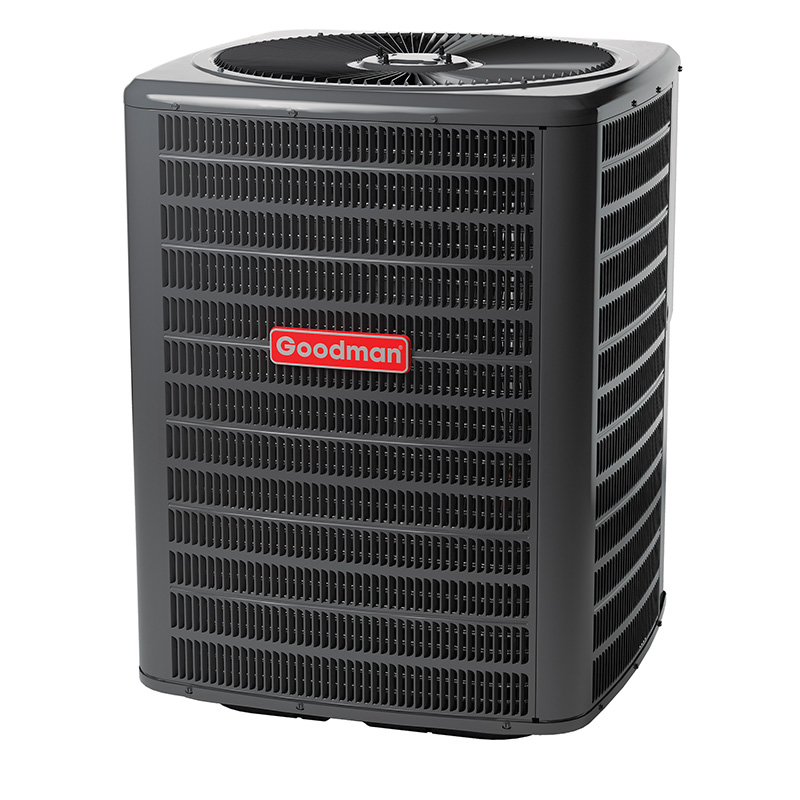
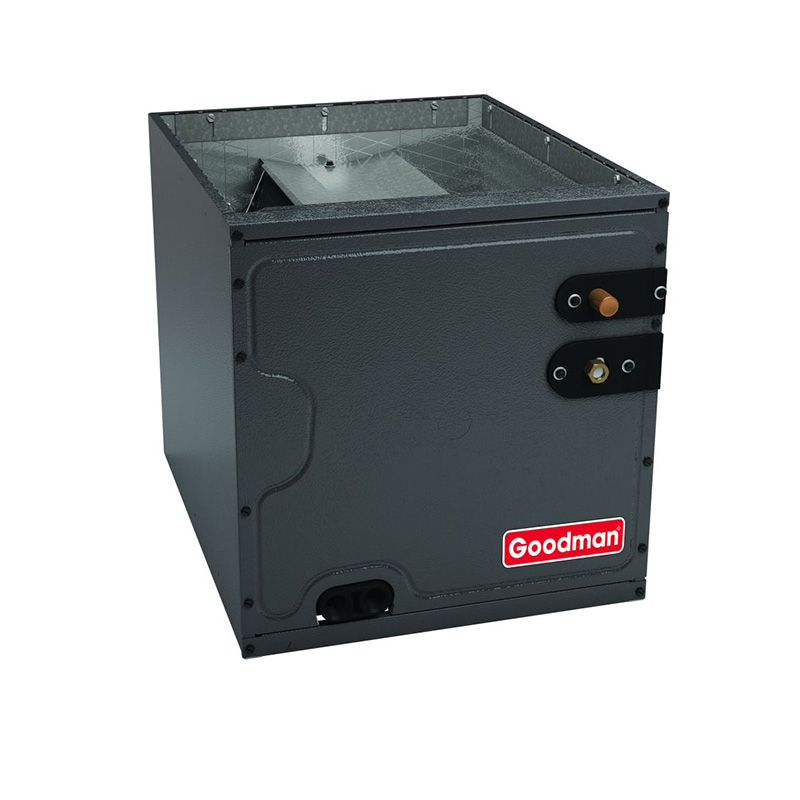
This Goodman bundle pairs a 2-ton, 16 SEER2 air conditioner with an 80,000 BTU, 80% AFUE two-stage gas furnace in an upflow configuration, making it a practical fit for homes with centrally located mechanical rooms and ductwork that rises from below. The 16 SEER2 rating sits at the entry point of what regulators now classify as efficient, which means lower operating costs than older 13 or 14 SEER equipment without the premium price tag of 18-plus SEER2 variable-speed systems. R-32 refrigerant is an environmental step forward, carrying a lower global warming potential than the R-410A it replaces, and it is increasingly standard across the industry.
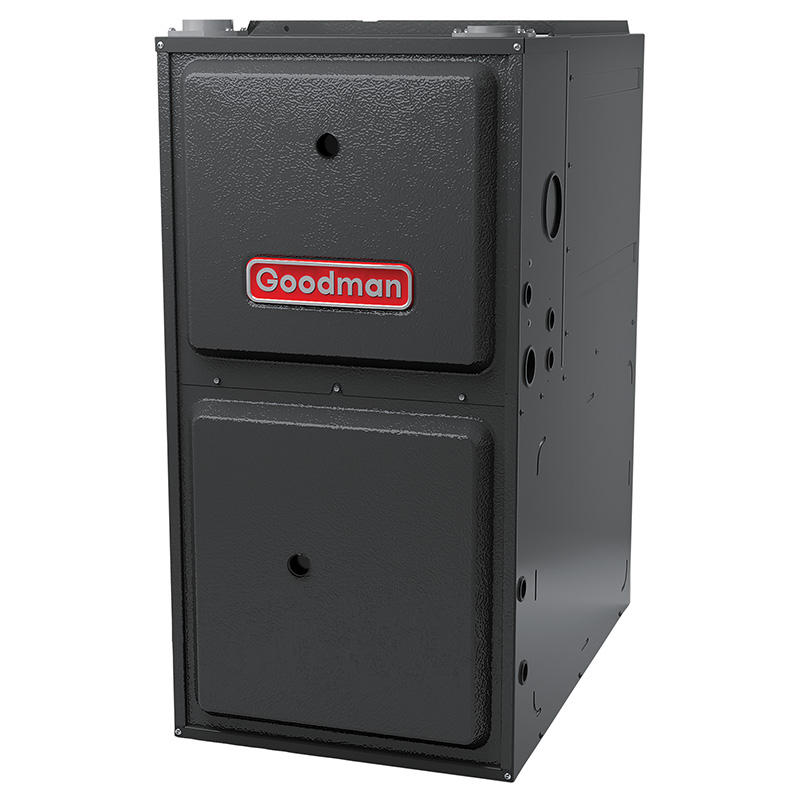
The two-stage furnace and multi-speed ECM blower motor are the features most worth paying attention to here. Two-stage heating runs on a lower flame most of the time, cycling up only on the coldest days, which results in more consistent temperatures and quieter operation than a single-stage unit. The ECM motor adjusts airflow in small increments rather than running at full blast or not at all, which reduces electricity consumption and helps the system maintain better humidity control during cooling season. Together these features push comfort noticeably past what a budget single-stage system delivers, though they stop short of the precise comfort a variable-capacity or modulating furnace provides.
This system suits a homeowner in a mild to moderately cold climate who wants a meaningful upgrade from an aging baseline system, values keeping upfront cost reasonable, and is not opposed to the idea that a service call or two over a 10-to-15-year ownership period is a real possibility rather than a remote one. It is not the right choice for someone who wants to set it and forget it for 20 years without attention.
This Goodman system offers a legitimate two-stage, ECM-equipped comfort upgrade at a price point that undercuts comparable Carrier, Trane, and Lennox bundles by roughly 15 to 25 percent. The trade-off is a brand with a documented history of capacitor failures, coil leaks in a meaningful share of units, and compressors that tend to top out around 10 to 14 years rather than the 15 to 20 years seen in premium equipment. It rewards buyers who hire a careful installer and budget for occasional maintenance.
Overall score is the average of the five ratings above.
What we like
- Two-stage heating and ECM blower deliver noticeably better comfort and humidity control than single-stage alternatives at this price
- 16 SEER2 efficiency keeps operating costs lower than older or baseline-tier equipment
- Priced 15 to 25 percent below comparable Trane, Lennox, and Carrier systems, lowering the upfront financial barrier
- R-32 refrigerant is lower environmental impact and increasingly well-supported by technicians
- Upflow design is straightforward to connect in the most common residential mechanical room layout
Trade-offs
- Dual-run capacitors are the most frequently reported failure, typically adding a 300 to 600 dollar repair cost somewhere in the ownership period
- Evaporator coil leaks show up in a meaningful share of owner reports, a more significant and costly repair than a capacitor
- Compressor lifespan averages 10 to 14 years, shorter than the 15 to 20 years typical of premium brands
- 80% AFUE is standard efficiency, not high efficiency, so owners in cold climates with high gas rates will see smaller savings than a 95-plus AFUE unit would provide
What homeowners and pros say about Goodman
Homeowners who share experiences with Goodman equipment tend to land in two camps. On ConsumerAffairs, where the audience skews toward people actively having problems, Goodman scores around 2.5 out of 5, with the recurring theme being repair costs that climb after roughly year seven. The specific failure modes that come up most consistently are dual-run capacitor replacements, which are annoying but relatively inexpensive at 300 to 600 dollars, and evaporator coil leaks, which are a more serious repair. Compressor longevity is another honest concern: Goodman compressors average 10 to 14 years in owner reports, while premium brands tend to reach 15 to 20. On the other hand, Google dealer reviews for Goodman-selling contractors average around 3.8 out of 5, and the most common thread in positive feedback is straightforward: buyers got reliable function at a price that fit their budget.
HVAC technicians who work on Goodman equipment regularly make a point that the brand’s performance is unusually sensitive to installation quality. A careful installer who pulls a proper vacuum, verifies refrigerant charge precisely, and sets airflow to spec can close much of the gap between this system and a premium brand. A rushed or careless install, by contrast, amplifies the brand’s known weak spots. For this specific system, the two-stage furnace and ECM blower add some mechanical complexity relative to a single-stage entry-level unit, which makes choosing an experienced installer even more consequential. The minority of owners who report refrigerant leaks in the first year are most often dealing with a charge or connection issue from installation rather than a manufacturing defect, which underscores that point.
Sources: ConsumerAffairs Goodman owner reviews, AHRI Directory of Certified Product Performance, U.S. DOE appliance and equipment efficiency standards, Goodman product specification sheets.
What it costs to run
At 16 SEER2, cooling this 2-ton system for a typical 1200-hour cooling season at the U.S. average electricity rate of $0.17/kWh works out to roughly $306 per year in cooling, about $59 less per year than a minimum-efficiency 13.4 SEER2 unit of the same size. Your real cost depends on your climate and local rate.
Method: (24,000 BTU/hr ÷ 16 SEER2) × 1200 hours ÷ 1000 × $0.17/kWh. Rate source: U.S. EIA average; cooling hours: moderate-climate estimate.
How it compares
| Brand | Comparable model | SEER2 | Stage | Price position |
|---|---|---|---|---|
| Goodman | GSX2 / GMVC8 Two-Stage ECM Bundle | 16 | Two-stage | Value pick |
| Carrier | Performance 16 (24ACC6) with 59SC2 Two-Stage Furnace | 16 | Two-stage | Typically 15 to 25 percent more than this Goodman bundle |
| Trane | XR16 (4TTR6) with S9V2 Two-Stage Furnace | 16 | Two-stage | Typically 15 to 25 percent more than this Goodman bundle |
| Lennox | Merit ML16 with ML195 Two-Stage Furnace | 16 | Two-stage | Typically 15 to 25 percent more than this Goodman bundle |
Competitor rows are comparable single-stage units at similar efficiency; price is relative position, not a quote.
Questions about this system
What warranty comes with this Goodman system and what does it actually cover?
Goodman typically offers a 10-year parts limited warranty on registered units, covering components like the compressor, coil, and heat exchanger. Registration is required within a set window after installation or the warranty period shortens significantly. Labor is not included, so a service call to replace a covered part still costs you the technician's time.
Is 80% AFUE good enough for my climate, or should I be looking at a 95% furnace?
In mild to moderate climates with shorter heating seasons, 80% AFUE is a reasonable choice and the lower upfront cost can take years to recover through gas savings alone. In colder northern climates where the furnace runs heavily from October through March, a 95-plus AFUE unit typically pays back the price difference faster, and in some areas building codes or utility rebates now favor high-efficiency equipment.
What is R-32 refrigerant and will my future service technician be able to work with it?
R-32 is a single-component refrigerant with a lower global warming potential than R-410A, and it is increasingly common in new residential equipment. Most HVAC technicians are already certified and equipped to handle it, and supply availability is growing quickly as the industry shifts away from R-410A.
How often do the dual-run capacitors actually fail and what does it cost to fix?
Capacitor failure is the most commonly reported repair on Goodman systems, often showing up after several years of operation. The good news is that it is one of the lower-cost HVAC repairs, generally in the 300 to 600 dollar range including labor, and a qualified technician can usually complete it in under an hour.
Does the upflow configuration mean anything for how the installer sets this up, or is it standard?
Upflow means the furnace pulls return air from the bottom or sides and sends conditioned air up through the supply plenum and into the ductwork above. It is the most common residential configuration, so most installers work with it routinely, but you do need to confirm your existing duct layout matches before ordering since a counterflow or horizontal system will not substitute.
Specifications
| Cooling capacity | 2 Ton |
| Efficiency | 16 SEER2 |
| Furnace output | 80000 BTU |
| Furnace efficiency | 80% AFUE |
| Configuration | Upflow |
| Refrigerant | R-32 |