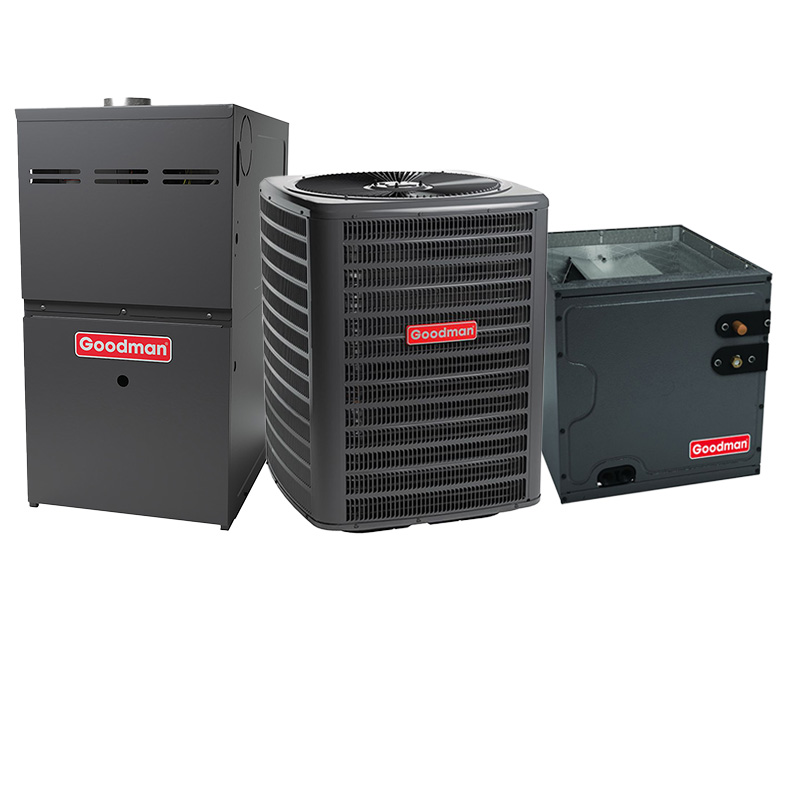
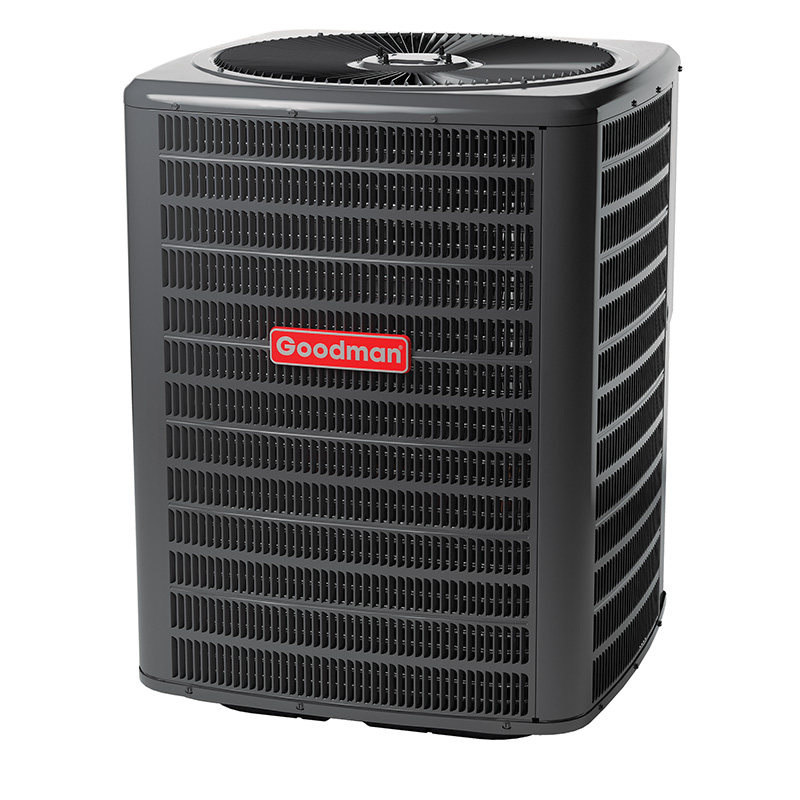
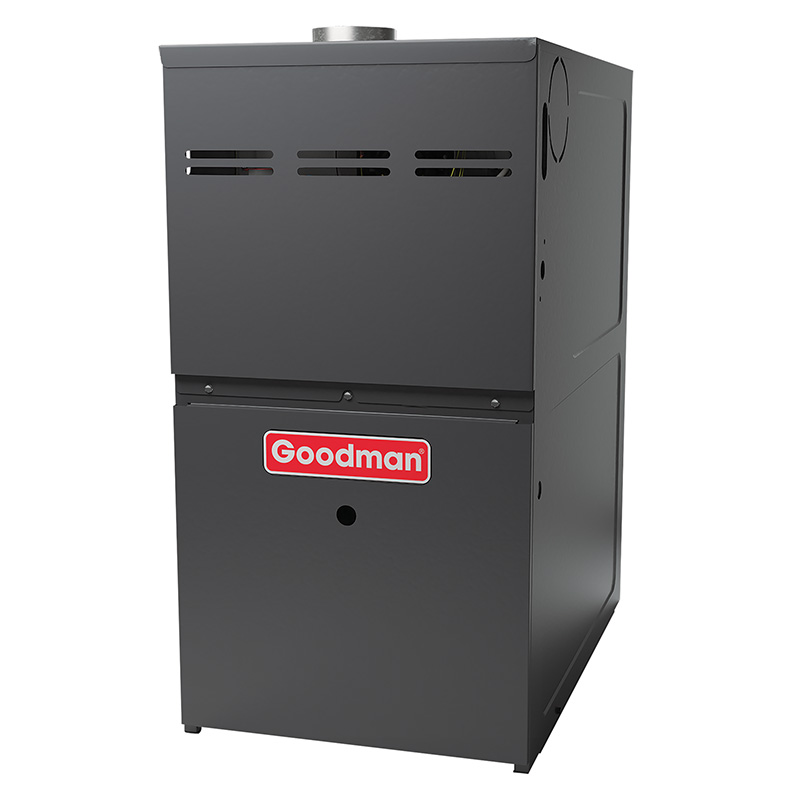
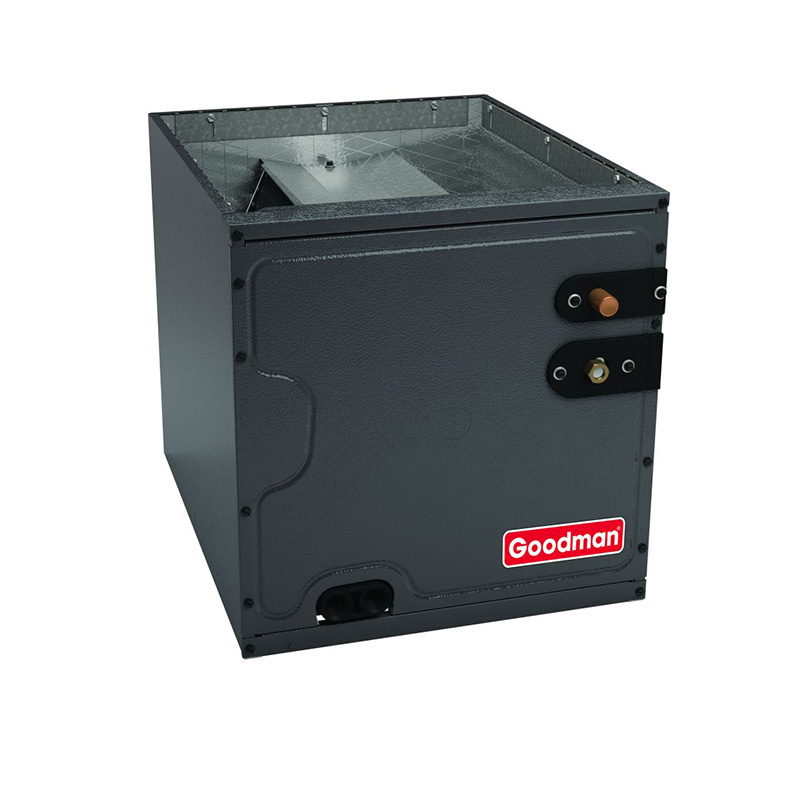
Goodman Furnace And Air Conditioner 3.5 Ton 15.2 SEER2 AC With 100000 BTU 80% AFUE Multi-Speed ECM Gas Furnace System – Upflow | R32
View on AC Direct see your lowest price →Check current price on AC Direct →
Key features
- 3.5-ton cooling capacity, suited for mid-size homes in moderate to warm climates
- 15.2 SEER2 efficiency rating, meeting current federal minimums with modest operating savings
- 100,000 BTU output at 80% AFUE, delivering reliable heat in most cold-climate applications
- Multi-speed ECM blower motor for quieter operation and lower blower electricity consumption
- R-32 refrigerant charge, a lower-GWP alternative to R-410A now widely adopted by manufacturers
- Upflow configuration designed for basement or ground-level installs with overhead duct systems
About this system
This Goodman bundle pairs a 3.5-ton, 15.2 SEER2 central air conditioner with a 100,000 BTU, 80% AFUE multi-speed ECM gas furnace in an upflow configuration. The combination is sized for homes roughly in the 1,800 to 2,400 square foot range, depending on climate zone, insulation, and window load. The 15.2 SEER2 rating clears the federal minimum thresholds that took effect in 2023 and lands in the entry-level tier of modern efficiency, delivering meaningful savings over older 13 or 14 SEER equipment without reaching the higher efficiency brackets that carry a steeper price tag.
The furnace side uses an ECM (electronically commutated motor) blower, which runs quieter and draws less electricity than a standard PSC motor, helping offset some of the operating costs over a conventional 80% AFUE single-speed unit. R-32 refrigerant is a newer, lower global-warming-potential option compared to R-410A, and it is becoming more common across the industry, though it does require technicians certified for its handling. The upflow configuration means conditioned air is discharged from the top of the furnace cabinet, making this system the right fit for installations where ductwork runs above the unit, a basement or utility-room setup being the most common scenario.
Goodman positions this system as a budget-conscious starting point rather than a premium long-term investment, and the specs reflect that honestly. Buyers who want variable-speed comfort, two-stage cooling, or the efficiency that comes with a 16-plus SEER2 or 96% AFUE furnace will need to budget up. For homeowners replacing aging equipment on a firm budget and prioritizing upfront cost, this bundle covers the fundamentals without unnecessary extras.
This Goodman system is a workable, budget-friendly solution for homeowners who need to replace aging equipment without a large capital outlay and are comfortable accepting a shorter expected service life and more variable reliability than premium brands offer. The ECM furnace motor is a genuine functional upgrade over basic single-speed units, but the 80% AFUE and entry-level SEER2 rating mean operating costs will run higher than mid- or high-efficiency alternatives over the life of the system. As with all Goodman equipment, the quality of the installing contractor matters as much as the hardware itself.
Overall score is the average of the five ratings above.
What we like
- Priced roughly 15 to 25 percent below comparable Carrier, Trane, and Lennox systems, reducing initial outlay
- ECM multi-speed blower cuts blower motor electricity use and lowers operating noise compared to PSC motors
- R-32 refrigerant is a forward-looking choice with lower environmental impact than R-410A
- 100,000 BTU furnace output provides adequate capacity for colder climates or larger upflow duct systems
- Parts are widely stocked nationwide, so repair sourcing is rarely a problem for service technicians
Trade-offs
- Dual-run capacitors are the most commonly reported failure point, typically appearing as the system ages and costing $300 to $600 to repair
- Evaporator coil leaks are a documented recurring issue in owner reports, potentially requiring costly coil replacement outside the warranty window
- Compressor lifespan averages 10 to 14 years versus 15 to 20 years typical of premium-brand competitors
- 80% AFUE means roughly one in five BTUs of fuel is lost as exhaust, a real long-term cost disadvantage compared to 95% or 96% AFUE alternatives
What homeowners and pros say about Goodman
Homeowners who have installed Goodman systems tend to split into two groups: those who got a solid install at a fair price and have had few complaints, and those who ran into repair bills after year seven that made the upfront savings feel less worthwhile. On ConsumerAffairs, Goodman scores around 2.5 out of 5, a channel that skews toward dissatisfied voices, where the recurring theme is maintenance and repair costs accumulating in the back half of the equipment’s life. Google dealer reviews paint a more balanced picture at roughly 3.8 out of 5, with affordability consistently cited as the main reason buyers chose Goodman over a premium brand. Neither number tells the whole story, but together they suggest a brand that delivers on price and meets basic expectations when conditions are right, while carrying more risk than competitors at the premium tier.
HVAC technicians who work on Goodman equipment regularly point to a few specific patterns worth knowing before you buy. Dual-run capacitors are the most frequently replaced component, and while the repair is generally straightforward and costs in the $300 to $600 range, it is a near-certainty for many units past the midpoint of their service life. Evaporator coil leaks appear often enough in owner accounts to be a real concern, particularly on systems that were not commissioned with a precise refrigerant charge at install. Compressor longevity is the bigger picture item: Goodman compressors tend to average 10 to 14 years in real-world service, which falls short of the 15 to 20 years that owners of premium-brand equipment more often report. For this specific system, with its ECM blower and R-32 charge, the fundamentals are modern, but those broader Goodman reliability patterns still apply and are worth factoring into a total-cost-of-ownership calculation.
Sources: ConsumerAffairs Goodman owner reviews, AHRI Directory of Certified Product Performance, U.S. DOE appliance and equipment efficiency standards, Goodman product specification sheets.
What it costs to run
At 15.2 SEER2, cooling this 3.5-ton system for a typical 1200-hour cooling season at the U.S. average electricity rate of $0.17/kWh works out to roughly $564 per year in cooling, about $75 less per year than a minimum-efficiency 13.4 SEER2 unit of the same size. Your real cost depends on your climate and local rate.
Method: (42,000 BTU/hr ÷ 15.2 SEER2) × 1200 hours ÷ 1000 × $0.17/kWh. Rate source: U.S. EIA average; cooling hours: moderate-climate estimate.
How it compares
| Brand | Comparable model | SEER2 | Stage | Price position |
|---|---|---|---|---|
| Goodman | GSX16 / GMVC8 Series (this bundle) | 15.2 | Single-stage | Value pick |
| Carrier | Comfort 15 Series (24ACC6) | 15.2 | Single-stage | Typically 15 to 25 percent more than this Goodman bundle |
| Trane | XR15 Series | 15.0 to 16.0 | Single-stage | Typically 15 to 25 percent more than this Goodman bundle |
| Lennox | Merit 14ACX Series | 15.0 to 15.5 | Single-stage | Typically 15 to 25 percent more than this Goodman bundle |
Competitor rows are comparable single-stage units at similar efficiency; price is relative position, not a quote.
Questions about this system
Is R-32 refrigerant safe and easy to service, or will it be hard to find a technician who handles it?
R-32 is mildly flammable (classified A2L), which means technicians need specific certification and tools to work with it safely. Availability of certified techs is growing rapidly as manufacturers shift away from R-410A, but in some rural markets you may want to confirm local service capability before purchasing. It is not a reason to avoid the system, but it is worth a conversation with your installer upfront.
What is the actual warranty on this Goodman system and what does it cover?
Goodman typically offers a 10-year parts limited warranty on registered systems, covering components including the compressor, heat exchanger, and coil. Registration must be completed within a set window after installation, and the warranty does not cover labor, refrigerant, or items attributed to improper installation or maintenance. Always confirm current warranty terms directly with Goodman at the time of purchase, as terms can change.
My house is around 2,200 square feet in a mixed climate. Is 3.5 tons and 100,000 BTU the right size?
Possibly, but sizing should never rely on square footage alone. A proper Manual J load calculation accounting for your insulation levels, window area, ceiling height, climate zone, and duct condition is the correct method. An oversized system will short-cycle, reduce dehumidification, and accelerate wear, while an undersized one will struggle on peak days. Ask your contractor to perform a load calc before committing to this size.
How likely am I to face the capacitor or coil leak failures mentioned in owner reviews, and what do those repairs cost?
Capacitor failures are the most commonly reported Goodman repair and are generally inexpensive at roughly $300 to $600 including a service call. Evaporator coil leaks are less predictable but appear in a meaningful share of owner accounts, and a coil replacement outside the warranty period can run substantially higher depending on labor rates and refrigerant recovery costs. Keeping up with annual maintenance and addressing refrigerant charge issues early can reduce the likelihood of coil deterioration.
Would it be worth paying more upfront for a higher AFUE furnace given energy costs in a cold climate?
In climates with long heating seasons and higher natural gas prices, upgrading to a 95% or 96% AFUE furnace can meaningfully reduce annual heating bills, and the payback period on the additional cost can be under five years in colder regions. An 80% AFUE unit is a reasonable fit for mild climates or situations where the budget constraint is real. If you heat heavily from October through April, the math often favors a higher-efficiency furnace.
Specifications
| Cooling capacity | 3.5 Ton |
| Efficiency | 15.2 SEER2 |
| Furnace output | 100000 BTU |
| Furnace efficiency | 80% AFUE |
| Configuration | Upflow |
| Refrigerant | R-32 |