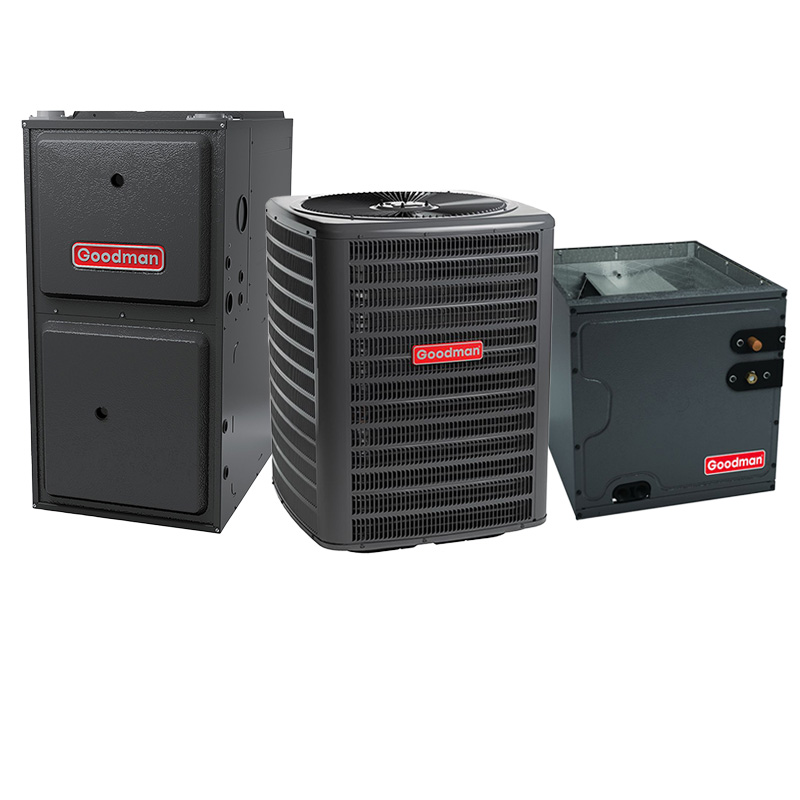
Goodman Furnace And Air Conditioner 3.5 Ton 15.2 SEER2 AC With 100000 BTU 96% AFUE Multi-Speed ECM Gas Furnace System – Upflow | R32
View on AC Direct see your lowest price →Check current price on AC Direct →
Key features
- 3.5-ton cooling capacity with 15.2 SEER2 efficiency rating
- 100,000 BTU 96% AFUE gas furnace with multi-speed ECM blower motor
- R-32 refrigerant with lower global-warming potential than R-410A
- Upflow configuration suits homes with ductwork above the air handler
- Single-stage scroll compressor paired with a stainless-steel secondary heat exchanger
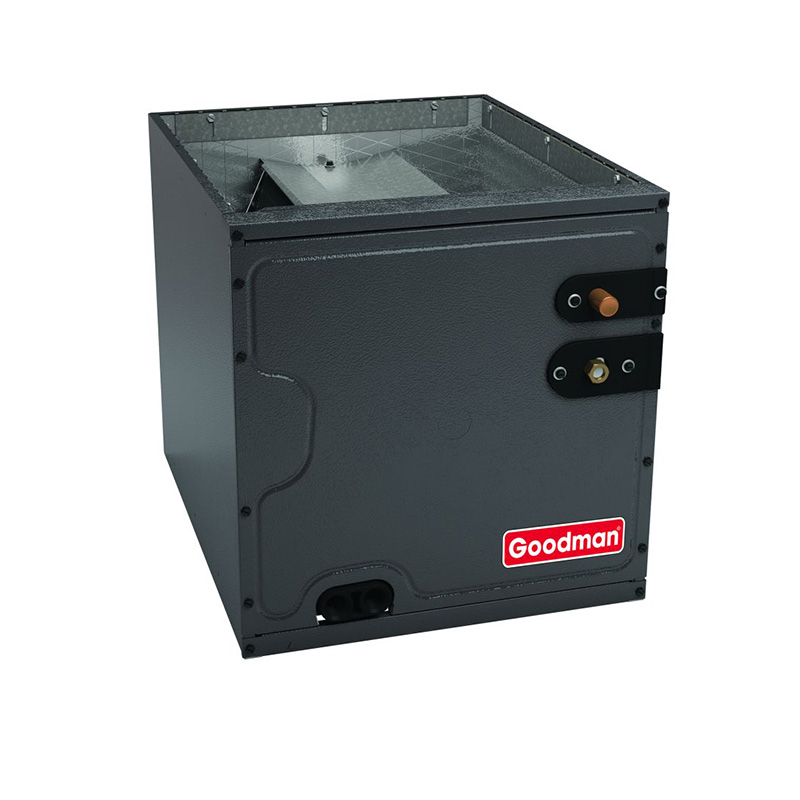
- Factory-matched system designed for simplified coil compatibility and warranty validation
About this system
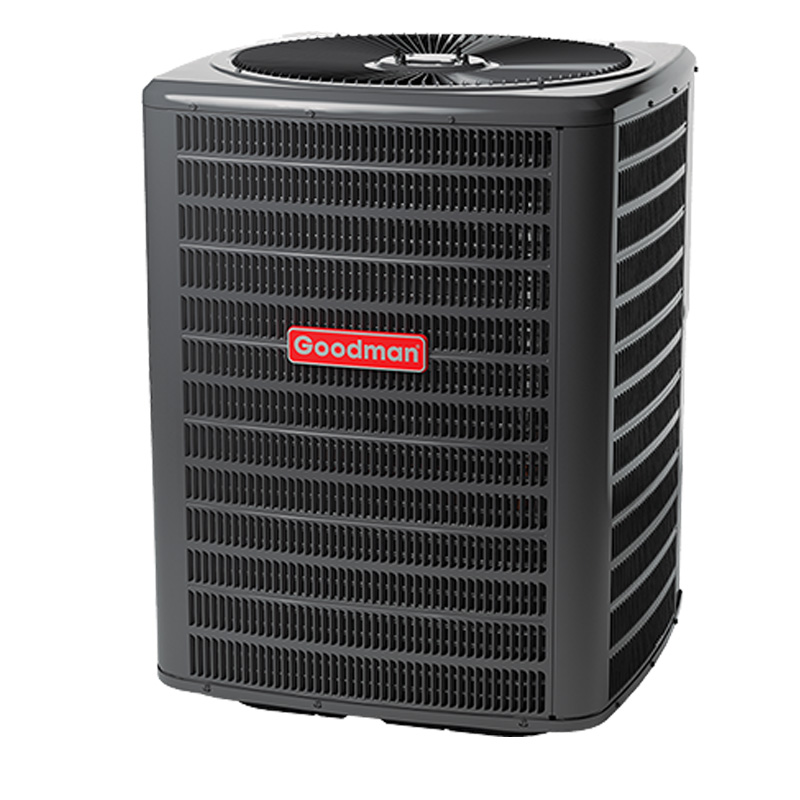
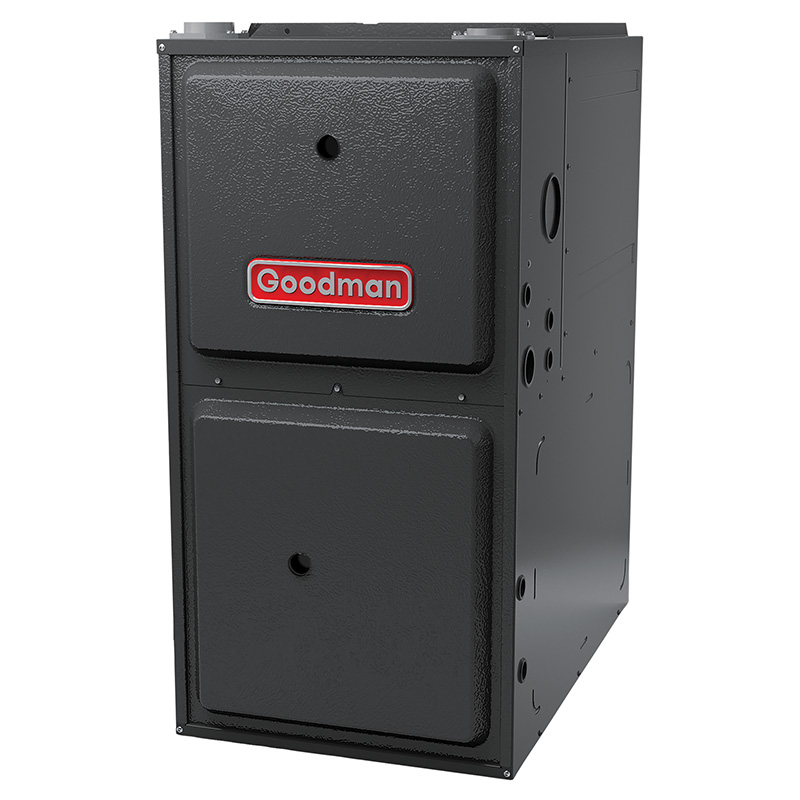
This Goodman bundle pairs a 3.5-ton, 15.2 SEER2 air conditioner with a 100,000 BTU, 96% AFUE multi-speed ECM gas furnace in an upflow configuration, making it a practical fit for homes in the 1,800 to 2,400 square foot range that have ductwork routed above the air handler. The AC side uses R-32 refrigerant, a lower global-warming-potential alternative to the R-410A found in older systems, and meets current federal minimum efficiency standards with a modest buffer above them. The furnace’s 96% AFUE rating means roughly 96 cents of every dollar spent on gas goes toward heat, which puts it in the upper tier of gas furnace efficiency without reaching the 98% ceiling of the most expensive condensing units.
The multi-speed ECM blower motor is the component that does the most everyday work here. Unlike a single-speed motor that runs at full blast or nothing, an ECM motor adjusts airflow to match demand, which lowers electricity consumption during shoulder seasons, reduces cold-air blasts at startup, and generally moves the system toward quieter, more consistent operation. That said, this is still a single-stage cooling system, meaning the compressor runs at full capacity whenever it calls for cooling. Humidity control and precise temperature maintenance are therefore not as refined as with a two-stage or variable-capacity system. Buyers replacing an aging R-22 or R-410A system and working within a defined budget will find this configuration competitive; buyers prioritizing top-tier comfort or long-term parts availability at the premium end should compare it honestly against Carrier, Trane, and Lennox equivalents.
This Goodman bundle delivers solid mid-tier efficiency at a price point that undercuts comparable Carrier, Trane, and Lennox equipment by roughly 15 to 25 percent, making it a reasonable choice for budget-conscious homeowners who plan to use a vetted installer. The efficiency numbers are legitimate and the factory-matched pairing simplifies the job, but the brand's documented track record of capacitor failures, evaporator coil leaks, and compressors that tend to run shorter than premium-brand counterparts means buyers should budget for maintenance costs after year seven.
Overall score is the average of the five ratings above.
What we like
- Price sits 15 to 25 percent below comparable Carrier, Trane, and Lennox systems
- 96% AFUE furnace meaningfully reduces gas consumption versus 80% units
- ECM multi-speed blower cuts fan electricity use and softens airflow surges
- R-32 refrigerant is a forward-looking choice with lower environmental impact
- Factory-matched AC and furnace bundle simplifies installation and warranty compliance
Trade-offs
- Single-stage compressor offers limited humidity control compared with two-stage or variable systems
- Dual-run capacitors are the most commonly reported failure point, typically around year 5 to 8
- Compressor lifespan averages 10 to 14 years versus 15 to 20 years in premium brands
- A minority of owners report refrigerant leaks within the first year, most often tied to install or initial charge quality
What homeowners and pros say about Goodman
Goodman draws a consistent response from the people who buy and install its equipment. On Google dealer reviews, where verified purchases are more common, the brand averages around 3.8 out of 5 stars, and the word that comes up most often is affordability. Homeowners who got a competitive install price and had no issues in the early years tend to be satisfied. The ConsumerAffairs score tells a different story, sitting around 2.5 out of 5, though that channel skews heavily toward owners who are frustrated enough to write a review. The recurring theme in those complaints is repair costs climbing after roughly year seven, which lines up with the documented failure patterns around dual-run capacitors and evaporator coil leaks that show up across independent owner forums and HVAC technician reports.
Technicians who work on Goodman equipment regularly point out that the brand’s performance is unusually sensitive to how well the system was installed and commissioned. A properly sized system with a careful refrigerant charge, clean coil connections, and correct static pressure setup tends to run reliably through its expected service life. A rushed or undersized install, on the other hand, accelerates the known weak points. The compressor lifespan issue is real and worth knowing going in: Goodman compressors tend to average 10 to 14 years in field reports, compared with 15 to 20 years for premium-brand counterparts. For this specific R-32 bundle, the refrigerant choice adds one more factor to vet before committing, since not every local service company stocks R-32 yet. Going in with clear eyes on those trade-offs makes this a defensible purchase; going in expecting Trane-level longevity at Goodman pricing does not.
Sources: ConsumerAffairs Goodman owner reviews, AHRI Directory of Certified Product Performance, U.S. DOE appliance and equipment efficiency standards, Goodman product specification sheets.
What it costs to run
At 15.2 SEER2, cooling this 3.5-ton system for a typical 1200-hour cooling season at the U.S. average electricity rate of $0.17/kWh works out to roughly $564 per year in cooling, about $75 less per year than a minimum-efficiency 13.4 SEER2 unit of the same size. Your real cost depends on your climate and local rate.
Method: (42,000 BTU/hr ÷ 15.2 SEER2) × 1200 hours ÷ 1000 × $0.17/kWh. Rate source: U.S. EIA average; cooling hours: moderate-climate estimate.
How it compares
| Brand | Comparable model | SEER2 | Stage | Price position |
|---|---|---|---|---|
| Goodman | GSX2/GMVC96 Bundle (this system) | 15.2 | Single-stage | Value pick |
| Carrier | Comfort 24ACC636 / 58TP | 15.2 | Single-stage | Typically 15 to 25 percent more than this Goodman bundle |
| Trane | XR15 / S9V2 | 15.0 to 15.5 | Single-stage | Typically 15 to 25 percent more than this Goodman bundle |
| Lennox | Merit ML15 / ML196 | 15.0 to 15.5 | Single-stage | Typically 15 to 25 percent more than this Goodman bundle |
Competitor rows are comparable single-stage units at similar efficiency; price is relative position, not a quote.
Questions about this system
Is 15.2 SEER2 good enough to avoid high electric bills in a hot climate like Texas or Florida?
15.2 SEER2 meets the current federal minimum for most Southern regions and will produce noticeable savings over an older 10 to 13 SEER system, but it will not match the summer energy costs of a 17 to 20 SEER2 two-stage or variable unit. In a very hot, humid climate, the single-stage compressor also limits dehumidification, which can affect comfort even when temperatures are being met.
What does the upflow configuration mean, and will it work in my home?
Upflow means the furnace draws return air in at the bottom and pushes conditioned air upward into ductwork above the unit. This is the most common configuration for homes where the furnace sits in a basement, utility closet, or main floor with supply ducts running through the ceiling or upper floors. If your ductwork enters from the side or the unit sits in a crawlspace, you would need a different configuration.
Why does this system use R-32 instead of R-410A, and does that matter for future repairs?
R-32 has a lower global-warming potential than R-410A and is part of the industry's broader shift away from high-GWP refrigerants as regulatory pressure increases. For repairs, it means technicians need to be certified to handle R-32 specifically, and not all service companies stock it yet, so confirming your local HVAC companies carry it before purchasing is worth doing.
What are the most likely repair costs I should plan for over the first ten years?
Dual-run capacitors are the most commonly reported failure on Goodman equipment and typically cost between 300 and 600 dollars to replace. Evaporator coil leaks show up in a meaningful share of owner reports and can be significantly more expensive. Budgeting a few hundred dollars per year for maintenance and setting aside a repair fund after year seven is a reasonable approach given the brand's documented patterns.
Does Goodman's warranty require anything specific to stay valid on a bundled system like this?
Goodman's full parts warranty generally requires registration within a set window after installation and, critically, that the system be installed by a licensed HVAC contractor. Using this as a DIY install or skipping registration typically reduces coverage substantially. Always confirm current warranty terms directly with Goodman or your dealer at the time of purchase, as terms can change by model year.
Specifications
| Cooling capacity | 3.5 Ton |
| Efficiency | 15.2 SEER2 |
| Furnace output | 100000 BTU |
| Furnace efficiency | 96% AFUE |
| Configuration | Upflow |
| Refrigerant | R-32 |