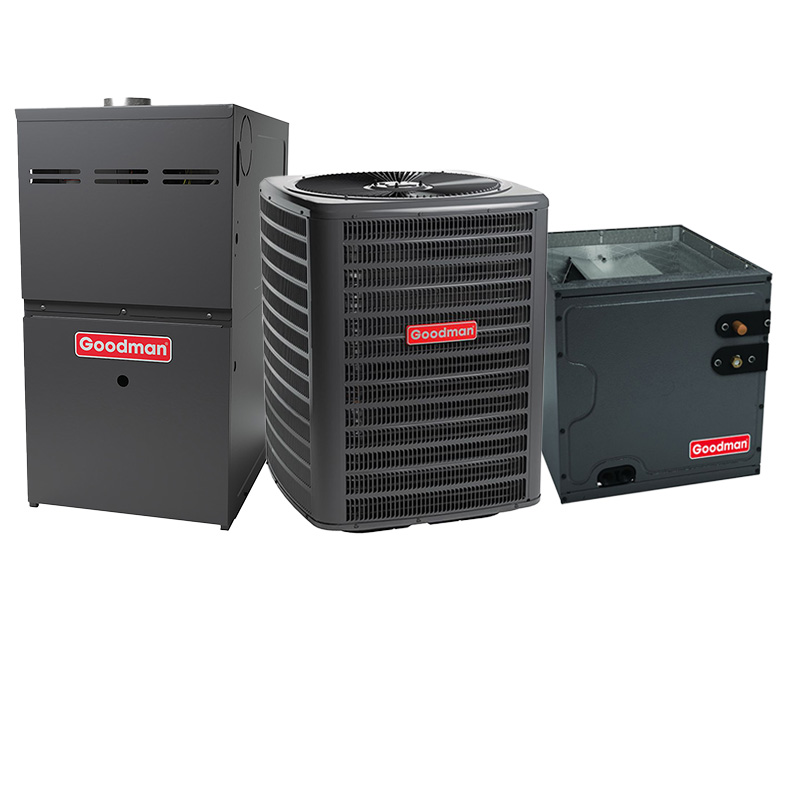
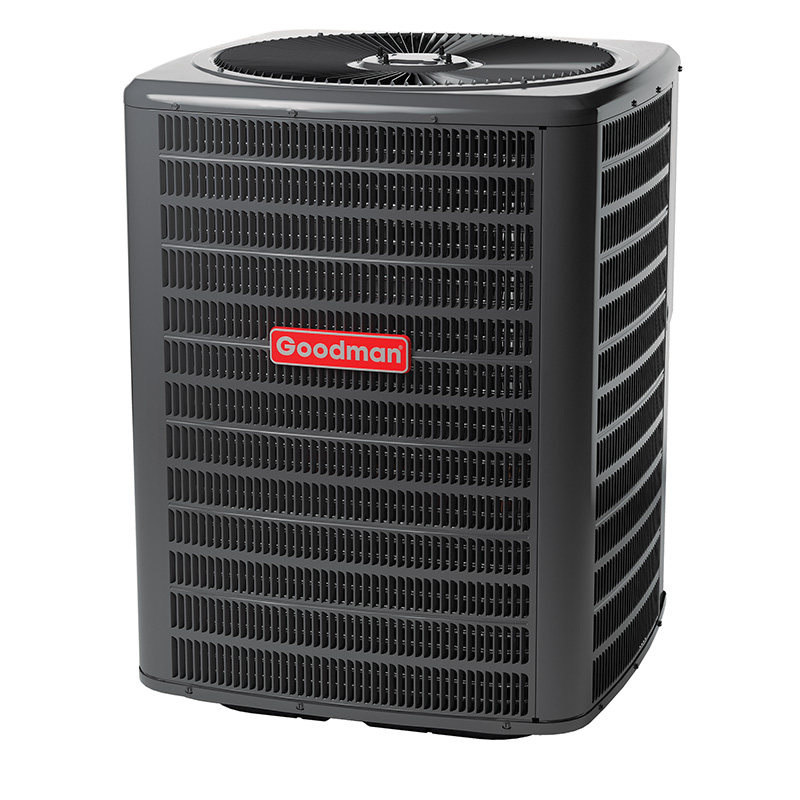
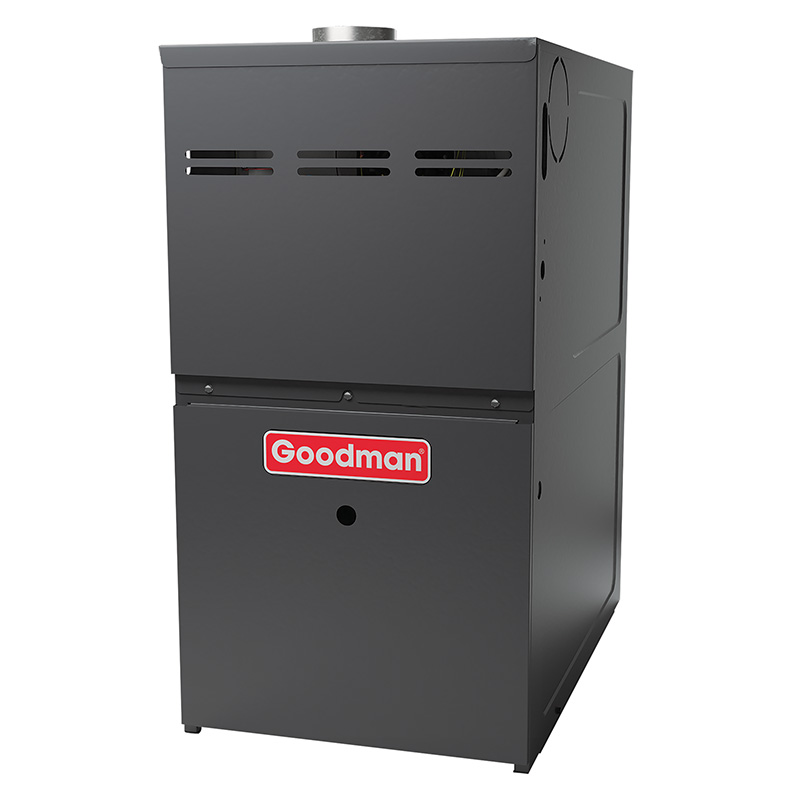
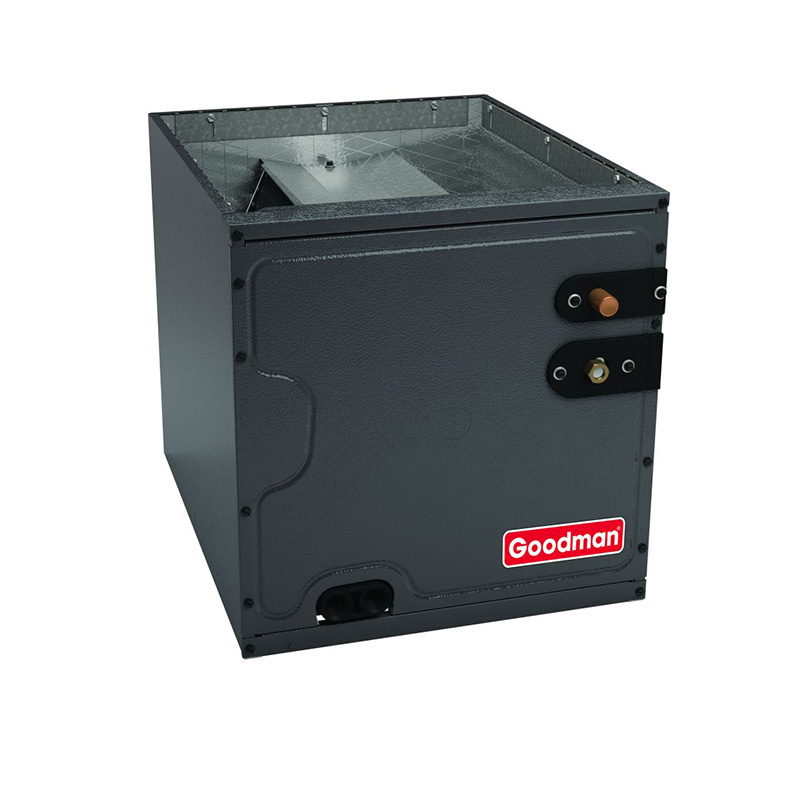
Goodman Furnace And Air Conditioner 3.5 Ton 15.2 SEER2 AC With 120000 BTU 80% AFUE Multi-Speed ECM Gas Furnace System – Upflow | R32
View on AC Direct see your lowest price →Check current price on AC Direct →
Key features
- 3.5-ton cooling capacity with 15.2 SEER2 efficiency rating
- 120,000 BTU gas furnace rated at 80% AFUE
- Multi-speed ECM blower motor for quieter, more humidity-friendly airflow
- Upflow configuration suits basement or closet installs with supply air ducted upward
- R-32 refrigerant, a lower global-warming-potential alternative to R-410A
- Bundled system ensures coil and cabinet compatibility out of the box
About this system
This Goodman bundle pairs a 3.5-ton, 15.2 SEER2 air conditioner with a 120,000 BTU, 80% AFUE multi-speed ECM gas furnace in an upflow configuration. The combination is aimed at larger homes, typically in the 2,000 to 2,800 square foot range depending on climate and insulation, that need meaningful heating capacity alongside solid cooling output. R-32 refrigerant is a lower global-warming-potential alternative to R-410A and is increasingly common in new residential equipment as the industry moves away from older refrigerants.
The 15.2 SEER2 rating clears the federal minimum efficiency thresholds for most U.S. climate zones but sits at the entry tier of what today’s market offers. Expect meaningful savings over an aging R-22 or low-SEER R-410A system, but do not expect the operating-cost reductions you would see from a two-stage or variable-speed unit rated at 18 SEER2 or higher. The multi-speed ECM blower motor on the furnace does help with humidity control and quieter part-load airflow compared to a basic single-speed motor, which is one of the more practical spec upgrades in this price range. The 80% AFUE rating means 20 cents of every heating dollar is lost through the flue, a reasonable trade-off for buyers in mild-to-moderate heating climates who prioritize upfront cost over long-term gas savings.
This Goodman bundle delivers a functional, code-compliant system at a price point that is realistically 15 to 25 percent below comparable Carrier, Trane, or Lennox equipment, which is its clearest selling point. The 80% AFUE furnace and entry-tier SEER2 rating keep operating costs moderate rather than low, and long-term ownership costs depend heavily on install quality and component luck. Buyers who want peace of mind over the full lifespan of the system may find the savings eroded by out-of-pocket repairs after year seven.
Overall score is the average of the five ratings above.
What we like
- Meaningfully lower purchase price than comparable Carrier, Trane, or Lennox bundles
- ECM blower motor improves humidity handling and reduces noise at lower fan speeds
- R-32 refrigerant is a forward-looking choice as R-410A is phased down
- Bundled coil and unit matching reduces the risk of compatibility or airflow mismatches
- 120,000 BTU furnace output gives headroom for larger or leakier homes in colder climates
Trade-offs
- Dual-run capacitors are a documented weak point, with failures often appearing in years three to seven and repair costs typically running 300 to 600 dollars
- Evaporator coil leaks appear in a meaningful share of owner accounts, potentially requiring refrigerant recharge or coil replacement
- Compressor lifespan averages 10 to 14 years versus 15 to 20 years reported for premium brands, a real long-term cost consideration
- 80% AFUE loses 20% of fuel to exhaust, a noticeable efficiency gap compared to 95%+ condensing furnaces in cold-climate regions
What homeowners and pros say about Goodman
Homeowners who share experiences online about Goodman equipment tend to cluster at the extremes. On ConsumerAffairs, where the platform skews toward people logging complaints, Goodman earns roughly 2.5 out of 5, and the recurring theme in those reviews is repair costs that begin accumulating after about year seven. Dual-run capacitor failures are the most frequently cited issue, usually a 300 to 600 dollar fix but an irritating one when it happens repeatedly. Evaporator coil leaks also appear often enough in owner accounts to be a genuine concern rather than an outlier, and compressor longevity that averages 10 to 14 years compares unfavorably to the 15 to 20 years more commonly reported for premium-brand compressors.
At the installer level, the picture is noticeably more balanced. Google dealer reviews across Goodman-selling HVAC companies run around 3.8 out of 5, and the most common praise is straightforward: the equipment costs less and performs adequately when set up correctly. Technicians consistently point out that installation quality is the single largest variable in how long a Goodman system lasts, which is both reassuring if you find a skilled installer and a caution if you are tempted by the lowest bid. For this specific 3.5-ton, 15.2 SEER2 and 80% AFUE bundle, the calculus is similar to other Goodman products: the upfront savings are real, the component risk is real, and the outcome depends more on who installs it than on any label on the cabinet.
Sources: ConsumerAffairs Goodman owner reviews, AHRI Directory of Certified Product Performance, U.S. DOE appliance and equipment efficiency standards, Goodman product specification sheets.
What it costs to run
At 15.2 SEER2, cooling this 3.5-ton system for a typical 1200-hour cooling season at the U.S. average electricity rate of $0.17/kWh works out to roughly $564 per year in cooling, about $75 less per year than a minimum-efficiency 13.4 SEER2 unit of the same size. Your real cost depends on your climate and local rate.
Method: (42,000 BTU/hr ÷ 15.2 SEER2) × 1200 hours ÷ 1000 × $0.17/kWh. Rate source: U.S. EIA average; cooling hours: moderate-climate estimate.
How it compares
| Brand | Comparable model | SEER2 | Stage | Price position |
|---|---|---|---|---|
| Goodman | GSXH5 / GMVC8 bundle (this system) | 15.2 | Single-stage | Value pick |
| Carrier | Comfort 15 (24ACC6) with 58MXB furnace | 15.2 | Single-stage | Typically 15 to 25 percent more than this Goodman bundle |
| Trane | XR15 (4TTR5) with S9X1 furnace | 15.2 | Single-stage | Typically 15 to 25 percent more than this Goodman bundle |
| Lennox | Merit 14ACX with ML180 furnace | 15.0 to 15.2 depending on configuration | Single-stage | Typically 15 to 25 percent more than this Goodman bundle |
Competitor rows are comparable single-stage units at similar efficiency; price is relative position, not a quote.
Questions about this system
Will this system work in a home that previously used R-410A equipment?
The outdoor unit and coil are designed for R-32, which is not interchangeable with R-410A. If your existing line set is in good condition and properly flushed, it can often be reused, but your installing technician must verify it is rated for the operating pressures of R-32. Using the wrong refrigerant or an incompatible coil will void the warranty and can damage the compressor.
Is 120,000 BTU too much furnace for a typical home?
It can be. Oversized furnaces short-cycle, which increases wear, reduces humidity control, and raises operating costs. A proper Manual J load calculation is essential before purchasing this system. For many homes in the 2,000 to 2,500 square foot range, 80,000 to 100,000 BTU is often sufficient, so confirm your actual heat loss numbers with your installer.
What does the Goodman warranty cover and for how long?
Goodman typically offers a 10-year parts warranty when the unit is registered within a set window after installation, and a lifetime heat exchanger warranty on qualifying furnace models. Labor is not covered under the manufacturer warranty, which means repair bills still land on the homeowner even when a part itself is replaced at no cost. Confirm the exact terms for this specific model at time of purchase.
How often should I expect to service this system to avoid the documented failure modes?
Annual professional maintenance is strongly recommended, with particular attention to capacitor condition since that is the most frequently reported failure point on Goodman equipment. Catching a weakening capacitor early during a tune-up is far cheaper than an emergency call after the unit stops on a hot day. Filter changes every one to three months also protect the coil from the dirt buildup that contributes to evaporator coil problems.
Does the upflow configuration limit where I can install this furnace?
Yes. Upflow means the furnace draws return air from the bottom and discharges conditioned air from the top, making it the right match for basement installations or ground-floor closets where ductwork runs through the ceiling or into an attic. If your existing system is a downflow or horizontal unit, this furnace will not fit the same orientation without significant duct modifications.
Specifications
| Cooling capacity | 3.5 Ton |
| Efficiency | 15.2 SEER2 |
| Furnace output | 120000 BTU |
| Furnace efficiency | 80% AFUE |
| Configuration | Upflow |
| Refrigerant | R-32 |