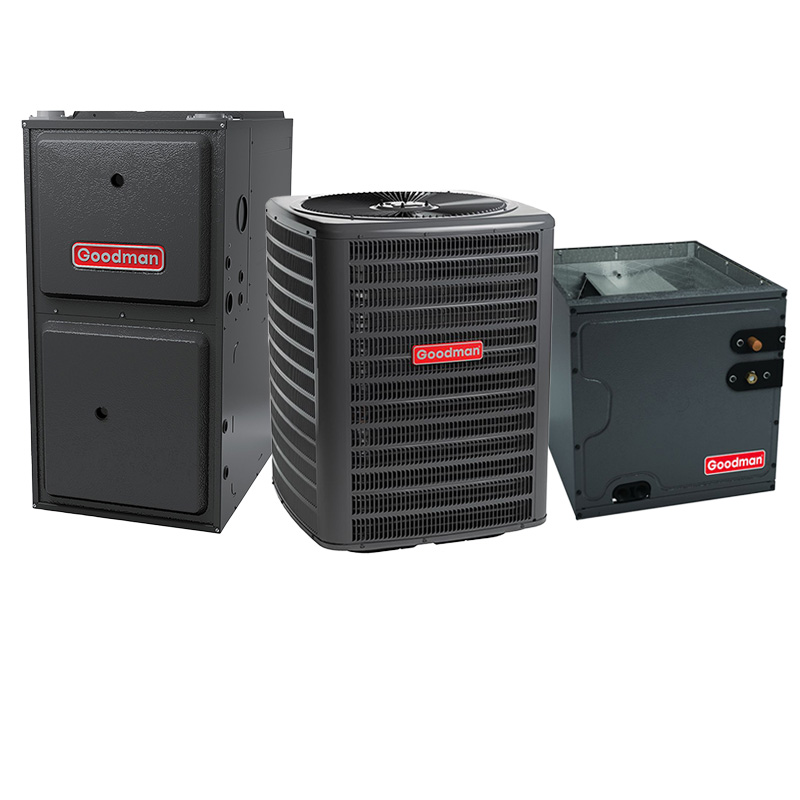
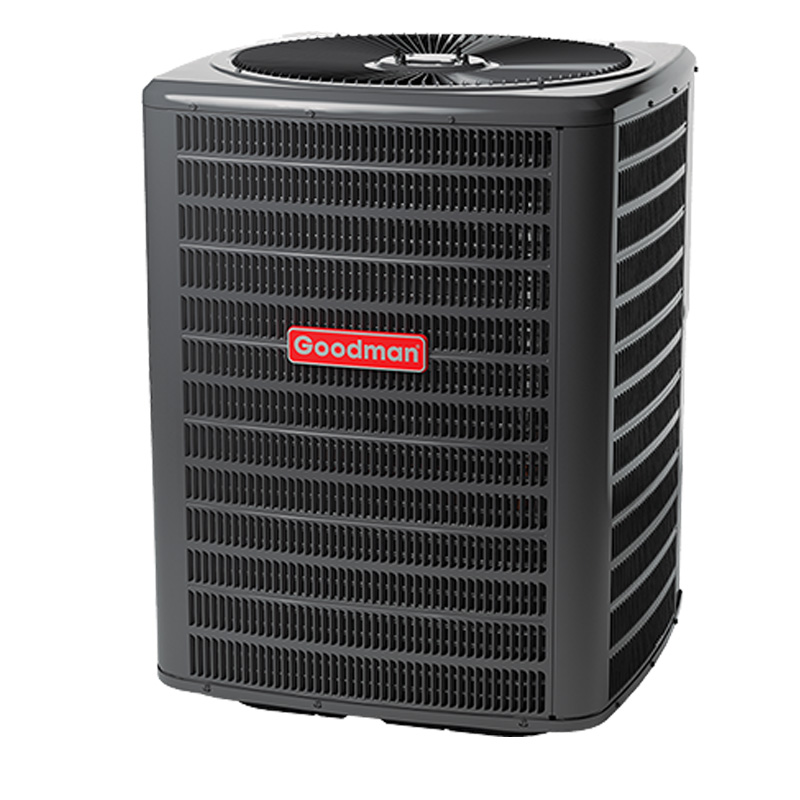
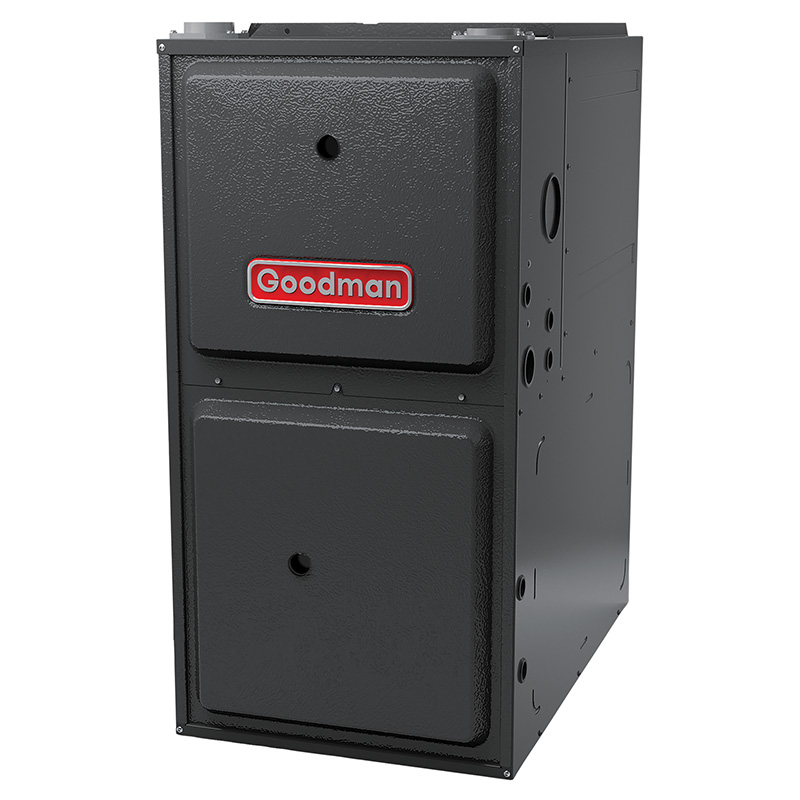
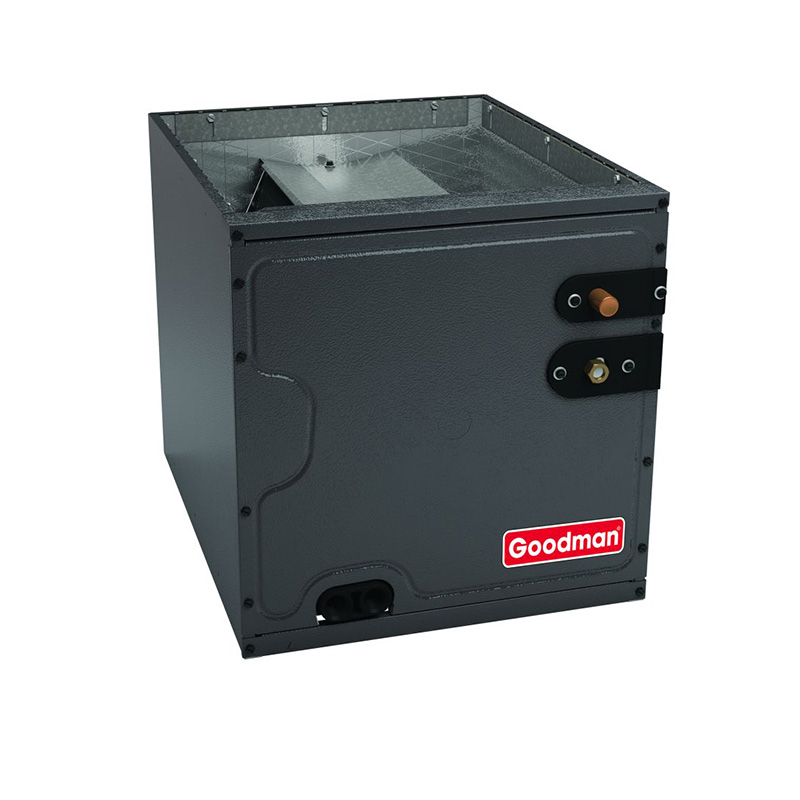
Goodman Furnace And Air Conditioner 3.5 Ton 15.2 SEER2 AC With 120000 BTU 96% AFUE Multi-Speed ECM Gas Furnace System – Upflow | R32
View on AC Direct see your lowest price →Check current price on AC Direct →
Key features
- 3.5-ton cooling capacity with 15.2 SEER2 efficiency rating
- 120,000 BTU gas furnace rated at 96% AFUE for high-efficiency heating
- Multi-speed ECM blower motor for quieter operation and improved humidity control
- Upflow configuration designed for basement or ground-level mechanical room installs
- R-32 refrigerant with lower global warming potential than R-410A
- Matched system bundle engineered and rated as a single tested assembly
About this system
This Goodman bundle pairs a 3.5-ton, 15.2 SEER2 air conditioner with a 120,000 BTU, 96% AFUE multi-speed ECM gas furnace in an upflow configuration. The cooling side sits right at the federal minimum efficiency tier for new residential equipment, which keeps the unit price accessible without delivering the kind of utility savings you would see from a two-stage or variable-speed system. The 96% AFUE furnace is a genuine high-efficiency unit, meaning roughly 96 cents of every dollar spent on natural gas goes toward heat rather than going up the flue. The multi-speed ECM blower motor adjusts airflow more precisely than a basic single-speed motor, which helps with humidity control in cooling mode and quieter low-demand operation in heating mode.
At 3.5 tons and 120,000 BTU, this is sized for larger homes, typically in the 1,800 to 2,600 square foot range depending on climate, insulation, and window loads. A proper Manual J load calculation is essential before purchase; oversizing a system this large leads to short-cycling, poor humidity removal, and accelerated wear. The upflow configuration suits homes where the air handler sits in a basement, utility closet, or ground-level mechanical room and supplies conditioned air upward through the duct system. R-32 refrigerant is the modern low-global-warming-potential replacement for R-410A, and this system positions you ahead of the industry transition away from older refrigerants.
This bundle will appeal most to budget-conscious homeowners replacing aging equipment, landlords managing larger rental properties, or buyers in competitive new-construction markets where first cost matters more than long-term efficiency premiums. It is not the right fit for anyone expecting the longevity or quiet comfort of a premium brand, but it fills a real gap for those who want a code-compliant, reasonably efficient system at a price point well below Carrier, Trane, or Lennox equivalents.
This Goodman bundle delivers legitimate high-efficiency heating and entry-level cooling efficiency at a price that undercuts the major premium brands by a noticeable margin. The 96% AFUE furnace is a real strength, while the 15.2 SEER2 cooling side is adequate but not exceptional. Long-term ownership costs depend heavily on install quality and the willingness to budget for likely component repairs in years seven through twelve.
Overall score is the average of the five ratings above.
What we like
- 96% AFUE furnace is genuine high-efficiency and will cut heating bills compared to 80% AFUE equipment
- Multi-speed ECM motor improves comfort and dehumidification over basic single-speed blowers
- R-32 refrigerant is future-ready and has a lower environmental impact than R-410A
- Matched bundle simplifies coil compatibility and system warranty qualification
- Price point is typically 15 to 25 percent below comparable Carrier, Trane, and Lennox configurations
Trade-offs
- Single-stage cooling at 15.2 SEER2 is the efficiency floor for new equipment, not a premium performer
- Compressor longevity averages 10 to 14 years versus 15 to 20 years documented in premium brands
- Dual-run capacitors and evaporator coil leaks are recurring failure modes that owners should budget for after year seven
- Overall reliability ratings are modest, with ConsumerAffairs sitting around 2.5 out of 5 on a complaint-heavy channel
What homeowners and pros say about Goodman
Homeowners who have lived with Goodman equipment long enough to see both the good and the frustrating tend to land in a similar place: the first several years are generally uneventful, but the experience diverges sharply after that depending on who installed it and how well it was maintained. On Google dealer review pages, where Goodman equipment scores around 3.8 out of 5 across hundreds of reviews per location, the most consistent praise is straightforward: it is affordable, it works out of the gate, and getting it installed is cheaper than going premium. On ConsumerAffairs, where the score sits around 2.5 out of 5, the story is different. That channel skews toward people who are already upset, and the recurring theme there is repair costs climbing after roughly year seven, which aligns with what technicians say about component wear curves on value-tier equipment.
HVAC pros who work on Goodman regularly point to two specific failure modes that any buyer of this system should keep in mind. Dual-run capacitors are the most commonly replaced component, and the good news is that it is usually a fast, inexpensive fix in the 300 to 600 dollar range. Evaporator coil leaks are the more consequential issue, showing up in a meaningful number of owner accounts and representing a more significant repair cost. Compressor lifespan is also a real consideration: Goodman compressors tend to average 10 to 14 years of service, compared to 15 to 20 years documented for premium brands, which matters when you are deciding whether this system suits a home you plan to own for two decades. For this specific furnace and air conditioner bundle, a minority of owners have also reported refrigerant leaks in the first year, which technicians generally attribute to install or initial charge issues rather than a manufacturing defect. The consistent professional advice is the same regardless of the complaint: install quality is the single biggest variable in how long a Goodman system lasts and how much it costs to keep running.
Sources: ConsumerAffairs Goodman owner reviews, AHRI Directory of Certified Product Performance, U.S. DOE appliance and equipment efficiency standards, Goodman product specification sheets.
What it costs to run
At 15.2 SEER2, cooling this 3.5-ton system for a typical 1200-hour cooling season at the U.S. average electricity rate of $0.17/kWh works out to roughly $564 per year in cooling, about $75 less per year than a minimum-efficiency 13.4 SEER2 unit of the same size. Your real cost depends on your climate and local rate.
Method: (42,000 BTU/hr ÷ 15.2 SEER2) × 1200 hours ÷ 1000 × $0.17/kWh. Rate source: U.S. EIA average; cooling hours: moderate-climate estimate.
How it compares
| Brand | Comparable model | SEER2 | Stage | Price position |
|---|---|---|---|---|
| Goodman | 3.5T 15.2 SEER2 AC + 120K BTU 96% AFUE ECM Furnace (this system) | 15.2 | Single-stage cooling, multi-speed heating | Value pick |
| Carrier | Comfort Series (24ACC636 paired with 59SC6) | 15.2 | Single-stage | Typically 15 to 25 percent more than this Goodman bundle |
| Trane | XR15 (4TTR5042 paired with S9X2 furnace) | 15.2 | Single-stage | Typically 15 to 25 percent more than this Goodman bundle |
| Lennox | Merit Series (14ACX paired with ML196E furnace) | 15.2 | Single-stage | Typically 15 to 25 percent more than this Goodman bundle |
Competitor rows are comparable single-stage units at similar efficiency; price is relative position, not a quote.
Questions about this system
Is 15.2 SEER2 going to make a meaningful difference in my electric bill compared to my old system?
If you are replacing equipment rated below 13 SEER or 12 SEER2, yes, you will see a real reduction in cooling costs. If you are comparing this to a 17 or 18 SEER2 variable-speed system, the savings gap between them is smaller on an annual basis and may take many years to recover the price difference. For most replacement scenarios, 15.2 SEER2 is a solid baseline, not a standout performer.
What does multi-speed ECM actually mean for day-to-day comfort?
The ECM blower motor can run at lower speeds during mild conditions, which keeps air circulating more consistently, reduces temperature swings room to room, and pulls more moisture out of the air in cooling mode because the coil has more contact time with warm humid air. It also runs more quietly than a single-speed motor at full blast. You will notice the difference most on shoulder-season days when the system does not need to run at full capacity.
How concerned should I be about the documented evaporator coil leak and capacitor failure issues?
Dual-run capacitor failures are common across many HVAC brands and are typically a low-cost repair in the 300 to 600 dollar range. Evaporator coil leaks are a more serious issue and appear in a meaningful share of Goodman owner reviews, particularly after year seven or eight. Keeping up with annual maintenance, ensuring proper refrigerant charge at install, and budgeting for a potential coil repair in the second decade of ownership is a realistic expectation with this brand.
Does my home need to be upflow to use this system, and how do I know?
Upflow means the furnace pulls return air in from the bottom and pushes conditioned air out of the top into supply ducts that run upward, which is standard in homes with basement or ground-floor mechanical rooms and duct systems in the ceiling or attic above. If your existing system is upflow, this is a straightforward swap. If your ducts enter from the top of the air handler and exit downward, you need a downflow configuration instead.
What warranty comes with this system and are there any catches?
Goodman typically offers a 10-year parts warranty when the system is registered within a set window after installation, and a lifetime heat exchanger warranty on qualifying furnaces. The catch is that warranty coverage requires installation by a licensed contractor and timely registration; failing to register often drops coverage to five years. Labor is not covered, so a warranty repair still means paying a technician's time and service call fee.
Specifications
| Cooling capacity | 3.5 Ton |
| Efficiency | 15.2 SEER2 |
| Furnace output | 120000 BTU |
| Furnace efficiency | 96% AFUE |
| Configuration | Upflow |
| Refrigerant | R-32 |