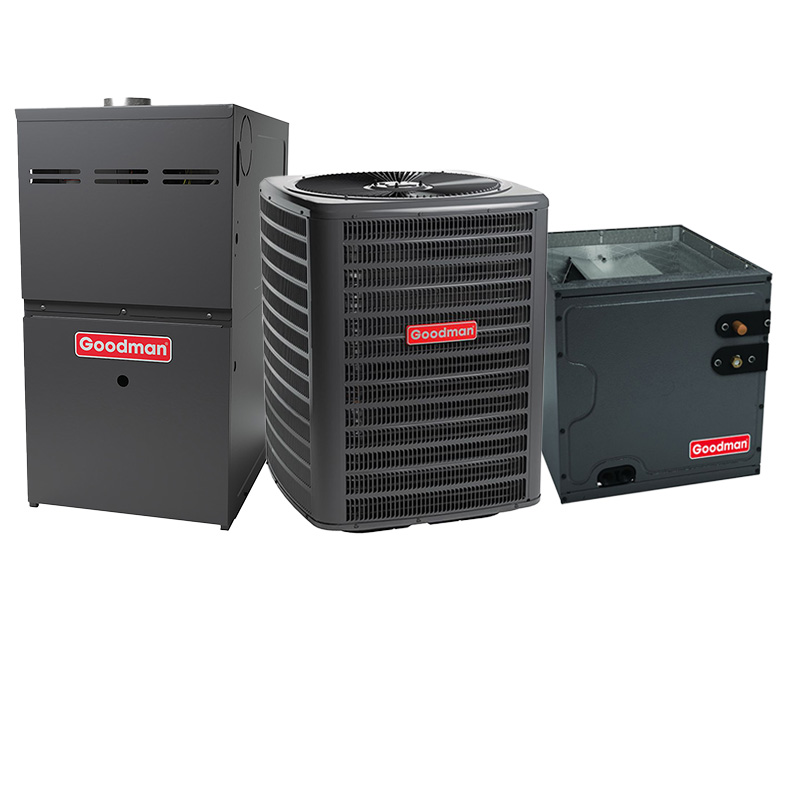
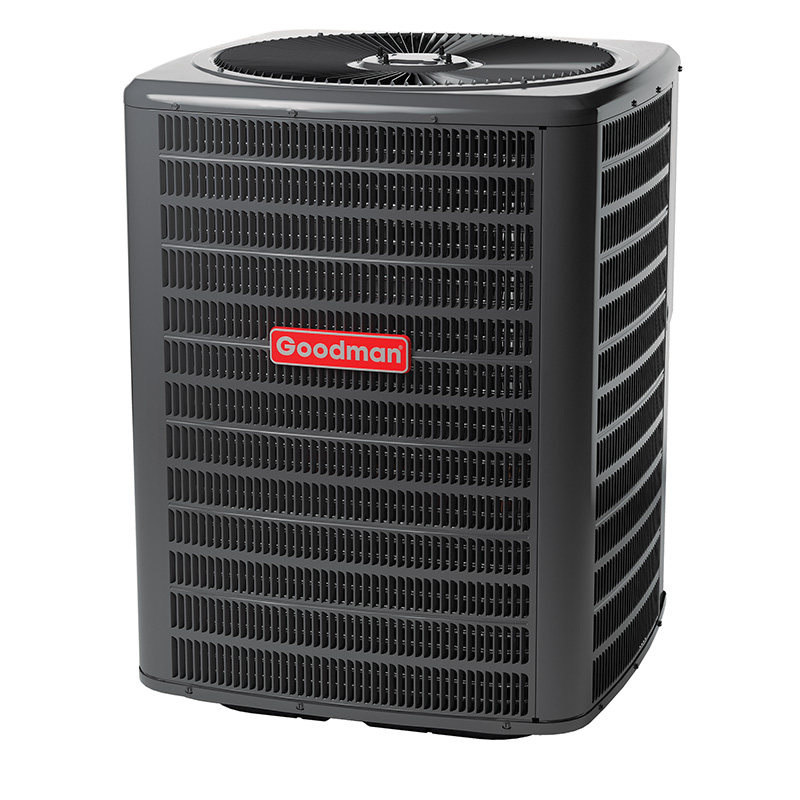
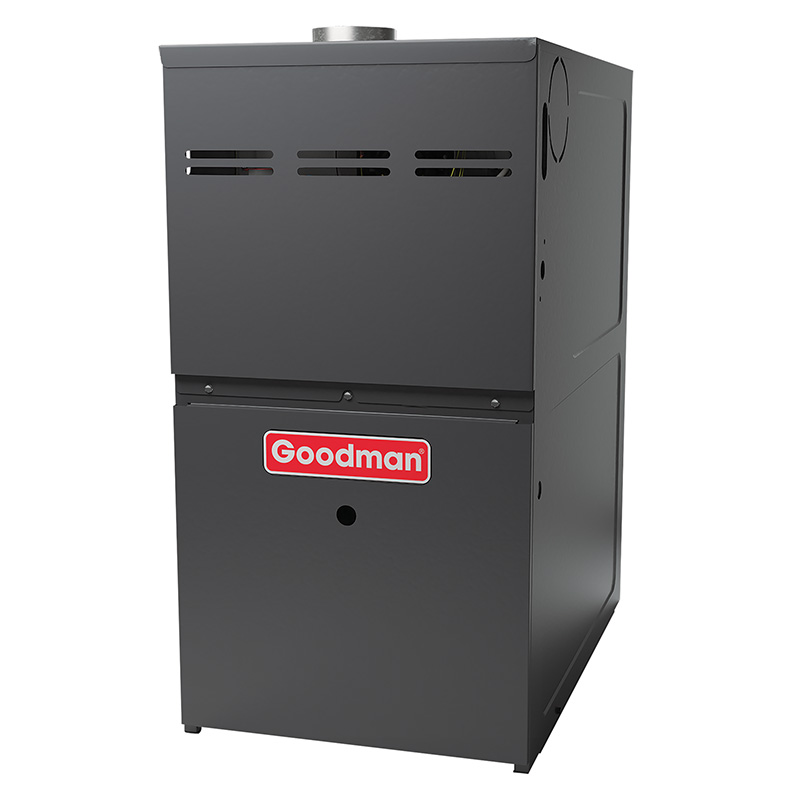
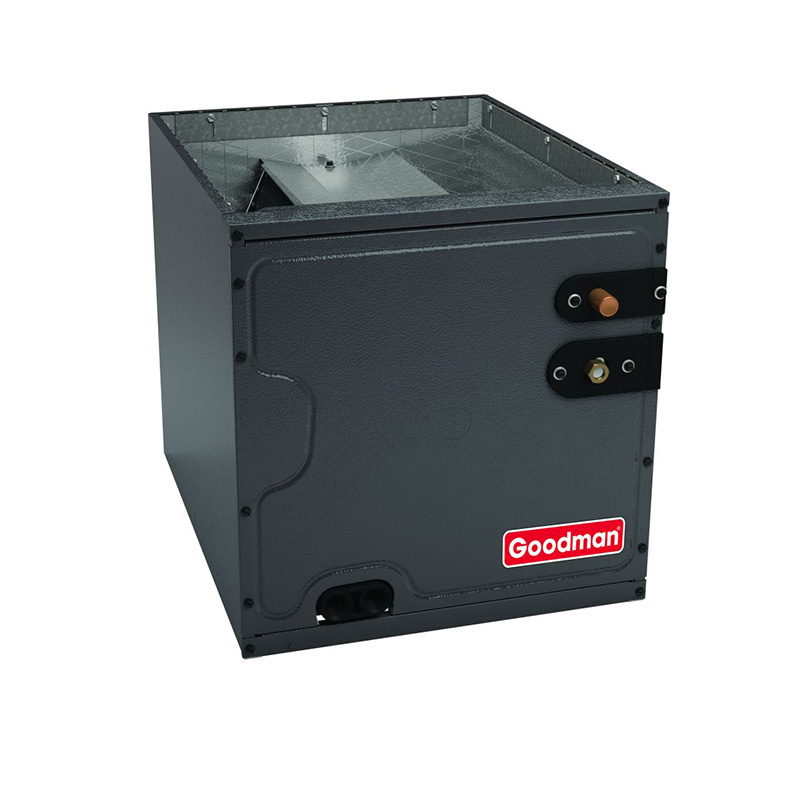
Goodman Furnace And Air Conditioner 3.5 Ton 15.2 SEER2 AC With 80000 BTU 80% AFUE Multi-Speed ECM Gas Furnace System – Upflow | R32
View on AC Direct see your lowest price →Check current price on AC Direct →
Key features
- 3.5-ton cooling capacity rated at 15.2 SEER2 for moderate efficiency gains over minimum-code equipment
- 80,000 BTU gas furnace at 80% AFUE, the federal non-condensing minimum, suitable for mild-to-moderate heating climates
- Multi-speed ECM blower motor reduces electricity use and improves humidity control versus single-speed motors
- Upflow configuration matches the most common residential ductwork layout with basement or ground-level air handlers
- R-32 refrigerant replaces R-410A with a lower global warming potential and slightly better heat transfer properties
- Goodman price point typically runs 15 to 25 percent below comparable Trane, Lennox, and Carrier equipment
About this system
The Goodman 3.5-ton, 15.2 SEER2 air conditioner paired with an 80,000 BTU 80% AFUE multi-speed ECM gas furnace is a straightforward workhorse combination sized for homes roughly in the 1,800 to 2,400 square foot range, depending on climate zone and insulation quality. The upflow configuration means the furnace pulls return air from the bottom and discharges conditioned air upward through ductwork above, which is the most common residential setup in homes with basements or ground-level mechanical rooms. R-32 refrigerant is a step forward from the older R-410A standard, carrying a lower global warming potential and slightly better thermodynamic efficiency, though it does require technicians who are current on handling procedures for a mildly flammable refrigerant.
The 80% AFUE furnace rating means 80 cents of every dollar spent on gas converts to usable heat, with the remaining 20% lost through the flue. That is the federal minimum for non-condensing furnaces in most regions and is an honest, cost-effective choice for mild-to-moderate heating climates where a 96% AFUE upgrade would take many years to pay back in fuel savings. The multi-speed ECM blower motor is a genuine comfort and efficiency feature, running at lower speeds during steady-state operation to reduce electricity consumption and improve humidity control compared to a single-speed PSC motor. At 15.2 SEER2, cooling efficiency clears the federal minimum comfortably and will produce meaningful savings over an aging 10 to 13 SEER system, though it sits well below the 18 to 20 SEER2 range of variable-capacity premium systems.
This Goodman combination system delivers a solid, code-compliant package at a price point that is hard to argue with for budget-conscious homeowners who accept some trade-offs in long-term durability and efficiency headroom. At 15.2 SEER2 and 80% AFUE, the specs are honest rather than impressive, and the system's actual lifespan will hinge heavily on installation quality and how quickly minor repairs like capacitor swaps get addressed. It is a reasonable choice for a first-time buyer or a rental property, but homeowners planning a 20-plus-year horizon should price out premium alternatives before committing.
Overall score is the average of the five ratings above.
What we like
- Price lands 15 to 25 percent below comparable Carrier, Trane, and Lennox systems, reducing upfront cost significantly
- Multi-speed ECM motor improves comfort and lowers blower electricity draw compared to basic single-speed furnaces
- R-32 refrigerant is forward-looking, with better environmental profile and solid thermodynamic performance
- 15.2 SEER2 clears federal minimums by a comfortable margin, producing real savings over older 10 to 13 SEER systems
- Upflow configuration and widespread Goodman parts availability make service straightforward for most local HVAC technicians
Trade-offs
- Dual-run capacitors are the most commonly reported failure point, with repair costs typically in the $300 to $600 range, often appearing within the first decade
- Evaporator coil leaks appear in a meaningful share of owner reviews, a potentially costly repair if it occurs after the parts warranty window
- Compressor lifespan averages 10 to 14 years versus 15 to 20 years documented for premium-brand compressors, a real long-term cost consideration
- 80% AFUE is the legal minimum for non-condensing furnaces and will cost noticeably more to operate annually than a 95 to 96% AFUE condensing alternative in cold climates
What homeowners and pros say about Goodman
Homeowners who have lived with Goodman equipment long enough to post about it tell a familiar story: the system works fine out of the box, and praise for the lower upfront cost is consistent across Google dealer reviews, where Goodman locations average around 3.8 out of 5 stars. The trouble tends to arrive quietly, usually around year 7 or 8, when the ConsumerAffairs review pattern shifts from satisfaction to frustration over repair costs. That platform scores Goodman at roughly 2.5 out of 5, and while ConsumerAffairs skews toward people who had problems, the recurring theme of climbing repair bills after the first several years is worth taking seriously. The dual-run capacitor is the failure mode that comes up most often and is usually the lowest-stakes repair in the lineup, typically costing $300 to $600 to sort out. Evaporator coil leaks and refrigerant escaping in the first year, the latter usually pointing to an install or charge issue rather than a manufacturing defect, are the complaints that sting more.
HVAC technicians tend to be pragmatic about Goodman. They note that parts are widely available and the equipment is familiar, which keeps service calls manageable. The stronger criticism from the trade side is that Goodman’s longevity sits a tier below premium brands, with compressors averaging 10 to 14 years compared to the 15 to 20 years that Trane, Carrier, and Lennox compressors more routinely achieve. Pros also emphasize that installation quality is the single biggest variable in how any Goodman system performs, which is a fair point that applies to the whole industry but matters more here because the equipment has less margin for error. For a rental property, a tight-budget first home, or a situation where replacing the system in 12 to 15 years is an acceptable plan, the Goodman value proposition holds up. For a forever home, the honest advice is to at least price out the premium alternatives before deciding.
Sources: ConsumerAffairs Goodman owner reviews, AHRI Directory of Certified Product Performance, U.S. DOE appliance and equipment efficiency standards, Goodman product specification sheets.
What it costs to run
At 15.2 SEER2, cooling this 3.5-ton system for a typical 1200-hour cooling season at the U.S. average electricity rate of $0.17/kWh works out to roughly $564 per year in cooling, about $75 less per year than a minimum-efficiency 13.4 SEER2 unit of the same size. Your real cost depends on your climate and local rate.
Method: (42,000 BTU/hr ÷ 15.2 SEER2) × 1200 hours ÷ 1000 × $0.17/kWh. Rate source: U.S. EIA average; cooling hours: moderate-climate estimate.
How it compares
| Brand | Comparable model | SEER2 | Stage | Price position |
|---|---|---|---|---|
| Goodman | GSXH5 / GMEC8 Series (this system) | 15.2 | Single-stage | Value pick |
| Carrier | Comfort 24ACC6 / 59SC5 Series | 15.2 | Single-stage | Typically 15 to 25 percent more than this Goodman system |
| Trane | XR15 / S8X1 Series | 15.0 to 15.5 | Single-stage | Typically 15 to 25 percent more than this Goodman system |
| Lennox | Merit 14ACX / ML180 Series | 15.0 to 15.2 | Single-stage | Typically 15 to 25 percent more than this Goodman system |
Competitor rows are comparable single-stage units at similar efficiency; price is relative position, not a quote.
Questions about this system
Is 15.2 SEER2 enough efficiency, or should I spend more for a higher-rated system?
15.2 SEER2 will produce meaningful savings over any system rated below 13 SEER2, and for most homeowners in moderate climates it is a practical stopping point. Stepping up to 18 to 20 SEER2 variable-speed equipment can cut cooling costs further, but the upfront premium often takes 8 to 12 years to recover in energy savings alone, so the math depends heavily on your local electricity rates and how many cooling months you have.
Should I upgrade to a 96% AFUE condensing furnace instead of taking the 80% AFUE unit here?
In cold climates where the furnace runs hard for five or more months, a 96% AFUE condensing furnace can save $150 to $300 or more annually in gas costs, and the payback period on the upgrade cost can be under five years. In mild climates with short heating seasons, the payback stretches to 10 or more years and the 80% unit is harder to argue against on pure economics.
What are the most likely repairs I will face with this Goodman system?
Dual-run capacitors are the single most commonly reported failure on Goodman equipment and are generally a quick fix in the $300 to $600 range. Evaporator coil leaks appear in a meaningful share of owner reports and are a more expensive repair. The compressor is rated to average 10 to 14 years, so budgeting for a potential replacement or full system swap in that window is realistic.
Does the R-32 refrigerant require any special handling or change how I find service technicians?
R-32 is classified as mildly flammable, so technicians need to be current on safe handling procedures, but it is widely known in the industry and most established HVAC companies are already equipped for it. You should confirm this with any contractor before scheduling service, but it should not significantly limit your options in most metro areas.
Is the upflow configuration right for my home, and can it be converted if my setup is different?
Upflow furnaces pull return air from the bottom and push supply air upward, which matches most homes where the furnace sits in a basement or ground-floor closet with ductwork running overhead. If your setup requires downflow or horizontal airflow, this unit is not the right fit and should not be field-converted, so confirm your duct configuration with your installer before purchasing.
Specifications
| Cooling capacity | 3.5 Ton |
| Efficiency | 15.2 SEER2 |
| Furnace output | 80000 BTU |
| Furnace efficiency | 80% AFUE |
| Configuration | Upflow |
| Refrigerant | R-32 |